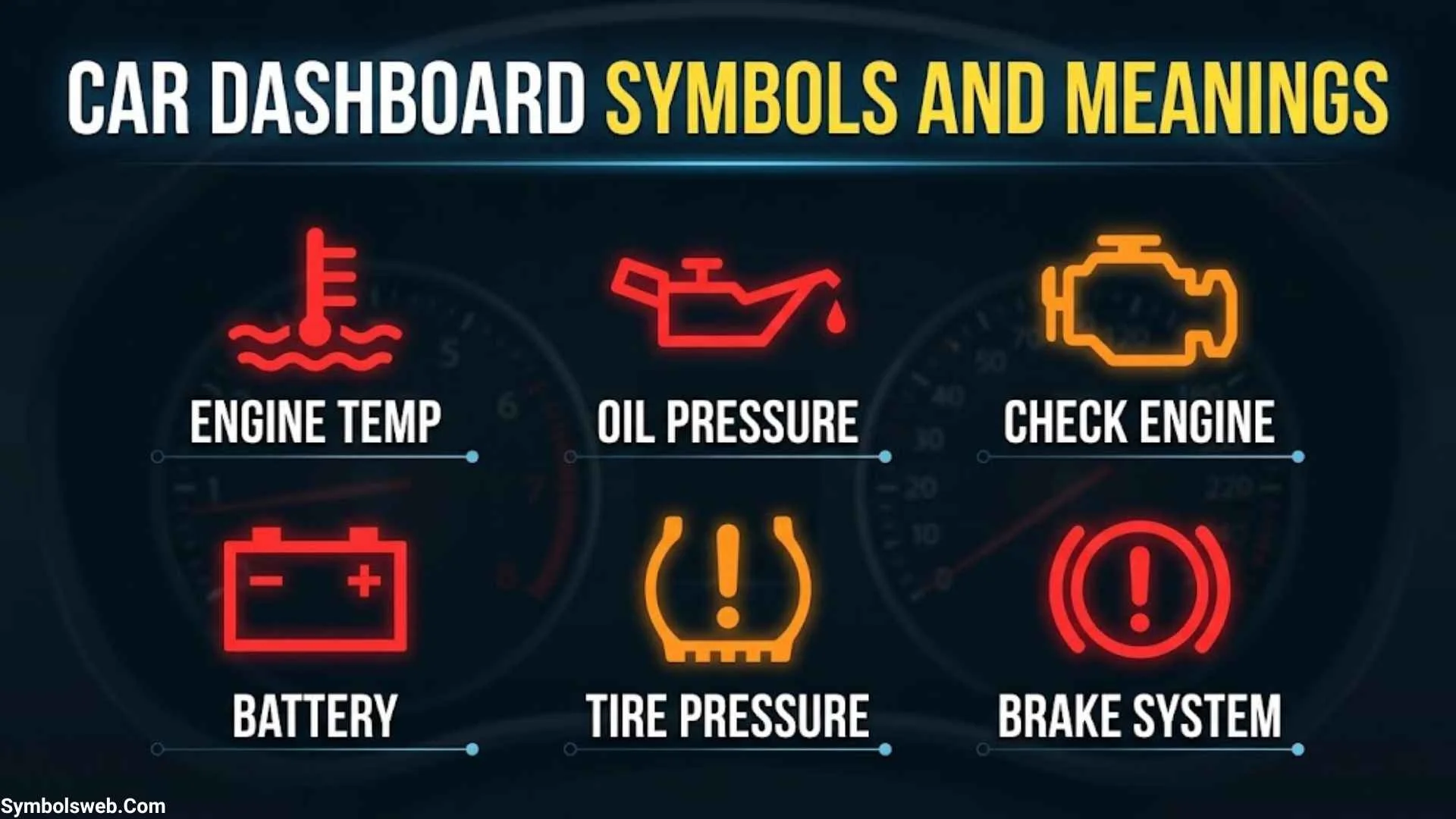
Car dashboard symbols help you understand what your vehicle needs, whether you’re dealing with a low tire, an engine problem, or a feature that’s switched on. Some lights simply provide information. Others warn you about problems that could affect your safety or damage your vehicle if you ignore them.
When an unfamiliar symbol appears while you’re driving, knowing what it means can save you time, money, and unnecessary stress. The trick is to recognize the symbol, understand its urgency, and take the right action instead of guessing.
This guide explains the most common car dashboard symbols and their meanings, including red warning lights, yellow alerts, green indicators, and blue or white status lights. You’ll also learn which warnings may require you to stop driving, how to identify unfamiliar dashboard icons, and when to contact a mechanic.
What Do Car Dashboard Symbols Mean?
Car dashboard symbols are visual signals that communicate information about your vehicle’s condition and operating systems. You’ll usually find them on the instrument cluster behind the steering wheel, although some newer vehicles display alerts on a central touchscreen.
Your car uses sensors, electronic control units, and monitoring systems to detect certain conditions. When a system identifies a problem or activates a feature, the dashboard may display a light, symbol, or written message.
For example, a tire-shaped symbol with an exclamation point often indicates low tire pressure. An oil-can symbol may warn you about low engine oil pressure. Meanwhile, a green arrow usually tells you that a turn signal is operating.
Not every dashboard light indicates a fault. Most symbols fall into four main categories:
- Warning lights: Alert you to a potential mechanical, electrical, or safety problem.
- Status indicators: Show that a feature, such as high-beam headlights or cruise control, is active.
- Maintenance reminders: Tell you when scheduled servicing or routine maintenance is due.
- Startup indicators: Illuminate briefly when you switch on the ignition as part of a system check.
Many vehicles illuminate several dashboard lights before the engine starts. These lights should generally go out after the startup check, although the exact sequence varies by vehicle.
If a warning stays on while you’re driving, don’t assume it’s harmless. Check the owner’s manual to identify the symbol and follow the instructions for your specific make, model, and year. The AA dashboard warning light guide also explains common symbols and their general meanings.
What Do Dashboard Warning Light Colors Mean?
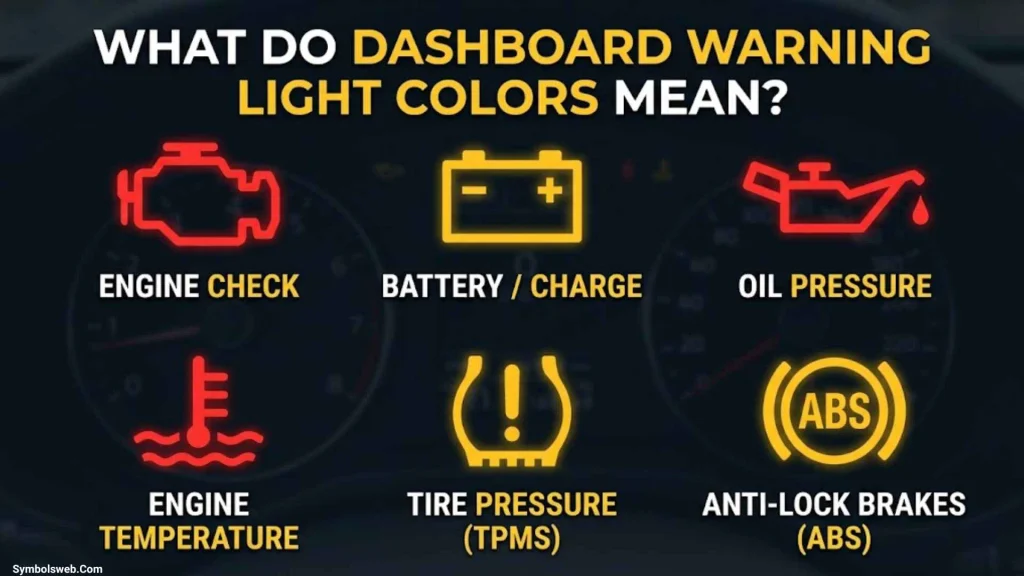
Dashboard colors provide a useful first clue about urgency. However, color alone doesn’t tell you everything. The symbol, any accompanying message, and the vehicle’s behavior all matter.
Red Dashboard Warning Lights
Red dashboard warning lights commonly signal an urgent problem that needs immediate attention. Depending on the symbol, you may need to stop as soon as it’s safe and switch off the engine.
Common red warnings include:
- Engine oil pressure warning
- Engine coolant temperature warning
- Brake system warning
- Certain charging-system or steering warnings
- Some transmission temperature warnings
For example, a red oil pressure light that appears while the engine is running can indicate inadequate lubrication. Continuing to drive may cause severe engine damage.
A red brake warning deserves equal attention, especially if the brake pedal feels soft or the car takes longer to stop. Pull over safely and arrange assistance if you suspect a braking problem.
Important: Don’t treat every red symbol identically. Some vehicles use red indicators for parking brakes or seat-belt reminders. Identify the actual symbol before deciding what to do.
Yellow or Amber Dashboard Warning Lights
Yellow dashboard warning lights usually indicate a detected fault, a system that needs checking, or a condition that requires attention soon. Some allow you to drive cautiously to a safe location or repair shop. Others may require you to stop, depending on the fault.
Common amber warnings include:
- Check engine light
- Tire pressure warning
- Anti-lock braking system (ABS) warning
- Traction control or electronic stability control warning
- Airbag system warning
- Certain maintenance and driver-assistance alerts
An amber check engine light, for instance, may result from a minor emissions-system issue or a more serious engine fault. A steady light with normal vehicle performance generally calls for prompt diagnosis. A flashing light can indicate a more serious problem.
Don’t ignore an amber warning simply because the car still feels normal. Some faults develop before you notice changes in performance.
Green Dashboard Indicator Lights
Green dashboard indicator lights usually show that a feature is active or operating. They generally provide information rather than warn you about a fault.
Examples include:
- Turn signals
- Cruise control activation
- Certain exterior-light indicators
- Some driver-assistance system status lights
A green cruise control indicator typically means the feature is switched on or ready, depending on the vehicle. Green turn-signal arrows flash when you activate the corresponding signal.
Blue Dashboard Warning Lights
Blue dashboard lights often identify a particular operating condition or active feature. The most familiar example is the high-beam headlight indicator.
Some vehicles also use a blue temperature symbol to show that the engine coolant is still cold. If your vehicle displays this symbol, drive gently until the engine reaches its normal operating temperature.
Blue doesn’t automatically mean that everything is safe. Read the symbol and its accompanying message rather than relying on color alone.
White Dashboard Indicator Lights
White dashboard indicators often communicate system status, selected settings, or available features. Their exact meanings vary between manufacturers.
A white icon might show that a driver-assistance feature is available or that a particular setting has been selected. Consult the owner’s manual when you can’t identify the symbol confidently.
What Does a Flashing Dashboard Warning Light Mean?
A flashing light often signals a changing condition or a fault that needs attention. However, flashing doesn’t carry one universal meaning across all dashboard symbols.
The flashing check engine light is especially important. It can indicate an engine misfire that may damage the catalytic converter if you continue driving under the same conditions.
If the vehicle shakes, loses power, smells unusual, or runs roughly, pull over as soon as it’s safe and turn off the engine. If the warning continues flashing, contact roadside assistance rather than risking further damage.
Common Car Dashboard Symbols and Their Meanings
The following car dashboard light guide covers frequently encountered symbols, their usual meanings, and the next steps to consider.
| Dashboard symbol | What it generally means | What you should do |
| Check engine | Engine or emissions system detected a fault | Arrange diagnosis; stop if the light flashes or the car runs abnormally |
| Oil can | Engine oil pressure may be too low | Pull over safely and switch off the engine |
| Thermometer over waves | Engine coolant temperature may be too high | Stop safely and let the engine cool according to the manual |
| Battery | Charging system may not be working correctly | Stop somewhere safe and seek assistance if the light remains on while driving |
| Brake warning | Parking brake is engaged or the braking system needs attention | Check the parking brake; stop if the warning persists or braking feels abnormal |
| ABS | Anti-lock braking system fault | Arrange prompt inspection and drive cautiously only if braking remains safe |
| Tire with exclamation point | Tire pressure may be low | Check tire pressure and inspect for damage |
| Airbag | Airbag or restraint system may have a fault | Arrange prompt inspection |
| Traction control | System is active or has detected a fault | Check whether the light flashes or stays on and consult the manual |
| Steering wheel with warning | Steering assistance may have a problem | Stop if steering becomes difficult or unsafe |
| Fuel pump | Fuel level is low | Refuel as soon as practical |
| Seat belt | A seat belt isn’t fastened or a restraint reminder is active | Fasten seat belts and check the warning again |
| Washer spray | Washer fluid may be low | Refill with the recommended washer fluid |
| Security symbol | Anti-theft or immobilizer system status | Follow the vehicle’s security and starting instructions |
| Gear or transmission temperature symbol | Transmission or drivetrain needs attention | Follow the vehicle’s warning message and stop if instructed |
These descriptions are general, not a substitute for your vehicle’s manual. Manufacturers sometimes use similar-looking icons for different systems, so confirm unfamiliar dashboard warning symbols before taking action.
Red Dashboard Warning Lights You Should Never Ignore
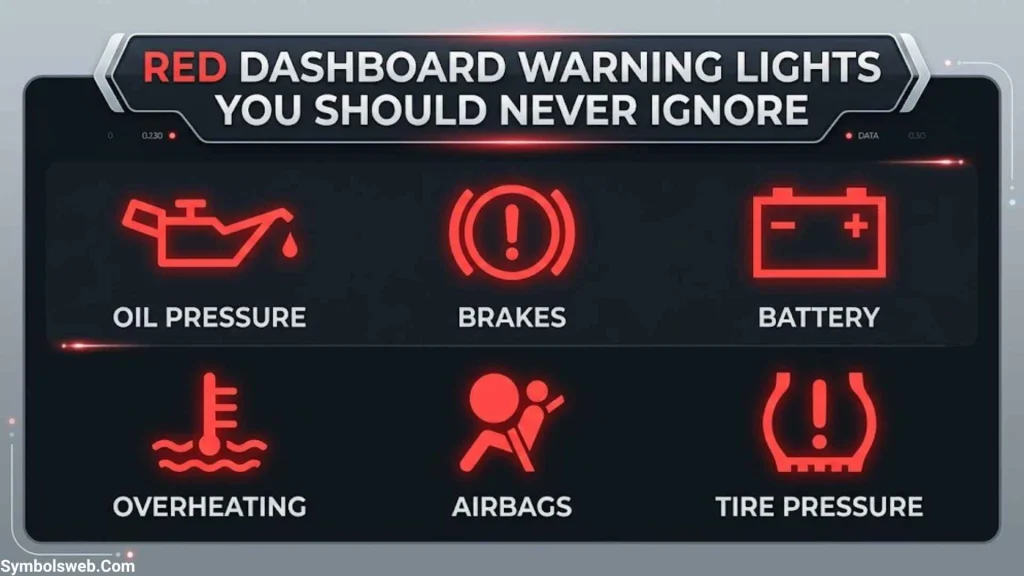
Some warnings require a faster response than others. If a serious warning appears while you’re driving, focus first on getting to a safe place rather than trying to diagnose the problem on the road.
Oil Pressure Warning Light
The oil pressure warning usually looks like an oil can with a droplet. It warns that the engine may not have enough oil pressure to lubricate its moving parts properly.
Engine oil reduces friction and helps control heat. Without adequate pressure, critical components may wear rapidly or suffer severe damage.
Possible causes include:
- Low engine oil level
- An oil leak
- A failing oil pump
- A blocked oil filter or oil passage
- A faulty pressure sensor
What should you do?
- Pull over as soon as it’s safe.
- Switch off the engine.
- Wait for the vehicle’s recommended checking conditions, then inspect the oil level if you can do so safely.
- Add the correct oil only if the level is low and the manual permits it.
- If the warning remains on, don’t continue driving. Arrange professional assistance.
Low oil pressure and low oil level aren’t the same thing. Adding oil won’t necessarily solve a pressure problem caused by a failed pump or another mechanical fault.
Engine Coolant Temperature Warning Light
The engine temperature warning light often looks like a thermometer above wavy lines. It may indicate that the engine is overheating or that the cooling system has a problem.
Your engine produces substantial heat during operation. Coolant carries heat away from the engine and helps maintain a safe operating temperature. If the system fails, excessive heat can damage the engine, cylinder head, or head gasket.
Possible causes include low coolant, a coolant leak, a faulty thermostat, a damaged radiator, or a cooling fan problem.
If the warning appears:
- Pull over safely and turn off the engine when instructed.
- Don’t continue driving while the engine is overheating.
- Never open a hot radiator cap or pressurized coolant reservoir.
- Let the engine cool and follow the manufacturer’s instructions.
- Arrange assistance if coolant is leaking or the warning returns.
Never pour cold water into an overheated engine without checking the manufacturer’s guidance. Sudden temperature changes and hot pressurized coolant can create additional risks.
Brake System Warning Light
The brake warning light may appear as an exclamation point inside a circle, often surrounded by parentheses. Depending on the vehicle, it may indicate an engaged parking brake, low brake fluid, or a braking-system malfunction.
Start by checking whether the parking brake is fully released. If the light stays on, don’t assume the problem is minor.
Watch for these warning signs:
- A brake pedal that feels unusually soft
- A pedal that travels farther than normal
- Reduced stopping power
- Brake fluid leaking near a wheel or beneath the vehicle
- A red brake warning that appears with an ABS warning
If braking feels different or the warning remains unexplained, stop safely and request assistance. A brake-system fault can affect your ability to stop the vehicle.
Don’t top up brake fluid and immediately continue driving without understanding why the level dropped. Low fluid may indicate a leak or worn components that need inspection.
Battery and Charging System Warning Light
The battery symbol usually indicates a problem with the battery charging system. It doesn’t automatically mean the battery itself has failed.
While the engine runs, the charging system supplies electrical power and recharges the battery. If the alternator, drive belt, wiring, or a connection fails, the vehicle may eventually lose electrical power.
Potential causes include:
- A failing alternator
- Loose or damaged battery terminals
- A damaged charging-system cable
- A broken alternator belt, where fitted
- A battery or charging-system fault
If the light comes on while driving, find a safe place to stop and seek advice. Avoid switching off and restarting the engine unnecessarily because the car may not start again.
Other Serious Red Warning Symbols
Some vehicles display red warnings for power steering, transmission temperature, or other critical systems. The exact response depends on the message and the vehicle.
For example, a transmission-temperature warning may indicate excessive heat that can damage transmission components. A steering warning accompanied by suddenly heavy steering can make the car difficult to control.
If a red warning appears alongside smoke, a burning smell, severe noises, fluid loss, or a sudden change in handling, stop safely and request help. These symptoms matter even if the dashboard symbol looks unfamiliar.
Yellow and Amber Dashboard Warning Lights Explained
Yellow and amber lights often give you a chance to address a fault before it becomes more expensive. Still, you should determine what triggered the alert instead of waiting for another warning.
Check Engine Light
The check engine light, also called the engine management light, usually appears as an engine-shaped icon. It monitors aspects of engine operation and emissions control.
Possible causes include:
- A loose or faulty fuel cap
- An oxygen sensor problem
- An ignition or spark-plug fault
- A misfire
- An airflow sensor issue
- An emissions-system malfunction
A steady check engine light with normal performance usually calls for prompt diagnostic testing. If it flashes, treat it more seriously, especially if the engine shakes, loses power, or smells unusual.
A mechanic can read diagnostic trouble codes using an appropriate scanner. These codes help narrow down the problem, but they don’t always identify the failed part on their own.
See AAA’s check engine light guide for more information about common causes and recommended responses.
Tire Pressure Monitoring System (TPMS) Warning Light
The tire pressure warning light often looks like a flattened tire with an exclamation point inside it. It alerts you when tire pressure drops below the vehicle’s monitored threshold.
Low pressure can affect handling, braking, fuel economy, and tire wear. In severe cases, driving on an underinflated tire can cause tire damage or failure.
When the light appears:
- Reduce speed and avoid sudden maneuvers.
- Stop somewhere safe.
- Check all tires for visible damage.
- Use a reliable gauge to check pressure when the tires are cold.
- Inflate them to the pressure listed on the driver’s door placard or in the owner’s manual.
Don’t use the maximum pressure printed on the tire sidewall as your normal target. That number doesn’t necessarily represent the recommended pressure for your vehicle.
If the TPMS light flashes before staying on, some vehicles use that pattern to indicate a monitoring-system fault. Check the manual and arrange an inspection if needed.
Anti-Lock Braking System (ABS) Warning Light
The ABS warning light usually displays the letters “ABS” inside a circle or similar symbol. The anti-lock braking system helps prevent the wheels from locking during hard braking.
If the ABS light stays on, the anti-lock function may be unavailable. Conventional braking may still work, but the vehicle may not respond the same way during emergency stops or on slippery surfaces.
Drive cautiously only if the brakes feel normal and the owner’s manual permits it. If the red brake warning also appears, or braking feels abnormal, stop safely and seek assistance.
Traction Control and Electronic Stability Control
Traction control helps limit wheel spin during acceleration. Electronic stability control helps the driver maintain control when the vehicle begins to skid or deviate from the intended path.
A flashing traction-control symbol often means the system is actively intervening because a wheel is slipping. A light that stays on may indicate that the system has been switched off or has detected a fault.
Slippery roads, wheel-speed sensor problems, and other system faults can affect these indicators. Check the owner’s manual to determine whether the system is operating normally.
Remember, these features support safe driving. They can’t overcome excessive speed, worn tires, or poor road conditions.
Airbag Warning Light
The airbag warning light may indicate a fault in the airbag system or another part of the supplemental restraint system. Depending on the vehicle, this can include seat-belt pretensioners and passenger-occupancy detection.
A fault may prevent some restraints from working as intended during a crash. The light doesn’t necessarily tell you which component has failed.
Arrange a professional inspection promptly. Avoid unplugging connectors or attempting repairs on airbag wiring yourself because these systems require proper safety procedures.
Other Amber Dashboard Symbols
Depending on your vehicle, amber indicators may also warn about:
- Power steering: Assistance may be reduced or unavailable.
- Diesel particulate filter (DPF): The exhaust filter may need a manufacturer-approved regeneration procedure or inspection.
- Glow plugs: A diesel engine may be warming its glow plugs before startup.
- Lane assistance: A driver-assistance system may be unavailable or malfunctioning.
- Maintenance reminders: Scheduled service may be due.
These indicators don’t all require the same response. Follow the message displayed by your vehicle rather than applying a single rule to every amber light.
Green, Blue, and White Dashboard Indicators
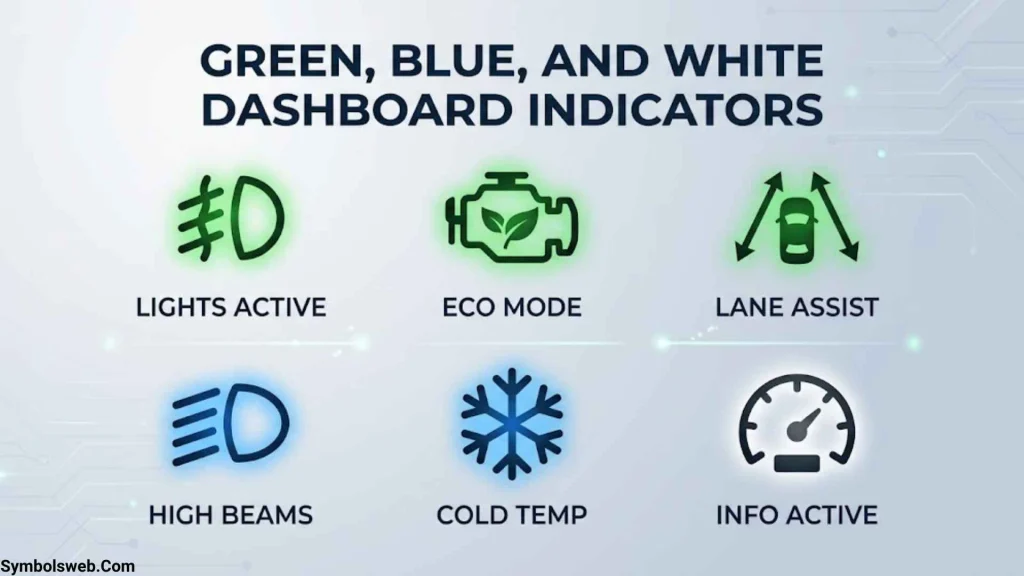
Not every dashboard icon signals trouble. Many vehicle dashboard indicators simply tell you which features are operating or selected.
Turn Signal and Hazard Warning Indicators
Green arrows typically flash when you activate the left or right turn signal. If the arrows flash unusually quickly, check the exterior signal lamps because a bulb or circuit may have a problem.
Hazard warning lights usually activate both turn signals at once. Use them according to local traffic laws and the situation.
Headlight and High-Beam Symbols
Headlight symbols help you confirm which exterior lights are active. A blue high-beam indicator usually means the high beams are switched on.
Remember to dip your high beams when approaching other drivers or following another vehicle closely. Bright headlights can temporarily impair other drivers’ vision.
Some vehicles also display indicators for automatic headlights, fog lights, or adaptive lighting systems. The symbols vary, so consult the manual if you’re unsure.
Cruise Control and Adaptive Cruise Control
A cruise control indicator usually shows that the system is active or ready. Adaptive cruise control adds distance monitoring and may adjust speed to maintain a gap from the vehicle ahead.
An indicator doesn’t always mean the system is currently controlling speed. Some vehicles distinguish between standby, active operation, and temporary suspension.
Keep your attention on traffic and be ready to brake. Driver-assistance systems don’t replace the driver’s responsibility to control the vehicle.
Lane Assist and Other Driver Assistance Indicators
Lane-assistance symbols may show that a system is available, active, intervening, or temporarily unavailable. Some systems use different colors to distinguish these states.
Other indicators may relate to parking sensors, automatic start-stop, eco mode, sport mode, or four-wheel drive.
Because these features vary widely, use your vehicle’s manual to confirm whether an indicator represents normal operation or a fault.
Other Important Car Dashboard Symbols
Some dashboard icons don’t fit neatly into the major warning-light categories, but they still deserve attention.
Low Fuel Warning
The fuel-pump symbol indicates that the fuel level has reached a low threshold. The remaining driving distance depends on the vehicle, fuel consumption, traffic, terrain, and driving style.
Refuel as soon as practical rather than relying on the estimated remaining range. Running out of fuel can leave you stranded and may cause problems for some fuel systems.
Seat Belt Warning
The seat-belt symbol reminds you that one or more occupants may not have fastened their seat belts. Some vehicles also monitor the passenger seat and may react to a heavy object placed on it.
Fasten all seat belts and check the dashboard again. If the alert continues despite correctly fastened belts, the sensor or restraint system may need inspection.
Electronic Parking Brake Symbol
An electronic parking brake often uses a red “P” inside a circle or a related brake symbol. Depending on the vehicle, the indicator may show that the parking brake is engaged or that the system has a fault.
Release the parking brake according to the vehicle’s instructions. If the warning remains on, or the brake doesn’t release properly, don’t force the vehicle to move.
Washer Fluid and Wiper Indicators
A windshield with spray marks usually indicates low washer fluid. Refill the reservoir with an appropriate product, especially before a long drive or bad weather.
Some vehicles also display symbols for automatic wipers or rain-sensing features. If your windshield becomes dirty and washer fluid runs out, visibility can drop quickly.
Security and Immobilizer Indicators
A flashing security symbol may be normal when the vehicle is locked. It can show that the anti-theft system is armed.
If the vehicle won’t start and the security light behaves differently than usual, consult the manual. A key-recognition or immobilizer problem may prevent the engine from starting.
Transmission and Drivetrain Indicators
Transmission warnings can relate to overheating, a detected fault, or a selected driving mode. Four-wheel-drive and all-wheel-drive vehicles may also display status indicators for drivetrain settings.
If the vehicle reports a transmission fault or overheating condition, follow its instructions promptly. Don’t continue driving if the warning says to stop or the car behaves abnormally.
Which Dashboard Warning Lights Mean You Should Stop Driving?
Knowing when to stop is more important than memorizing every symbol. If a warning suggests a serious fault, find a safe place to pull over rather than trying to reach your destination.
| Warning or symptom | Recommended response |
| Oil pressure warning while the engine runs | Stop safely and turn off the engine |
| Engine overheating warning | Stop safely and follow the manufacturer’s cooling instructions |
| Brake warning with poor braking or a soft pedal | Stop and request assistance |
| Flashing check engine light with rough running | Reduce risk, stop safely, and arrange diagnosis |
| Battery light while driving | Find a safe place to stop and seek assistance if the warning persists |
| ABS light alone with normal braking | Check the manual and arrange prompt inspection |
| Low tire pressure | Reduce speed, stop safely, and check the tires |
| Smoke, burning smell, severe noise, or sudden steering difficulty | Stop safely and seek professional help |
These are general guidelines, not universal rules for every vehicle. The owner’s manual may provide more specific instructions for a particular warning.
If stopping immediately would put you in danger, such as in a live traffic lane, focus on reaching the nearest safe location. Use hazard lights when appropriate, and don’t inspect the vehicle while standing in a dangerous position.
What Should You Do When a Dashboard Warning Light Comes On?
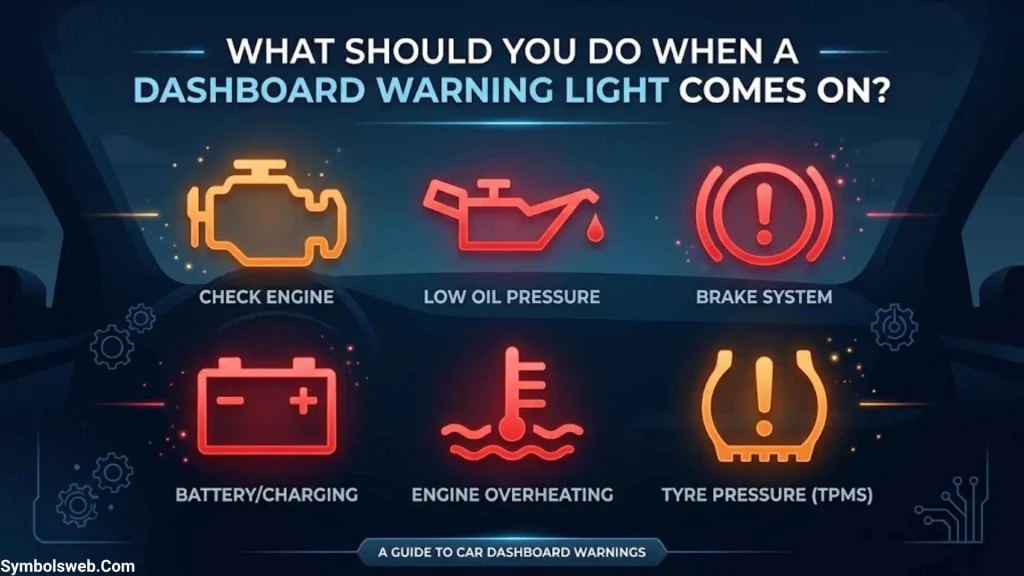
When a warning appears, your first job is to understand the risk. Don’t start pressing buttons or resetting alerts before you know what the symbol means.
Identify the Symbol and Check Its Color
Look at the symbol and note its color, whether it flashes, and when it appeared. Check for a message on the vehicle information display.
For example, an oil-can symbol usually points to an oil-pressure concern, while a fuel-pump symbol indicates low fuel. These warnings require different responses, even though both appear on the same dashboard.
Pay Attention to How Your Car Behaves
Your car’s behavior can help you judge the urgency of a warning. Notice whether the engine runs roughly, the steering becomes heavy, the brakes feel different, or the temperature gauge rises.
Also look for smoke, fluid leaks, burning smells, or unusual noises. These signs may indicate a serious problem even if the warning light doesn’t look familiar.
Pull Over Safely When Necessary
If the warning indicates overheating, low oil pressure, or a serious brake problem, stop as soon as it’s safe. Switch off the engine when the vehicle’s instructions call for it.
Choose a safe place away from moving traffic. Don’t stand beside a busy road to inspect the engine, and never open a hot cooling system.
Consult Your Owner’s Manual
Your owner’s manual explains the dashboard warning icons specific to your vehicle. It may also tell you whether a light indicates a fault, a temporary operating condition, or a feature that’s switched on.
If you don’t have a printed manual, look for the official digital version on the manufacturer’s website. Match the manual to your exact model year and trim when possible.
Arrange Proper Diagnosis and Repair
Some warnings need a simple maintenance step. Others require specialized testing.
An appropriate OBD-II scanner can read many engine and emissions-related diagnostic trouble codes. However, a basic scanner may not access every airbag, ABS, transmission, or manufacturer-specific system.
A diagnostic code is a starting point, not always a final answer. A mechanic may need to inspect wiring, test sensors, check fluid levels, or perform additional measurements before identifying the actual fault.
Don’t erase a warning code simply to make the light disappear. Fix the underlying problem first, then follow the proper procedure to clear the warning if needed.
Why Do Dashboard Warning Lights Turn On?
Your vehicle may illuminate a warning light because a sensor detects a problem, a system reaches a particular operating condition, or scheduled maintenance becomes due.
Understanding the common causes can help you describe the problem accurately when you contact a repair shop.
Mechanical Problems
Mechanical faults can affect engine performance, cooling, braking, and transmission operation.
Common examples include:
- Low engine oil or inadequate oil pressure
- Coolant leaks or engine overheating
- Worn brake components
- Transmission overheating
- Damaged belts or other mechanical parts
A single warning doesn’t always identify the exact failed component. For instance, an overheating alert may result from low coolant, a thermostat problem, or a cooling fan that isn’t working correctly.
Electrical and Charging System Problems
Modern vehicles depend on electrical power to operate sensors, control modules, lights, and other equipment.
A battery warning may result from an alternator fault, damaged wiring, loose connections, or a failing battery. Some vehicles may display additional alerts when low voltage affects several electronic systems.
If multiple warnings appear together, don’t assume every component has failed independently. A shared electrical problem may be responsible.
Sensor and Electronic System Faults
Electronic monitoring systems rely on sensors to measure conditions such as wheel speed, engine operation, tire pressure, and temperature.
A damaged sensor, corroded connector, wiring fault, or control-module issue can trigger a warning. However, a sensor warning doesn’t always mean the sensor itself is defective. It may be reporting a genuine problem elsewhere in the vehicle.
Proper diagnosis helps prevent unnecessary parts replacement.
Maintenance and Environmental Factors
Not every warning means a major mechanical failure. Some alerts relate to ordinary maintenance or changing conditions.
Examples include:
- Low tire pressure during colder weather
- Scheduled oil or service reminders
- Low washer fluid
- A traction-control system responding to slippery pavement
- A diesel particulate filter that needs attention under the manufacturer’s specified conditions
Even when a warning has a simple cause, verify it before assuming the problem has been resolved.
How to Identify an Unknown Car Dashboard Symbol
If you see an unfamiliar icon, don’t guess based on its shape alone. A quick search can help, but the best match should come from a reliable source for your particular vehicle.
Follow these steps to identify car dashboard symbols and meanings accurately.
Find your vehicle’s exact details. Note the manufacturer, model, model year, and trim. Different versions of the same vehicle may use different features and indicators.
Check the dashboard message. A written message may explain the problem more clearly than the symbol itself.
Consult the owner’s manual. Look for the warning-light section or search the official digital manual for the symbol’s name.
Take a clear photo. If you can photograph the symbol safely while the vehicle is parked, compare it with the manual or share it with a qualified mechanic.
Use a diagnostic scanner when appropriate. An OBD-II scanner may help identify an engine or emissions-related fault. Remember that basic scanners don’t support every vehicle system.
Seek professional help when necessary. If the symbol relates to brakes, steering, airbags, oil pressure, or engine temperature, don’t delay action while trying to identify it yourself.
An unfamiliar warning becomes easier to handle when you combine the symbol, dashboard message, vehicle symptoms, and manufacturer’s guidance.
Do Dashboard Symbols Differ by Car Make and Model?
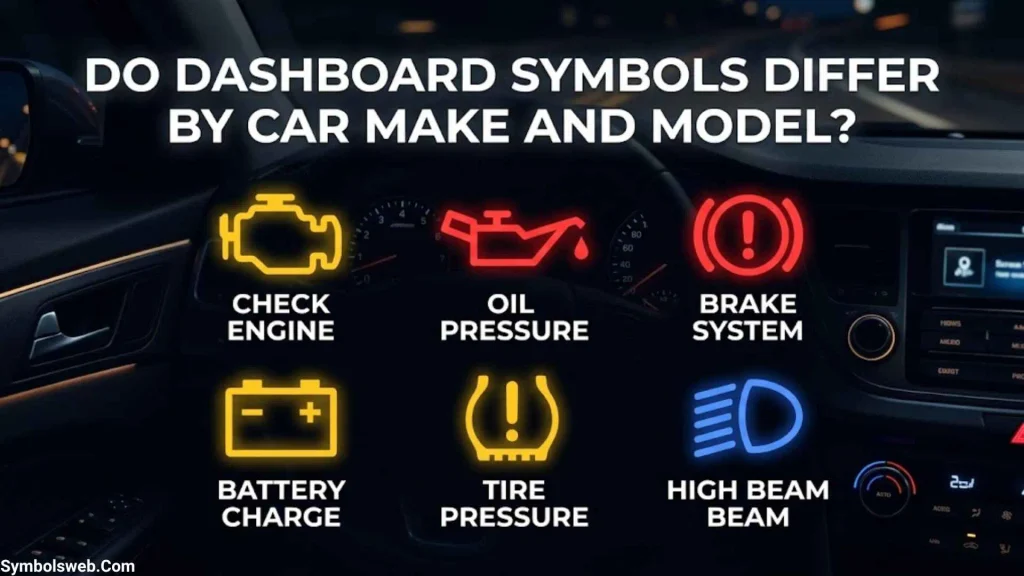
Yes. Many automotive dashboard symbols follow widely recognized conventions, but manufacturers don’t use one identical symbol set across every vehicle.
The same general system may appear differently between brands. Some vehicles display a standalone warning light, while others pair it with a written message or a detailed graphic on the instrument cluster.
Differences can also depend on the vehicle’s powertrain and equipment.
- Gasoline vehicles commonly display engine management, oil pressure, coolant temperature, and emissions-related indicators.
- Diesel vehicles may include glow plug, diesel particulate filter, or diesel exhaust fluid warnings.
- Hybrid vehicles may display high-voltage system and hybrid powertrain alerts.
- Electric vehicles may show battery, charging, regenerative braking, and electric drivetrain warnings.
- Vehicles with advanced driver assistance may include indicators for lane keeping, adaptive cruise control, collision warnings, and sensor availability.
Even when two symbols look alike, their meanings or recommended responses may differ. Always use the manual for your specific vehicle rather than relying entirely on a generic dashboard symbol chart.
Frequently Asked Questions About Car Dashboard Symbols
What do dashboard warning lights mean?
Dashboard warning lights tell you that a vehicle system needs attention, a fault may exist, or a feature is operating. Some indicate urgent mechanical problems, while others serve as maintenance reminders or status indicators. Check the symbol, its color, any accompanying message, and your owner’s manual to determine the correct response.
What do red dashboard warning lights mean?
Red dashboard warning lights commonly indicate urgent conditions that require immediate attention. Oil pressure, engine overheating, and serious brake-system warnings are important examples. Depending on the symbol, you may need to stop safely and switch off the engine. Always follow the instructions for your specific vehicle.
What does a yellow dashboard light mean?
A yellow or amber light usually indicates a fault, a system limitation, or a condition that needs checking. Common examples include the check engine light, tire pressure warning, ABS warning, and traction-control fault. Some allow cautious driving to a safe location, but others require a quicker response.
Can I drive with a dashboard warning light on?
It depends on the warning and how the car behaves. A green turn-signal indicator is normal, while an oil pressure warning or engine overheating alert may require you to stop. If you notice unusual noises, smoke, poor braking, heavy steering, or a flashing check engine light, pull over safely and seek assistance.
Which dashboard warning lights mean stop driving immediately?
An oil pressure warning while the engine runs, an overheating warning, and a brake warning accompanied by abnormal braking commonly require you to stop as soon as it’s safe. A flashing check engine light with rough running can also indicate a serious problem. Follow the owner’s manual and don’t continue if the vehicle is unsafe.
What does the check engine light mean?
The check engine light indicates that the engine management or emissions system has detected a problem. Possible causes include a loose fuel cap, a faulty sensor, an ignition problem, or an engine misfire. A steady light generally requires prompt diagnosis, while a flashing light may indicate a more serious fault.
Why is my battery warning light on while driving?
A battery symbol that illuminates while driving often indicates a charging-system problem. The alternator, wiring, drive belt, or battery connections may be responsible. The car could eventually lose electrical power. Find a safe place to stop and seek assistance if the warning persists.
How do I reset a dashboard warning light?
The correct procedure depends on the warning. Some maintenance reminders can be reset after the required service, while fault warnings may need diagnostic testing and repair. Don’t disconnect the battery or clear codes simply to hide a warning. Confirm the cause first and follow the manufacturer’s reset procedure.
Why does my tire pressure light stay on after inflating the tires?
The light may remain on because one or more tires still need air, the pressure hasn’t been measured correctly, or the system needs time to update. A slow puncture or faulty tire-pressure sensor may also cause the warning. Check every tire against the recommended cold pressure and consult the manual for any required reset procedure.
Where can I find the meaning of my car’s dashboard symbols?
Start with the owner’s manual for your exact make, model, and year. You can also check the manufacturer’s official website or a trusted automotive guide. If the symbol remains unclear or relates to a critical vehicle system, ask a qualified mechanic to identify it.
Final Thoughts on Car Dashboard Symbols and Their Meanings
Understanding car dashboard symbols helps you respond to vehicle problems before they become more serious. Red warnings often demand urgent attention, amber alerts commonly call for investigation, and green, blue, or white indicators frequently show that a feature is active. However, the symbol and your vehicle’s instructions matter more than color alone.
When a warning appears, identify it, check how your car behaves, and follow the manufacturer’s guidance. Don’t ignore a persistent alert or reset it without understanding the cause. A little attention now can help protect your safety, prevent avoidable damage, and keep your car ready for the road.

Jordan Hayes is a writer with a passion for exploring the history, meanings, and cultural significance behind symbols from around the world. He enjoys turning complex topics into clear, engaging content that anyone can understand. Jordan is also the fictional author of The Silent Language of Ancient Marks and Hidden Symbols Beyond the Surface, two original book concepts created for his author profile. When he’s not writing, he spends time researching myths, traditions, and forgotten stories that inspire his work. His goal is to help readers discover the deeper meanings behind the symbols they encounter every day.
 Eliana Foster
 Ethan Holloway