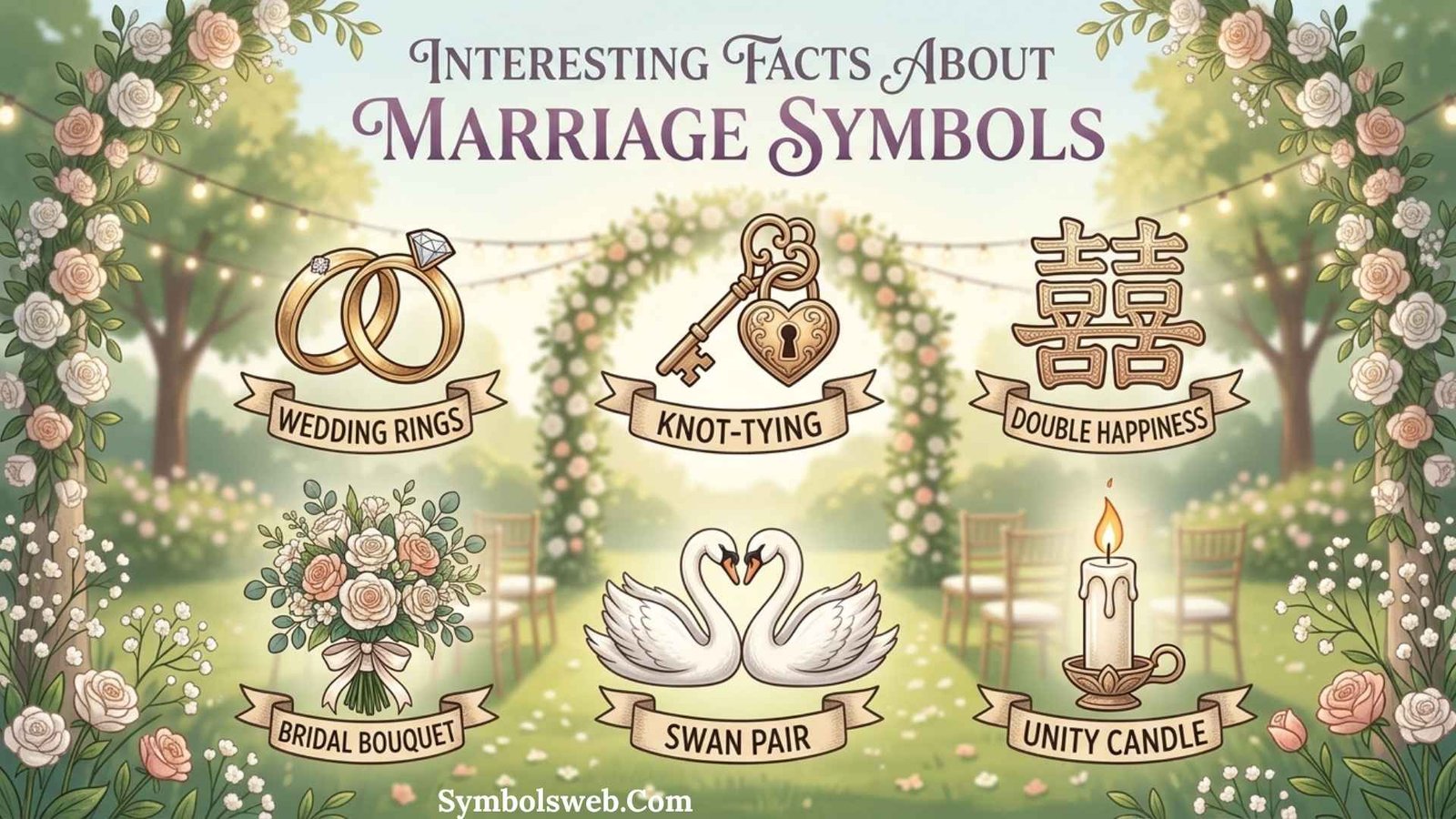
Marriage is a beautiful relationship between two people who promise to love, respect, and support each other. I believe that marriage symbols represent the special bond between a husband and wife. You can see these symbols in many cultures and traditions around the world.
Marriage symbols, such as rings, flowers, hearts, and white dresses, have special meanings. I think these symbols show love, commitment, unity, and trust. When you see a wedding ring, you can understand that it represents the promise of staying together and caring for each other.
In my opinion, marriage symbols make weddings more meaningful and memorable. They remind you that marriage is not only about a wedding ceremony but also about love, respect, and lifelong companionship. These symbols help you understand the importance of the relationship between two people.
Marriage Symbols: (Quick Answer)
Marriage symbols are traditional signs that represent the love, commitment, trust, and unity shared between two people. Wedding rings, hearts, flowers, and other symbols are commonly used to express these feelings. Each symbol has its own meaning and helps make a marriage and wedding ceremony more special and memorable.
Quick Facts About Marriage Symbols
| Aspect | Information |
| Origin | Ancient civilizations including Egypt, Mesopotamia, Greece, and Rome |
| Historical Significance | Used to signify legal, spiritual, and social unions |
| Main Meaning | Love, commitment, unity, and partnership |
| Spiritual Meaning | Sacred bond, soul connection, and divine blessing |
| Cultural Importance | Represents family continuity and social stability |
| Modern Usage | Wedding ceremonies, jewelry, tattoos, fashion, and art |
What Are Marriage Symbols?
Marriage symbols are visual signs, objects, patterns, or rituals that represent the bond between spouses. They communicate ideas of devotion, trust, fidelity, and shared life experiences.
The history of marriage symbols stretches back thousands of years. Ancient Egyptians exchanged rings made from woven reeds. The circular shape represented eternity because it had no beginning and no end. This powerful idea continues today in modern wedding rings.
Throughout history, societies developed unique ways to symbolize marriage. Some cultures used knots, others used crowns, veils, sacred cords, or symbolic animals. Although the forms varied, the message remained remarkably similar: two lives becoming connected.
As civilizations evolved, marriage symbols gained religious, legal, and emotional significance. They became visible reminders of promises made before family, community, and sometimes divine powers.
Today, marriage symbols remain deeply meaningful because they transform abstract emotions into tangible representations people can see, wear, and cherish.
Marriage Symbols and Meanings
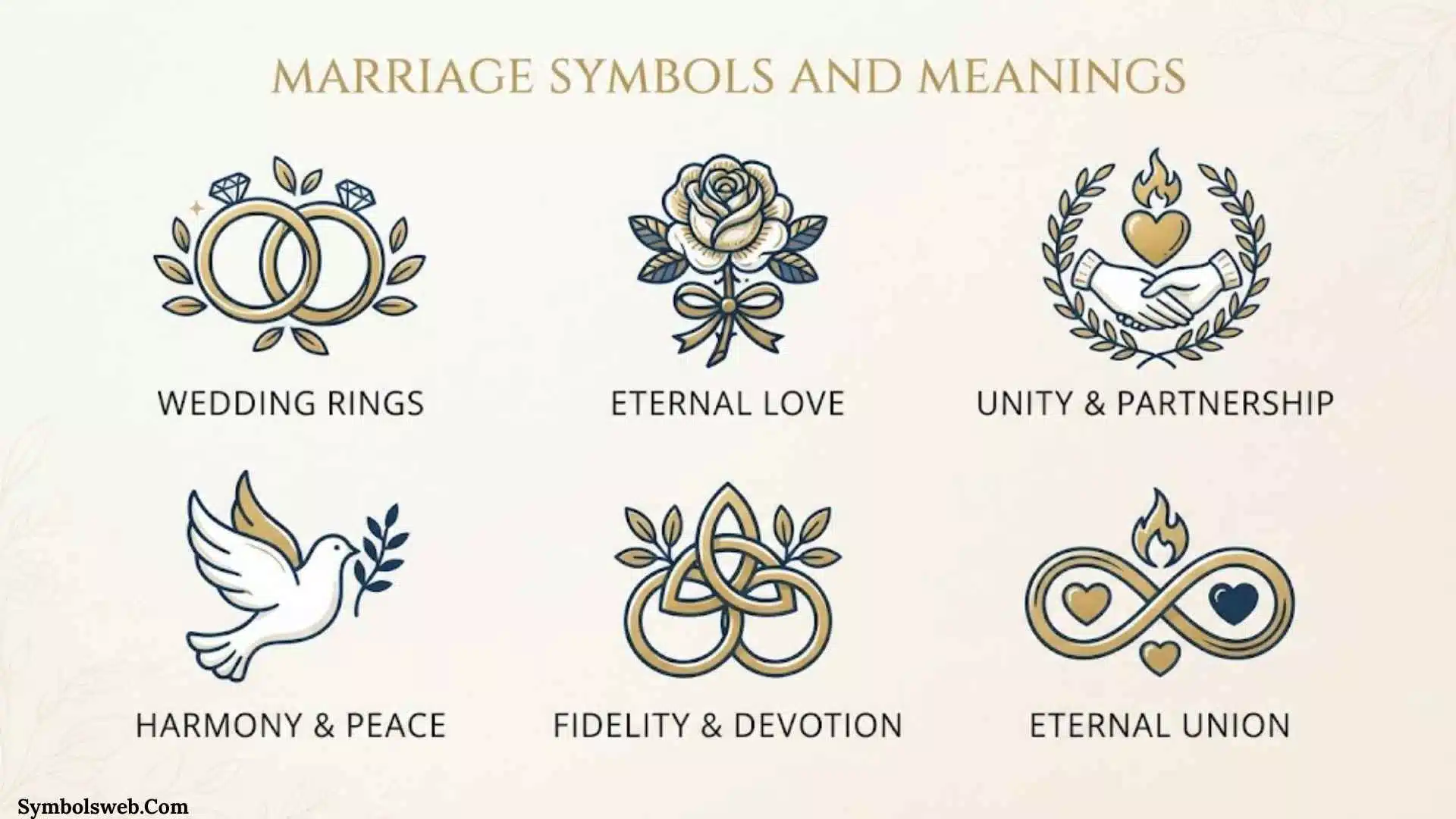
Marriage symbols represent love, commitment, partnership, unity, and the promise of building a life together. Some are simple objects, such as rings and wedding bands, while others come from religious traditions, ancient customs, or cultural ceremonies. Their meanings can also change from one society to another.
The wedding ring is one of the most widely recognized marriage symbols because its circular shape can represent continuity and an unbroken bond. Other common symbols include intertwined hands, hearts, flowers, doves, knots, crowns, and ceremonial objects used during wedding rituals.
Understanding marriage symbols can add meaning to wedding decorations, invitations, jewelry, tattoos, vows, and personal keepsakes. The best symbol is often the one that reflects the couple’s values, culture, faith, or shared story.
Ancient Symbols of Marriage
Ancient marriage symbols often focused on unity, fertility, loyalty, protection, and the joining of two families. Different civilizations used objects, gestures, and religious imagery to represent the importance of marriage.
The circle was especially meaningful because it had no obvious beginning or end, making it a natural representation of an enduring relationship. Knots and linked forms were also used to express the idea of two lives becoming connected.
Flowers, sacred plants, ceremonial clothing, exchanged gifts, and shared meals could also carry marital meaning. In many ancient traditions, marriage was more than a romantic relationship; it could connect families, communities, traditions, and religious responsibilities.
Marriage Symbols in Different Cultures
Marriage symbols vary widely around the world because every culture has its own history, beliefs, and wedding customs. A symbol that represents commitment in one culture may have a completely different meaning somewhere else.
Wedding rings are common in many modern societies, but they are not the only symbols of marriage. Henna, ceremonial necklaces, crowns, cords, special garments, flowers, coins, and sacred objects can all represent marital commitment in different traditions.
Looking at marriage symbols across cultures shows that the idea of partnership is expressed in many creative ways. Despite these differences, many traditions share themes such as loyalty, unity, family, prosperity, and lifelong companionship.
Celtic Marriage Symbols
Celtic marriage symbolism is strongly associated with ideas of connection, continuity, loyalty, and shared life. One of the best-known examples is the Celtic knot, whose interwoven lines can suggest an enduring connection between people.
Handfasting is another important Celtic-associated wedding tradition. During a handfasting ceremony, the couple’s hands may be joined with a cord or cloth, creating a visual representation of their commitment.
Celtic-inspired rings, knots, spirals, and interwoven designs are popular choices for wedding jewelry and tattoos. Their appeal comes from the way the patterns visually communicate connection without requiring words.
Christian Marriage Symbols
Christian marriage symbols often focus on covenant, love, faithfulness, unity, and the spiritual responsibilities of married life. The wedding ring is widely used in Christian weddings as a visible reminder of a couple’s commitment.
The cross can also carry meaning in a Christian marriage because it connects the relationship with Christian faith and devotion. A Bible, wedding vows, joined hands, and church ceremony may similarly represent the spiritual dimension of marriage.
Christian wedding symbolism differs among denominations and communities. Some traditions place greater emphasis on particular rituals, while others focus more strongly on the couple’s vows and commitment before God and their community.
Hindu Marriage Symbols
Hindu marriage traditions include several important symbols and ceremonial elements, although customs can differ significantly between regions, communities, and families. Many of these symbols represent commitment, prosperity, family responsibilities, and the sacred nature of marriage.
The mangalsutra is a well-known marital symbol in many Hindu communities. It is traditionally associated with a married woman and carries cultural and religious significance. Sindoor is another important symbol in many Hindu traditions, although its use and meaning can vary.
The wedding fire, or sacred fire, is also central to many Hindu wedding ceremonies. Rituals performed around the fire can represent sacred promises and the couple’s shared responsibilities. Together, these traditions show that Hindu marriage symbolism often connects love with duty, family, spirituality, and social life.
Viking Marriage Symbols
Viking era marriage customs are often discussed through historical evidence, archaeology, literature, and later interpretations of Norse culture. Symbols associated with Norse traditions may include interwoven patterns, protective objects, rings, and imagery connected with gods, family, and fate.
The Norse concept of marriage could involve family alliances, social responsibilities, property, and community relationships in addition to affection between partners. This makes Viking marriage symbolism different from the modern idea of a wedding as primarily a romantic celebration.
Modern Viking-inspired wedding designs often use knotwork, runic-style lettering, Nordic animals, trees, or Norse mythological imagery. However, modern interpretations should be distinguished from what is firmly established about historical Viking wedding practices.
Catholic Marriage Symbols
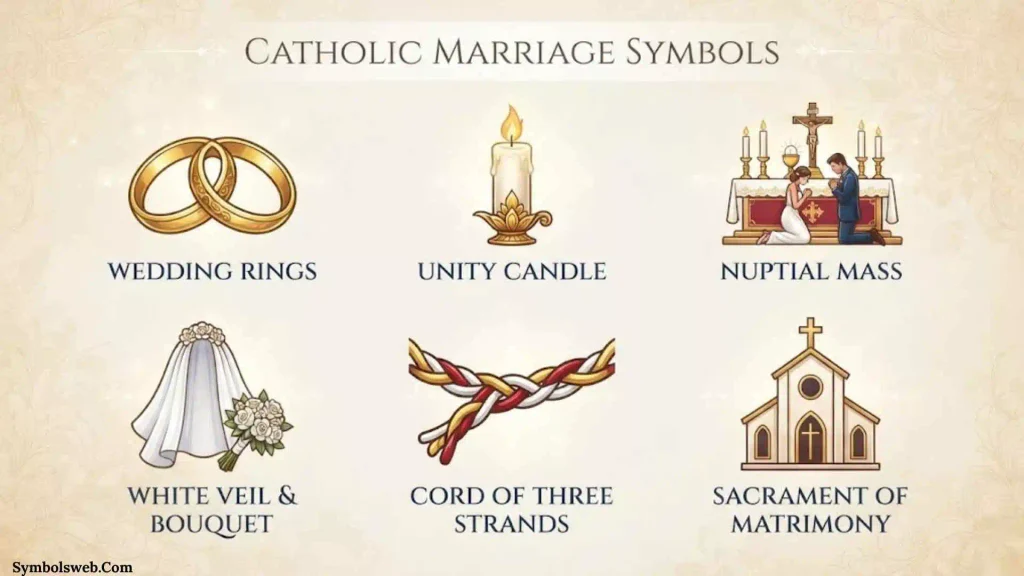
Catholic marriage symbolism centers on the sacramental nature of marriage, the couple’s vows, and their commitment to one another. Wedding rings are commonly exchanged as visible reminders of fidelity and lifelong commitment.
The church itself can become part of the symbolism because the marriage ceremony takes place within a religious setting and is connected with the couple’s faith. The Bible, cross, vows, and blessing can also represent the spiritual responsibilities of married life.
Catholic weddings may include additional traditions depending on local customs and cultural background. Some practices are universal parts of Catholic teaching, while others are regional customs rather than requirements of the sacrament itself.
Marriage Symbols Tattoos
Marriage symbol tattoos can provide a permanent way to represent love, commitment, partnership, or a shared journey. Couples may choose matching tattoos, complementary designs, or a single symbol that has special meaning to both people.
Popular ideas include infinity designs, interlocking rings, Celtic knots, hearts, initials, dates, flowers, meaningful symbols, and minimalist line art. Some couples prefer a subtle symbol that only they understand, while others choose a design that clearly represents marriage.
Before getting a marriage tattoo, it is worth considering whether the symbol has a meaning beyond its appearance. Researching cultural and religious symbols is especially important so that a design is understood and used respectfully.
Religious Marriage Symbols
Religious marriage symbols can represent the spiritual foundation of a relationship as well as love between two people. The meaning depends heavily on the faith tradition and the community in which the marriage takes place.
Crosses, sacred texts, ceremonial garments, rings, crowns, cords, prayer traditions, and ritual objects can all have marital significance in different religions. Some symbols represent God, while others represent the couple’s vows, unity, family, or spiritual responsibilities.
Because religious traditions are diverse, there is no single symbol that represents marriage for every faith. A meaningful choice should reflect the specific beliefs and traditions of the people using it.
Sacrament of Marriage Symbols
The sacrament of marriage is represented through several important elements in Catholic tradition. The couple’s free consent and marriage vows are central because they express the commitment that establishes the marital bond.
Wedding rings can serve as an outward reminder of this lifelong promise. The church setting, priest’s blessing, Scripture readings, and other elements of the wedding liturgy can also help express the spiritual meaning of the sacrament.
The symbolism points beyond the wedding day itself. Marriage is understood as a lasting covenant in which spouses commit themselves to love, fidelity, and a shared life within their faith.
Love Marriage Symbols
Love marriage symbols represent affection, emotional connection, partnership, and the decision to share life with another person. Hearts and wedding rings are among the most recognizable examples, but many other symbols can express the same idea.
Infinity symbols can suggest an enduring relationship, while intertwined lines can represent two lives becoming connected. Flowers may symbolize growth and affection, and birds or doves can represent peace, companionship, or devotion.
For a personal symbol, couples can also use meaningful places, dates, initials, shared objects, or designs inspired by their story. A symbol becomes more powerful when its meaning is connected to a real experience rather than chosen only because it looks attractive.
Marriage Symbol Text
Marriage symbol text can be useful when you need a simple character, phrase, or visual element for a wedding invitation, social media post, profile, tattoo concept, or digital design. Common text-based ideas include the heart symbol, infinity symbol, linked-heart designs, and short expressions of commitment.
Simple combinations can make digital wedding content visually appealing. For example, a heart paired with initials or a wedding date can create a personalized design without requiring a complicated graphic.
When choosing marriage symbol text, consider where it will be used. A minimalist symbol may work best for a profile or message, while a more decorative combination may be better suited to invitations, wedding stationery, or personalized artwork.
Gay Marriage Symbols
Gay marriage symbols can represent love, equality, commitment, visibility, and the right of same-sex couples to marry. The rainbow is one of the most widely recognized symbols associated with LGBTQ+ identity and equality.
Wedding rings, hearts, intertwined designs, and matching symbols can also represent marriage between same-sex partners. Some couples combine traditional wedding imagery with rainbow colors or other LGBTQ+ symbolism to create something more personal.
There is no single symbol that every gay married couple must use. Couples can choose traditional wedding symbols, LGBTQ+ symbols, or completely original designs that reflect their relationship and shared identity.
Deep Symbolic Meaning of Marriage Symbols
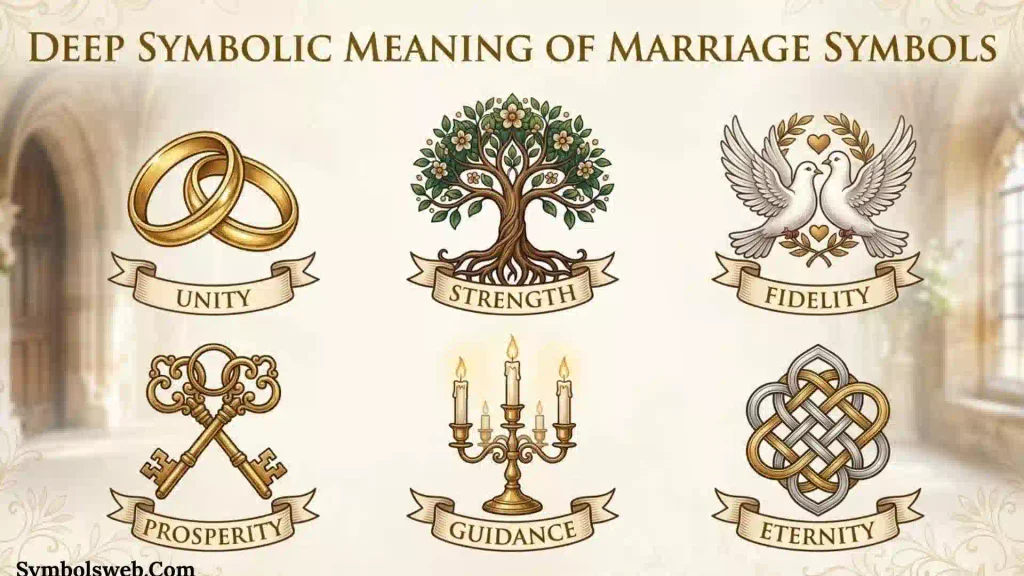
Spiritual Level
On a spiritual level, marriage symbols often represent the joining of two souls.
Many traditions view marriage as more than a legal contract. It is considered a sacred covenant that connects individuals on emotional, spiritual, and energetic levels.
The circle found in wedding rings symbolizes eternity and infinite love. Sacred knots represent lives woven together by destiny. Twin flames, intertwined circles, and sacred geometric patterns often symbolize spiritual harmony and balance.
Marriage symbols also remind people of values such as:
- Faithfulness
- Sacrifice
- Compassion
- Mutual growth
- Spiritual partnership
In many religious traditions, marriage symbolizes divine unity and sacred purpose.
Psychological Level
Psychologically, marriage symbols satisfy a deep human need for belonging and connection.
According to psychologist Carl Jung’s theories, symbols act as bridges between conscious and unconscious minds. Marriage symbols tap into universal archetypes such as:
- The Lover
- The Partner
- The Caregiver
- The Divine Union
These symbols help people feel secure and emotionally connected.
For example, wearing a wedding ring creates a constant reminder of commitment. This simple object reinforces identity, loyalty, and shared purpose.
Marriage symbols also help couples navigate life’s challenges by serving as visible reminders of promises made during moments of love and hope.
Cultural Level
Every culture uses marriage symbols to strengthen community bonds.
A wedding ceremony is not only about two individuals. It often involves families, traditions, ancestors, and social responsibilities.
Marriage symbols communicate:
- Family continuity
- Social acceptance
- Cultural identity
- Community support
- Shared values
Whether through traditional clothing, ceremonial objects, or sacred rituals, marriage symbols help preserve cultural heritage across generations.
Types and Variations of Marriage Symbols
Wedding Rings
Visual Description: Circular bands worn on fingers.
Meaning: Eternal love and commitment.
Symbolism: Endless connection without beginning or end.
Cultural Connection: Found worldwide.
Where It Appears: Weddings, jewelry, art, literature, and popular culture.
Celtic Love Knot
Visual Description: Interwoven loops with no visible start or finish.
Meaning: Eternal partnership.
Symbolism: Unbreakable bond and everlasting devotion.
Cultural Connection: Ancient Celtic traditions.
Where It Appears: Jewelry, manuscripts, and wedding decorations.
Interlocking Circles
Visual Description: Two overlapping circles.
Meaning: Unity of two individuals.
Symbolism: Shared life while maintaining individuality.
Cultural Connection: Common in Western traditions.
Where It Appears: Wedding logos, jewelry, and artwork.
Doves
Visual Description: Pair of white birds.
Meaning: Peace, loyalty, and harmony.
Symbolism: Faithful companionship.
Cultural Connection: Christian and global traditions.
Where It Appears: Weddings, paintings, poetry, and religious art.
Crowns
Visual Description: Decorative headpieces.
Meaning: Honor and sacred union.
Symbolism: Royal dignity and spiritual blessing.
Cultural Connection: Eastern Orthodox wedding ceremonies.
Where It Appears: Religious weddings and ceremonial artwork.
Handfasting Cord
Visual Description: Decorative cord wrapped around joined hands.
Meaning: Binding commitment.
Symbolism: Two lives tied together.
Cultural Connection: Celtic and neo-pagan traditions.
Where It Appears: Marriage ceremonies and spiritual practices.
Marriage Symbols Across Different Cultures
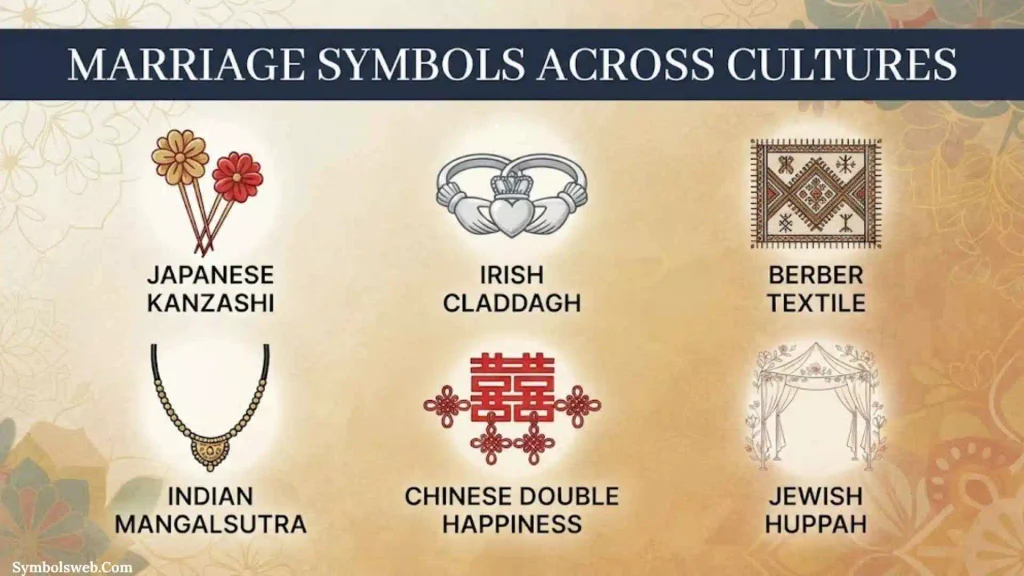
Ancient Egypt
Ancient Egyptians viewed marriage as a sacred partnership.
The wedding ring originated here, where circles represented eternity and the endless cycle of life. Rings were commonly crafted from reeds, leather, or bone.
Marriage symbols emphasized eternal connection and continuity.
Ancient Greece
Greek marriage ceremonies included crowns known as stephana.
These crowns symbolized honor, divine blessing, and the union of two families. Greek mythology often linked marriage with divine order and social harmony.
Marriage was viewed as both a personal and civic responsibility.
Roman Culture
Romans popularized metal wedding rings.
The ring was often placed on the fourth finger because people believed a vein connected directly to the heart. This idea became known as the “vein of love.”
Roman marriage symbols highlighted loyalty, legal union, and family stability.
Eastern Traditions
Many Eastern cultures use red as a marriage symbol.
In China, red symbolizes luck, happiness, prosperity, and fertility. Traditional weddings feature red garments, decorations, and symbolic gifts.
In India, marriage symbols include:
- Mangalsutra necklaces
- Sindoor
- Sacred fire rituals
- Henna designs
These symbols represent commitment, protection, and spiritual union.
Indigenous Traditions
Many Indigenous cultures use nature-based marriage symbols.
Feathers, woven textiles, sacred circles, and ceremonial blankets often symbolize unity and mutual respect.
These traditions emphasize harmony between individuals, community, and nature.
Modern Interpretations
Modern couples increasingly personalize marriage symbols.
Popular contemporary symbols include:
- Matching tattoos
- Custom jewelry
- Infinity symbols
- Tree of life designs
- Personalized wedding logos
These adaptations allow couples to express unique identities while honoring traditional meanings.
Similar Symbols and Their Meanings
| Symbol | Similarity to Marriage Symbols | Difference |
| Heart | Represents love | Focuses on emotion rather than commitment |
| Infinity Symbol | Represents eternity | Does not specifically indicate marriage |
| Yin Yang | Symbolizes balance | Represents universal duality |
| Celtic Knot | Represents eternal connection | Often broader than marital relationships |
| Tree of Life | Represents growth | Focuses on interconnected existence |
Common Misconceptions
Many people assume marriage symbols only represent romantic love.
In reality, they often symbolize:
- Responsibility
- Loyalty
- Family
- Community
- Spiritual growth
- Shared purpose
Love is only one aspect of their deeper meaning.
Marriage Symbols in Mythology and Folklore
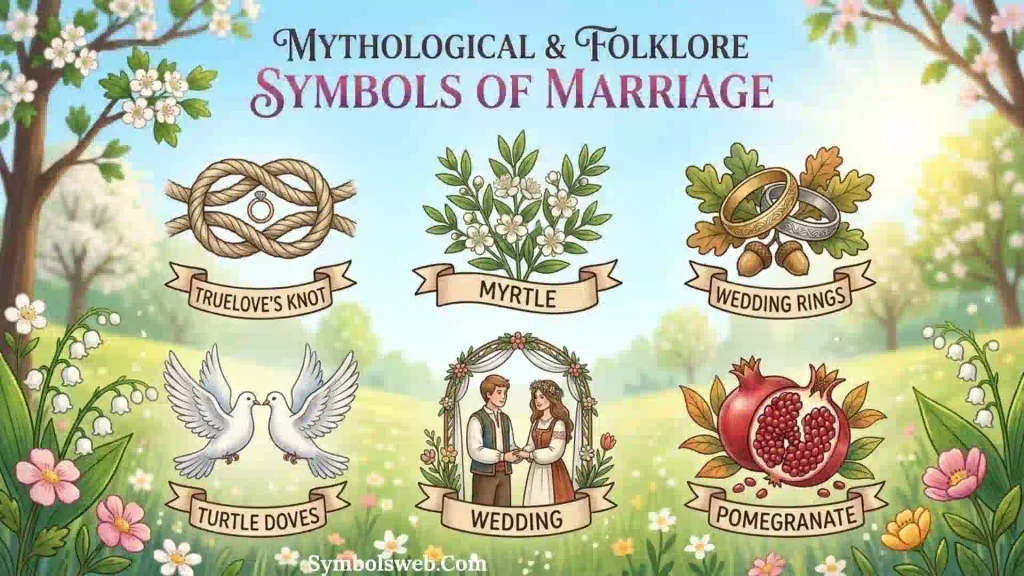
Marriage symbols appear throughout mythology and folklore worldwide.
In Greek mythology, the goddess Hera was considered the protector of marriage. Symbols associated with her included peacocks and crowns, representing dignity and fidelity.
Norse mythology celebrated marriage through sacred oaths witnessed by gods. Rings and ceremonial objects reinforced the seriousness of these commitments.
Celtic folklore frequently featured magical knots and intertwined patterns symbolizing destinies woven together by unseen forces.
Many fairy tales include symbolic marriage objects such as rings, crowns, or enchanted tokens that represent loyalty and true love.
These stories shaped modern ideas about romance and commitment, helping marriage symbols remain meaningful across generations.
Marriage Symbols in Art, Literature, Movies, and Pop Culture
Paintings
Artists often use wedding rings, doves, flowers, and joined hands to represent marriage.
These visual elements communicate love and partnership without requiring words.
Literature
Marriage symbols appear throughout classic literature.
Authors use rings, vows, gifts, and ceremonial objects to symbolize trust, loyalty, and emotional transformation.
Poetry
Poets frequently compare marriage to:
- Endless circles
- Intertwined vines
- Joined rivers
- Shared journeys
These symbolic images help express complex emotions.
Movies and Television
Modern films often use wedding rings as visual shorthand for commitment.
A ring can symbolize:
- Love
- Loss
- Betrayal
- Hope
- Reconciliation
Tattoos
Marriage-inspired tattoos have become increasingly popular.
Common designs include:
- Wedding dates
- Interlocking rings
- Infinity signs
- Initials
- Celtic knots
Fashion and Design
Marriage symbols influence jewelry, clothing, invitations, logos, and home decor.
Their enduring popularity reflects their emotional power and universal appeal.
Spiritual and Dream Meaning of Marriage Symbols
Dreaming about marriage symbols often reflects emotional relationships and personal growth.
Positive Interpretations
Marriage symbols in dreams may suggest:
- Harmony
- Commitment
- Emotional balance
- Personal transformation
- New beginnings
Cautionary Interpretations
Sometimes they may indicate:
- Fear of commitment
- Relationship concerns
- Internal conflicts
- Unresolved emotional issues
Meditation and Spiritual Experiences
Many spiritual traditions use marriage symbolism to represent:
- Inner balance
- Union of masculine and feminine energies
- Personal wholeness
- Divine connection
These interpretations extend beyond romantic relationships and reflect broader spiritual development.
Positive and Negative Meanings of Marriage Symbols
| Positive Meaning | Negative Meaning |
| Love | Possessiveness |
| Commitment | Restriction |
| Loyalty | Dependency |
| Unity | Loss of individuality |
| Stability | Resistance to change |
| Trust | Unrealistic expectations |
| Partnership | Emotional burden |
| Growth | Fear of separation |
The meaning often depends on personal experience and cultural context.
Why Humans Are Attracted to Marriage Symbols
Humans naturally think in symbols.
Long before written language existed, symbols helped people communicate important ideas.
Marriage symbols resonate because they represent universal experiences:
- Love
- Belonging
- Security
- Family
- Hope
Psychologists believe symbols create emotional shortcuts. A wedding ring immediately communicates commitment without requiring explanation.
Cultural memory also plays an important role. People inherit symbolic meanings from generations before them. Even when individuals do not fully understand a symbol’s history, they often feel its emotional significance.
This combination of psychology, tradition, and storytelling explains why marriage symbols continue to hold power in modern society.
Modern Uses of Marriage Symbols
Today, marriage symbols appear in many aspects of daily life.
Tattoos
Couples use symbolic designs to celebrate lasting bonds.
Jewelry
Wedding rings remain the most recognized marriage symbol worldwide.
Fashion
Designers incorporate hearts, knots, rings, and infinity motifs into clothing and accessories.
Branding
Many wedding-related businesses use marriage symbols to convey trust and romance.
Social Media
Couples share symbolic images to celebrate anniversaries and milestones.
Contemporary Spirituality
Marriage symbols often appear in meditation, relationship coaching, and spiritual practices.
Home Decor
Artwork featuring marriage symbols helps couples express shared values and memories.
Interesting Facts About Marriage Symbols
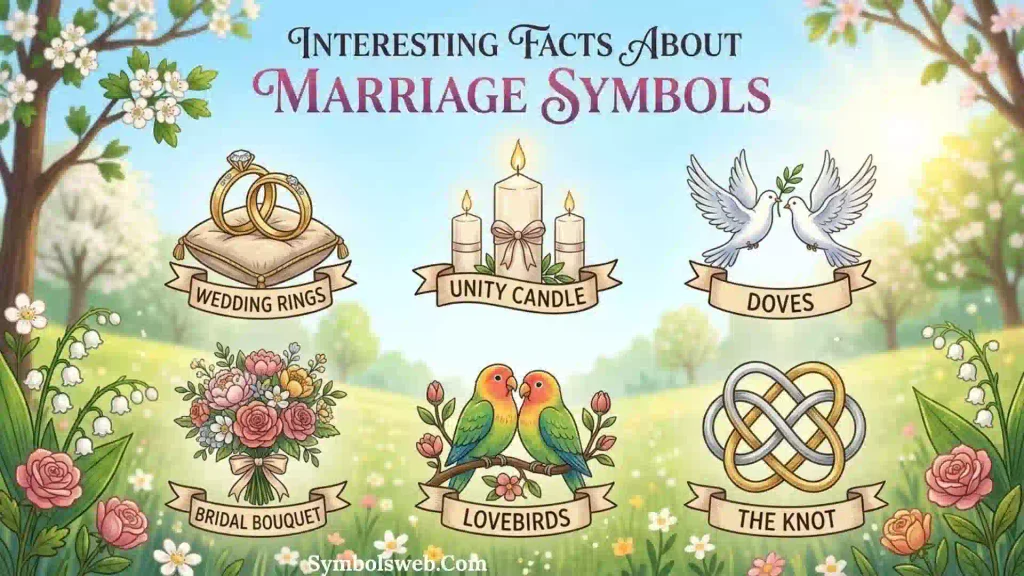
- The wedding ring tradition dates back over 4,000 years.
- Ancient Egyptians are often credited with creating the first wedding rings.
- The circular ring symbolizes eternity because it has no beginning or end.
- Celtic knots were originally used in ancient manuscripts before becoming wedding symbols.
- Doves often mate for life, making them powerful symbols of marital fidelity.
- Handfasting ceremonies inspired the phrase “tying the knot.”
- Red is considered the luckiest wedding color in many Asian cultures.
- Ancient Romans believed a vein connected the ring finger directly to the heart.
- Crowns are still used in some Orthodox Christian wedding ceremonies.
- Modern couples increasingly create personalized marriage symbols unique to their relationships.
Frequently Asked Questions
What is the most common marriage symbol?
The wedding ring is the most widely recognized marriage symbol worldwide. Its circular shape represents eternal love, commitment, and unity.
Why are rings used as marriage symbols?
Rings symbolize eternity because they have no beginning or end. This makes them powerful representations of lifelong commitment.
What do marriage symbols represent spiritually?
Spiritually, marriage symbols represent sacred union, soul connection, divine blessing, mutual growth, and the joining of two lives.
Which culture created wedding rings?
Ancient Egypt is widely credited with introducing wedding rings, using circular bands made from woven reeds and natural materials.
What does “tying the knot” mean?
The phrase comes from handfasting ceremonies where couples’ hands were bound together with cords, symbolizing commitment and unity.
Are marriage symbols the same in every culture?
No. Different cultures use unique symbols such as rings, crowns, knots, cords, fire rituals, or ceremonial garments. However, most represent love, loyalty, and partnership.
Conclusion
Marriage symbols are far more than decorative traditions. They are powerful expressions of love, commitment, unity, and human connection that have endured across centuries and civilizations. From ancient Egyptian rings to Celtic knots and sacred wedding rituals, these symbols tell a universal story about our desire to build lasting bonds. Their enduring power reminds us that while cultures may differ, the human longing for partnership, trust, and belonging remains remarkably timeless.

Hi, I’m Ethan Holloway, and I’ve always believed that a few meaningful words can change the way we think, feel, and live. I enjoy collecting timeless quotes, studying their deeper meanings, and sharing inspiring messages that help people stay motivated through every stage of life.
Over the years, I’ve explored thousands of famous sayings from writers, leaders, philosophers, and everyday people. My goal is to make wisdom easy to understand and useful for everyone.
Books by Ethan Holloway
- The Power of Everyday Quotes
- Words That Inspire Greatness
 Jordan Hayes
 Eliana Foster