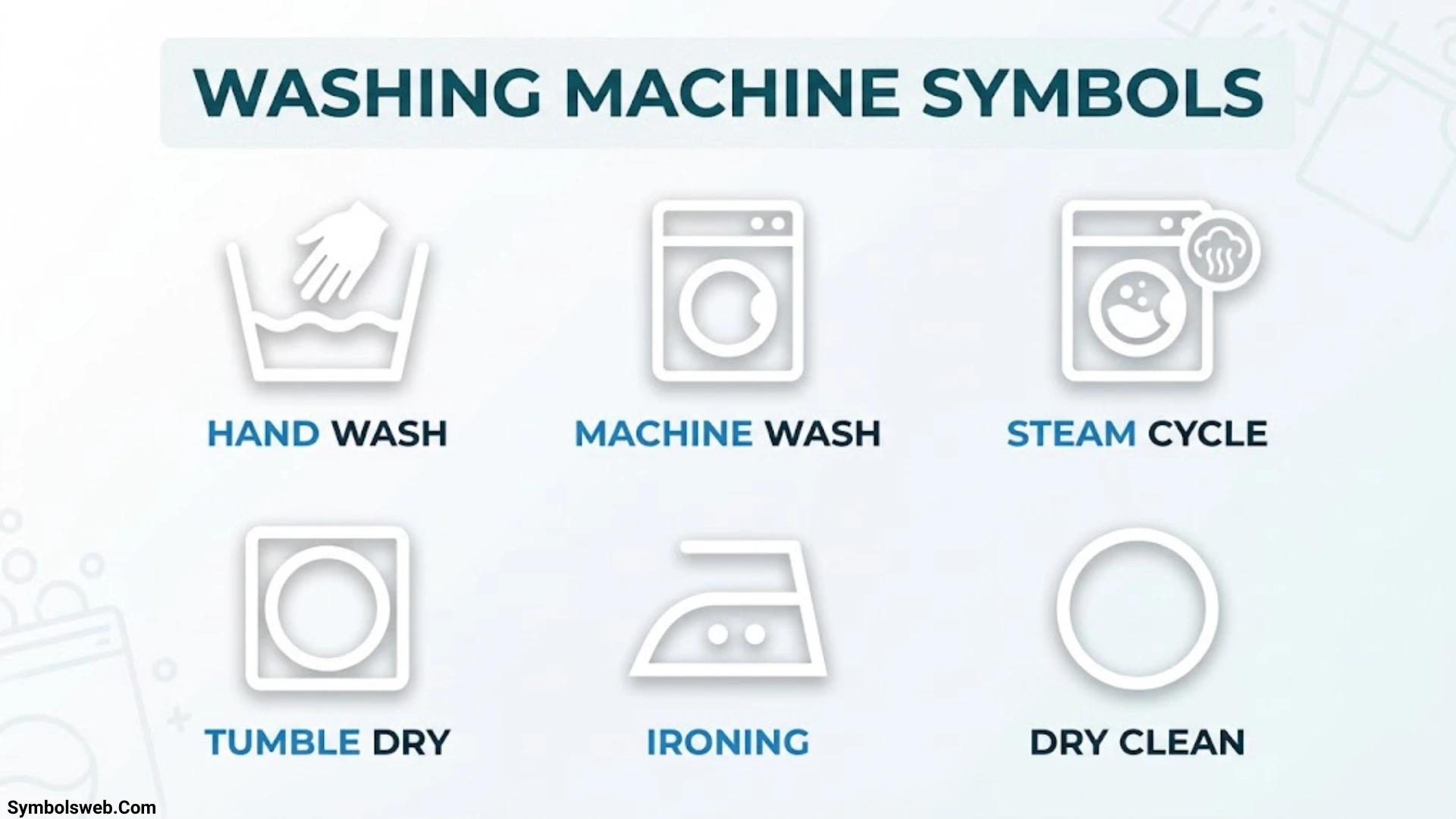
Washing machine symbols can look like a secret code when you’re trying to do a simple load of laundry. A small tub, triangle, circle, or series of dots can determine whether your favorite shirt comes out clean or gets damaged. The good news? Once you understand a few basic rules, washing symbols and meanings become much easier to recognize.
However, there are two different types of symbols to understand. Clothing care symbols appear on garment labels and tell you how to wash, dry, iron, bleach, or professionally clean an item. Washing machine symbols appear on the appliance itself and help you choose a cycle, temperature, spin speed, or extra function.
This guide explains both types of laundry symbols, including temperature numbers, drying instructions, bleach restrictions, ironing settings, and common washing machine programs. You’ll also learn how to read care labels, choose the right settings, and avoid mistakes that can shrink, fade, or damage your clothes.
Quick Guide to Washing Machine Symbols
The fastest way to understand laundry labels is to learn the five main symbol families. Each shape represents a different part of clothing care.
| Laundry symbol | What it means | What to check |
| Wash tub | Washing instructions | Temperature and cycle intensity |
| Triangle | Bleaching instructions | Whether bleach is allowed |
| Square | Drying instructions | Tumble drying or natural drying |
| Iron | Ironing instructions | Heat level and restrictions |
| Circle | Professional textile care | Cleaning method and special restrictions |
These symbols follow the international textile care labeling system described by GINETEX and ISO 3758. The symbols usually appear in the order washing, bleaching, drying, ironing, and professional care.
Three additional details help you read them correctly:
- Numbers inside a wash tub indicate the maximum washing temperature in degrees Celsius.
- Dots inside an iron or tumble-drying symbol indicate the permitted heat level.
- Lines beneath certain symbols indicate that a gentler treatment is needed.
A crossed-out symbol means you must not use the treatment it represents. Always follow the complete care label rather than interpreting one symbol in isolation.
How to Read Laundry Symbols on Clothing Labels
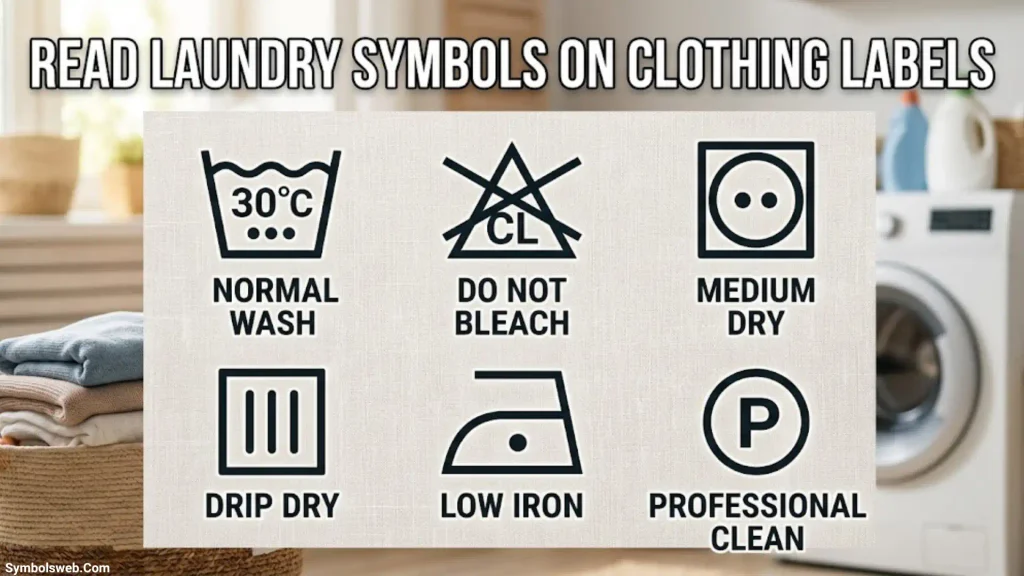
A clothing care label is your first source of guidance before washing a garment. Manufacturers use these instructions to indicate the maximum treatment the item can tolerate under the specified care process.
What Do the Five Main Laundry Symbols Mean?
The five main laundry care symbols cover different stages of garment maintenance.
- Wash tub: Tells you whether domestic washing is permitted and identifies temperature or cycle restrictions.
- Triangle: Indicates whether bleaching is allowed and which types may be suitable.
- Square: Explains how to dry the garment, including tumble drying and natural drying.
- Iron: Shows the permitted ironing temperature.
- Circle: Provides instructions for professional textile cleaning, including dry cleaning and certain wet-cleaning processes.
For example, a shirt may have a wash tub marked 30, an empty triangle crossed out, a square containing a circle with one dot, and an iron with two dots. Together, these symbols tell you to wash the shirt at no more than 30°C, avoid bleach, use low-heat tumble drying if permitted, and iron at a moderate temperature.
What Do Numbers Inside Washing Symbols Mean?
Numbers inside the wash tub indicate the maximum permitted washing temperature. They aren’t instructions to use that exact temperature every time.
| Temperature | General meaning |
| 20°C | Very cool washing |
| 30°C | Low-temperature washing |
| 40°C | A common temperature for everyday washable garments |
| 50°C | Higher-temperature washing when specified |
| 60°C | Hotter washing for items whose labels permit it |
These temperatures are examples, not a list of settings that every garment or washing machine supports. The care label determines the maximum allowed temperature.
For instance, if a garment displays 40°C, you can generally select a lower temperature when it suits the load and cleaning needs. Don’t exceed 40°C unless the garment’s instructions permit it.
What Do Dots on Laundry Symbols Mean?
Dots indicate heat levels on ironing and tumble-drying symbols. More dots generally mean a higher permitted heat level.
The same rule doesn’t apply to every symbol. A wash tub usually uses a printed temperature number, while a circle inside a square identifies tumble drying.
When reading the label, first identify the symbol’s shape. Then interpret the dots or numbers inside it.
What Do Lines Under Washing Symbols Mean?
Lines beneath a wash tub indicate that the garment needs gentler washing conditions.
- No line: Normal washing treatment within the stated temperature limit.
- One line: A milder wash with reduced mechanical action.
- Two lines: A very gentle wash intended for particularly sensitive items, such as suitable wool garments.
These lines matter because two garments may display the same temperature but require different levels of agitation. A 30°C wash with two lines calls for gentler treatment than a regular 30°C cycle.
What Does a Crossed Out Laundry Symbol Mean?
A cross over a symbol prohibits the treatment shown.
Examples include:
- A crossed-out wash tub means don’t wash the item using the indicated domestic washing process.
- A crossed-out triangle means don’t bleach the garment.
- A crossed-out tumble-drying symbol means don’t use a tumble dryer.
- A crossed-out iron means don’t iron the garment.
- A crossed-out professional-cleaning symbol means the indicated professional treatment isn’t permitted.
Don’t assume that a garment with a crossed-out wash tub can safely go through a gentle machine cycle. Check the complete care label and seek professional advice when necessary.
Washing Symbols and Their Meanings
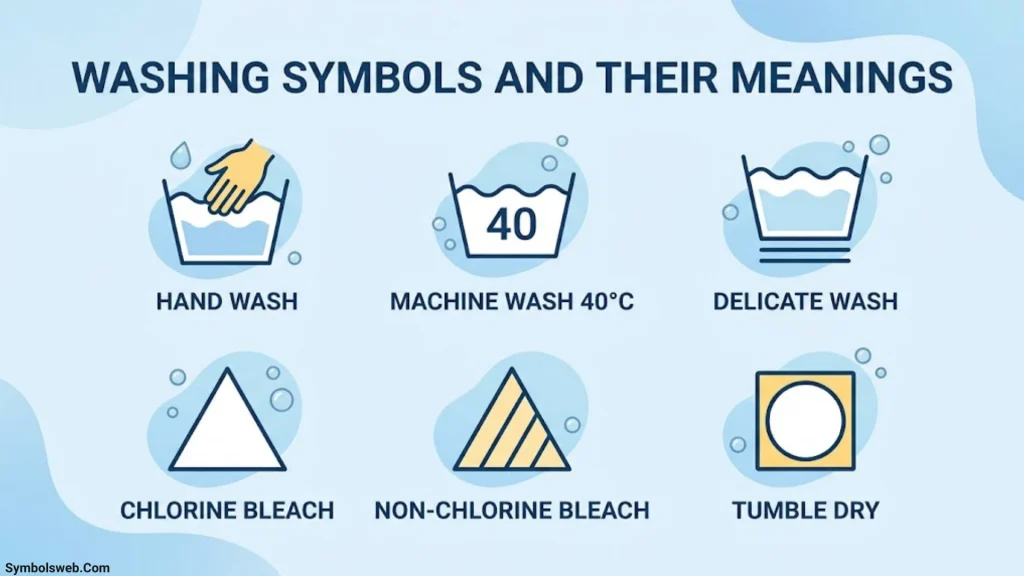
Washing symbols explain how to clean garments without exceeding their care limits. The wash tub is the most important symbol in this group because it communicates the permitted washing method and temperature.
Machine Wash Symbol
The wash tub resembles a small basin filled with water. It indicates that the garment can undergo the washing treatment specified by the rest of the symbol.
Check for a temperature number, underlines, or a hand inside the tub. These details change how you should handle the garment.
For example, a plain wash tub marked 40 permits a normal washing process at a maximum of 40°C. A similar tub with one underline requires a milder cycle.
Washing Temperature Symbols
The correct washing temperature symbols help you choose a suitable setting without exposing fabric to unnecessary heat.
- 20°C to 30°C: Useful for many lightly soiled garments and items that need cooler washing.
- 40°C: Suitable for many everyday clothes when their labels allow it.
- 50°C to 60°C: Appropriate only for garments whose care instructions permit these temperatures.
Cooler water can help reduce energy use and may protect some colors and delicate materials. However, cleaning performance also depends on the detergent, cycle, soil level, and garment type.
A higher temperature doesn’t automatically produce better results. Follow the label and choose a suitable cycle for the load.
Gentle and Very Gentle Wash Symbols
One or two horizontal lines beneath the wash tub indicate reduced mechanical action.
A gentle cycle typically uses less vigorous movement than a standard program. A very gentle cycle reduces mechanical action further and may also limit spinning.
These settings are useful for suitable delicate fabrics, wool, and some synthetic garments. Still, check the label before selecting a cycle. Not every delicate-looking item has the same washing requirements.
Hand Wash Symbol
A hand inside the wash tub means the garment requires hand washing under the conditions specified by its care label.
To hand-wash a suitable garment:
- Fill a clean basin with water at the permitted temperature.
- Dissolve an appropriate detergent in the water.
- Submerge the garment and move it gently through the water.
- Rinse without twisting or aggressively rubbing the fabric.
- Press out excess water carefully and reshape the item.
- Follow the label’s drying instructions.
Some modern washers have a hand-wash program. However, a machine setting isn’t automatically suitable for every hand-wash-only item.
Do Not Wash Symbol
A crossed-out wash tub means the garment must not undergo the prohibited domestic washing treatment.
Some materials, constructions, trims, or finishes can react badly to water or mechanical action. Washing may cause distortion, shrinkage, color changes, or damage to attached components.
Check whether the label specifies professional cleaning. If it does, take the garment to a qualified cleaner and show them the care instructions.
Wool and Delicate Clothing Wash Symbols
Wool, silk, and other delicate materials need particular attention because fiber type alone doesn’t determine the safest washing method.
A wool garment marked for very gentle machine washing may tolerate a suitable wool program. Another wool item may require hand washing or professional cleaning.
For the best results:
- Choose a program that matches the label.
- Avoid excessive agitation.
- Use an appropriate detergent.
- Don’t overload the washer.
- Follow the specified drying method to help preserve the garment’s shape.
Drying Symbols on Clothes
Drying symbols explain how to remove moisture after washing. They help you distinguish between tumble drying symbols, air-drying instructions, and methods that require the garment to lie flat.
Tumble Dry Symbol
A square containing a circle indicates tumble drying. Dots inside the circle identify the permitted heat level.
| Symbol description | Meaning |
| Square with a circle | Tumble drying is permitted under specified conditions |
| Circle with one dot inside a square | Low-heat tumbqale drying |
| Circle with two dots inside a square | Higher heat than the one-dot setting |
| Crossed-out square containing a circle | Do not tumble dry |
Follow the exact symbol and your dryer’s available settings. Appliance labels may use different wording, so consult the manual if you’re unsure which program matches the care instruction.
Low, Medium, and High Heat Drying Symbols
Dots help identify the permitted heat level, but the available settings vary between dryers.
A one-dot symbol generally calls for low-heat drying. Two dots permit a higher temperature. Some care-label systems include additional distinctions, so use the applicable symbol standard when interpreting unusual labels.
Lower heat can be useful for heat-sensitive garments. It may also increase drying time, so don’t assume that every item will dry at the same rate.
Do Not Tumble Dry Symbol
A crossed-out tumble-drying symbol means you should avoid using a tumble dryer.
Heat and repeated movement can damage certain garments, cause shrinkage, or affect their shape. Items with this instruction may need line drying, drip drying, or flat drying, depending on the remaining symbols.
Line Dry Symbol
A square with a curved line near the top represents line drying. Hang the garment to dry using a suitable line or rack.
This method allows air to circulate around the fabric. Support heavier garments appropriately so their weight doesn’t stretch the material while it’s wet.
Drip Dry Symbol
Vertical lines inside a square indicate a natural drying method involving dripping water.
The garment may need to hang while excess water drains away rather than being vigorously spun or wrung out. Check the remaining care instructions before deciding how to remove water after washing.
Dry Flat Symbol
A horizontal line inside a square indicates flat drying.
Lay the garment on a suitable flat surface and reshape it as needed. This method is especially useful for items that may stretch under their own weight when wet, including some wool garments and knitted clothing.
Avoid placing the garment on a surface that traps moisture for long periods. Good airflow helps the fabric dry more evenly.
Drying in the Shade
A diagonal line on a natural-drying symbol indicates that the garment should dry in the shade.
This instruction can help protect sensitive colors and materials from direct sunlight. Choose a ventilated area and allow enough space for air to circulate around the garment.
Bleaching Symbols on Clothing Labels
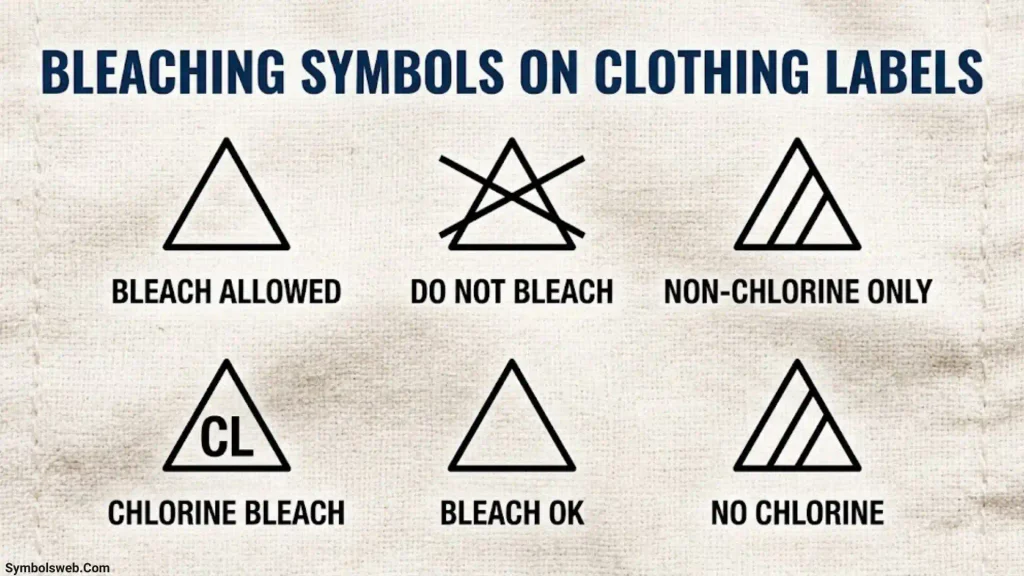
The triangle is the standard bleaching symbol on clothing care labels. It indicates whether bleach is permitted and, in some versions, which type you can use.
Empty Triangle Symbol
An empty triangle generally means that bleaching is permitted under the applicable care-label standard.
However, it doesn’t mean you should automatically pour bleach into every wash. Follow the bleach product’s instructions and check whether the garment needs a particular bleaching method.
Triangle With Diagonal Lines
A triangle containing two diagonal lines indicates that only oxygen-based, non-chlorine bleach is permitted under the relevant symbol system.
Avoid chlorine bleach on garments with this restriction. Check the product label before use because not every whitening or stain-removal product has the same ingredients.
Crossed-Out Triangle
A crossed-out triangle means do not bleach.
Use a suitable bleach-free detergent instead. This restriction applies even when the garment is white because fabric dyes, finishes, and fibers can react differently to bleaching agents.
How to Choose Bleach Safely
Before using a bleaching product, follow these precautions:
- Check the garment’s triangle symbol.
- Read the bleach product’s directions.
- Confirm that the product is suitable for the fabric and intended use.
- Never mix bleach with ammonia or acidic cleaning products.
- Don’t assume that white clothing is automatically bleach-safe.
Bleach restrictions help protect both the fabric and its color. When the label prohibits bleaching, choose another stain-treatment method suitable for the garment.
Ironing Symbols and Their Meanings
The iron-shaped symbol identifies the permitted ironing temperature. Dots inside the iron indicate the heat level, making it easier to choose an appropriate setting.
One-Dot Iron Symbol
One dot indicates low-temperature ironing. This is commonly associated with heat-sensitive fabrics and suitable synthetic garments.
Use the iron’s low setting and test an inconspicuous area if the care instructions permit ironing. Avoid leaving the iron in one place for too long.
Two-Dot Iron Symbol
Two dots indicate a moderate ironing temperature.
This setting may suit certain wool, silk, polyester, and viscose garments, depending on their care labels. Use the fabric’s instructions rather than relying on its appearance alone.
Three-Dot Iron Symbol
Three dots indicate a higher permitted ironing temperature.
Some cotton and linen garments can tolerate higher heat. However, construction, dyes, finishes, and blends can change the appropriate treatment.
Do Not Iron Symbol
A crossed-out iron means the garment must not be ironed.
Heat may damage the fabric, create permanent marks, or affect special finishes. If the label permits, hanging the garment carefully after washing may help reduce wrinkles without ironing.
Steam Ironing Restrictions
Some labels include additional restrictions relating to steam or particular ironing methods.
Follow these instructions alongside the temperature symbol. If the meaning isn’t clear, consult the manufacturer’s care information or ask a professional cleaner before applying heat.
Dry Cleaning Symbols Explained
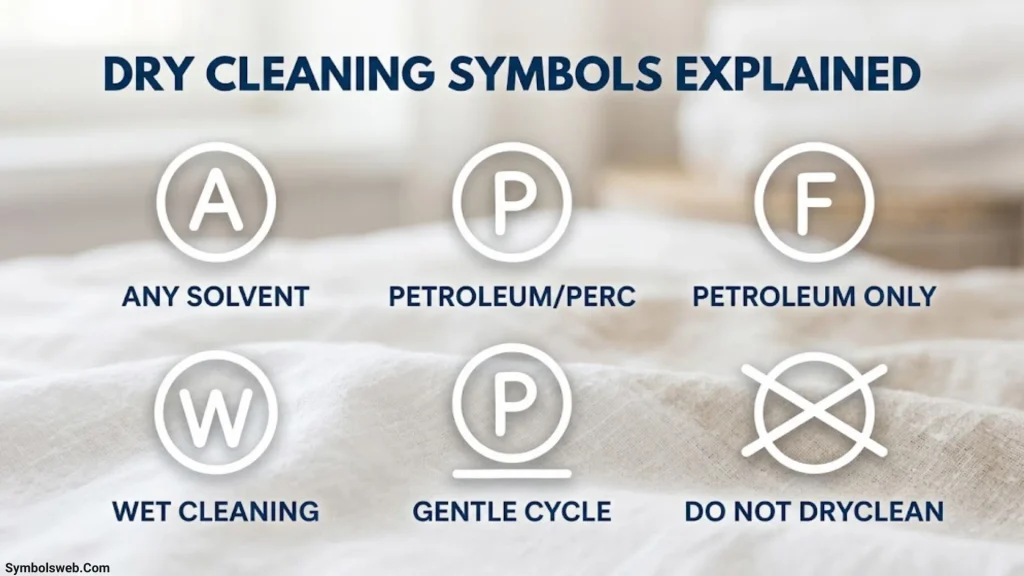
A circle on a clothing care label identifies professional textile cleaning. Depending on the symbol, it can specify a permitted cleaning process, solvent requirements, or restrictions.
Circle Symbol on Clothing Labels
The circle represents professional care rather than an ordinary household washing program.
Letters inside the circle can tell a professional cleaner which cleaning methods or solvents are suitable. Lines beneath the circle may indicate that a gentler professional process is required.
Dry Clean Only Symbol
A dry-cleaning instruction means you should follow the specified professional-care method rather than assuming the garment is safe for home washing.
Some garments have linings, structured shapes, special finishes, or materials that can react unpredictably to water. A professional cleaner can assess the label and select a suitable process.
Do Not Dry Clean Symbol
A crossed-out circle means the indicated professional dry-cleaning treatment isn’t permitted.
Don’t interpret this as permission to machine-wash the garment. Check the other care symbols to determine which alternative treatments are allowed.
Letters Inside Dry Cleaning Symbols
Letters such as P and F communicate information about professional cleaning methods.
They aren’t washer cycle abbreviations. Their exact technical meaning relates to the permitted professional process and applicable cleaning solvents.
Leave interpretation of these specialized instructions to a qualified cleaner when necessary. The GINETEX care symbol guide provides further detail on the standardized system.
Additional Professional Cleaning Instructions
Some professional-care symbols include underlines or other variations that indicate gentler treatment.
These details may relate to mechanical action, moisture, drying temperature, or the cleaning process. Show the complete label to the cleaner instead of describing only the circle or letter.
Washing Machine Control Panel Symbols and Settings

Clothing care labels and appliance control panels serve different purposes. The garment label tells you what treatment is permitted, while the washer’s controls let you select an available program.
Washing machine symbols can vary by manufacturer and model. The examples below describe common functions rather than universal icons. For a specific machine, consult its manual or the manufacturer’s support website.
Power and Start/Pause Symbols
The power icon usually switches the appliance on or off. Start/Pause begins a selected program or temporarily stops it, depending on the machine.
Some models require you to hold a button for several seconds to cancel a cycle. Follow the manual rather than assuming every control works the same way.
Cotton and Normal Wash Symbols
Cotton and Normal programs are designed for everyday washable loads that suit the selected cycle.
They may differ in water level, movement, temperature, and spin behavior. Choose the program according to the garment labels and the manufacturer’s recommendations.
Eco Wash Symbol
An Eco program aims to reduce energy use under its designed operating conditions.
Eco cycles may take longer than standard programs. A longer cycle doesn’t automatically mean the washer is wasting energy because the program may use time and lower-temperature washing to achieve its intended performance.
Quick Wash Symbol
Quick Wash is designed for suitable loads that need a shorter cycle.
It often works best with lightly soiled clothing and smaller loads. It may not provide the same cleaning performance as a longer program for heavily soiled garments.
Delicate and Hand Wash Settings
Delicate and Hand Wash programs generally use gentler movement than standard cycles.
They’re useful only when their treatment matches the garment’s care label. A delicate cycle doesn’t override a do-not-wash symbol or automatically make every hand-wash-only item machine-safe.
Wool and Synthetics Programs
A Wool program is designed for compatible wool items, while a Synthetics program suits certain synthetic and blended fabrics.
Their exact settings vary. Check the manual for program details and follow the care label for each garment.
Rinse and Spin Symbols
These programs perform different jobs:
- Rinse: Adds a rinse stage to help remove detergent from the load.
- Spin: Extracts water mechanically without running a complete wash.
- Rinse and Spin: Combines rinsing with a spin stage.
These functions are useful when a load needs an extra rinse or when you want to remove water without repeating the full wash.
Spin Speed Symbols
Spin speed is commonly measured in revolutions per minute (RPM).
A higher spin speed can remove more water from suitable fabrics, reducing the moisture left at the end of the cycle. Delicate garments may require lower speeds or no spin, depending on their labels.
Choose a setting that suits the load rather than automatically selecting the highest available speed.
Temperature Control Symbols
Temperature controls let you choose the water temperature for the selected program, when the machine allows adjustments.
Always keep the garment’s maximum permitted temperature in mind. If the label specifies 30°C, don’t select 40°C simply because the washer offers it.
Prewash, Extra Rinse, and Delay Start Symbols
These extra functions can help tailor a wash:
- Prewash: Adds an initial washing stage when supported by the program.
- Extra Rinse: Adds another rinse stage.
- Delay Start: Schedules the program to begin later.
Not every cycle supports every option. Check the appliance manual for availability and instructions.
Child Lock and Door Lock Indicators
A child-lock indicator usually shows that selected controls are locked to prevent unintended operation.
A door-lock indicator has a different purpose. It shows that the door is locked during a stage when opening it may be unsafe or the machine does not permit access.
Don’t force a locked door. Follow the manual’s instructions for pausing the cycle and waiting for the lock to release.
Drain, Water Supply, and Error Indicators
Some machines display warning icons when they detect a problem with drainage, water supply, or another system.
Their exact meanings depend on the model. Check the displayed code or icon against the manufacturer’s troubleshooting guide before attempting repairs.
Washing Machine Symbols Chart
Use this quick-reference chart to identify common programs and understand their general purpose.
| Setting | General purpose | Important consideration |
| Cotton | Washes compatible cotton items | Follow temperature and fabric instructions |
| Eco | Runs an energy-conscious program | Cycle time may be longer |
| Quick Wash | Shortens washing time | Best for suitable, lightly soiled loads |
| Delicate | Reduces washing intensity | Check the garment label |
| Wool | Washes compatible wool garments | Use only when machine washing is allowed |
| Rinse and Spin | Rinses and then spins | Useful when an extra rinse is needed |
| Spin | Removes water mechanically | Select a suitable speed |
| Child Lock | Locks selected controls | Operation varies by model |
| Delay Start | Schedules a later start | Follow the machine’s instructions |
For brand-specific icons, consult the manufacturer’s documentation. For example, Samsung’s washing machine icon guide explains common controls and notes that icon appearance and availability vary between models.
How to Choose the Right Washing Machine Setting
The right setting depends on the care label, fabric, soil level, and capabilities of your appliance. A few simple checks can prevent many common laundry problems.
Check the Clothing Care Label First
Look at every care symbol before placing an unfamiliar garment in the washer.
Check the washing temperature, cycle restrictions, bleaching instructions, drying method, and ironing limits. If the label prohibits a treatment, don’t select that treatment just because your washer offers it.
Match the Wash Cycle to the Fabric
Choose a cycle that suits both the garment and its care label.
- Cotton: Use a compatible cotton or normal program.
- Synthetic fabrics: Consider a suitable synthetics or easy-care program.
- Wool: Use an approved wool or very gentle program when machine washing is permitted.
- Delicate garments: Select an appropriate gentle cycle or follow hand-washing instructions.
Fabric names alone don’t determine the safest cycle. Blends, dyes, seams, decorations, and garment construction can affect care requirements.
Choose the Correct Water Temperature
Follow the maximum temperature shown on the wash tub.
Cooler settings may suit many everyday garments and can reduce energy use. Higher temperatures should be reserved for items whose labels permit them and whose cleaning needs justify the choice.
Select an Appropriate Spin Speed
A suitable spin speed removes water while respecting the garment’s limits.
Delicate fabrics and some knitted garments may need lower spin speeds. Follow the care label and avoid unnecessary mechanical stress.
Separate Laundry by Color and Care Requirements
Sort laundry into compatible loads rather than mixing everything together.
- Separate colors when color transfer is a concern.
- Keep delicate garments away from rough or heavy items.
- Group items that need compatible temperatures and cycles.
- Check pockets and fastenings before washing.
- Avoid overloading the machine.
These steps can help reduce damage and improve washing results.
Common Laundry Mistakes to Avoid
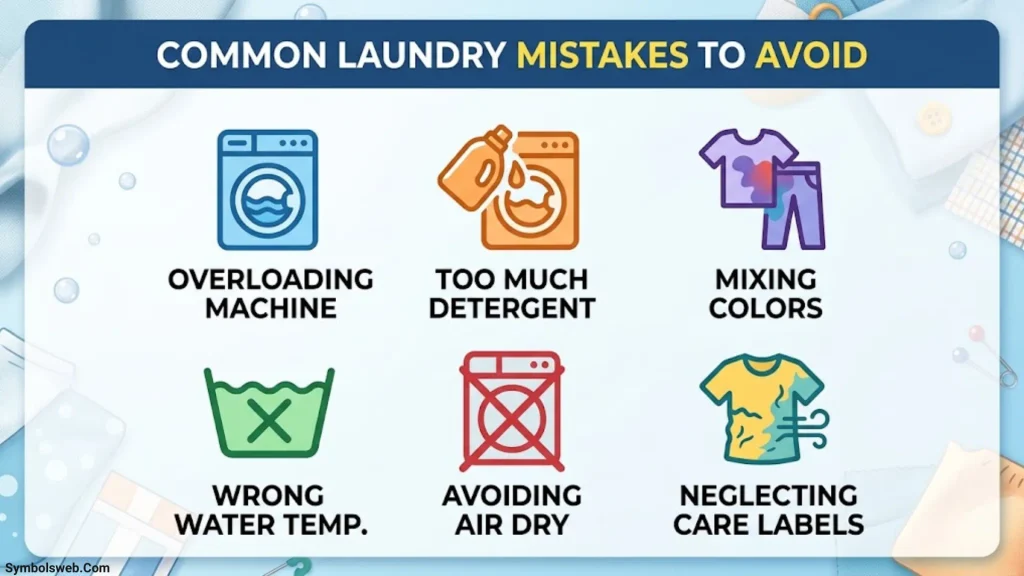
Even when you recognize the symbols, a few everyday mistakes can undermine their purpose.
- Ignoring the maximum temperature: Excess heat can shrink or damage certain fabrics.
- Using a regular cycle for delicate items: Strong mechanical action may stretch or distort sensitive garments.
- Tumble drying prohibited items: Heat and movement can cause avoidable damage.
- Bleaching without checking the triangle: The wrong bleaching agent may damage fabric or color.
- Ironing at excessive heat: High temperatures can leave marks or damage fibers.
- Confusing appliance icons with care labels: Washer settings don’t replace garment instructions.
- Assuming every washer uses the same icons: Control panels vary by model.
- Using too much detergent: Excess product can leave residue and may make rinsing less effective.
- Overloading the washer: Crowded loads can restrict movement and interfere with cleaning.
- Ignoring drying instructions: The wrong drying method can affect a garment’s size, shape, and texture.
The simplest habit is also the most useful: check the garment label before choosing a wash program, then confirm that your appliance can provide the required treatment.
Frequently Asked Questions About Washing Machine Symbols
What Do Washing Symbols Mean?
Washing symbols explain how to care for clothing. They indicate washing methods, maximum temperatures, bleaching restrictions, drying methods, ironing limits, and professional cleaning requirements.
What Are the Five Main Laundry Symbols?
The five main symbols are the wash tub, triangle, square, iron, and circle. They represent washing, bleaching, drying, ironing, and professional textile care.
What Does a Number Inside a Wash Tub Mean?
The number indicates the maximum washing temperature in degrees Celsius. A tub marked 30 means you shouldn’t exceed 30°C for that treatment.
What Do Two Lines Under a Washing Symbol Mean?
Two lines indicate a very gentle washing process with reduced mechanical action. This treatment is particularly important for suitable delicate garments and wool items.
What Does a Crossed-Out Wash Tub Mean?
A crossed-out wash tub means the indicated domestic washing treatment isn’t permitted. Check the rest of the care label to determine whether professional cleaning is recommended.
What Does the Square Symbol Mean on Clothing Labels?
A square represents drying instructions. A circle inside the square identifies tumble drying, while lines inside the square indicate natural drying methods.
What Does a Crossed-Out Tumble Dryer Symbol Mean?
It means you shouldn’t tumble dry the garment. Follow the label’s other drying instructions to determine whether line drying, drip drying, or flat drying is appropriate.
What Does a Triangle With Diagonal Lines Mean?
A triangle with two diagonal lines indicates that oxygen-based, non-chlorine bleach is permitted under the relevant care-label standard. Chlorine bleach isn’t allowed by this instruction.
What Do the Dots on an Iron Symbol Mean?
The dots indicate the permitted ironing heat level. One dot means low heat, two dots mean moderate heat, and three dots mean higher heat.
What Does a Circle With a Letter Inside Mean?
It provides professional textile-care information, including the cleaning process or solvent requirements. A qualified cleaner can interpret the symbol and select a suitable method.
Are Washing Machine Symbols the Same Across All Brands?
No. Many manufacturers use familiar icons for common functions, but their appearance and availability can vary. Always consult your washer’s manual for exact meanings.
How Can I Find the Meaning of an Unknown Washing Machine Symbol?
Check the model number and look up the user manual on the manufacturer’s official website. Compare the icon with the manual’s control-panel diagram before changing settings or troubleshooting a warning.
Conclusion
Understanding washing machine symbols makes laundry easier and helps protect your clothes from unnecessary damage. Start with the five main clothing care symbols, learn how temperatures, dots, underlines, and crosses change their meanings, and check the complete label before washing or drying a garment.
Remember that clothing care labels and washer control panels serve different purposes. Use the label to determine which treatments are permitted, then choose a compatible machine program. When an appliance icon remains unclear, consult the manufacturer’s manual instead of guessing. A few seconds spent checking the symbols can help your clothes stay in good condition for longer.

Hi, I’m Ethan Holloway, and I’ve always believed that a few meaningful words can change the way we think, feel, and live. I enjoy collecting timeless quotes, studying their deeper meanings, and sharing inspiring messages that help people stay motivated through every stage of life.
Over the years, I’ve explored thousands of famous sayings from writers, leaders, philosophers, and everyday people. My goal is to make wisdom easy to understand and useful for everyone.
Books by Ethan Holloway
- The Power of Everyday Quotes
- Words That Inspire Greatness
 Jordan Hayes
 Eliana Foster