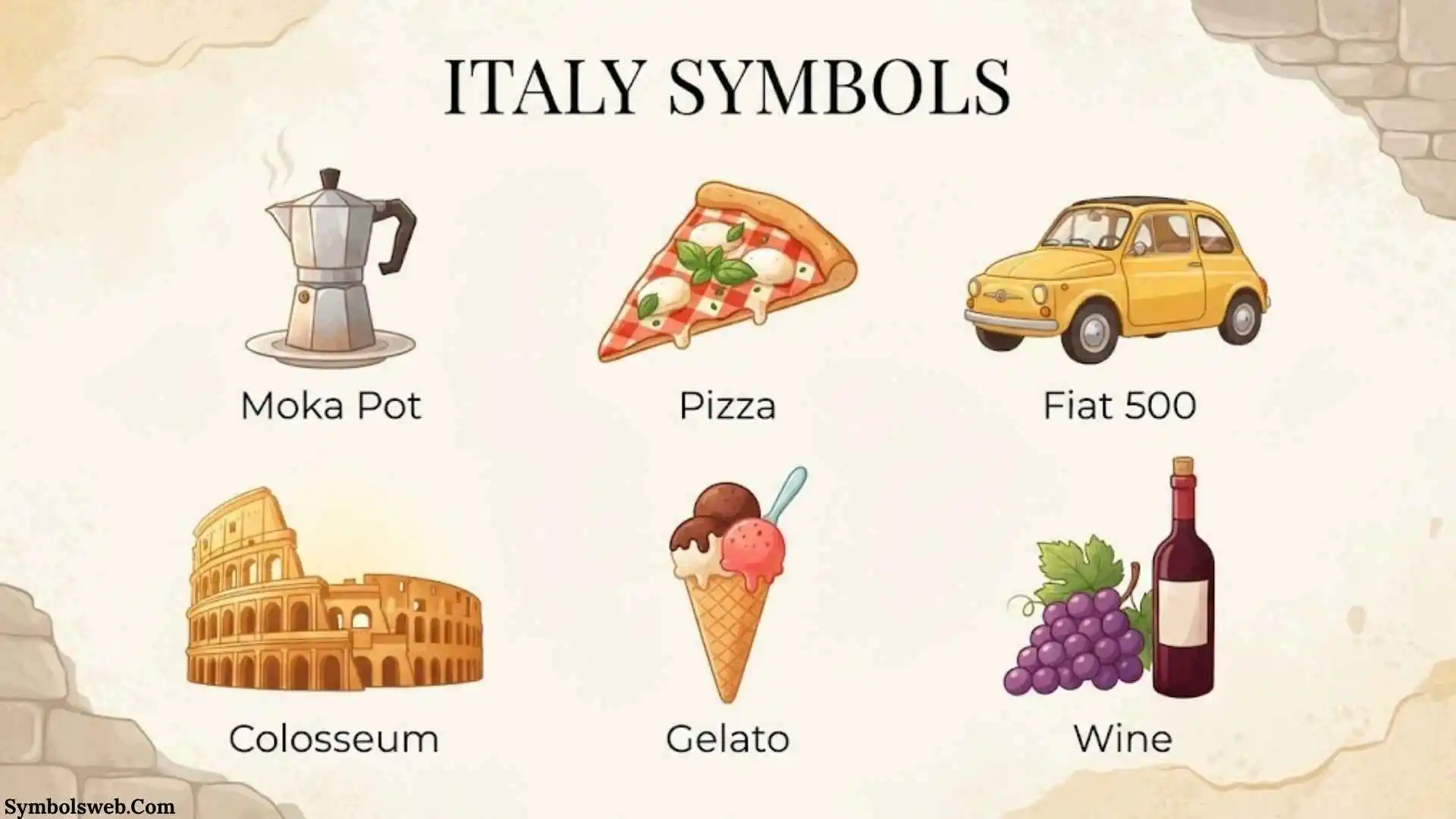
Italy symbols tell the story of a nation shaped by ancient empires, artistic genius, spiritual traditions, and deep cultural pride. From the famous tricolor flag to the legendary Roman wolf, these symbols carry meanings that go far beyond their visual appearance. They connect Italians to their history, identity, and shared values.
Understanding Italy symbols reveals fascinating insights into human psychology, mythology, religion, and national heritage. Each symbol represents centuries of stories, struggles, victories, and cultural evolution that continue to influence modern Italy today.
Italy Symbols: (Quick Answer)
Italy symbols are national, cultural, historical, and spiritual emblems that represent the identity, values, and heritage of Italy. These symbols include the Italian flag, the Stella d’Italia (Star of Italy), the Roman she-wolf, the olive branch, the national emblem, and other iconic images connected to Italian history, culture, unity, and tradition.
Quick Facts About Italy Symbols
| Aspect | Information |
| Origin | Ancient Roman, medieval, and modern Italian traditions |
| Historical Significance | Represent Italy’s national identity, unity, and heritage |
| Main Meaning | Patriotism, culture, strength, beauty, and resilience |
| Spiritual Meaning | Hope, guidance, peace, wisdom, and renewal |
| Cultural Importance | Unites Italians through shared history and traditions |
| Modern Usage | Government emblems, sports, tourism, education, art, and fashion |
What Are Italy Symbols?
Italy symbols are visual representations, emblems, animals, colors, plants, and icons that embody the history and character of Italy.
These symbols developed over thousands of years. Some date back to the Roman Empire, while others emerged during the unification of Italy in the nineteenth century.
The purpose of national symbols is simple yet powerful. They create a shared identity among people who may live in different regions, speak different dialects, and have different local customs.
Italy has a particularly rich collection of symbols because of its unique history. Ancient Rome influenced Europe for centuries. The Renaissance transformed art and science. Christianity shaped spiritual life. Together, these forces created symbols recognized throughout the world.
Today, Italy symbols appear on government buildings, passports, coins, sports uniforms, monuments, artworks, and cultural celebrations.
Deep Symbolic Meaning of Italy Symbols
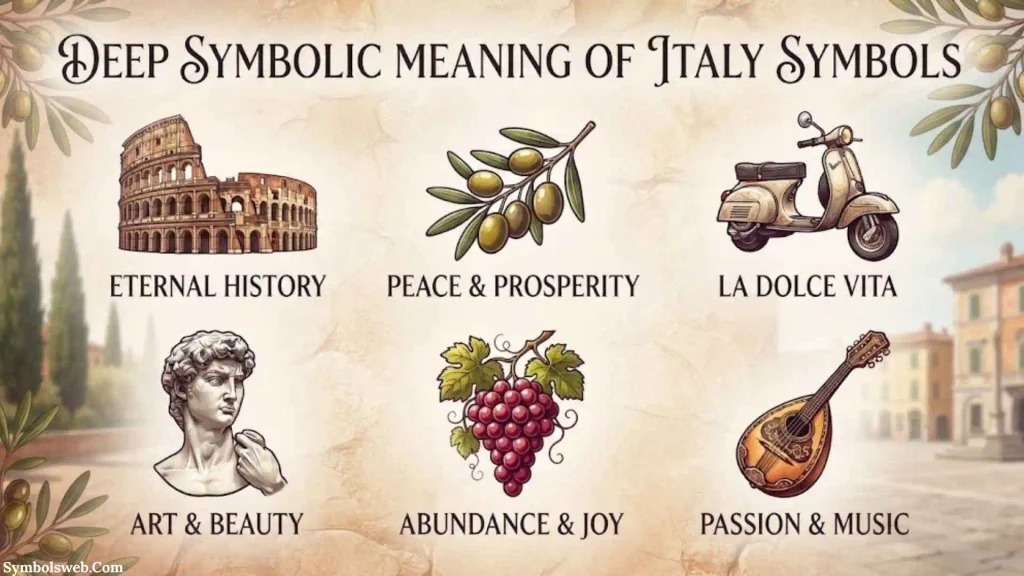
Spiritual Level
Many Italy symbols carry profound spiritual meanings.
The olive branch symbolizes peace, divine blessing, and reconciliation. Since ancient times, olive trees have represented endurance and spiritual wisdom.
The Stella d’Italia, or Star of Italy, symbolizes guidance and protection. Like a star helping travelers find their way, it represents hope and national destiny.
The Italian landscape itself has symbolic value. Mountains, seas, and fertile countryside often represent harmony between humanity and nature.
Spiritually, Italy symbols remind people of continuity, faith, and resilience through changing times.
Psychological Level
From a psychological perspective, symbols satisfy a fundamental human need for belonging.
According to the theories of psychologist Carl Jung, symbols act as archetypes that connect individuals to collective memory.
The Roman she-wolf, for example, represents the nurturing mother archetype. It embodies protection, survival, and strength.
The tricolor flag evokes emotional responses because colors communicate powerful psychological messages:
- Green symbolizes hope and growth.
- White symbolizes purity and unity.
- Red symbolizes courage and sacrifice.
These colors create an emotional bond that strengthens national identity.
Cultural Level
Culturally, Italy symbols serve as a bridge between past and present.
Imagine walking through Rome and seeing ancient ruins beside modern buildings. Symbols help connect those different eras into one shared story.
For Italians, these symbols celebrate achievements in art, architecture, music, literature, and innovation.
They also reinforce family values, regional traditions, and community pride.
Types and Variations of Italy Symbols
The Italian Flag
Visual Description: Green, white, and red vertical stripes.
Meaning: Unity, freedom, and national pride.
Symbolism: Hope, faith, and sacrifice.
Cultural Connection: The most recognized symbol of modern Italy.
Where It Appears: Government buildings, schools, sports events, and international ceremonies.
Stella d’Italia (Star of Italy)
Visual Description: A white five-pointed star.
Meaning: Protection and destiny.
Symbolism: Guidance and national continuity.
Cultural Connection: One of the oldest national symbols of Italy.
Where It Appears: National emblems and official institutions.
The Roman She-Wolf
Visual Description: A wolf nursing twin infants.
Meaning: Survival and nurturing strength.
Symbolism: The legendary founding of Rome.
Cultural Connection: Linked to Romulus and Remus.
Where It Appears: Statues, museums, and historical monuments.
Olive Branch
Visual Description: Branches with olive leaves.
Meaning: Peace and prosperity.
Symbolism: Harmony and wisdom.
Cultural Connection: Mediterranean heritage.
Where It Appears: National emblem and artistic works.
Oak Branch
Visual Description: Strong oak leaves and acorns.
Meaning: Strength and dignity.
Symbolism: Endurance and courage.
Cultural Connection: Represents the resilience of the Italian people.
Where It Appears: Official state emblems.
Italy Symbols Across Different Cultures
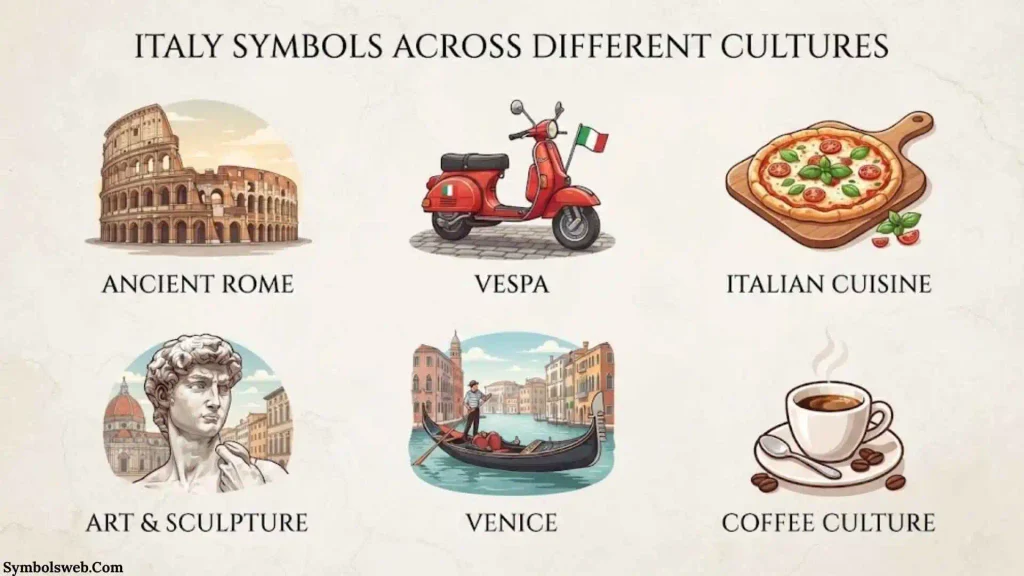
Ancient Egypt
Ancient Egyptians viewed stars and sacred animals as divine messengers.
The symbolic use of stars in Italy’s Stella d’Italia echoes similar ideas of celestial guidance found in Egyptian traditions.
Ancient Greece
Greek culture influenced Roman civilization significantly.
Olive branches were sacred in Greece and represented peace, wisdom, and victory. Italy inherited many of these symbolic associations.
Roman Culture
Roman civilization created many symbols still associated with Italy today.
The eagle, wolf, laurel wreath, and Roman standards symbolized power, honor, and military excellence.
These symbols continue to influence Italian identity.
Eastern Traditions
In many Eastern cultures, stars symbolize enlightenment and spiritual direction.
Similarly, Italy’s national star often represents hope and guidance through challenging times.
Indigenous Traditions
Many Indigenous cultures around the world respect animals as spiritual guides.
The Roman she-wolf reflects a similar respect for nature’s protective and nurturing forces.
Modern Interpretations
Today, Italy symbols represent more than history.
They symbolize:
- Creativity
- Beauty
- Family values
- Cultural heritage
- Global influence
- National unity
Similar Symbols and Their Meanings
| Symbol | Similarity to Italy Symbols | Key Difference |
| French Tricolor | National identity | Different historical origins |
| Roman Eagle | Ancient heritage | Focus on imperial authority |
| Olive Branch | Peace symbolism | Shared globally |
| Laurel Wreath | Roman roots | Represents victory specifically |
| European Star Symbols | Guidance and unity | Different political meanings |
Common Misconceptions
Many people assume all Italy symbols originated in modern Italy.
In reality, many trace their roots to:
- Ancient Rome
- Classical Greece
- Christian traditions
- Medieval states
- Renaissance culture
Their meanings evolved over centuries.
Italy Symbols in Mythology and Folklore
Italian mythology blends Roman legends, local folklore, and historical traditions.
Romulus and Remus
The most famous story involves twin brothers Romulus and Remus.
According to legend, they were abandoned as infants and rescued by a she-wolf. Romulus later founded Rome.
This story transformed the wolf into one of Italy’s most enduring symbols.
The Sacred Star
Ancient traditions associated stars with destiny and divine protection.
The Stella d’Italia became a visual representation of Italy’s historical journey and future aspirations.
Olive Tree Legends
Mediterranean folklore often portrays olive trees as sacred gifts from the gods.
They symbolize wisdom, peace, and longevity.
These stories helped strengthen the olive branch’s symbolic role in Italian culture.
Italy Symbols in Art, Literature, Movies and Pop Culture
Paintings
Renaissance masters frequently used symbolic imagery connected to Italy’s religious and cultural identity.
Stars, olive branches, and classical Roman motifs appear throughout Italian art history.
Literature
Italian poets and writers often reference national symbols to explore themes of homeland, sacrifice, beauty, and unity.
Poetry
Poets use symbols such as stars and landscapes to evoke emotional connections with Italy.
Movies
Italian cinema frequently showcases national symbols to express pride, nostalgia, and cultural identity.
Television
Historical dramas often feature Roman imagery, flags, and iconic monuments.
Tattoos
Popular Italian-themed tattoos include:
- Italian flag
- Roman wolf
- Olive branches
- Colosseum designs
- National star
Fashion
Italy’s global fashion industry frequently incorporates national colors and historical motifs into modern designs.
Modern Design
Contemporary branding uses Italy symbols to communicate quality, elegance, craftsmanship, and authenticity.
Spiritual and Dream Meaning of Italy Symbols
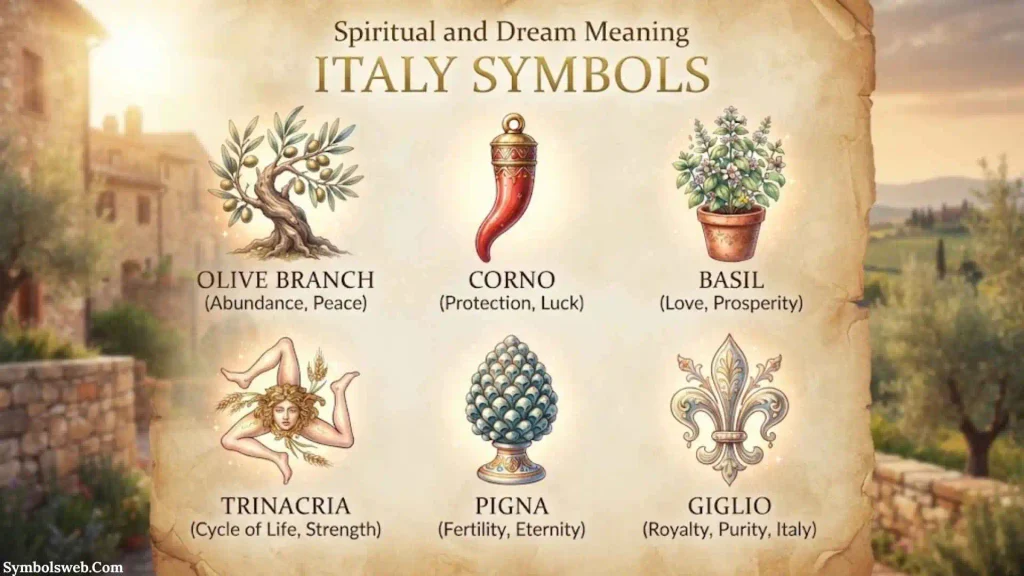
Dreams involving Italy symbols can have powerful interpretations.
Dreaming of the Italian Flag
Often symbolizes:
- Personal identity
- Pride
- Belonging
- Emotional renewal
Dreaming of a Star
May represent:
- Guidance
- Hope
- Life direction
- Spiritual awakening
Dreaming of a Wolf
Frequently symbolizes:
- Protection
- Instinct
- Independence
- Family loyalty
Dreaming of Olive Trees
Can indicate:
- Peace
- Healing
- Wisdom
- Reconciliation
Positive Messages
- Growth
- Protection
- Confidence
- Renewal
- Success
Cautionary Messages
- Overattachment to the past
- Identity conflicts
- Resistance to change
- Emotional isolation
Positive and Negative Meanings of Italy Symbols
| Positive Meaning | Negative Meaning |
| Unity | Excessive nationalism |
| Pride | Arrogance |
| Strength | Aggression |
| Tradition | Resistance to progress |
| Protection | Overprotection |
| Heritage | Attachment to outdated beliefs |
| Courage | Recklessness |
| Loyalty | Tribal thinking |
Like all symbols, meaning depends on context and interpretation.
Why Humans Are Attracted to Italy Symbols
Humans naturally seek symbols that tell stories.
Italy symbols attract people because they combine beauty, history, and emotion.
Psychologists suggest that symbols work because they simplify complex ideas into memorable images.
A single star can represent hope.
A wolf can represent protection.
A flag can represent millions of people sharing a common identity.
Italy’s symbols are especially powerful because they connect to some of humanity’s greatest achievements:
- Roman civilization
- Renaissance art
- Architectural wonders
- Religious traditions
- Cultural innovation
These symbols activate what Jung called the collective unconscious, connecting modern individuals to ancient stories and shared human experiences.
Modern Uses of Italy Symbols
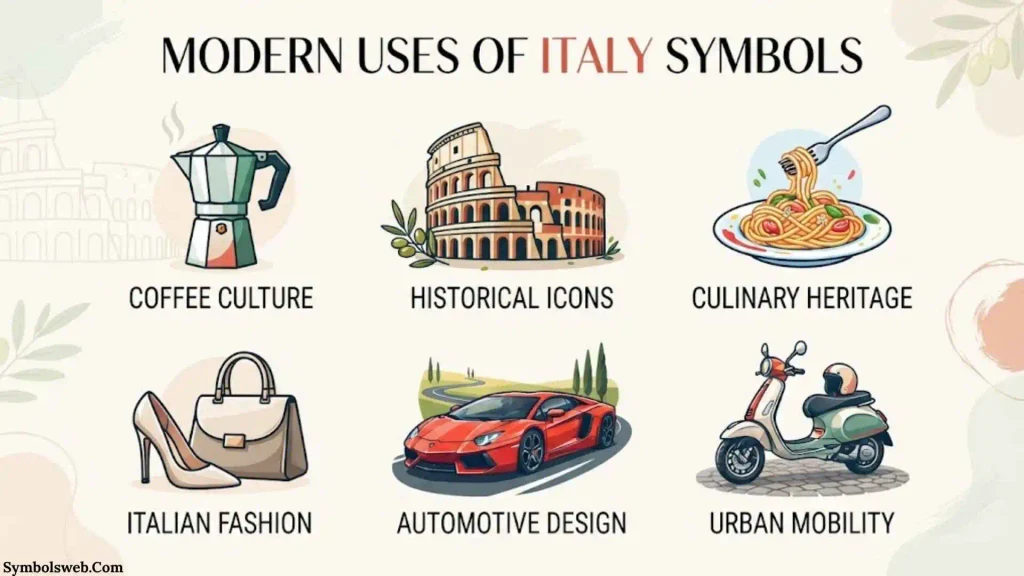
Tattoos
Many people choose Italian symbols to honor ancestry, heritage, or personal values.
Jewelry
Stars, olive branches, and national motifs are common in Italian-inspired jewelry.
Fashion
Italian colors and symbolic designs remain popular worldwide.
Branding
Businesses use Italian symbols to suggest:
- Quality
- Tradition
- Luxury
- Authenticity
Social Media
National symbols frequently appear during sporting events, celebrations, and cultural festivals.
Contemporary Spirituality
Many people use symbols such as stars and olive branches in meditation and personal growth practices.
Home Decor
Italian-inspired decor often incorporates symbolic elements reflecting peace, beauty, and history.
Personal Expression
People use these symbols to express cultural pride and personal identity.
Interesting Facts About Italy Symbols
- The Stella d’Italia is one of the oldest national symbols in Europe.
- The Roman she-wolf symbol is over two thousand years old.
- Italy’s national emblem combines both an olive branch and an oak branch.
- The colors of the Italian flag have inspired countless fashion designs worldwide.
- Olive trees in Italy can live for hundreds of years.
- Roman symbols continue to influence government architecture across the world.
- The wolf remains one of the most recognizable symbols associated with Rome.
- Many Italian symbols combine both ancient pagan and Christian traditions.
- Italy’s symbolic heritage spans more than three millennia.
- Several modern European symbols trace their origins to Roman iconography.
Frequently Asked Questions
What is the most famous symbol of Italy?
The Italian tricolor flag is the most famous symbol of Italy. It represents national unity, freedom, and patriotism through its green, white, and red colors.
What does the Stella d’Italia symbolize?
The Stella d’Italia symbolizes guidance, protection, hope, and the historical destiny of the Italian nation.
Why is the wolf important in Italian culture?
The wolf is important because of the legend of Romulus and Remus, who were said to have been raised by a she-wolf before Rome was founded.
What do the colors of the Italian flag mean?
Green symbolizes hope, white symbolizes faith and unity, and red symbolizes courage and sacrifice.
What is Italy’s national emblem?
Italy’s national emblem includes a star, a cogwheel, an olive branch, and an oak branch, representing peace, work, strength, and national identity.
Are Italy symbols connected to Ancient Rome?
Yes. Many important Italian symbols, including the wolf, laurel wreath, and various state emblems, have roots in Ancient Roman culture and mythology.
Conclusion
Italy symbols are far more than decorative images. They are living reminders of a civilization that has shaped art, politics, spirituality, and culture for thousands of years. From the guiding Stella d’Italia to the legendary Roman she-wolf, each symbol carries layers of meaning that connect the past with the present.
These powerful icons continue to inspire pride, identity, and belonging. They remind us that symbols matter because they preserve stories, values, and memories that help define who we are and where we come from.

Hi, I’m Ethan Holloway, and I’ve always believed that a few meaningful words can change the way we think, feel, and live. I enjoy collecting timeless quotes, studying their deeper meanings, and sharing inspiring messages that help people stay motivated through every stage of life.
Over the years, I’ve explored thousands of famous sayings from writers, leaders, philosophers, and everyday people. My goal is to make wisdom easy to understand and useful for everyone.
Books by Ethan Holloway
- The Power of Everyday Quotes
- Words That Inspire Greatness
 Jordan Hayes
 Eliana Foster