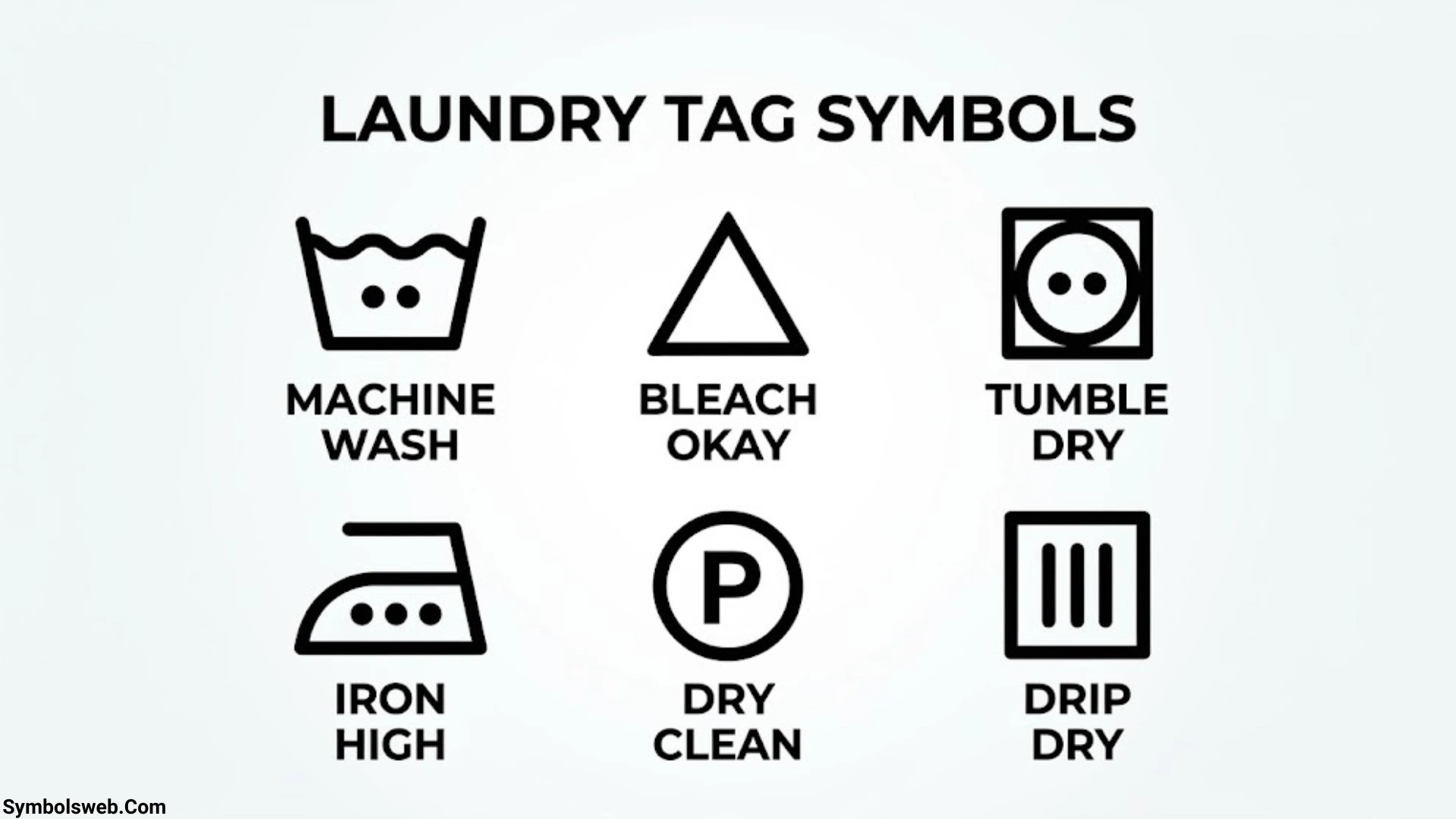
Have you ever looked at a clothing label and wondered what those tiny laundry symbols actually mean? Laundry tag symbols tell you how to wash, dry, iron, and care for your clothes properly. If you want to keep your favorite outfits looking fresh and new, learning these symbols can help you avoid shrinking, fading, and accidental fabric damage.
When you understand laundry tag symbols, you can make smarter decisions every time you do your laundry. You’ll know which clothes need cold water, which items should never go in the dryer, and when dry cleaning is the better option. Instead of guessing what each symbol means, you can follow the care instructions with confidence and protect your clothes for longer.
In this guide, you’ll discover the meanings of common laundry tag symbols, from washing and bleaching to drying and ironing. If you’re a beginner or someone who wants to take better care of your wardrobe, this simple guide will help you read clothing labels easily and avoid common laundry mistakes. By the end, you’ll know exactly what to look for before tossing your clothes into the washing machine
What Do Laundry Tag Symbols Mean?
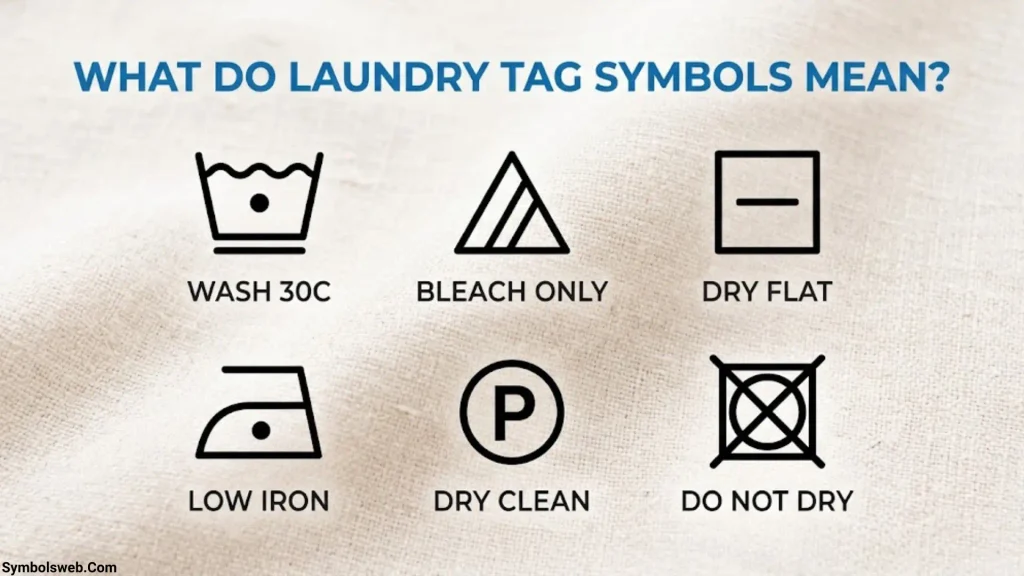
Laundry tag symbols are standardized or regionally recognized icons printed on garment care labels. They tell you how to clean and maintain clothing while reducing the risk of damage to the fabric, color, shape, and decorative details.
Manufacturers consider several factors when assigning care instructions. These may include fabric composition, dyes, garment construction, linings, buttons, zippers, prints, and special finishes.
The international care-label system described in ISO 3758:2023 organizes care instructions into five main categories. Source:
- Washing symbols: Explain whether and how to wash a garment.
- Bleaching symbols: Show whether bleach is permitted.
- Drying symbols: Identify suitable tumble-drying or natural-drying methods.
- Ironing symbols: Indicate the recommended ironing temperature and restrictions.
- Dry-cleaning symbols: Give professional cleaners instructions for suitable cleaning processes.
These categories generally appear in the order listed above on international-style care labels. Regional labeling systems can differ in their details.
Why Are Laundry Care Symbols Important?
Following garment care instructions helps you avoid common problems, including:
- Shrinking clothes in hot water or excessive dryer heat.
- Fading colors through unsuitable washing or bleaching.
- Stretching wool sweaters and delicate knitwear.
- Damaging prints, elastic fibers, and decorative finishes.
- Scorching fabrics with an iron that’s too hot.
- Ruining garments through an unsuitable cleaning method.
A care label indicates the permitted treatment for the garment. It doesn’t guarantee that every stain will disappear, so stain removal may require additional care. Source: GINETEX care-label guidance.
Laundry Symbols Chart: Quick Reference Guide
Use this laundry symbols chart to identify common clothing care symbols at a glance. The descriptions below explain the standard visual patterns; actual labels may include regional variations.
| Symbol description | Meaning | What you should do |
| Washing tub | Washing is permitted under the indicated conditions | Check the temperature and cycle markings |
| Tub with a number | Maximum washing temperature | Don’t exceed the displayed temperature |
| Tub with one underline | Reduced-action washing | Choose a gentler cycle |
| Tub with two underlines | Very gentle washing | Use a suitable delicate or wool cycle |
| Tub with a hand | Hand washing | Wash gently by hand according to the label |
| Crossed-out tub | Do not wash | Avoid washing and check alternative care instructions |
| Empty triangle | Bleaching permitted under the applicable standard | Check bleach compatibility and product directions |
| Crossed-out triangle | Do not bleach | Use bleach-free laundry products |
| Triangle with diagonal lines | Non-chlorine bleaching permitted in systems using this mark | Avoid chlorine bleach |
| Square with a circle | Tumble drying | Check the dots and any additional marks |
| Square with a crossed-out circle | Do not tumble dry | Choose a permitted alternative |
| Square with vertical lines | Natural line or drip drying, depending on the lines | Follow the exact drying pattern |
| Square with a horizontal line | Dry flat | Place the garment on a flat surface |
| Iron with one dot | Low-temperature ironing | Use a low heat setting |
| Iron with two dots | Medium-temperature ironing | Use medium heat |
| Iron with three dots | High-temperature ironing | Use high heat only when permitted |
| Crossed-out iron | Do not iron | Avoid direct ironing |
| Circle with a letter | Professional cleaning instructions | Show the label to your cleaner |
| Crossed-out circle | Do not dry-clean | Avoid the prohibited dry-cleaning process |
Important: A symbol’s meaning depends on its shape, internal markings, and the care-label system used. Always interpret the complete symbol rather than one feature in isolation.
Washing Symbols and Their Meanings
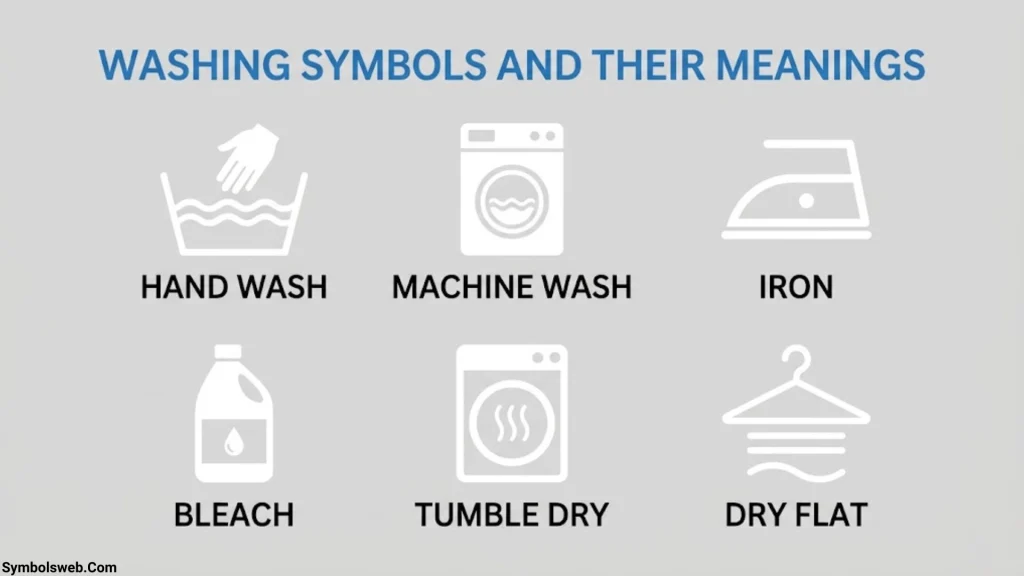
Washing symbols tell you how to clean clothes without putting unnecessary stress on the fibers. They help you choose the right water temperature, washing method, and level of mechanical action.
The washing tub symbol is the starting point for understanding most washing instruction symbols.
Washing Tub Symbol
The tub represents washing with water. Check for a number, underline, hand, or cross before choosing a washing method.
A plain washing tub generally indicates that washing is permitted. However, it doesn’t automatically mean you can use any temperature or washing-machine program.
For example, a cotton T-shirt and a delicate blouse may both have washing-tub symbols, yet their temperature limits and cycle requirements can differ.
Always inspect the complete symbol and follow any additional written instructions.
Washing Temperature Symbols
Numbers inside the washing tub indicate the maximum permitted washing temperature in Celsius. They don’t mean you must wash the garment at that temperature.
| Temperature | Practical meaning |
| 30°C | Cool washing for garments that need gentler treatment |
| 40°C | A common setting for everyday clothing when the label permits it |
| 60°C | A higher-temperature wash for suitable, durable textiles |
| 95°C | Very hot washing for textiles specifically designed to tolerate it |
These are examples of common temperature markings, not universal recommendations for every fabric.
A garment marked 40°C can generally be washed at a lower temperature when that suits the cleaning task. Lower temperatures may reduce heat exposure, but cleaning performance still depends on the detergent, soil level, wash duration, and fabric.
Remember: The number indicates a maximum, not a target you must reach.
Machine Wash and Do Not Wash Symbols
A washing tub without a cross generally permits washing under the conditions shown on the label.
A crossed-out washing tub means you should not wash the garment using the prohibited washing treatment. Check the remaining instructions for professional cleaning requirements or other warnings.
Don’t assume that a garment marked “do not wash” is automatically safe for dry cleaning. The label may prohibit a particular cleaning method or require another form of care.
When a label includes wording such as “dry-clean only,” follow that instruction rather than experimenting with a washing machine.
Gentle Wash and Delicate Cycle Symbols
Lines beneath the washing tub indicate that you need to reduce the intensity of the washing process in the ISO style system.
This marking indicates reduced mechanical action. Select a suitable gentle or easy-care program and avoid unnecessarily vigorous spinning.
This marking indicates a more delicate process. Use a suitable very gentle program and avoid overloading the machine.
You may encounter these instructions on wool knitwear, delicate garments, and some synthetic fabrics. The exact requirements depend on the garment.
A gentle cycle typically uses less aggressive drum movement. A reduced spin speed may also help protect sensitive items, although the correct setting depends on the machine and garment.
Hand Wash Only Symbol
A hand inside the washing tub indicates that you should wash the garment by hand according to its care instructions.
Hand washing is useful for garments that need careful handling. It lets you control how much you move, press, and rinse the fabric.
Follow these steps:
- Fill a clean basin with water at the temperature permitted by the label.
- Add a suitable detergent and dissolve it according to the product instructions.
- Submerge the garment and move it gently through the water.
- Rinse thoroughly without pulling or twisting the fabric.
- Press out excess water carefully.
- Reshape the garment and dry it using the method shown on its label.
Some modern international labels include a hand-wash symbol with specific ambient-temperature instructions. Other versions indicate a temperature limit or use different conventions. Therefore, don’t assume that every hand-wash label has the same temperature limit. Reference: GINETEX care symbols.
Washing Symbols With Dots and Lines
Dots and lines provide different information depending on the symbol.
- Numbers inside a washing tub indicate the maximum washing temperature.
- Underlines beneath a washing tub indicate a gentler washing process.
- Dots inside an iron indicate ironing heat levels.
- Dots inside a tumble-drying symbol indicate the dryer temperature level.
Don’t confuse a dot used for ironing with a number used for washing. These symbols communicate different instructions.
Washing Machine Symbols vs. Laundry Tag Symbols
Clothing labels and washing-machine control panels serve different purposes.
Laundry tag symbols tell you what treatment the garment can tolerate. Washing machine symbols identify programs or functions offered by a particular appliance.
For example, your washer may have programs labeled cotton, synthetics, wool, or delicate. These names aren’t universal guarantees of a particular temperature or spin speed.
To choose correctly:
- Read the garment’s care label.
- Find a machine program that matches its requirements.
- Set the temperature within the permitted limit.
- Adjust the spin speed if the garment needs gentler handling.
- Follow your washer’s manual if a control icon is unfamiliar.
A wool program on one machine may operate differently from a wool program on another. The garment’s instructions should guide your selection.
Bleaching Symbols and Their Meanings
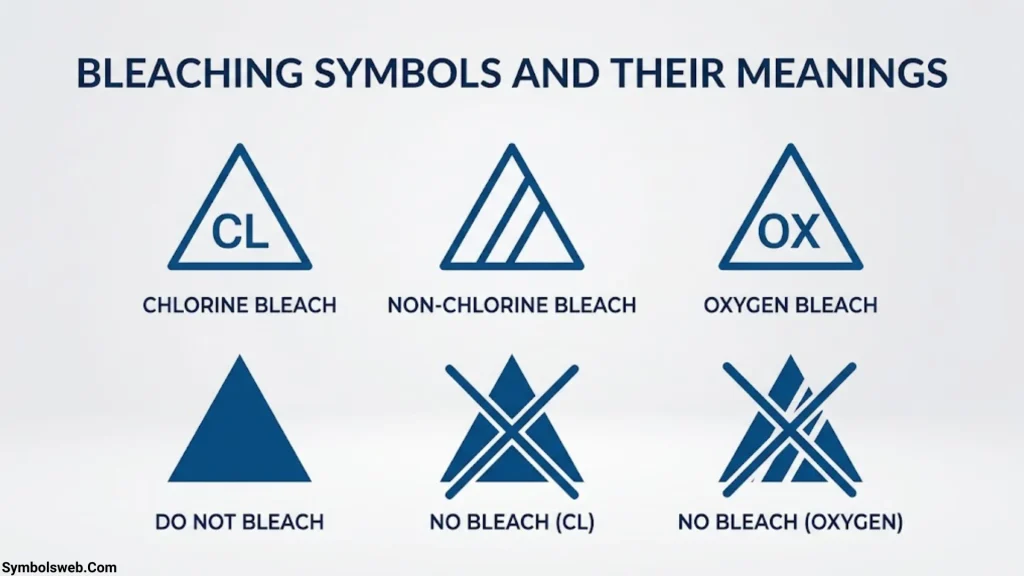
Bleaching symbols help you decide whether a cleaning product containing bleach is suitable for your clothing. Using the wrong type can damage dyes, weaken fibers, or leave permanent pale patches.
The triangle laundry symbol represents bleaching in common textile-care systems.
Triangle Laundry Symbol
In the applicable care label system, an empty triangle permits bleaching when needed. Check the product directions and the garment’s other instructions before use.
Permission to bleach doesn’t mean every bleach product is suitable for every garment. Concentration, contact time, dye stability, and fabric composition all matter.
Do Not Bleach Symbol
This symbol prohibits bleaching. Use a suitable bleach-free detergent and choose another stain-treatment method if necessary.
Avoid adding chlorine bleach or oxygen-based bleach to a load marked “do not bleach” unless the garment’s manufacturer provides a specific, reliable alternative instruction.
Non Chlorine Bleach Symbol
In the ISO/GINETEX style system, this marking permits oxygen-based bleach but excludes chlorine bleach.
Oxygen bleach is often marketed as color-safe bleach. However, a product’s label and the garment’s care instructions still matter.
How to Choose Bleach Safely
Before using bleach, check both the care label and the cleaning product.
- Confirm that the garment permits the type of bleach you plan to use.
- Follow the product’s dilution, dosing, and contact-time instructions.
- Test an inconspicuous area when the product instructions recommend testing.
- Never mix bleach with ammonia, acids, vinegar, or other incompatible cleaners.
- Don’t assume that white clothing can always tolerate chlorine bleach.
If the care label prohibits bleaching, choose a suitable detergent and a stain remover approved for that garment instead.
Drying Symbols and Their Meanings
Drying symbols tell you whether clothes can go in a tumble dryer or need a natural-drying method. These drying symbols are especially useful for garments that may shrink, stretch, or lose their shape under excessive heat.
The square is the main symbol for drying in the international care-label system. A circle inside the square indicates tumble drying.
Square With a Circle: Tumble Drying Symbol
A square containing a circle indicates tumble drying. Check the dots and any additional markings to identify the permitted heat level.
Don’t assume that every machine-washable garment can go in the dryer. Washing and drying are separate care treatments.
A shirt may tolerate machine washing but require air drying to protect its shape, print, or elastic components.
Low-, Medium-, and High-Heat Drying Symbols
Dots inside the tumble-drying symbol indicate the permitted dryer heat level in systems that use this marking.
| Symbol marking | General interpretation | Practical approach |
| One dot | Low heat | Choose a low-temperature drying setting |
| Two dots | Normal or higher permitted heat under the relevant system | Follow the label’s specific dryer guidance |
| Cross through the symbol | Tumble drying prohibited | Use an allowed natural-drying method |
Symbol conventions can differ between labeling systems. In particular, the exact interpretation of dryer dots should be verified against the applicable standard.
Use the lowest effective heat when the garment permits tumble drying. Remove clothes promptly when dry to reduce creasing and unnecessary heat exposure.
Do Not Tumble Dry Symbol
The crossed out tumble drying symbol means you should avoid using a tumble dryer for the garment.
Instead, use a natural drying method allowed by the label. Depending on the garment, this may mean hanging it, laying it flat, or letting excess water drain without wringing.
Avoid placing a garment near a heater as a substitute for a dryer. Excessive localized heat can damage some fibers, finishes, and elastic materials.
Hang to Dry and Line Drying Symbols
A square with a vertical line represents a natural line-drying method in the international symbol system. Additional markings can change the instruction.
Hanging clothes can save energy and reduce exposure to dryer heat. However, the method matters.
- Hang sturdy garments that can support their own wet weight.
- Use a suitable hanger for shirts when the fabric won’t stretch.
- Keep heavy knitwear flat if the label specifies flat drying.
- Follow any shade-drying instructions to protect sensitive colors.
A square with a single vertical line and a square with multiple vertical lines don’t mean exactly the same thing.
Drip Dry Symbol
Multiple vertical lines inside the square indicate a drip-drying method. The garment should drain without being wrung out.
Drip drying is useful when a garment needs gentle handling or should retain more moisture during drying. The exact symbol pattern matters because some systems distinguish line drying from drip line drying.
Place the garment where water can drain safely, and protect nearby surfaces from dripping water.
Dry Flat Symbol
A horizontal line inside the square indicates flat drying. Lay the garment on a suitable surface instead of hanging it.
Flat drying is particularly helpful for some wool sweaters and other knitwear. Wet fibers can stretch under their own weight, leaving sleeves, shoulders, or hems misshapen.
To dry a sweater flat, gently reshape it and lay it on a clean, absorbent surface. Avoid direct sunlight if the garment’s instructions call for shade.
Natural Drying Symbols
Natural-drying symbols can show line drying, drip line drying, flat drying, or drip flat drying. Diagonal lines may indicate that drying should take place in the shade.
| Symbol feature | General meaning |
| Vertical line inside a square | Line drying |
| Multiple vertical lines | Drip drying |
| Horizontal line inside a square | Flat drying |
| Multiple horizontal lines | Drip flat drying |
| Diagonal line in the corner | Dry in the shade |
Use the complete symbol, since the number and position of lines change the instruction.
How to Prevent Shrinking and Fabric Damage While Drying
Dryer heat and mechanical movement can damage garments that aren’t designed for them. Even when a garment tolerates tumble drying, excessive heat may cause problems.
Use these practical habits:
- Check the label before putting clothes in the dryer.
- Separate garments with different drying requirements.
- Avoid excessive drying time.
- Reshape knitwear before laying it flat.
- Keep delicate clothing away from rough items that may snag it.
- Follow the care instructions for elastic, printed, or embellished garments.
Lower heat isn’t a substitute for reading the label. Some garments must not be tumble-dried at all.
Ironing Symbols and Their Meanings
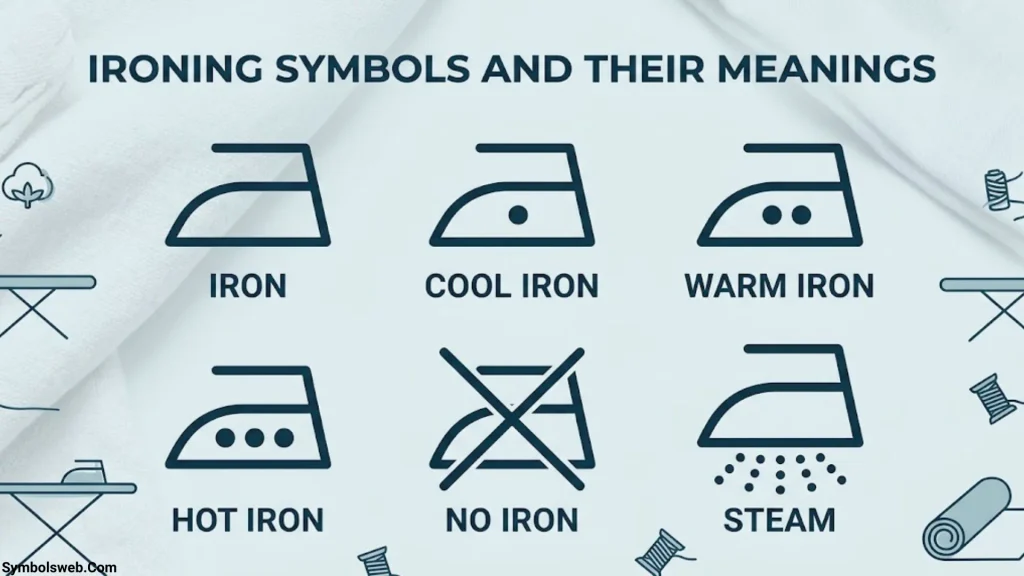
Ironing symbols help you choose a suitable temperature for removing wrinkles without scorching the fabric. The iron symbol appears with dots that indicate the permitted heat level.
These ironing symbols are especially important for synthetic fabrics, delicate garments, and clothing with heat-sensitive finishes.
Iron With One Dot
Use a low iron temperature. In the ISO-style system, the maximum soleplate temperature is generally 110°C.
Low heat is suitable for some synthetic fabrics and delicate materials when their labels permit ironing.
Avoid holding the iron in one place for too long. If the garment is especially delicate, check whether the label prohibits steam.
Iron With Two Dots
This marking generally permits a maximum soleplate temperature of 150°C in the ISO-style system.
Some cotton blends, wool garments, and other fabrics may tolerate medium heat. However, fiber type alone doesn’t determine the correct setting.
Check the care label and use a pressing cloth when appropriate to protect delicate surfaces.
Iron With Three Dots
This marking generally permits a maximum soleplate temperature of 200°C in the ISO-style system.
High heat may be suitable for certain durable fabrics, including some cotton and linen garments. Still, don’t use this setting unless the care label permits it.
A fabric blend, printed design, or decorative finish can require gentler treatment than the main fabric.
Do Not Iron Symbol
Avoid ironing the garment. Heat may cause irreversible damage to its fibers, surface, or finish.
If the label prohibits ironing, don’t assume a low setting will be safe. Instead, consider a permitted alternative, such as hanging the garment neatly after washing.
Steam and Ironing Care
Some care-label systems include additional instructions concerning steam. For example, a mark may prohibit steam while allowing dry ironing.
This distinction matters because moisture and heat can affect certain fabrics differently. Always check the complete symbol rather than relying on the dots alone.
- Start with the lowest permitted temperature.
- Check the garment’s label before using steam.
- Turn printed garments inside out when appropriate.
- Avoid pressing directly over delicate embellishments.
- Don’t leave a hot iron resting on the fabric.
Dry Cleaning Symbols and Their Meanings
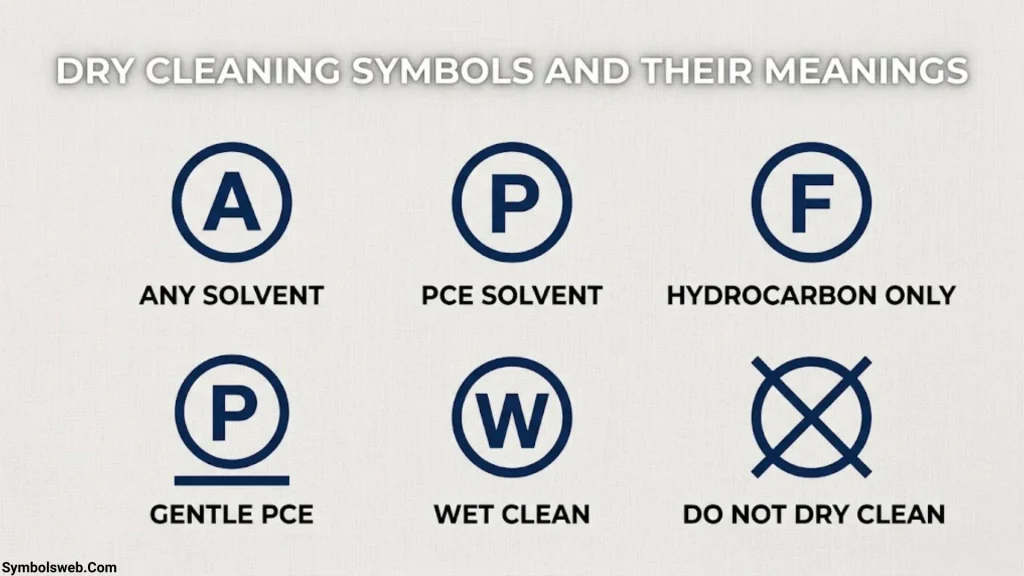
Dry-cleaning symbols use a circle to communicate professional-cleaning instructions. The letters inside the circle provide information about the permitted cleaning process.
These dry-cleaning symbols are intended primarily for professional cleaners. They aren’t instructions for choosing a household solvent or attempting chemical cleaning at home.
Circle Laundry Symbol
A circle indicates professional cleaning. The full symbol and any letters or additional marks determine the specific instructions.
A circle doesn’t necessarily mean that a garment must always be dry-cleaned. Read the complete label, including any written instructions.
Some garments permit washing, while others require a professional cleaning process to protect their structure or finish.
Circle With the Letter A
The letter A appears in some traditional dry-cleaning symbol systems. It indicates a broad category of permitted dry-cleaning solvents under that system.
However, solvent codes and their meanings can change across standards and revisions. Don’t assume that a letter appearing on an older label describes every solvent approved under current professional-cleaning practices.
Circle With the Letter P
The P marking traditionally identifies professional dry cleaning with specified solvents. Older symbol guides describe it as allowing solvents other than trichloroethylene.
Current standards may specify different solvent categories. A professional cleaner should interpret the label using the applicable standard and available cleaning methods.
Circle With the Letter F
The F marking traditionally indicates a professional dry-cleaning process using specified petroleum-based solvents.
This is a professional instruction, not permission to purchase or apply a solvent at home. Solvent handling requires appropriate equipment and safety procedures.
Do Not Dry Clean Symbol
This symbol prohibits dry cleaning under the applicable care-label system.
If a garment also carries washing restrictions, don’t assume that home washing is safe. Check the full label and consult the manufacturer or a qualified cleaner if the permitted method isn’t clear.
Dry-Clean Only vs. Do Not Dry-Clean
These instructions have opposite meanings.
| Instruction | Meaning |
| Dry-clean only | Use the specified professional cleaning method rather than ordinary home washing |
| Do not dry-clean | Avoid the prohibited dry-cleaning process |
| Circle with a letter | Follow the professional solvent instructions for the applicable system |
Professional cleaning may be necessary for garments with structured linings, sensitive finishes, or components that react poorly to water. The garment’s actual care label remains the best guide.
What Do Dots, Lines, and Crossed-Out Laundry Symbols Mean?
Small details often carry the most important information on a care label. Learning how these markings work makes laundry symbols meaning much easier to understand.
What Do Dots Mean on Laundry Symbols?
Dots generally indicate temperature or heat levels when they appear inside ironing or tumble drying symbols.
| Symbol category | What the dots indicate |
| Iron | Permitted ironing temperature |
| Tumble-drying symbol | Permitted dryer heat level |
| Washing tub with a number | The number, rather than dots, indicates the maximum washing temperature |
A single dot in an iron generally means low heat. A single dot inside a dryer symbol also indicates a lower heat level, but the two symbols refer to different processes.
Always identify the main symbol first.
What Do Lines Under Washing Symbols Mean?
Underlines beneath the washing tub indicate reduced mechanical action in the ISO-style system.
- One underline: A mild washing process.
- Two underlines: A very mild washing process.
These markings help protect garments that cannot tolerate vigorous washing. Choose a suitable machine program, reduce the load when needed, and follow any spin-speed guidance.
What Does a Crossed-Out Laundry Symbol Mean?
A cross usually indicates that the treatment represented by the symbol isn’t permitted.
For example:
- A crossed-out washing tub means don’t wash using the prohibited washing method.
- A crossed-out triangle means don’t bleach.
- A crossed-out tumble-drying symbol means don’t tumble-dry.
- A crossed-out iron means don’t iron.
- A crossed-out circle means don’t dry-clean.
Don’t treat these symbols as suggestions. They warn against a process that may damage the garment.
How to Read Multiple Laundry Symbols Together
Care labels work as a set of instructions rather than isolated icons. Each symbol addresses a different stage of garment care.
Consider a shirt with the following instructions:
| Care stage | Example instruction | What it means |
| Washing | Tub marked 30°C | Don’t exceed 30°C |
| Bleaching | Crossed-out triangle | Don’t bleach |
| Drying | Crossed-out tumble-drying symbol | Don’t use a tumble dryer |
| Ironing | Iron with one dot | Use low heat if ironing is permitted |
| Professional care | No dry-cleaning symbol shown | Check the full label before assuming professional cleaning is prohibited |
This example illustrates how instructions work together. The exact combination will vary from garment to garment.
A practical rule is to follow every applicable instruction, not just the washing temperature.
Laundry Symbols for Different Fabrics
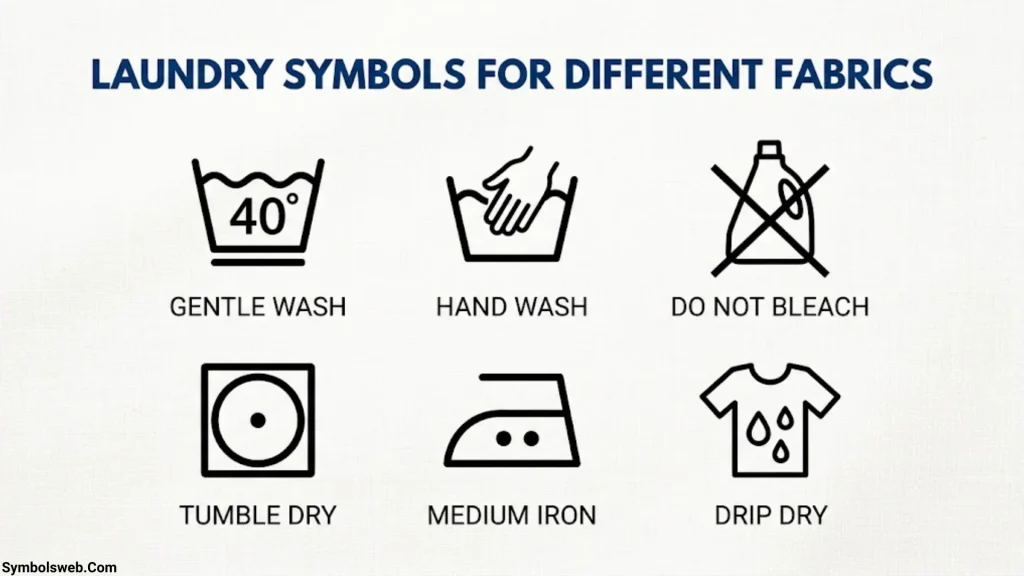
Fabric type can help you understand why a garment needs special care. However, clothing care symbols take priority over general assumptions about cotton, wool, silk, linen, or synthetic materials.
Two garments made from the same fiber may have different requirements because of their dyes, construction, lining, or finish.
Cotton
Cotton garments range from sturdy towels to lightweight shirts and delicate knitwear. Their care requirements can differ considerably.
Check the label for:
- Maximum washing temperature.
- Bleaching restrictions.
- Tumble-drying permission.
- Ironing temperature.
Hotter washing isn’t automatically better. Use a higher temperature only when the garment’s instructions permit it and the cleaning task warrants it.
Wool
Wool fibers can shrink, felt, or lose their shape under unsuitable conditions. Some wool garments tolerate machine washing, while others require hand washing or professional cleaning.
For wool clothing:
- Check for a hand-wash or very gentle washing symbol.
- Use a suitable wool detergent.
- Avoid aggressive agitation and unnecessary wringing.
- Dry flat when the label specifies it.
- Reshape the garment while it’s damp.
Don’t assume that every wool garment requires hand washing. Some are designed for machine washing on an appropriate wool cycle.
Silk
Silk is often sensitive to abrasion, heat, and unsuitable cleaning products. Its care requirements depend on the garment’s construction, dye, and finish.
Before cleaning silk:
- Read the washing and professional-care symbols.
- Avoid harsh treatment and vigorous rubbing.
- Use a suitable detergent when washing is permitted.
- Follow the label’s drying and ironing instructions.
Some silk garments can be washed at home. Others require professional care, so the fiber name alone isn’t enough to choose a method.
Linen
Linen can wrinkle easily and may shrink under unsuitable washing or drying conditions. Its recommended care depends on how the fabric was made and finished.
Check the label before selecting a wash temperature or dryer setting. If ironing is permitted, follow the indicated heat level and any steam restrictions.
Synthetic Fabrics
Polyester, nylon, and other synthetic materials often need less heat than some durable natural fabrics. However, their care instructions still depend on the specific garment.
For synthetic clothing:
- Follow the permitted washing temperature.
- Check whether tumble drying is allowed.
- Avoid excessive heat that could damage fibers or finishes.
- Pay attention to prints, elastic components, and bonded details.
Activewear may also need special attention because of stretch fibers, coatings, or moisture-management finishes.
Delicate Clothing and Blended Fabrics
Blended fabrics combine two or more fibers. A garment may contain cotton and polyester, wool and nylon, or several other materials.
The care label accounts for the garment as a whole, including features beyond its main fiber. Follow the indicated treatment rather than selecting a washing method based only on the fabric’s most familiar component.
How to Read Laundry Tag Symbols Step by Step
Once you understand the basic icons, following garment care instructions becomes much easier. Use this routine before your next load of laundry.
Find and Read the Care Label
Care labels commonly appear inside side seams, waistbands, or other inconspicuous areas. Some garments include multiple labels containing fiber composition and cleaning information.
Read the full label before washing. If the instructions are faded or missing, check the manufacturer’s care guidance when available.
Check the Washing Instructions
Find the washing tub and identify its markings.
Ask yourself:
- Is washing permitted?
- Is there a maximum temperature?
- Does the tub contain a hand symbol?
- Are there one or two underlines?
These details help you choose a suitable washing method and machine program.
Check Bleaching and Drying Instructions
Look for the triangle and square symbols.
Confirm whether bleach is allowed and whether tumble drying is permitted. If the label calls for natural drying, determine whether the garment should hang, drip dry, or lie flat.
Review Ironing and Dry-Cleaning Instructions
Check the iron for dots or a crossed-out marking. Then inspect any circle symbol for professional-care instructions.
If the garment requires a professional cleaning method, don’t replace it with home washing without reliable guidance.
Select Suitable Products and Machine Settings
Choose a detergent compatible with the garment and follow its dosing directions.
Then select a washing-machine program that respects the care label’s temperature and mechanical-action requirements. Avoid overloading the machine, since crowded garments may not wash or rinse effectively.
The best laundry routine starts with the label, not the washing-machine dial.
Common Laundry Symbol Mistakes to Avoid
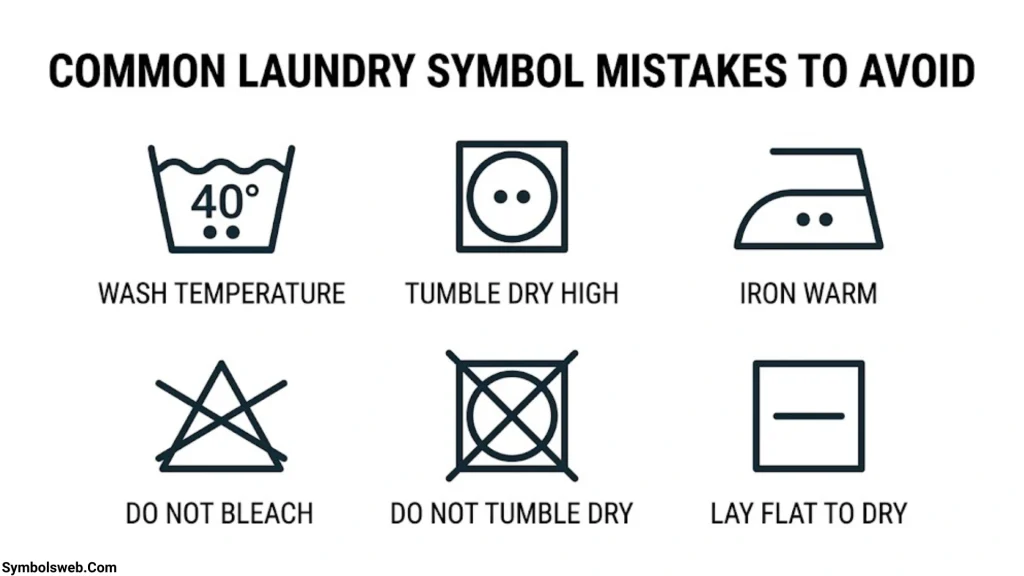
Even when you recognize most laundry icons’ meaning, small misunderstandings can lead to damaged clothes. Avoid these common mistakes to make your laundry routine safer and more effective.
- Ignoring temperature limits: Washing at a higher temperature than the label permits can cause shrinking, fading, or other damage.
- Overlooking underlines: A garment requiring very gentle washing may not tolerate a normal cycle.
- Assuming machine-washable means dryer-safe: Washing and tumble drying are separate treatments.
- Using the wrong bleach: Non-chlorine bleach and chlorine bleach aren’t interchangeable.
- Ignoring crossed-out symbols: These markings indicate prohibited treatments, not optional preferences.
- Assuming every fabric needs the same care: Different finishes, dyes, blends, and construction methods can change the requirements.
- Using aggressive stain treatments: A product that removes a stain may also damage the fabric or its color.
- Confusing appliance icons with clothing symbols: A washing machine’s program labels don’t replace the garment’s care instructions.
- Forgetting professional-cleaning instructions: Some garments need a specific cleaning process that home equipment cannot safely reproduce.
What Should You Do if a Laundry Tag Is Missing?
A missing label doesn’t mean you must guess. Start by checking the manufacturer’s website or contacting its customer service team.
If reliable instructions aren’t available, identify the fabric composition and any delicate details. Choose a cautious cleaning method appropriate to the garment, but remember that fiber content alone cannot establish every care requirement.
For expensive, structured, or particularly delicate clothing, professional advice may be safer than experimentation.
Frequently Asked Questions About Laundry Tag Symbols
What Are the Five Main Laundry Symbols?
The five main categories are washing, bleaching, drying, ironing, and professional textile care. Each category communicates a different part of the garment’s cleaning requirements.
Together, these symbols help you choose appropriate washing methods, temperatures, drying techniques, and finishing treatments.
What Does 40°C Mean on a Laundry Label?
A washing tub marked 40°C indicates the maximum recommended washing temperature for that garment under the applicable labeling system.
You can generally use a lower temperature when appropriate. However, consider the cleaning task, detergent instructions, and fabric requirements before choosing your cycle.
What Does a Circle Mean on a Clothing Label?
A circle indicates professional textile-care instructions in common international care-label systems. Letters or additional markings inside or around the circle provide more specific cleaning guidance.
A plain circle alone doesn’t tell you every detail of the permitted process.
What Does a Square With a Circle Mean?
A square containing a circle indicates tumble drying. Dots or other markings can specify the permitted dryer temperature or restrictions.
A crossed out version means you shouldn’t tumble-dry the garment under that system.
What Does One Line Under a Washing Symbol Mean?
One underline beneath a washing tub indicates a mild washing process with reduced mechanical action in the ISO-style system.
Choose a suitable gentle or easy-care program and follow the label’s temperature instructions.
Can I Machine-Wash Clothes Marked for Hand Washing?
You shouldn’t assume that machine washing is acceptable for a garment marked for hand washing.
Some washing machines offer a hand-wash program, but its suitability depends on the garment and the care-label standard. If the label specifically requires hand washing, follow that instruction unless the manufacturer confirms an appropriate alternative.
What Does the Crossed-Out Triangle Mean?
A crossed-out triangle means do not bleach. Avoid chlorine bleach and oxygen-based bleach unless the manufacturer provides a specific, reliable alternative instruction.
Use a suitable bleach-free detergent and check whether another stain-treatment method is safe for the fabric.
How Can I Tell if Clothes Can Go in the Dryer?
Look for the square containing a circle. This is the tumble-drying symbol.
Check for dots or a cross to determine the permitted heat level or whether tumble drying is prohibited. If no tumble-drying symbol appears, don’t automatically assume that a dryer is safe.
Where Can I Find Laundry Symbols on Clothes?
You can usually find them on care labels inside side seams, waistbands, collars, or other concealed areas.
The exact location depends on the garment. Some items have separate labels for fiber composition, manufacturing information, and care instructions.
What Should I Do if a Laundry Symbol Is Unclear?
Check a reliable care-symbol guide, such as the GINETEX care symbols reference, and compare the complete symbol.
If the meaning remains uncertain, contact the garment’s manufacturer or consult a professional cleaner. Avoid guessing when an incorrect treatment could permanently damage the item.
Conclusion: Use Laundry Tag Symbols to Care for Clothes Correctly
Understanding laundry tag symbols makes it easier to choose suitable washing temperatures, select appropriate drying methods, and avoid damaging your favorite clothes. The washing tub, triangle, square, iron, and circle each communicate a different part of the care process.
Pay particular attention to numbers, dots, underlines, and crossed-out markings. These small details can change the recommended treatment significantly. When you’re unsure, check the complete label instead of relying on the fabric name alone.
Make reading care labels part of your regular laundry routine. A few seconds spent checking the instructions can help your clothes retain their shape, color, and appearance for longer.

Eliana Foster is a writer with a passion for exploring the meanings behind symbols, traditions, and cultural history. She enjoys breaking down complex topics into simple, engaging articles that are easy for everyone to understand. Eliana is also the fictional author of The Hidden Language of Silent Marks and Beyond the Circle of Ancient Signs, two original book concepts created for her author profile. When she’s not writing, she loves visiting museums, reading about mythology, and researching the stories behind symbols from around the world. Her goal is to help readers discover the fascinating meanings hidden in everyday signs and ancient emblems.
 Ethan Holloway
 Jordan Hayes