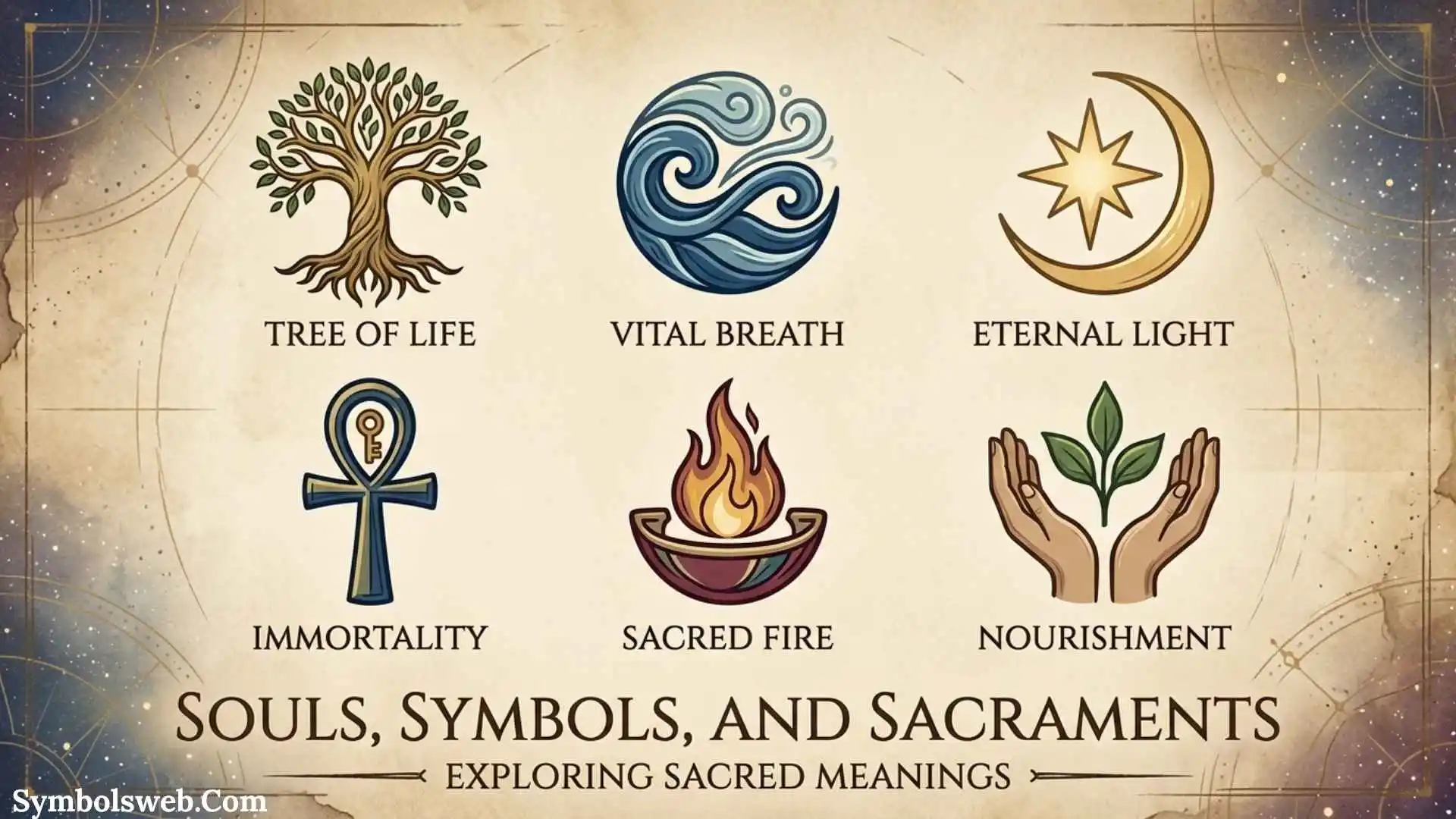
souls symbols and sacraments has always been a powerful idea woven into human history, faith, and inner experience. Across cultures and religions, people have used symbols and sacred rituals to understand the soul, life, death, and the unseen world. These meanings are not just religious. They are deeply emotional, psychological, and cultural.
When we explore this topic, we uncover something profound. Humans everywhere have tried to give form to the invisible. Symbols and sacraments became bridges between the physical world and the spiritual world.
Souls Symbols and Sacraments: (Quick Answer)
Souls symbols and sacraments are sacred signs and rituals used across cultures and religions to represent the soul, spiritual transformation, and connection with the divine. Symbols express meaning visually, while sacraments are sacred rites believed to carry spiritual grace and inner change.
Quick Facts About Souls Symbols and Sacraments
| Aspect | Information |
| Origin | Ancient civilizations and early religious traditions |
| Historical Significance | Used in rituals, burial practices, and sacred teachings |
| Main Meaning | Representation of the soul and divine connection |
| Spiritual Meaning | Inner transformation, purity, and spiritual awakening |
| Cultural Importance | Found in global religions, myths, and traditions |
| Modern Usage | Art, tattoos, psychology, rituals, and spiritual practices |
What Are Souls Symbols and Sacraments?
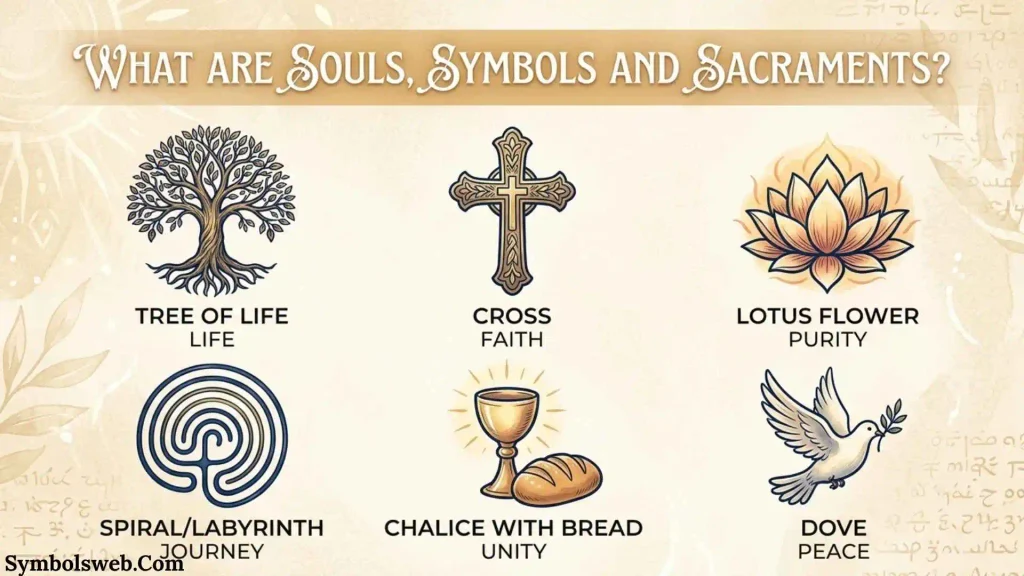
Souls symbols and sacraments refer to two deeply connected ideas:
- Symbols of the soul: Visual or conceptual representations of the human spirit, life force, or consciousness.
- Sacraments: Sacred rituals or ceremonies believed to bring divine grace, spiritual cleansing, or transformation.
The idea goes back thousands of years. Early humans used symbols in caves, burial sites, and rituals to explain life and death. Over time, religions developed structured sacraments like baptism, communion, and initiation rites.
In Christianity, sacraments became formal sacred acts. In other traditions, similar rituals existed under different names. For example, purification baths in ancient Egypt or initiation ceremonies in tribal cultures.
Across time, these practices evolved but kept one core idea: the soul needs connection, meaning, and transformation.
Deep Symbolic Meaning of Souls Symbols and Sacraments
Spiritual Level
At the spiritual level, souls symbols and sacraments represent:
- The journey of the soul beyond physical life
- Purification and rebirth
- Connection with higher consciousness
- Divine presence in human life
For example, water in baptism symbolizes cleansing and spiritual renewal. Fire in many traditions represents transformation and divine energy.
These symbols are not random. They reflect humanity’s deep belief that the soul is eternal and constantly evolving.
Psychological Level
From a psychological perspective, these symbols connect to:
- Carl Jung’s archetypes of transformation
- Human fear of death and desire for meaning
- Emotional healing through ritual
- The subconscious need for structure and belief
Jung believed symbols speak directly to the unconscious mind. That is why sacred rituals feel emotionally powerful even when people do not fully understand them intellectually.
For many individuals, sacraments create emotional stability. They mark important life transitions like birth, marriage, and death.
Cultural Level
Culturally, souls symbols and sacraments serve as:
- Shared identity within communities
- Moral and spiritual guidance systems
- Traditions passed through generations
- Tools for storytelling and meaning-making
For example, marriage rituals exist in almost every culture. While the form changes, the meaning remains the same: unity, commitment, and spiritual bonding.
Types and Variations of Souls Symbols and Sacraments
Water Symbolism
- Visual: Rivers, oceans, holy water
- Meaning: Purification, life, rebirth
- Cultural Connection: Baptism in Christianity, ritual cleansing in Hindu traditions
- Where It Appears: Religion, mythology, dreams
Fire Symbolism
- Visual: Flames, candles, sacred fire
- Meaning: Transformation, destruction of ego, divine presence
- Cultural Connection: Hindu fire rituals (Agni), eternal flame in temples
- Where It Appears: Ceremonies, mythology, spiritual rituals
Light Symbolism
- Visual: Sun, halo, glowing aura
- Meaning: Enlightenment, truth, divine wisdom
- Cultural Connection: Saints in Christian art, enlightenment in Buddhism
- Where It Appears: Art, religious imagery, dreams
Sacred Bread and Wine (Sacraments)
- Visual: Bread, wine, communion cup
- Meaning: Spiritual nourishment, unity with the divine
- Cultural Connection: Christian Eucharist
- Where It Appears: Churches, religious ceremonies
Circle Symbolism
- Visual: Rings, cycles, mandalas
- Meaning: Eternity, unity, soul continuity
- Cultural Connection: Indigenous rituals, Eastern meditation traditions
- Where It Appears: Art, architecture, spiritual practices
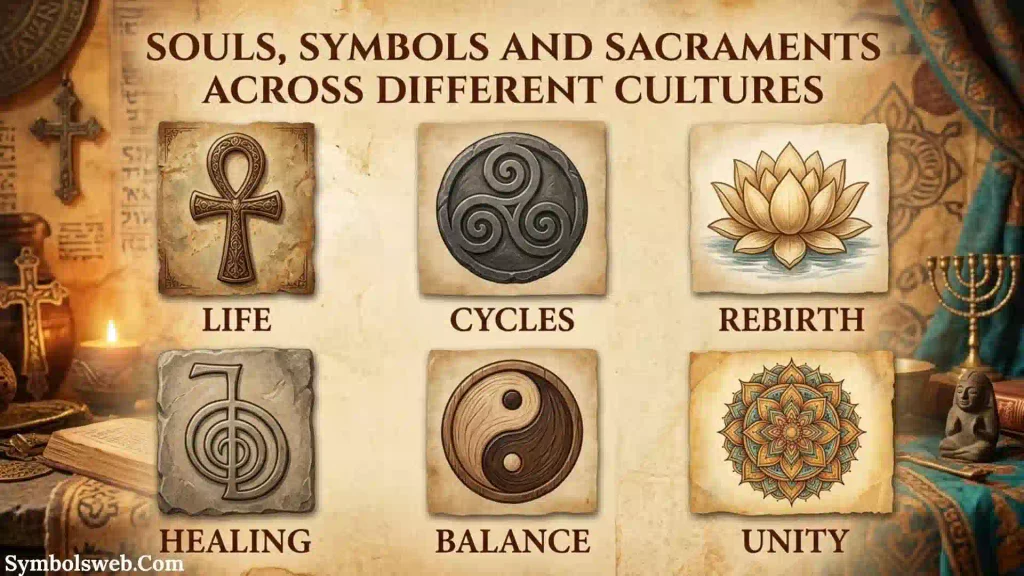
Souls Symbols and Sacraments Across Different Cultures
Ancient Egypt
In Ancient Egypt, the soul was believed to have multiple parts like the “Ka” and “Ba.” Symbols such as the Ankh represented eternal life. Burial rituals were sacred sacraments ensuring safe passage to the afterlife.
Ancient Greece
The Greeks believed in the immortal soul and used rituals to honor gods like Hades and Persephone. Symbols of the underworld represented transition and rebirth.
Roman Culture
Romans adapted Greek beliefs and added structured religious sacraments. Ritual offerings and ceremonies were essential for connecting humans with divine forces.
Eastern Traditions
In Hinduism and Buddhism, the soul is seen as eternal and cyclical. Symbols like lotus flowers represent spiritual awakening. Ritual purification and meditation act as sacraments for inner growth.
Indigenous Traditions
Many Indigenous cultures use sacred dances, smoke rituals, and nature-based symbols. These practices honor ancestors and maintain balance between physical and spiritual worlds.
Modern Interpretations
Today, these symbols appear in psychology, art, wellness practices, and personal spirituality. People use them to find meaning in identity, healing, and life transitions.
Similar Symbols and Their Meanings
| Symbol | Similarity | Difference |
| Water vs Fire | Both represent transformation | Water cleanses, fire transforms through destruction |
| Circle vs Line | Both represent life journey | Circle = eternity, line = progression |
| Light vs Darkness | Both represent duality | Light = awareness, darkness = mystery |
Common misconception: Many people think symbols have one fixed meaning. In reality, meaning changes based on culture and context.
Souls Symbols and Sacraments in Mythology and Folklore
In mythology, souls symbols often represent journeys between worlds.
- In Egyptian mythology, the soul travels through the underworld.
- In Greek myths, heroes descend into death and return transformed.
- In Eastern folklore, reincarnation stories reflect soul cycles.
Sacraments in folklore often appear as sacred trials, initiations, or divine blessings given by gods.
These stories shaped how modern religions understand transformation and faith.
Souls Symbols and Sacraments in Art, Literature, Movies, and Pop Culture
- Art: Renaissance paintings use halos and light to show divine souls
- Literature: Books often describe soul journeys as inner transformation
- Movies: Films like fantasy epics show rebirth, sacrifice, and spiritual awakening
- Tattoos: Symbols like crosses, mandalas, and flames represent personal beliefs
- Fashion: Spiritual symbols appear in modern clothing designs
- Pop culture: Music and media often explore themes of soul searching
These representations show that humanity still deeply connects with spiritual symbolism.
Spiritual and Dream Meaning of Souls Symbols and Sacraments
In dreams, these symbols often represent inner change:
- Water dreams may signal emotional cleansing
- Fire dreams may indicate transformation or stress release
- Light dreams suggest clarity or awakening
- Ritual dreams may show personal growth or transition
Spiritually, these symbols often appear during life changes, emotional healing, or deep reflection.
Positive and Negative Meanings of Souls Symbols and Sacraments
| Positive Meaning | Negative Meaning |
| Spiritual growth | Fear of change |
| Inner peace | Emotional struggle |
| Transformation | Loss or destruction |
| Divine connection | Confusion or doubt |
Symbols are not fixed. Their meaning depends on personal experience and emotional state.
Why Humans Are Attracted to Souls Symbols and Sacraments
Humans are naturally drawn to these symbols because:
- The brain looks for patterns and meaning
- People need emotional comfort during uncertainty
- Cultures pass symbolic stories through generations
- The soul concept helps explain life and death
- Rituals create emotional stability and identity
These symbols make the invisible world feel understandable.
Modern Uses of Souls Symbols and Sacraments
Today, these ideas appear in:
- Tattoos representing identity and belief
- Jewelry with spiritual meaning
- Meditation and mindfulness practices
- Branding in wellness industries
- Social media spirituality trends
- Home decor with sacred symbols
- Personal healing rituals
They continue to evolve while keeping ancient meaning alive.
Interesting Facts About Souls Symbols and Sacraments
- Many ancient cultures independently created similar soul symbols
- Water is the most universal spiritual symbol across religions
- Some burial rituals are over 100,000 years old
- Jung believed symbols are part of the collective unconscious
- The concept of sacraments exists in nearly all major religions
- Mandalas are used in both art and meditation
- Fire rituals appear in over 70 percent of ancient traditions
Frequently Asked Questions
What are souls symbols and sacraments?
They are spiritual symbols and sacred rituals representing the soul, transformation, and connection with the divine.
Why are symbols important in spirituality?
They help people understand complex spiritual ideas in simple visual or ritual forms.
Are sacraments only found in Christianity?
No, similar sacred rituals exist in many religions and cultures worldwide.
What do soul symbols represent in dreams?
They often represent emotional change, healing, or spiritual awakening.
Why do humans use symbols for the soul?
Because the soul is invisible, symbols help express its meaning in a tangible way.
Conclusion
Souls symbols and sacraments reveal how deeply humans seek meaning beyond the physical world. They connect emotion, belief, culture, and psychology into a shared language of transformation. Across history, they have guided people through birth, death, and spiritual awakening.
Even today, they continue to shape identity, healing, and faith in powerful ways.At their core, they remind us of one simple truth: the human soul always looks for connection, meaning, and light.

Eliana Foster is a writer with a passion for exploring the meanings behind symbols, traditions, and cultural history. She enjoys breaking down complex topics into simple, engaging articles that are easy for everyone to understand. Eliana is also the fictional author of The Hidden Language of Silent Marks and Beyond the Circle of Ancient Signs, two original book concepts created for her author profile. When she’s not writing, she loves visiting museums, reading about mythology, and researching the stories behind symbols from around the world. Her goal is to help readers discover the fascinating meanings hidden in everyday signs and ancient emblems.
 Jordan Hayes
 Ethan Holloway