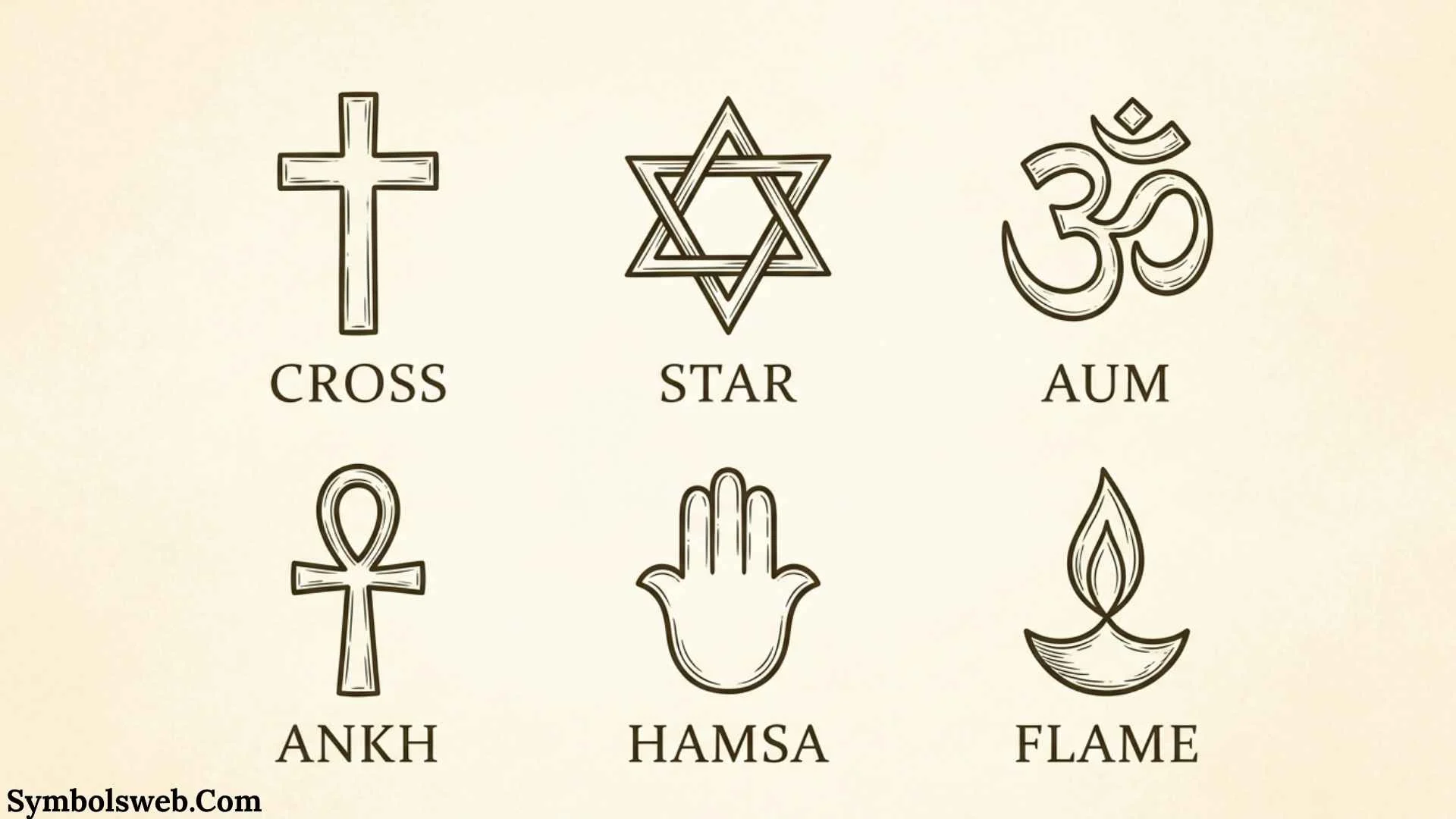
Symbols of God appear in every corner of human history, from ancient temples carved in stone to modern art, dreams, and personal spirituality. These symbols are more than drawings or icons. They carry deep emotional, cultural, and spiritual meanings that connect people to the divine.
Across civilizations, humans have used symbols of God to express what words cannot fully describe. They represent faith, creation, protection, and the mystery of existence itself.In this guide, you will explore how these symbols evolved, what they mean in different cultures, and why they still shape human belief and identity today.
Symbols of God: (Quick Answer)
Symbols of God are visual, cultural, or spiritual representations used to express the idea of a divine being or ultimate reality. They appear in religions, mythology, and sacred art, helping humans understand God’s presence, power, and qualities in a symbolic and meaningful way.
Quick Facts About Symbols of God
| Aspect | Information |
| Origin | Ancient civilizations such as Egypt, Mesopotamia, India, Greece |
| Historical Significance | Used in rituals, temples, and sacred texts to represent divine presence |
| Main Meaning | Representation of God, divine power, and universal truth |
| Spiritual Meaning | Connection between human soul and higher consciousness |
| Cultural Importance | Shapes religious identity, traditions, and moral systems |
| Modern Usage | Art, tattoos, architecture, jewelry, meditation practices |
What Are Symbols of God?
Symbols of God are visual or conceptual representations created by humans to express the idea of the divine. Since God is often considered beyond physical form, symbols become a bridge between human understanding and spiritual mystery.
In early human history, people used natural elements like the sun, fire, water, and animals to represent divine power. Over time, organized religions developed more structured symbols such as the cross in Christianity, the Om in Hinduism, and the Star and Crescent in Islam.
These symbols are not just decorative. They serve as reminders of faith, moral guidance, and the presence of something greater than human life.
Deep Symbolic Meaning of Symbols of God
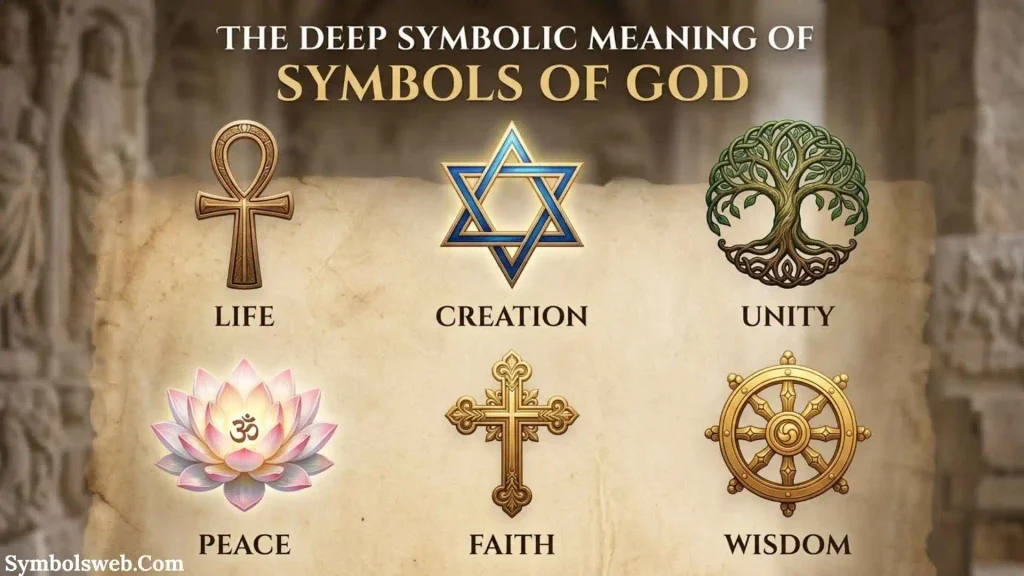
Spiritual Level
On a spiritual level, symbols of God represent connection with the divine source. They are used in prayer, meditation, and rituals to focus the mind and open the heart.
For example, the Om symbol in Hinduism is believed to represent the vibration of the universe. It is both sound and meaning, symbolizing creation itself.
Many spiritual traditions believe that focusing on divine symbols can help individuals experience inner peace and spiritual awakening.
Psychological Level
From a psychological perspective, symbols of God reflect deep human needs for meaning, safety, and identity. Carl Jung described such symbols as archetypes, universal images stored in the collective unconscious.
For instance, the image of a divine protector often reflects the human desire for guidance and security. These symbols help people process fear, uncertainty, and life transitions.
They also act as emotional anchors during difficult times.
Cultural Level
Culturally, symbols of God unify communities. They appear in rituals, festivals, architecture, and national identity.
For example, churches, mosques, and temples are often designed around sacred symbols that reflect divine presence. These symbols reinforce shared values and traditions, helping societies maintain moral and spiritual structure.
Types and Variations of Symbols of God
The Cross
Visual Description: Two intersecting lines
Meaning: Sacrifice, salvation, divine love
Symbolism: Christianity, resurrection of Jesus Christ
Where It Appears: Churches, jewelry, art, religious ceremonies
Om (ॐ)
Visual Description: Curved sacred Sanskrit symbol
Meaning: Universal sound of creation
Symbolism: Hindu philosophy, cosmic vibration
Where It Appears: Temples, meditation practices, spiritual art
Star and Crescent
Visual Description: Crescent moon with a star
Meaning: Faith, guidance, divine light
Symbolism: Islamic tradition
Where It Appears: Flags, mosques, cultural architecture
Eye of Providence
Visual Description: Eye inside a triangle with rays
Meaning: Divine watchfulness
Symbolism: God’s omniscience and protection
Where It Appears: Religious art, historical architecture
Lotus Flower
Visual Description: Blooming flower rising from water
Meaning: Purity and enlightenment
Symbolism: Hinduism and Buddhism
Where It Appears: Temples, meditation art, spiritual texts
Symbols of God Across Different Cultures
Ancient Egypt
The Ankh symbol represented eternal life and divine power. It was associated with gods like Ra and Osiris.
Ancient Greece
Greek culture used symbols like lightning bolts for Zeus, representing divine authority and control over nature.
Roman Culture
Romans adopted many Greek symbols, using them to represent Jupiter and other gods, emphasizing law and order.
Eastern Traditions
In Hinduism and Buddhism, symbols like Om and the lotus reflect spiritual awakening and unity with the universe.
Indigenous Traditions
Many indigenous cultures used natural symbols such as the sun, eagle, and river to represent creator spirits and natural balance.
Modern Interpretations
Today, symbols of God are often personal and blended across traditions, used in art, tattoos, and digital culture.
Similar Symbols and Their Meanings
| Symbol | Similarity | Difference |
| Cross vs Ankh | Both represent life and divinity | Cross focuses on sacrifice, Ankh on eternal life |
| Om vs Chant symbols | Both represent divine sound | Om is universal, others are tradition-specific |
| Eye of Providence vs Sun symbol | Both represent divine presence | Eye symbolizes awareness, sun symbolizes energy |
Many symbols overlap in meaning because humans across cultures share similar spiritual questions.
Symbols of God in Mythology and Folklore
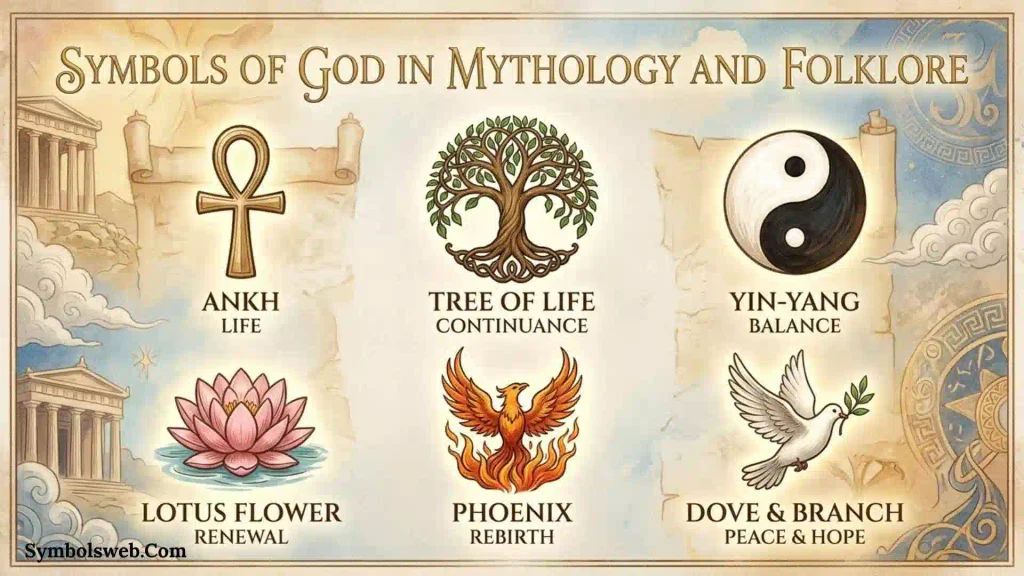
Mythology often uses symbols to explain divine power. In Norse mythology, Odin is associated with wisdom symbols like the raven. In Hindu mythology, gods like Shiva are linked with the trident, representing creation, preservation, and destruction.
Folklore uses symbols to teach moral lessons. Sacred animals, celestial objects, and elemental forces often represent divine will and human destiny.
These stories helped preserve symbolic meanings across generations.
Symbols of God in Art, Literature, Movies, and Pop Culture
In art, symbols of God appear in Renaissance paintings, stained glass windows, and sacred sculptures.
In literature, divine symbols often represent hope, morality, or fate.
In movies, symbols like light rays, crosses, or cosmic imagery represent higher forces or destiny.
In modern tattoos and fashion, people use symbols of God to express faith, protection, or personal identity.
Spiritual and Dream Meaning of Symbols of God
In dreams, symbols of God often appear during moments of emotional transformation. Seeing light, sacred geometry, or divine figures may represent guidance or awakening.
In meditation, these symbols can create a sense of peace and higher awareness.
Positive interpretations include protection, clarity, and healing. However, they can also reflect inner conflict or a search for meaning.
Positive and Negative Meanings of Symbols of God
| Positive Meaning | Negative Meaning |
| Guidance and protection | Fear of judgment |
| Inner peace and faith | Religious anxiety |
| Spiritual awakening | Confusion about beliefs |
| Hope and purpose | Dependence on external authority |
Symbols can carry both light and shadow depending on personal interpretation and cultural context.
Why Humans Are Attracted to Symbols of God
Humans are naturally drawn to symbols of God because they help explain the unknown. The brain processes symbols quickly, making them powerful tools for meaning-making.
These symbols connect to memory, emotion, and identity. They also offer comfort during uncertainty by suggesting order in the universe.
On a deeper level, they reflect humanity’s search for belonging and purpose.
Modern Uses of Symbols of God
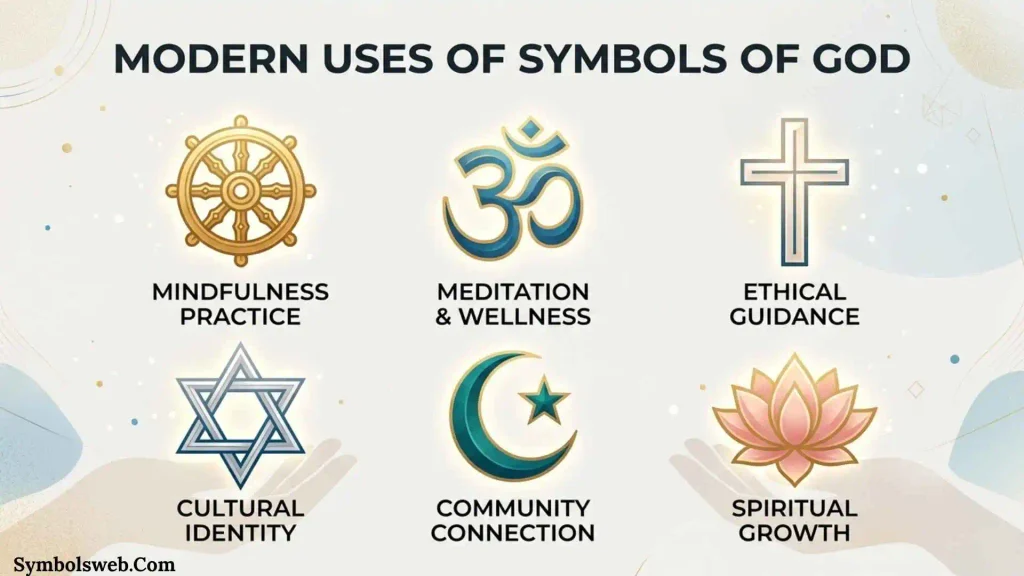
Today, symbols of God are widely used in:
- Tattoos representing faith or protection
- Jewelry like crosses, pendants, and rings
- Fashion designs inspired by sacred geometry
- Branding and logos expressing trust or authority
- Social media as expressions of identity
- Home decor for spiritual ambiance
- Meditation spaces for focus and calm
These modern uses show how ancient meanings continue to evolve.
Interesting Facts About Symbols of God
- The Om symbol is considered one of the oldest spiritual sounds in human history.
- The cross existed in pre-Christian cultures as a solar symbol.
- Many ancient temples were built based on sacred geometric patterns.
- The Eye of Providence appears in both religious and national symbols.
- Lotus flowers can grow in muddy water yet remain clean, symbolizing purity.
- Some cultures believed symbols could physically protect against evil forces.
- Sacred symbols were often restricted to priests or spiritual leaders in ancient societies.
Frequently Asked Questions
What is the most common symbol of God?
The most common symbol varies by religion, but the cross, Om, and Star and Crescent are widely recognized globally.
Why do different religions use different symbols of God?
Different cultures developed unique languages, beliefs, and traditions, leading to distinct symbolic representations of the divine.
Can symbols of God have personal meanings?
Yes, many people interpret divine symbols in personal ways based on their experiences and beliefs.
Are symbols of God only religious?
No, they can also be cultural, philosophical, or psychological representations of higher meaning.
Do symbols of God have power?
Their power comes from meaning, belief, and emotional connection rather than physical properties.
Conclusion
Symbols of God reflect humanity’s deepest search for meaning, connection, and understanding of the divine. They bridge the gap between the seen and unseen, shaping cultures, beliefs, and personal identities.
From ancient temples to modern tattoos, these symbols continue to guide human thought and emotion. They remind us that the idea of God is not only spiritual but also deeply human.

Jordan Hayes is a writer with a passion for exploring the history, meanings, and cultural significance behind symbols from around the world. He enjoys turning complex topics into clear, engaging content that anyone can understand. Jordan is also the fictional author of The Silent Language of Ancient Marks and Hidden Symbols Beyond the Surface, two original book concepts created for his author profile. When he’s not writing, he spends time researching myths, traditions, and forgotten stories that inspire his work. His goal is to help readers discover the deeper meanings behind the symbols they encounter every day.
 Eliana Foster
 Ethan Holloway