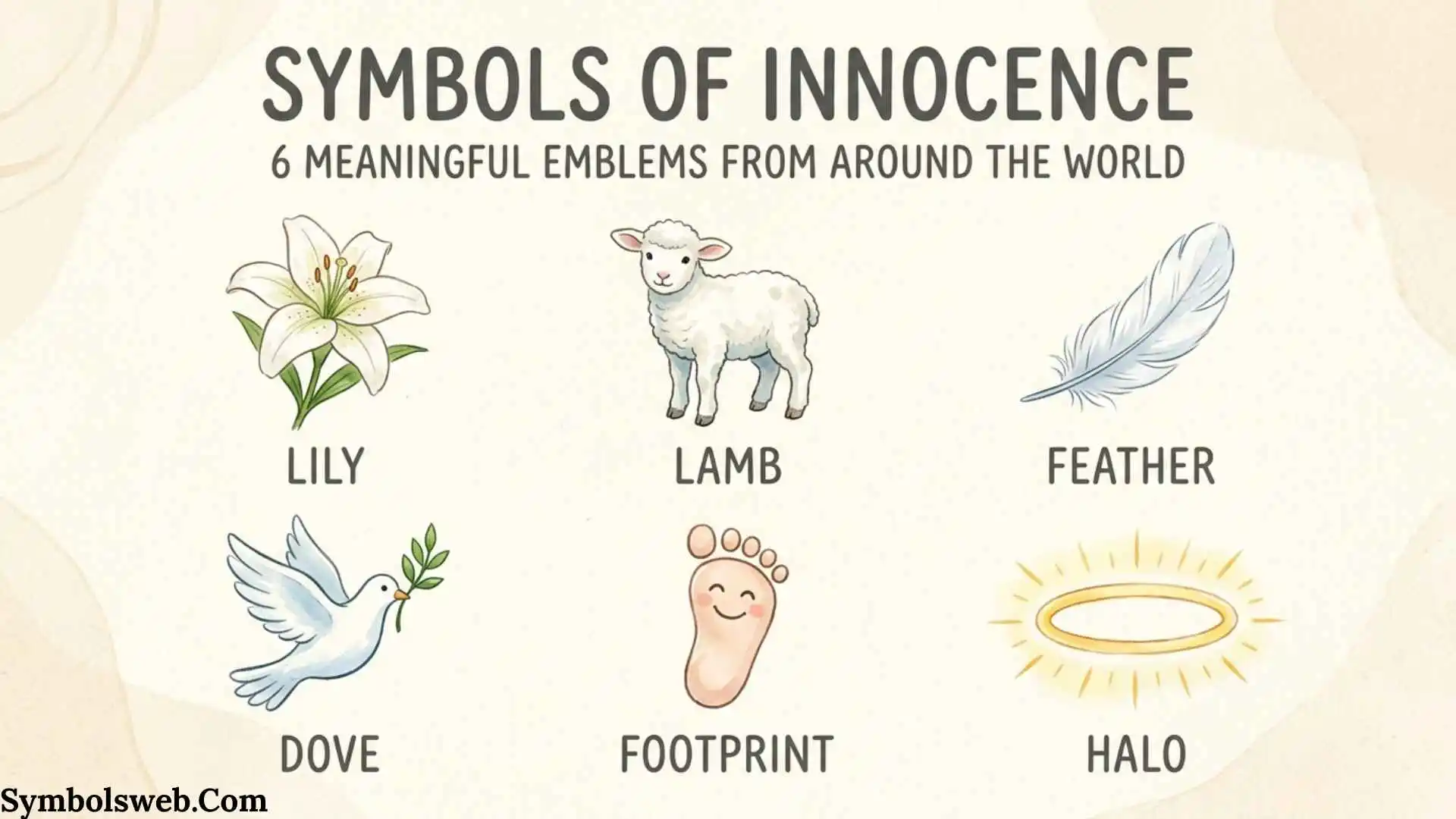
Symbols of innocence have fascinated humanity for thousands of years. Whether seen in a white dove soaring across the sky, a child laughing without fear, or a blooming lily untouched by the world, these symbols speak directly to our hearts. They remind us of purity, honesty, hope, and the beauty of beginnings.
Across history, cultures, religions, and psychology, symbols of innocence have carried powerful meanings that reveal how humans understand goodness, vulnerability, and the human spirit.
In this guide, you’ll discover the deeper meanings behind symbols of innocence, their origins, cultural significance, spiritual interpretations, and why they continue to inspire people around the world.
Powerful Symbols of Innocence: (Quick Answer)
Symbols of innocence are objects, animals, colors, plants, or figures that represent purity, goodness, honesty, moral integrity, and freedom from corruption. Common examples include white doves, lambs, lilies, children, butterflies, and the color white. These symbols appear in religion, mythology, art, literature, psychology, and cultural traditions worldwide.
Quick Facts About Symbols of Innocence
| Aspect | Information |
| Origin | Ancient civilizations and early spiritual traditions |
| Historical Significance | Represented purity, virtue, truth, and divine goodness |
| Main Meaning | Purity, honesty, simplicity, and moral goodness |
| Spiritual Meaning | Connection to the soul, divine grace, and spiritual purity |
| Cultural Importance | Appears in myths, religions, ceremonies, and art worldwide |
| Modern Usage | Tattoos, literature, fashion, branding, spirituality, and media |
What Are Symbols of Innocence?
Symbols of innocence are visual or conceptual representations associated with purity, goodness, sincerity, and an uncorrupted state of being.
The idea of innocence is as old as civilization itself. Ancient societies often associated innocence with divine favor, childhood, purity of intention, and harmony with nature. Over time, different cultures developed unique symbols that conveyed these values.
For example:
- Ancient Egyptians associated purity with sacred lotus flowers.
- Greeks linked innocence with youthful deities and untouched nature.
- Christians used lambs and doves as symbols of spiritual purity.
- Eastern traditions connected innocence to lotus blossoms rising unstained from muddy water.
These symbols became important because they helped societies communicate ideals that were difficult to express through words alone.
Symbols of Innocence Tattoos
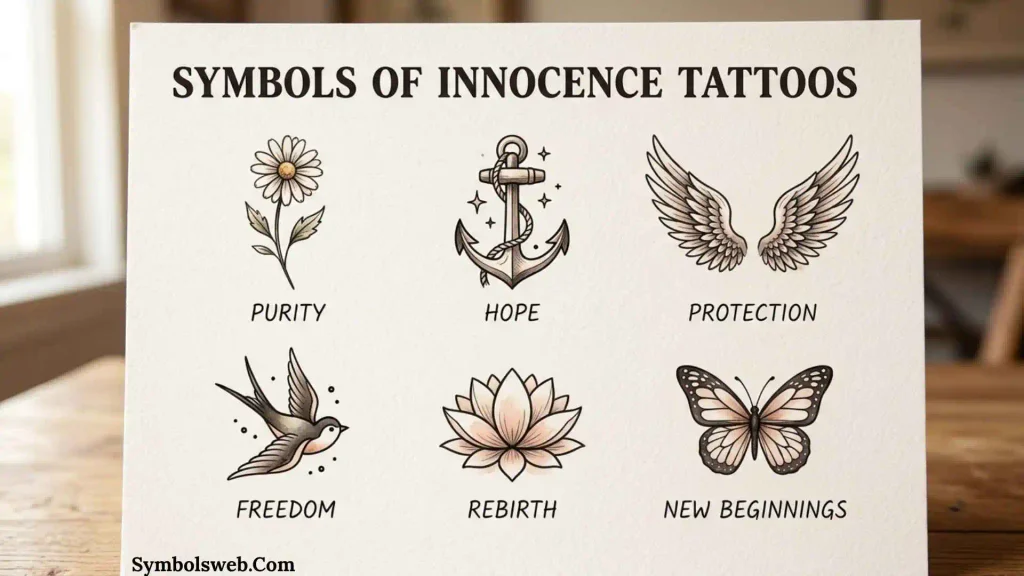
Innocence tattoos often represent purity, simplicity, childhood, or a sincere approach to life. Common designs include white flowers, doves, lambs, butterflies, angels, and delicate stars. Each symbol can carry a slightly different meaning, allowing people to choose a design that reflects their personal interpretation of innocence.
For some, an innocence tattoo represents a peaceful or gentle personality. For others, it may symbolize childhood memories, a fresh beginning, or the desire to preserve kindness despite difficult experiences. The meaning ultimately depends on the design and the story behind it.
Symbol of Innocence and Purity
White is one of the most recognizable visual representations of innocence and purity. Because of its association with cleanliness, simplicity, and light, white flowers, white feathers, and doves are frequently used to express these ideas.
A dove can suggest peace and gentleness, while a white lily is often associated with purity and renewal. These symbols are especially meaningful when someone wants to represent a clean heart, peaceful intentions, or a new chapter in life.
Symbols of Innocence in Art
Artists have represented innocence through simple forms, soft imagery, youthful figures, nature, and light throughout history. Flowers, birds, children, animals, and bright colors can all communicate a sense of vulnerability and purity.
In visual art, innocence is often contrasted with darker imagery to make its meaning more powerful. A delicate flower growing in a difficult environment, for example, can symbolize goodness surviving despite hardship. This makes innocence a flexible artistic theme rather than a symbol with only one fixed meaning.
Symbolic Symbols of Innocence
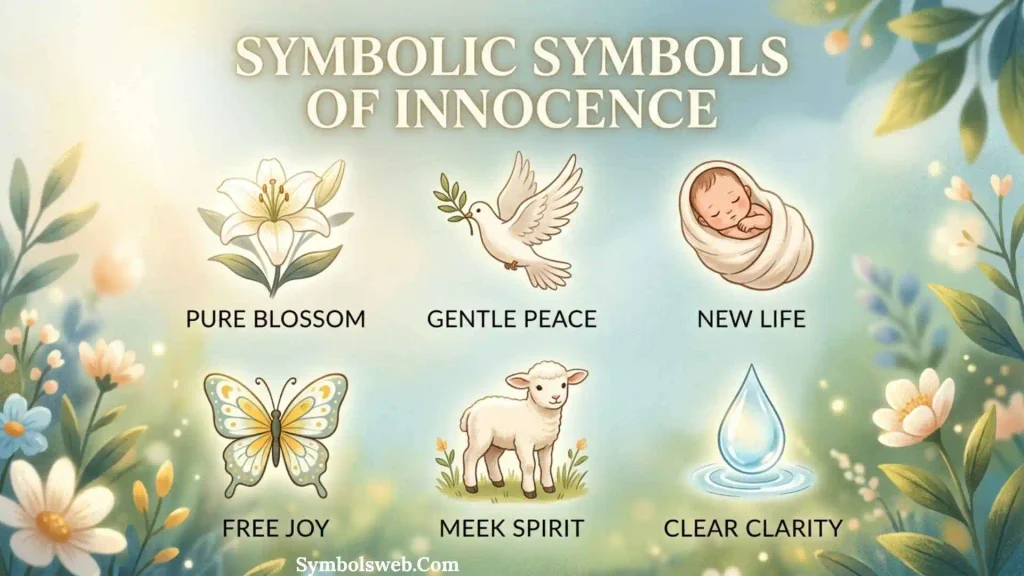
Many objects can function as symbolic representations of innocence. Butterflies may suggest youthful transformation, while feathers can represent gentleness and spiritual protection. White flowers commonly communicate purity, and stars may represent hope, wonder, and the uncomplicated beauty associated with childhood.
The meaning of these symbols can change depending on culture, religion, artwork, and personal experience. Therefore, the most appropriate symbol is often the one that connects with the individual’s own understanding of innocence.
Spiritual Symbols of Innocence
In spiritual traditions, innocence is often connected with purity of heart, compassion, humility, and a sincere relationship with the divine. Doves, angels, white garments, light, feathers, and white flowers are frequently used to communicate these qualities.
A spiritual symbol of innocence does not necessarily mean naivety. It can instead represent an intention to remain compassionate, honest, and peaceful while moving through life’s challenges. This interpretation gives spiritual symbols of innocence a deeper meaning beyond their appearance.
Symbols of Innocence Animals
Animals are powerful symbols of innocence because many of them are associated with gentleness, vulnerability, playfulness, or trust. Lambs are particularly well known as representations of innocence, while rabbits can suggest gentleness and harmlessness.
Young animals can also represent the uncomplicated nature of childhood. Doves, deer, butterflies, and small birds are other examples that may be used in art, tattoos, stories, and spiritual symbolism to express innocence or purity.
Symbols of Innocence in Literature
Literature frequently uses innocence as a theme to explore childhood, morality, vulnerability, and personal growth. Writers may represent innocence through children, gardens, white clothing, animals, untouched landscapes, or characters who initially have an idealistic view of the world.
These symbols become especially meaningful when a character encounters betrayal, violence, injustice, or another difficult experience. The contrast between an innocent beginning and later understanding allows writers to explore how people change as they gain knowledge and experience.
Loss of Innocence Symbols
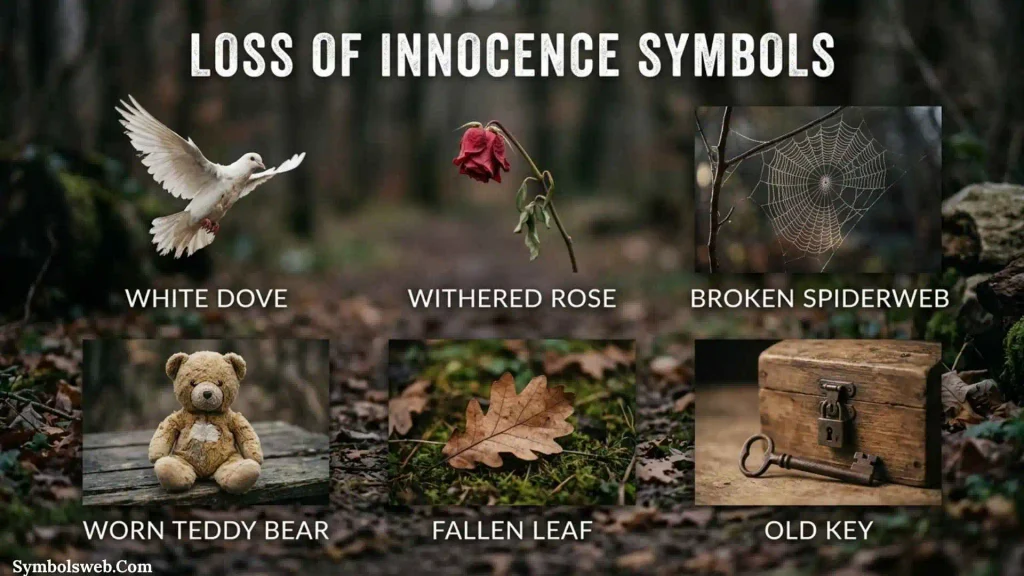
The loss of innocence is commonly represented through visual or narrative changes. A broken toy, fallen leaf, darkened landscape, damaged flower, or transition from light to darkness can symbolize the end of a more innocent period.
In literature and art, the loss of innocence does not always mean becoming completely negative or immoral. It can represent the painful process of discovering that the world is more complicated than previously believed. In this sense, symbols of lost innocence often connect with maturity, knowledge, and emotional growth.
Symbols of Purity and Innocence
Purity and innocence overlap, but they are not always identical concepts. Purity often focuses on cleanliness, moral goodness, or an untainted state, whereas innocence can emphasize a lack of experience, harmful intention, or worldly knowledge.
White lilies, doves, pearls, snow, white feathers, and clear water are frequently used to communicate purity and innocence. Their simple and clean visual qualities make them particularly effective symbols in art, literature, religious imagery, and personal designs.
Symbols of Childhood Innocence
Childhood innocence is often represented through toys, balloons, butterflies, flowers, storybooks, playgrounds, and small animals. These images evoke curiosity, imagination, playfulness, and a period of life before greater responsibilities and experiences shape a person’s worldview.
Some childhood symbols also carry a nostalgic meaning. A teddy bear, old toy, or childhood home can represent not only innocence but also memories of safety, happiness, and simpler times. For this reason, childhood innocence symbols are often used to express both purity and nostalgia.
Deep Symbolic Meaning of Symbols of Innocence
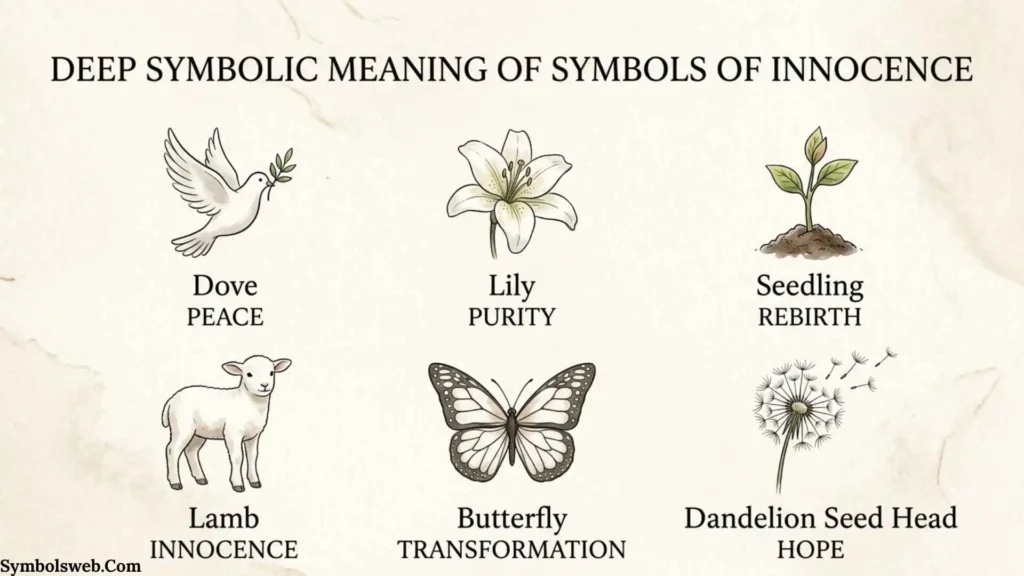
Spiritual Level
At the spiritual level, innocence is often viewed as the soul’s original state before it becomes burdened by fear, ego, or worldly concerns.
Many spiritual traditions teach that innocence is not ignorance. Instead, it is a state of inner purity and trust.
Spiritual symbolism includes:
- Divine grace
- Purity of heart
- Faith
- Spiritual awakening
- Connection to higher consciousness
- Return to one’s true self
A white dove, for example, often symbolizes a pure spirit and divine peace.
Inner Transformation
Many spiritual journeys involve rediscovering innocence after experiencing life’s challenges. This process represents wisdom combined with purity rather than naïveté.
Psychological Level
Psychologically, symbols of innocence connect to deep human emotions and archetypes.
Jungian Symbolism
Psychologist Carl Jung believed that humans share universal symbols known as archetypes.
The Innocent Archetype represents:
- Hope
- Trust
- Optimism
- Simplicity
- Goodness
People are naturally attracted to symbols of innocence because they evoke feelings of safety, comfort, and emotional healing.
Emotional Attraction
When people see innocent symbols, they often experience:
- Nostalgia
- Comfort
- Peace
- Trust
- Protection
- Hope for the future
These emotions explain why innocent imagery remains powerful in storytelling and advertising.
Cultural Level
Every culture values innocence in different ways.
Communities often use symbols of innocence to teach moral values, celebrate new beginnings, and preserve traditions.
A simple image of a child holding a flower can communicate ideas about hope, future generations, and human goodness without a single word being spoken.
Types and Variations of Symbols of Innocence
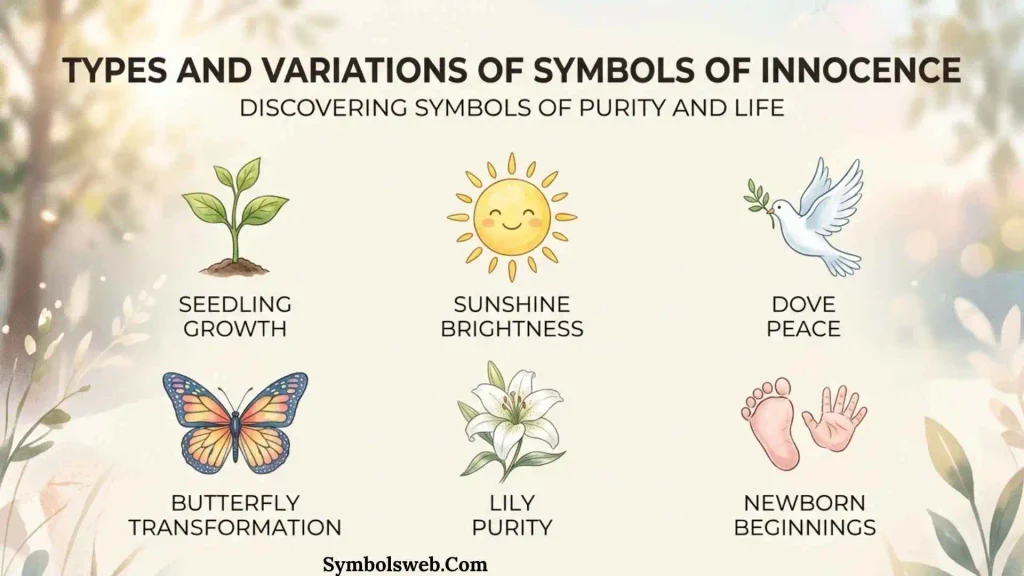
White Dove
Visual Description
A white bird with soft feathers and graceful flight.
Meaning
Peace, purity, and divine blessing.
Symbolism
Represents innocence untouched by violence or corruption.
Cultural Connection
Common in Christianity, Judaism, and many peace movements.
Where It Appears
- Religion
- Art
- Weddings
- Literature
- Memorial ceremonies
Lamb
Visual Description
A young sheep with soft white wool.
Meaning
Gentleness and innocence.
Symbolism
Represents vulnerability and purity.
Cultural Connection
Strongly associated with Christian traditions.
Where It Appears
- Religious texts
- Paintings
- Folklore
- Spiritual teachings
Lily Flower
Visual Description
Elegant flower with white petals.
Meaning
Purity and virtue.
Symbolism
Spiritual innocence and moral goodness.
Cultural Connection
Associated with religious ceremonies and sacred art.
Where It Appears
- Churches
- Weddings
- Paintings
- Poetry
Child
Visual Description
Young human being.
Meaning
Natural innocence and honesty.
Symbolism
Untouched potential and purity of spirit.
Cultural Connection
Universal across civilizations.
Where It Appears
- Literature
- Mythology
- Film
- Religion
Butterfly
Visual Description
Colorful winged insect.
Meaning
Transformation and purity.
Symbolism
Represents the soul’s innocence and renewal.
Cultural Connection
Common in Eastern and Indigenous traditions.
Where It Appears
- Dreams
- Art
- Spiritual symbolism
- Tattoos
Lotus Flower
Visual Description
Beautiful flower growing from muddy water.
Meaning
Purity despite adversity.
Symbolism
Spiritual innocence and enlightenment.
Cultural Connection
Prominent in Buddhism and Hinduism.
Where It Appears
- Temples
- Meditation practices
- Sacred artwork
Symbols of Innocence Across Different Cultures
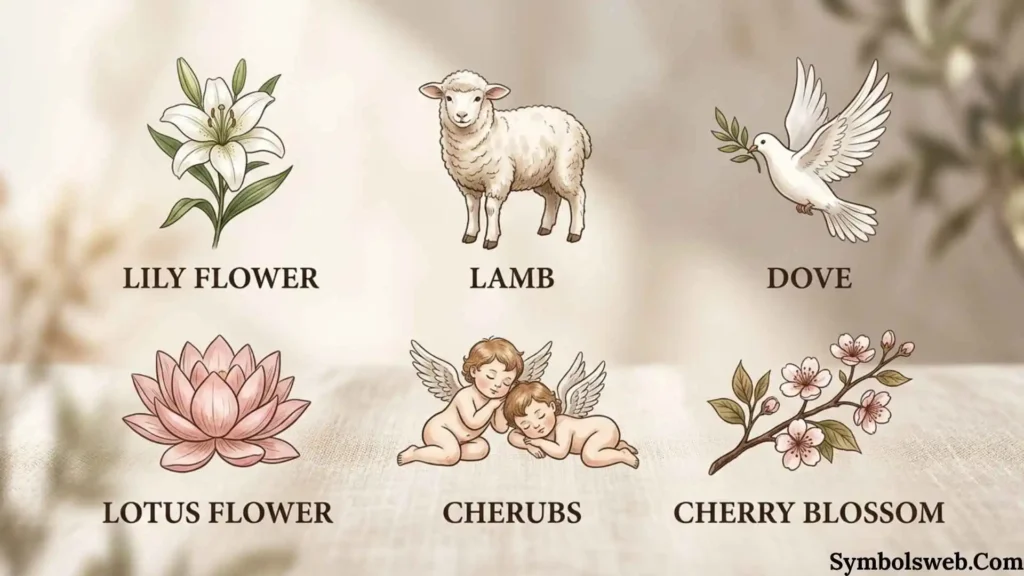
Ancient Egypt
The lotus flower symbolized purity, rebirth, and spiritual awakening.
Egyptians observed how lotus flowers emerged clean and beautiful from muddy waters, making them powerful symbols of innocence and divine creation.
Ancient Greece
Greek culture connected innocence to youth, beauty, and harmony with nature.
Myths often portrayed young heroes and nymphs as embodiments of purity before encountering life’s trials.
Roman Culture
Romans valued innocence as a civic virtue.
White garments often represented moral purity, especially during important ceremonies and religious festivals.
Eastern Traditions
Buddhist and Hindu teachings emphasize innocence as a state of spiritual clarity.
The lotus flower became one of the strongest symbols of maintaining purity despite worldly challenges.
Indigenous Traditions
Many Indigenous cultures view innocence through the lens of harmony with nature.
Animals such as deer, rabbits, and birds often symbolize purity, gentleness, and sacred balance.
Modern Interpretations
Today, innocence often symbolizes:
- Authenticity
- Kindness
- Emotional openness
- Childlike wonder
- Personal integrity
Modern culture uses these symbols in media, fashion, and self-expression.
Similar Symbols and Their Meanings
| Symbol | Similarity to Innocence | Difference |
| Dove | Purity and peace | Focuses more on harmony |
| Angel | Moral goodness | Stronger divine connection |
| Lotus | Purity | Emphasizes spiritual growth |
| White Rose | Innocence and beauty | Often linked to romance |
| Swan | Grace and purity | Associated with elegance |
| Butterfly | Transformation | Focuses on change and renewal |
Common Misconceptions
Many people confuse innocence with weakness.
In reality, innocence often symbolizes inner strength, moral courage, and the ability to remain good despite challenges.
Symbols of Innocence in Mythology and Folklore
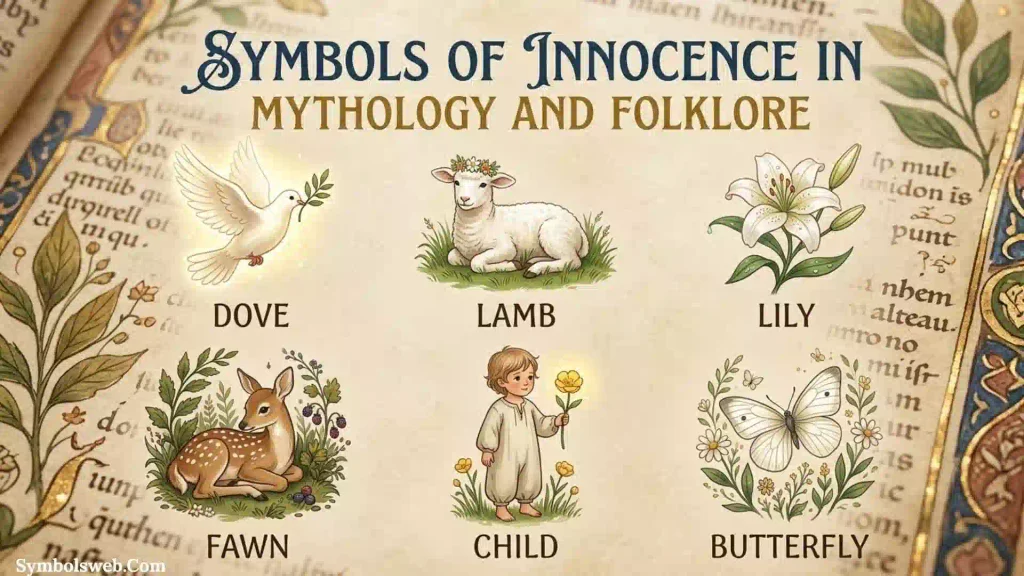
Mythology frequently uses innocent figures to represent humanity’s pure beginnings.
Greek Mythology
The Golden Age was described as a time when people lived in innocence, peace, and harmony before corruption entered the world.
Celtic Folklore
White animals often represented sacred purity and divine guidance.
Native American Traditions
Butterflies symbolized pure spirits and positive transformation.
European Folklore
Children and white birds frequently acted as messengers of hope and goodness.
These stories shaped modern ideas about innocence and continue to influence literature and film today.
Symbols of Innocence in Art, Literature, Movies and Pop Culture
Paintings
Artists often use children, white flowers, and soft natural settings to portray innocence.
Famous Themes
- Childhood purity
- Peaceful landscapes
- Sacred motherhood
- Spiritual grace
Literature
Many classic works explore innocence through young protagonists.
Examples include:
- The journey from innocence to experience
- Loss of innocence themes
- Coming-of-age stories
Authors often use symbolic objects like flowers, birds, and light to represent purity.
Poetry
Poets frequently compare innocence to:
- Morning light
- Fresh flowers
- Clear water
- Gentle birdsong
Movies and Television
Modern storytelling often uses innocent characters to highlight moral contrast and emotional depth.
Examples include:
- Child heroes
- Pure-hearted protagonists
- Protective animals
- Symbolic white clothing
Tattoos
Popular innocence tattoos include:
- Doves
- Butterflies
- Angels
- Lilies
- Lotus flowers
Fashion and Design
White colors, floral patterns, and minimalist designs often communicate innocence and simplicity.
Spiritual and Dream Meaning of Symbols of Innocence
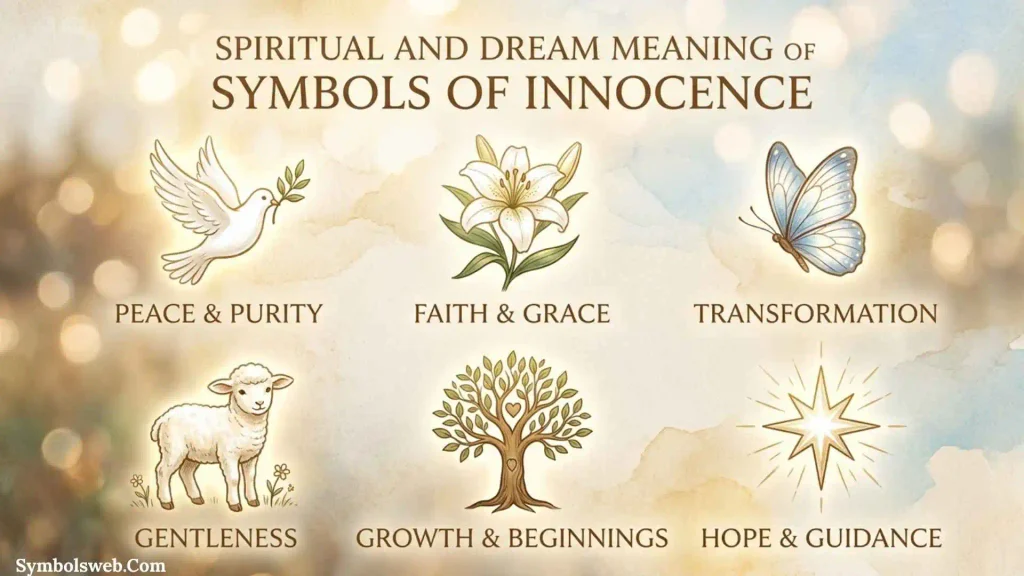
Dreams involving innocent symbols can carry important personal messages.
White Dove in Dreams
May symbolize peace, healing, forgiveness, or spiritual guidance.
Child in Dreams
Often represents inner potential, creativity, or emotional renewal.
Butterfly in Dreams
Can indicate personal growth and transformation.
Lotus in Dreams
May suggest spiritual awakening and inner peace.
Positive Messages
- New beginnings
- Healing
- Hope
- Faith
- Spiritual growth
- Emotional clarity
Cautionary Messages
Sometimes innocence symbols may warn against:
- Excessive trust
- Naivety
- Ignoring reality
- Emotional vulnerability
Context is always important when interpreting dreams.
Positive and Negative Meanings of Symbols of Innocence
| Positive Meaning | Negative Meaning |
| Purity | Naivety |
| Honesty | Gullibility |
| Hope | Unrealistic expectations |
| Trust | Vulnerability |
| Kindness | Lack of caution |
| Faith | Blind belief |
| Optimism | Denial of reality |
A symbol’s meaning often depends on context, culture, and personal interpretation.
Why Humans Are Attracted to Symbols of Innocence
Humans are naturally drawn to innocence because it reflects deep psychological needs.
Human Nature
People seek safety, trust, and emotional connection.
Collective Memory
Throughout history, innocence has represented an ideal state of harmony and goodness.
Pattern Recognition
Our brains quickly recognize symbols associated with protection and purity.
Storytelling
Stories often begin with innocence and follow the journey toward wisdom.
This narrative pattern appears in myths, religions, literature, and modern films.
Personal Meaning
Many people see symbols of innocence as reminders of:
- Childhood memories
- Lost dreams
- Hope for the future
- Personal values
Modern Uses of Symbols of Innocence
Tattoos
Used to represent personal growth, purity, and spiritual values.
Jewelry
Doves, butterflies, and lotus designs remain popular choices.
Fashion
White clothing and delicate imagery continue to symbolize simplicity and purity.
Branding
Companies often use innocence-related imagery to communicate trust and authenticity.
Social Media
Symbols of innocence frequently appear in inspirational content and personal storytelling.
Contemporary Spirituality
Used in meditation, mindfulness, and healing practices.
Home Decor
Popular in artwork, floral arrangements, and peaceful interior design themes.
Interesting Facts About Symbols of Innocence
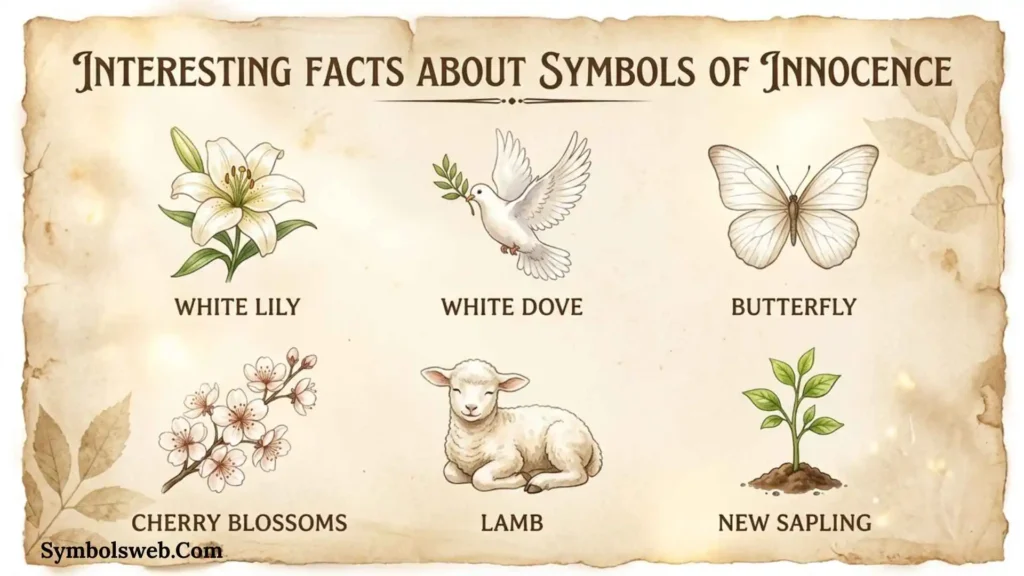
- The white dove has represented peace for over 2,000 years.
- Lotus flowers can bloom in muddy water while remaining remarkably clean.
- Lambs appear as symbols of purity in multiple religions.
- White lilies are often associated with spiritual perfection.
- Butterflies symbolize innocence and transformation across many cultures.
- The Innocent Archetype is one of the most recognized psychological archetypes.
- Many wedding traditions use innocence symbols to represent new beginnings.
- Ancient civilizations frequently linked innocence with divine favor.
- Children’s imagery has been used in art for centuries to represent hope.
- Symbols of innocence remain among the most universally understood symbols worldwide.
Frequently Asked Questions
What is the most common symbol of innocence?
The white dove is widely considered the most recognized symbol of innocence because it represents purity, peace, hope, and spiritual goodness across many cultures.
Why is the color white associated with innocence?
White is associated with innocence because it symbolizes cleanliness, purity, honesty, simplicity, and freedom from corruption in many cultural traditions.
What flower symbolizes innocence?
The white lily is one of the most common flowers associated with innocence. It represents purity, virtue, and spiritual beauty.
What animal symbolizes innocence?
Lambs, doves, deer, and rabbits are among the animals most commonly associated with innocence due to their gentle and peaceful nature.
What does innocence symbolize spiritually?
Spiritually, innocence symbolizes purity of the soul, divine grace, inner peace, trust, and connection with higher consciousness.
Are symbols of innocence universal?
While specific symbols vary across cultures, the concepts of purity, goodness, and honesty are nearly universal, making many symbols of innocence widely understood around the world.
Conclusion
Symbols of innocence reveal something timeless about the human experience. If expressed through a dove, a lily, a child, or a butterfly, these symbols remind us of purity, hope, and the goodness that people continue to value across cultures and generations.
Their meanings stretch beyond religion, mythology, and art into psychology and everyday life. In a complex world, symbols of innocence offer a powerful reminder that kindness, authenticity, and inner purity remain some of humanity’s most cherished ideals.

Eliana Foster is a writer with a passion for exploring the meanings behind symbols, traditions, and cultural history. She enjoys breaking down complex topics into simple, engaging articles that are easy for everyone to understand. Eliana is also the fictional author of The Hidden Language of Silent Marks and Beyond the Circle of Ancient Signs, two original book concepts created for her author profile. When she’s not writing, she loves visiting museums, reading about mythology, and researching the stories behind symbols from around the world. Her goal is to help readers discover the fascinating meanings hidden in everyday signs and ancient emblems.
 Jordan Hayes
 Ethan Holloway