Shinto symbols have fascinated people for centuries because they represent far more than simple images or religious decorations. They connect humans with nature, the divine, ancestors, and the unseen forces believed to shape life. Across Japan, these sacred symbols appear at shrines, festivals, homes, and cultural landmarks.
Understanding Shinto symbols offers a window into one of the world’s oldest living spiritual traditions. Their meanings reveal profound insights about purity, harmony, protection, gratitude, and humanity’s relationship with nature. As we explore these sacred signs, we uncover not only Jpanese culture but also universal truths about the human spirit.
Shinto Symbols: (Quick Answer)
Shinto symbols are sacred signs, objects, and visual representations used in Shinto, Japan’s indigenous spiritual tradition. They symbolize purity, divine presence, protection, harmony with nature, and communication with the kami, the spiritual beings or sacred forces believed to inhabit the natural world.
Also Check This Post: 99+ Warning Symbols: Hidden Meanings, History, Psychology, and Cultural Significance Explained
Quick Facts About Shinto Symbols
| Aspect | Information |
| Origin | Ancient Japan, dating back over 2,000 years |
| Historical Significance | Connected to early Japanese spirituality and worship of kami |
| Main Meaning | Connection between humans, nature, and the divine |
| Spiritual Meaning | Purity, protection, harmony, gratitude, and sacred presence |
| Cultural Importance | Central to Japanese religious practices, festivals, and traditions |
| Modern Usage | Shrines, architecture, jewelry, tattoos, art, tourism, and cultural education |
What Are Shinto Symbols?
Shinto symbols are visual representations, sacred objects, architectural elements, and ritual items associated with Shinto, Japan’s indigenous religion.
Unlike many religions that focus on a single sacred text or founder, Shinto evolved naturally through centuries of cultural traditions and nature worship. The faith centers around kami, spiritual beings believed to inhabit mountains, rivers, trees, rocks, animals, ancestors, and natural phenomena.
Shinto symbols developed as ways to identify sacred spaces, communicate spiritual ideas, and connect people with divine forces.
Historically, ancient Japanese communities viewed nature as alive with spiritual energy. Over time, symbolic objects emerged to mark places where kami were believed to dwell. These symbols eventually became essential parts of shrines, rituals, festivals, and daily life.
Today, Shinto remains deeply woven into Japanese culture, making its symbols among the most recognizable spiritual signs in East Asia.
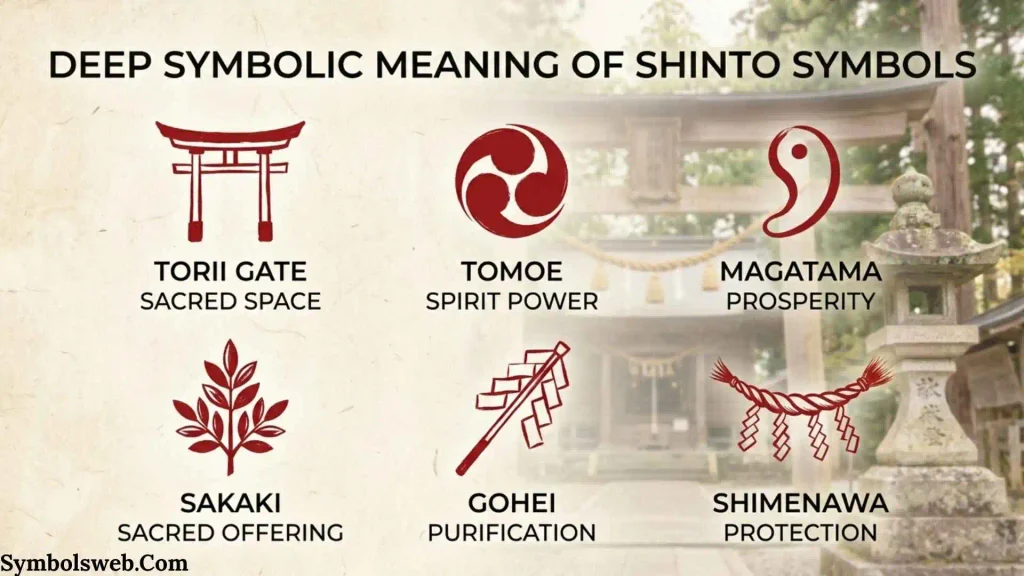
Deep Symbolic Meaning of Shinto Symbols
Spiritual Level
At the spiritual level, Shinto symbols represent the invisible relationship between humans and the sacred world.
Many Shinto symbols emphasize:
- Purification before spiritual contact
- Respect for nature
- Gratitude toward divine forces
- Balance and harmony
- Protection from spiritual impurities
The core Shinto belief is that spiritual power exists throughout nature. Therefore, symbols act as bridges connecting the physical and spiritual realms.
For example, passing through a torii gate symbolizes leaving the ordinary world and entering sacred space.
Inner Transformation
Shinto symbols often encourage personal renewal. Ritual cleansing symbolizes removing emotional burdens and spiritual pollution.
The journey through a shrine can be seen as a symbolic path toward greater awareness, gratitude, and harmony.
Soul and Consciousness
Many practitioners view these symbols as reminders that humans are part of a larger sacred ecosystem rather than separate from it.
Psychological Level
From a psychological perspective, Shinto symbols tap into universal human needs.
Archetypes
Psychologist Carl Jung argued that certain symbols appear across cultures because they reflect collective human experiences.
Many Shinto symbols align with archetypes such as:
- The gateway
- The sacred tree
- The protective guardian
- The purification ritual
- The journey toward transformation
Emotional Attraction
Humans naturally seek meaning, safety, and connection. Shinto symbols provide visual representations of these desires.
A sacred gate suggests transition.
A rope surrounding a tree suggests protection.
Flowing water symbolizes cleansing and renewal.
These meanings resonate deeply because they mirror emotional experiences shared by people everywhere.
Cultural Level
Within Japanese society, Shinto symbols help preserve cultural identity and community values.
They appear during:
- Weddings
- Festivals
- New Year celebrations
- Shrine visits
- Seasonal ceremonies
These symbols reinforce social bonds while connecting modern life to ancient traditions.
A child visiting a shrine today participates in rituals that ancestors practiced centuries ago.
Types and Variations of Shinto Symbols
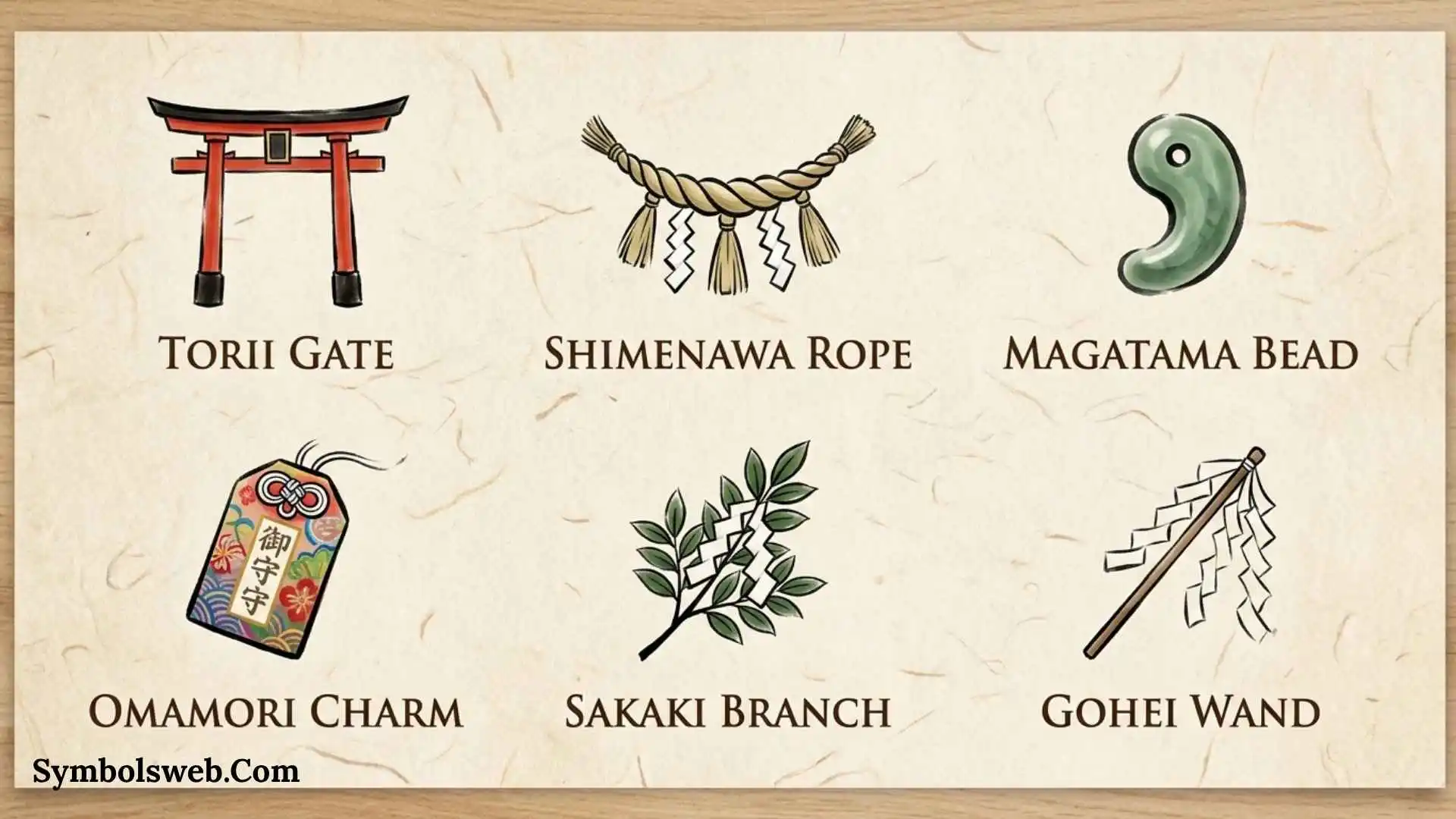
Torii Gate
Visual Description
A two-pillared gate with horizontal crossbeams, usually painted vermilion red.
Meaning
Entrance to sacred space.
Symbolism
Transition from the ordinary world to the spiritual realm.
Cultural Connection
Found at nearly every Shinto shrine in Japan.
Where It Appears
- Shrines
- Art
- Photography
- Tourism materials
Shimenawa
Visual Description
A thick rope made from rice straw.
Meaning
Marks sacred boundaries.
Symbolism
Purity and divine presence.
Cultural Connection
Used around shrines, sacred trees, and ritual sites.
Where It Appears
- Shrines
- Festivals
- Sacred natural sites
Shide
Visual Description
Zigzag paper streamers attached to ropes.
Meaning
Presence of kami.
Symbolism
Purification and spiritual energy.
Cultural Connection
Common in shrine rituals.
Sacred Mirror (Yata no Kagami)
Visual Description
Polished circular mirror.
Meaning
Truth and self-reflection.
Symbolism
Wisdom and divine illumination.
Cultural Connection
One of Japan’s Imperial Regalia.
Mythological Connection
Associated with the sun goddess Amaterasu.
Komainu
Visual Description
Lion-dog guardian statues.
Meaning
Protection.
Symbolism
Guardianship against harmful influences.
Cultural Connection
Usually positioned at shrine entrances.
Sacred Trees
Visual Description
Large ancient trees wrapped with shimenawa.
Meaning
Dwelling places of kami.
Symbolism
Life, endurance, and spiritual power.
Cultural Connection
Nature worship remains central to Shinto.
Shinto Symbols Across Different Cultures
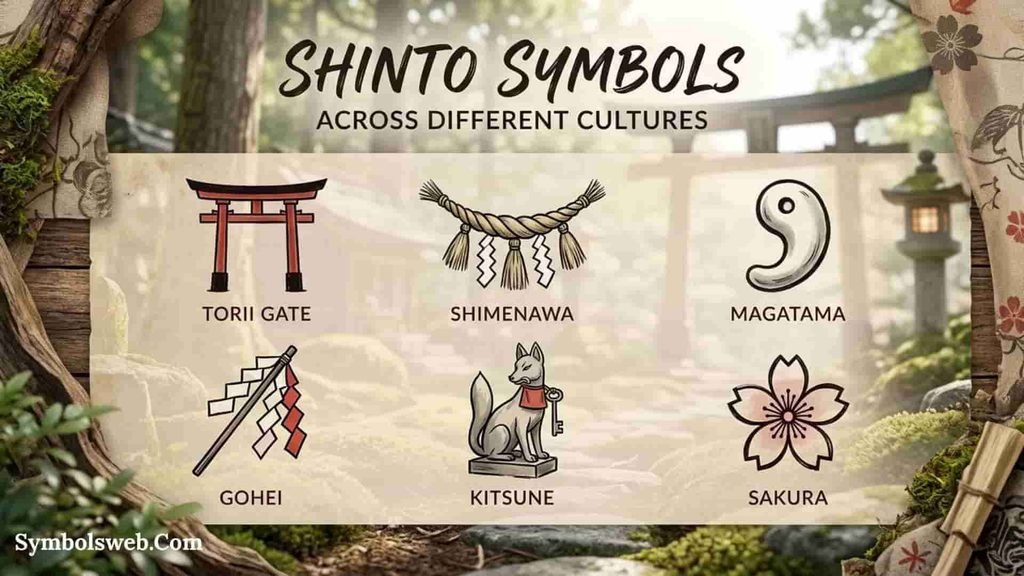
Although uniquely Japanese, many Shinto symbols share themes found worldwide.
Ancient Egypt
Ancient Egyptians viewed natural forces as sacred manifestations of divine powers.
Similar to Shinto sacred trees and rivers, Egyptians revered the life-giving waters of the Nile River.
Symbolism
Nature is divine.
Cultural Significance
Sacred landscapes connected humans with gods.
Ancient Greece
Greek religion associated gods with mountains, forests, and springs.
Similarity
Nature spirits resembled aspects of kami.
Difference
Greek gods were often personified individuals, while kami may inhabit natural objects themselves.
Roman Culture
Romans worshipped household spirits and protective deities.
Symbolism
Protection and sacred boundaries.
Historical Use
Household shrines served purposes similar to local Shinto practices.
Eastern Traditions
In cultures influenced by Buddhism, Taoism, and indigenous Asian beliefs, harmony with nature remains a central theme.
Similarity
Respect for natural balance.
Cultural Importance
Spiritual growth through alignment with natural forces.
Indigenous Traditions
Many Indigenous cultures worldwide believe spirits inhabit natural places.
Similarity
Sacred mountains, rivers, and forests.
Symbolism
Humans as part of a living spiritual ecosystem.
Modern Interpretations
Today, people around the world appreciate Shinto symbols for:
- Mindfulness
- Environmental awareness
- Spiritual reflection
- Cultural appreciation
Also Check This Post: 73+ Law Symbols: Hidden Meanings, History, and Powerful Representations of Justice
Similar Symbols and Their Meanings
| Symbol | Similarity to Shinto Symbols | Key Difference |
| Celtic Sacred Tree | Connection with nature | Different mythology |
| Buddhist Stupa | Sacred spiritual site | Different religious focus |
| Christian Cross | Spiritual connection | Focused on salvation |
| Native Totem Pole | Sacred symbolism | Represents ancestral stories |
| Hindu Temple Gateway | Entry into sacred space | Different cosmology |
Common Misconceptions
Many people assume Shinto symbols are merely decorative. In reality, they often serve ritual, spiritual, and cultural functions simultaneously.
Shinto Symbols in Mythology and Folklore
Shinto mythology plays a major role in understanding these symbols.
One of the most famous stories involves the goddess Amaterasu.
According to legend, she hid inside a cave after a conflict with her brother. The world fell into darkness.
The gods used a sacred mirror to lure her out. When she saw her reflection, curiosity drew her forward, restoring light to the world.
This myth transformed the mirror into a symbol of truth, self-awareness, and divine illumination.
Other folklore tales feature sacred foxes, protective spirits, enchanted forests, and kami dwelling within mountains and waterfalls.
These stories continue shaping the meanings attached to Shinto symbols today.
Shinto Symbols in Art, Literature, Movies, and Pop Culture
Paintings
Japanese artists frequently depict torii gates standing against oceans, forests, or mountain landscapes.
The imagery symbolizes spiritual transition and harmony.
Literature
Many Japanese literary works use shrine imagery to represent self-discovery and connection with tradition.
Notable examples appear in works by Natsume Sōseki and Yasunari Kawabata.
Poetry
Traditional haiku often reference sacred natural settings associated with kami.
Movies
Films by Hayao Miyazaki frequently incorporate Shinto-inspired themes.
Examples include:
- Spirited Away
- Princess Mononoke
These films explore nature spirits, sacred landscapes, and human responsibility toward the environment.
Tattoos
Many people choose torii gates or sacred fox imagery as tattoos representing spiritual journeys and protection.
Fashion and Design
Minimalist interpretations of Shinto symbols appear in:
- Clothing
- Home decor
- Jewelry
- Graphic design
Spiritual and Dream Meaning of Shinto Symbols
Dreams involving Shinto symbols often reflect personal growth and transformation.
| Symbol | Dream Meaning |
| Torii Gate | Entering a new phase of life |
| Sacred Tree | Personal growth and wisdom |
| Flowing Water | Emotional cleansing |
| Shrine | Spiritual guidance |
| Mirror | Self-discovery and truth |
Positive Messages
- Renewal
- Protection
- Inner peace
- Spiritual awakening
- Greater awareness
Cautionary Messages
Sometimes dreams suggest:
- Ignoring intuition
- Loss of balance
- Emotional stagnation
- Disconnection from nature
Positive and Negative Meanings of Shinto Symbols
| Positive Meaning | Negative Meaning |
| Purity | Fear of impurity |
| Protection | Overdependence on rituals |
| Harmony | Avoidance of conflict |
| Spiritual awareness | Spiritual confusion |
| Renewal | Difficulty letting go of the past |
| Respect for nature | Fear of change in natural cycles |
Like many sacred symbols, Shinto imagery reflects both light and shadow aspects of human experience.
Why Humans Are Attracted to Shinto Symbols
Humans naturally respond to symbols that connect them with something larger than themselves.
Shinto symbols appeal to us because they combine beauty, mystery, and meaning.
Psychologically, people seek:
- Belonging
- Safety
- Purpose
- Connection
A torii gate invites curiosity.
A sacred forest inspires awe.
A shrine offers a sense of peace.
These responses are rooted in what psychologists call collective symbolism. Certain images repeatedly appear across cultures because they address universal human experiences.
Shinto symbols also resonate today because they emphasize harmony with nature, a value many people feel modern society has lost.
Modern Uses of Shinto Symbols
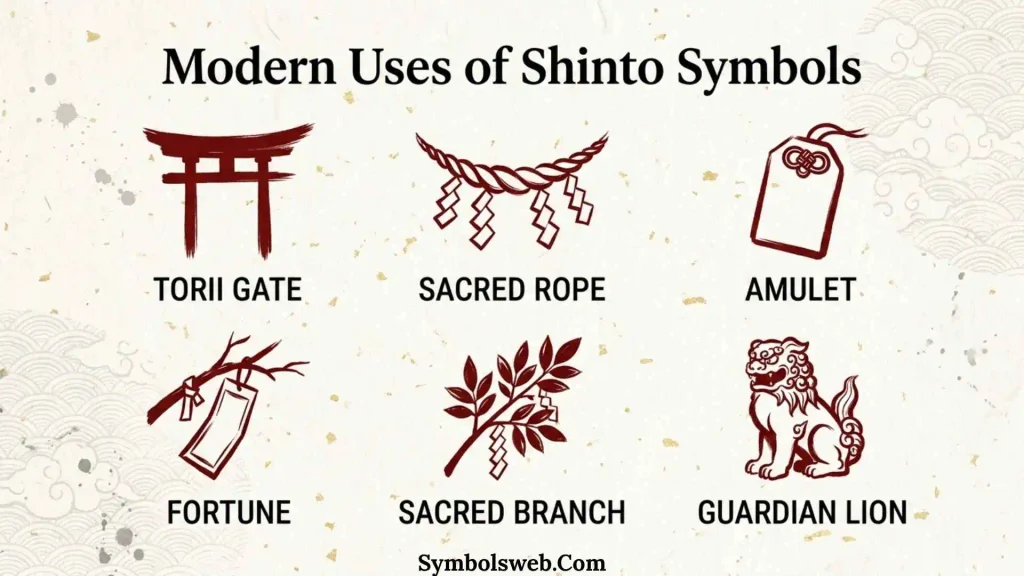
Today, Shinto symbols remain highly relevant.
Tattoos
Represent personal transformation and spiritual journeys.
Jewelry
Worn as symbols of protection and mindfulness.
Fashion
Used in artistic and cultural designs.
Branding
Companies sometimes incorporate traditional Japanese imagery to communicate authenticity and harmony.
Social Media
Photographs of torii gates are among the most shared cultural images from Japan.
Contemporary Spirituality
Many people use Shinto-inspired practices for reflection and gratitude.
Home Decor
Symbolic artwork creates calming and meaningful living spaces.
Interesting Facts About Shinto Symbols
- Japan has more than 80,000 Shinto shrines.
- The famous floating torii stands at Itsukushima Shrine.
- Vermilion red is believed to ward off harmful influences.
- Sacred ropes can mark trees, rocks, mountains, and buildings.
- Mirrors are considered sacred because they reflect truth.
- Many Japanese festivals incorporate ancient Shinto symbols.
- Some sacred trees are hundreds or even thousands of years old.
- Shinto has no single founder.
- Nature itself is often considered a sacred symbol.
- Many modern Japanese customs still contain Shinto influences.
Frequently Asked Questions
What is the most important Shinto symbol?
The torii gate is often considered the most recognizable Shinto symbol because it marks the transition from the ordinary world into sacred space.
What do Shinto symbols represent?
They represent purity, harmony, divine presence, protection, gratitude, and the connection between humans and nature.
Why are torii gates red?
The traditional vermilion color is believed to provide protection and symbolize spiritual vitality and purification.
What is the meaning of shimenawa?
Shimenawa are sacred ropes that mark places inhabited by kami and indicate spiritually significant spaces.
Are Shinto symbols religious or cultural?
They are both. Shinto symbols have religious meanings while also serving as important cultural icons throughout Japan.
Can non Japanese people use Shinto symbols?
Yes, many people appreciate them for their cultural, artistic, and spiritual significance. However, a respectful understanding of their origins and meanings is important.
Conclusion
Shinto symbols are much more than ancient religious signs. They are living expressions of humanity’s relationship with nature, the sacred, and the unseen forces that inspire wonder. From the iconic torii gate to sacred trees and ritual objects, each symbol carries centuries of wisdom and cultural memory.
Their enduring power lies in their simplicity. They remind us to seek harmony, respect the natural world, and recognize the sacred moments hidden within everyday life. In a fast-moving modern world, Shinto symbols continue to offer a timeless message of balance, gratitude, and spiritual connection.
Also Check This Post: 61+ Sign Language Symbols: Meanings, History, Cultural Significance, and Hidden Communication Power

Jordan Hayes is a writer with a passion for exploring the history, meanings, and cultural significance behind symbols from around the world. He enjoys turning complex topics into clear, engaging content that anyone can understand. Jordan is also the fictional author of The Silent Language of Ancient Marks and Hidden Symbols Beyond the Surface, two original book concepts created for his author profile. When he’s not writing, he spends time researching myths, traditions, and forgotten stories that inspire his work. His goal is to help readers discover the deeper meanings behind the symbols they encounter every day.
 Eliana Foster
 Ethan Holloway
[…] Guide to Powerful Meanings 83+ Space Symbols: A Simple Beginner’s Guide to Every Type 83+ Shinto Symbols: Hidden Meanings, Sacred Signs, and the Spiritual Language of Japan 99+ Warning Symbols: Hidden Meanings, History, Psychology, and Cultural Significance Explained […]