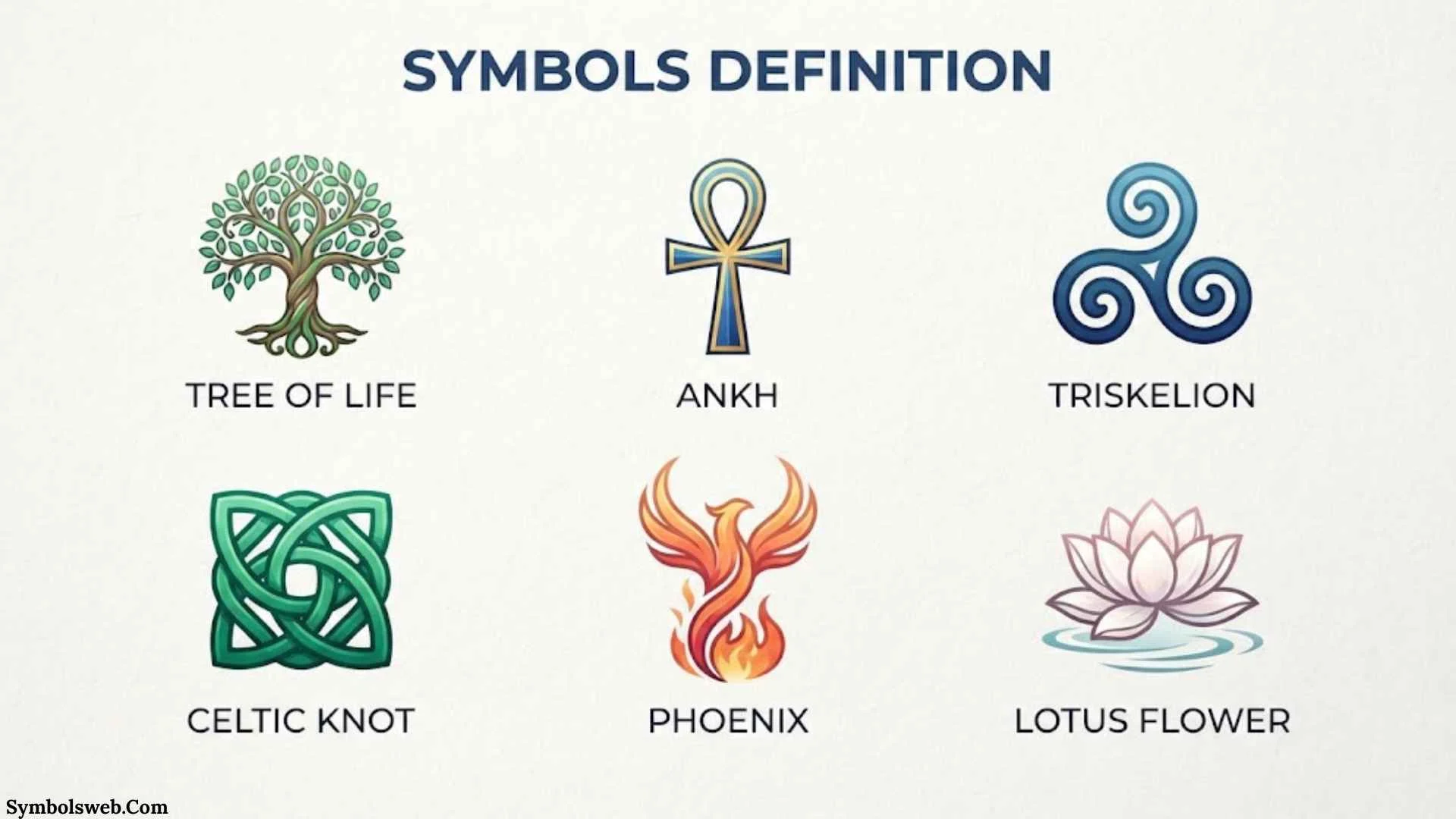
Symbols are all around you, from simple signs on your phone to ancient marks found in art, religion, and culture. A Symbols Definition helps you understand what these marks represent, why people use them, and how their meanings can change depending on context.
When I look at a symbol, I don’t just see a shape or character. You can often find a deeper idea behind it, such as love, peace, danger, identity, protection, or communication. Some symbols have universal meanings, while others are connected to specific cultures, groups, or traditions.
In this guide, I’ll explain the Symbols Definition in a simple and practical way. You’ll learn what symbols are, how they communicate meaning, and how you can understand common symbols more accurately in everyday life.
Symbols Definition: (Quick Answer)
A symbol is an object, image, sign, word, gesture, or design that represents a deeper meaning beyond its literal form. Symbols help communicate ideas, emotions, beliefs, values, and spiritual concepts across cultures and generations. They are widely used in language, religion, art, psychology, mythology, and everyday communication.
Quick Facts About Symbols
| Aspect | Information |
| Origin | Prehistoric human communication and early visual representation |
| Historical Significance | Used for religion, storytelling, governance, identity, and cultural transmission |
| Main Meaning | Representation of a deeper idea, belief, concept, or emotion |
| Spiritual Meaning | Connection between the visible world and unseen realities |
| Cultural Importance | Preserves traditions, values, and collective identities |
| Modern Usage | Logos, emojis, road signs, branding, social media, art, and digital communication |
What Are Symbols?
A symbol is anything that stands for something beyond itself.
For example, a heart shape often represents love. A dove may symbolize peace. A crown can represent authority or leadership. While these objects have physical forms, their symbolic meanings carry much deeper significance.
Origin of Symbols
The history of symbols stretches back tens of thousands of years. Archaeologists have discovered symbolic markings in prehistoric caves, suggesting early humans used visual representations to communicate ideas long before written language emerged.
Ancient civilizations developed increasingly sophisticated symbolic systems. These included:
- Religious icons
- Tribal markings
- Royal emblems
- Sacred animals
- Astronomical signs
Over time, symbols evolved into powerful tools for communication and cultural preservation.
Why Symbols Became Important
Symbols became important because they simplify complex ideas.
Instead of explaining an entire belief system, one image could communicate a shared understanding instantly.
For example:
- The cross communicates Christianity.
- The yin-yang represents balance.
- The lotus symbolizes spiritual growth.
- The olive branch signifies peace.
This ability to condense meaning makes symbols universally powerful.
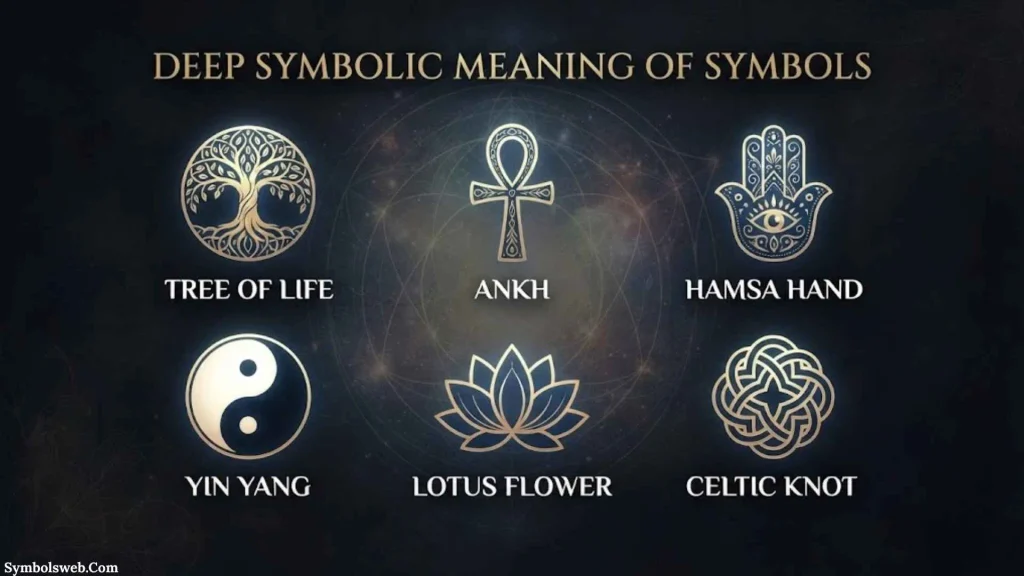
Deep Symbolic Meaning of Symbols
Spiritual Level
At the spiritual level, symbols often act as bridges between the physical and spiritual worlds.
Many religious traditions believe symbols help people connect with divine truths and sacred mysteries.
Examples include:
- Light representing enlightenment
- Water symbolizing purification
- Fire signifying transformation
- Trees representing life and growth
Spiritual symbols often guide meditation, prayer, and personal transformation.
Inner Transformation
Symbols frequently represent stages of personal growth.
A butterfly symbolizes transformation because it emerges from a cocoon. A phoenix symbolizes rebirth because it rises from ashes.
These symbolic images inspire people during life’s challenges and transitions.
Soul and Consciousness Connections
Many spiritual traditions view symbols as expressions of universal truths embedded within human consciousness.
Sacred geometry, mandalas, and mystical signs are believed to reflect deeper patterns of existence.
Psychological Meaning of Symbols
Human Emotions
Symbols trigger emotional responses quickly and effectively.
Seeing a wedding ring may evoke commitment and love. A national flag can inspire pride and belonging.
These emotional associations develop through personal experience and cultural learning.
Jungian Symbolism
Swiss psychologist Carl Jung believed symbols emerge from the collective unconscious.
According to Jung, certain symbolic images appear repeatedly across cultures because they reflect universal human experiences.
Examples include:
- The Hero
- The Mother
- The Wise Elder
- The Shadow
- The Tree of Life
These archetypes continue to influence storytelling and personal development today.
Emotional Attraction
Humans naturally seek meaning.
Symbols help organize thoughts, explain experiences, and provide emotional comfort during uncertainty.
This is one reason symbolic imagery remains powerful in modern society.
Cultural Meaning of Symbols
Every culture develops unique symbolic systems.
These symbols help communities preserve traditions, values, and shared identities.
For example:
- Dragons symbolize power in many Asian cultures.
- Eagles often represent freedom and strength.
- Snakes may symbolize wisdom, healing, danger, or renewal depending on cultural context.
A single symbol can have very different meanings across societies.
Types and Variations of Symbols
Religious Symbols
Visual Description: Sacred icons and emblems
Meaning: Faith, spirituality, divine connection
Cultural Connection: Found in nearly every religion
Where It Appears: Temples, churches, mosques, scriptures
Natural Symbols
Visual Description: Animals, plants, celestial objects
Meaning: Life lessons and natural forces
Cultural Connection: Ancient traditions worldwide
Where It Appears: Mythology, folklore, spiritual practices
Mythological Symbols
Visual Description: Legendary creatures and objects
Meaning: Heroism, wisdom, destiny
Cultural Connection: Ancient civilizations
Where It Appears: Myths, legends, literature
National Symbols
Visual Description: Flags, emblems, seals
Meaning: Unity and identity
Cultural Connection: Nations and governments
Where It Appears: Official documents and ceremonies
Modern Symbols
Visual Description: Logos, emojis, icons
Meaning: Communication and branding
Cultural Connection: Contemporary society
Where It Appears: Technology, advertising, social media
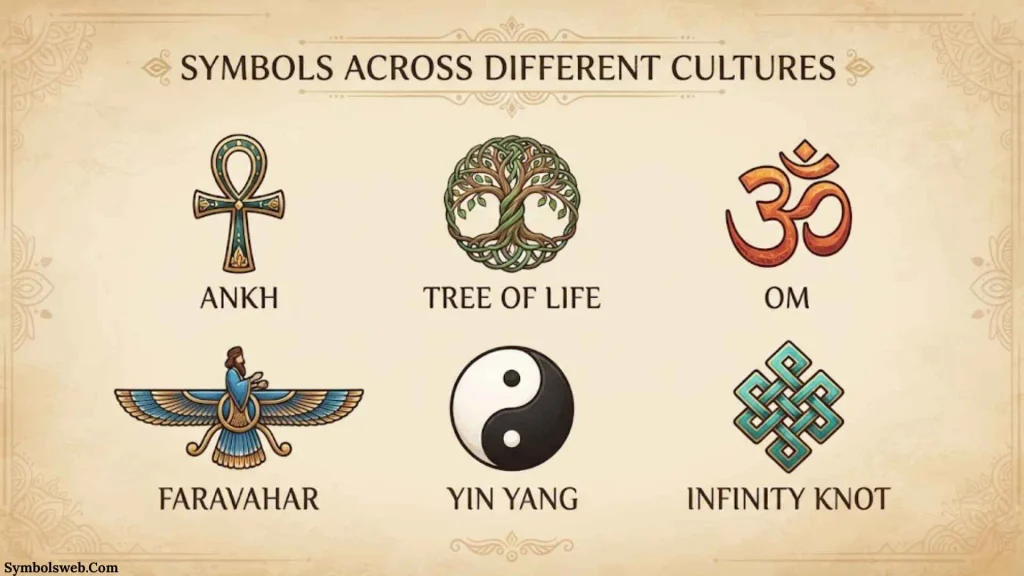
Symbols Across Different Cultures
Ancient Egypt
Ancient Egyptians relied heavily on symbolism.
Important examples included:
- Ankh for life
- Scarab beetle for rebirth
- Eye of Horus for protection
These symbols appeared in temples, tombs, and sacred texts.
Ancient Greece
Greek culture used symbols to represent gods, virtues, and cosmic forces.
Examples include:
- Owl for wisdom
- Laurel wreath for victory
- Lightning bolt for divine power
These symbols remain recognizable today.
Roman Culture
Romans adopted and expanded many Greek symbols.
Common Roman symbols included:
- Eagle representing imperial authority
- Fasces symbolizing governmental power
- Olive branch representing peace
Eastern Traditions
Eastern cultures developed rich symbolic traditions.
Examples include:
- Yin-yang representing balance
- Lotus representing enlightenment
- Dragon representing prosperity and power
These symbols continue to influence spiritual practices worldwide.
Indigenous Traditions
Many Indigenous cultures use symbols to express relationships between humans, nature, and spirit.
Common themes include:
- Sacred animals
- Medicine wheels
- Sun imagery
- Ancestral symbols
These traditions emphasize interconnectedness and respect for the natural world.
Modern Interpretations
Today, symbols continue evolving through:
- Digital communication
- Global culture
- Social movements
- Corporate branding
Modern symbols often blend ancient meanings with contemporary values.
Similar Symbols and Their Meanings
| Symbol Type | Similarity | Difference |
| Symbol | Represents meaning | Can have multiple interpretations |
| Sign | Communicates information | Usually direct and literal |
| Icon | Visually resembles subject | More concrete than symbolic |
| Emblem | Represents group or identity | Often official and formal |
| Logo | Brand representation | Primarily commercial |
Common Misconceptions
Many people assume every symbol has one fixed meaning.
In reality, symbolic meaning often depends on:
- Culture
- History
- Religion
- Personal experience
- Context
This flexibility is part of what makes symbols fascinating.
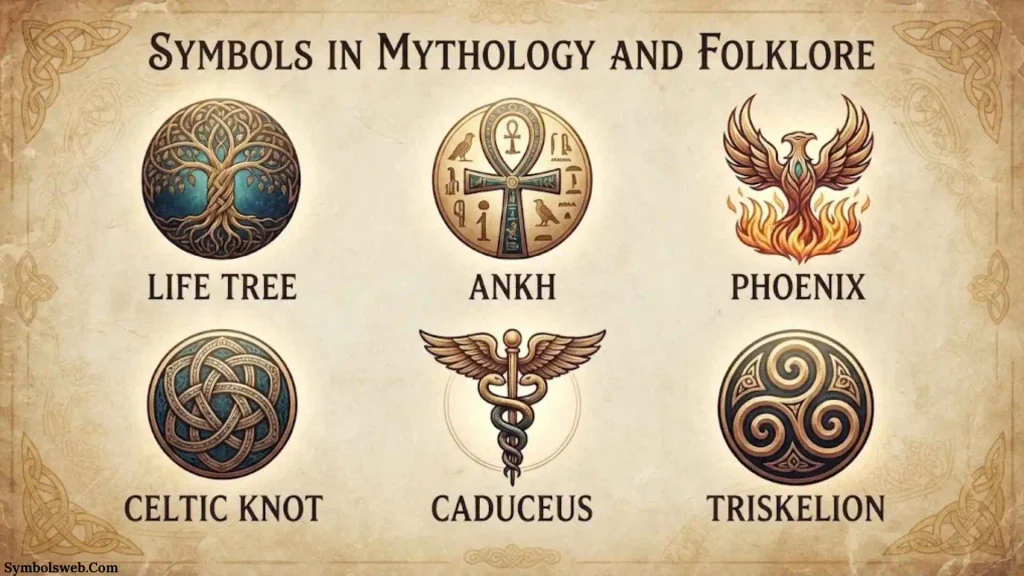
Symbols in Mythology and Folklore
Mythology is filled with symbolic imagery.
Ancient storytellers used symbols to explain the mysteries of life, death, nature, and destiny.
Examples include:
The Phoenix
Represents rebirth, resilience, and renewal.
The World Tree
Represents the connection between heaven, earth, and the underworld.
The Labyrinth
Symbolizes life’s journey and personal transformation.
The Serpent
Appears in countless myths as a symbol of wisdom, danger, healing, and renewal.
These stories shaped symbolic traditions that continue today.
Symbols in Art, Literature, Movies and Pop Culture
Paintings
Artists use symbols to communicate hidden messages.
A skull may symbolize mortality. A candle may represent hope.
Literature
Writers often use symbolic objects to deepen meaning.
A storm might symbolize conflict. A journey may symbolize self-discovery.
Poetry
Poets frequently use symbolic imagery to evoke emotion and imagination.
Movies and Television
Filmmakers rely on symbols to communicate themes visually.
Recurring colors, objects, or animals often carry symbolic meaning.
Tattoos
People choose symbolic tattoos to express:
- Identity
- Beliefs
- Personal experiences
- Spiritual journeys
Fashion and Design
Modern fashion frequently incorporates symbolic patterns and motifs to communicate values and style.
Spiritual and Dream Meaning of Symbols
Dreams often communicate through symbols rather than direct messages.
Common dream symbols include:
| Symbol | Common Dream Meaning |
| Water | Emotions and intuition |
| House | Self and identity |
| Snake | Transformation or hidden fears |
| Bird | Freedom and aspiration |
| Road | Life journey |
Meditation and Spiritual Experiences
During meditation, symbolic imagery may emerge naturally.
Many spiritual traditions interpret these images as reflections of inner growth and self-awareness.
Positive Messages
Symbols can encourage:
- Hope
- Wisdom
- Healing
- Personal growth
- Spiritual awakening
Cautionary Messages
Some symbols may highlight:
- Unresolved fears
- Personal challenges
- Necessary change
- Hidden conflicts
Positive and Negative Meanings of Symbols
| Positive Meaning | Negative Meaning |
| Wisdom | Confusion |
| Protection | Restriction |
| Transformation | Destruction |
| Power | Domination |
| Knowledge | Pride |
| Freedom | Isolation |
| Faith | Blind devotion |
| Passion | Obsession |
The same symbol may represent both positive and negative qualities depending on context and interpretation.
Why Humans Are Attracted to Symbols
Humans are meaning-making creatures.
Our brains naturally seek patterns and connections.
Symbols help us:
- Understand complex ideas
- Express emotions
- Preserve memories
- Build community
- Explore spirituality
Psychologists suggest symbols resonate because they connect individual experiences with universal human themes.
A simple image can remind someone of family, faith, identity, hope, or purpose.
That emotional power explains why symbols remain relevant across centuries.
Modern Uses of Symbols
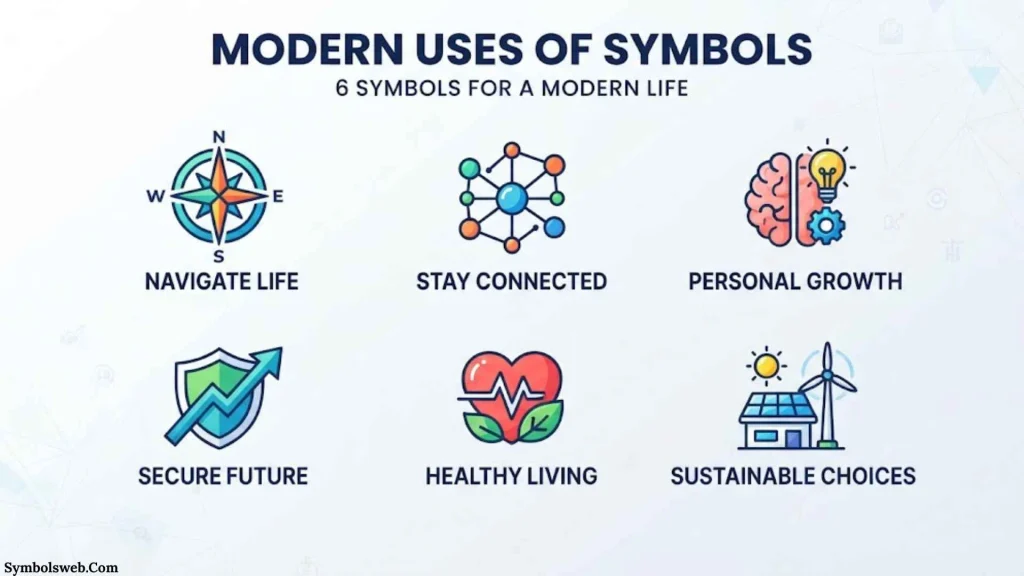
Tattoos
People use symbolic tattoos to tell personal stories.
Jewelry
Many wear symbolic jewelry for protection, faith, or self-expression.
Fashion
Symbols communicate identity and cultural affiliation.
Branding
Businesses use logos as powerful symbols of trust and recognition.
Social Media
Emojis function as modern symbolic language.
Contemporary Spirituality
Many people use symbols during meditation, mindfulness, and personal growth practices.
Home Decor
Symbolic artwork creates meaningful and inspiring living spaces.
Interesting Facts About Symbols
- Symbols existed thousands of years before formal writing systems.
- Many ancient symbols are still used today.
- Different cultures can assign completely different meanings to the same symbol.
- The human brain processes visual symbols faster than text.
- Religious symbols are among the oldest surviving forms of symbolic communication.
- Emojis are considered a modern symbolic language.
- Carl Jung believed symbols reveal unconscious psychological patterns.
- National flags function as powerful symbolic representations of identity.
- Mythological symbols often survive longer than the civilizations that created them.
- Some symbols become universal while others remain culture-specific.
Frequently Asked Questions
What is the simple definition of a symbol?
A symbol is an object, image, sign, or mark that represents a deeper meaning beyond its literal appearance.
Why are symbols important?
Symbols help communicate complex ideas, emotions, beliefs, and values quickly and effectively across cultures and generations.
Are symbols universal?
Some symbols have near-universal meanings, but many meanings depend on cultural, historical, and personal context.
What is the difference between a symbol and a sign?
A sign usually communicates direct information, while a symbol represents broader and often deeper meanings.
How do symbols affect psychology?
Symbols influence emotions, memories, beliefs, and unconscious thought patterns, making them powerful psychological tools.
Why do symbols appear in dreams?
Dreams often use symbols to express emotions, experiences, fears, desires, and unconscious thoughts in a visual form.
Conclusion
Symbols are far more than simple images or signs. They are a universal language that connects human experience across time, culture, and belief. From ancient civilizations and sacred traditions to modern branding and digital communication, symbols help people express ideas that words alone cannot capture.
Understanding symbols reveals deeper layers of history, psychology, spirituality, and culture.If found in dreams, myths, art, or everyday life, symbols continue to guide, inspire, and connect humanity through shared meaning.The next time you encounter a symbol, look beyond its surface. You may discover a story, a truth, or a piece of human wisdom hidden within it.

Jordan Hayes is a writer with a passion for exploring the history, meanings, and cultural significance behind symbols from around the world. He enjoys turning complex topics into clear, engaging content that anyone can understand. Jordan is also the fictional author of The Silent Language of Ancient Marks and Hidden Symbols Beyond the Surface, two original book concepts created for his author profile. When he’s not writing, he spends time researching myths, traditions, and forgotten stories that inspire his work. His goal is to help readers discover the deeper meanings behind the symbols they encounter every day.
 Eliana Foster
 Ethan Holloway