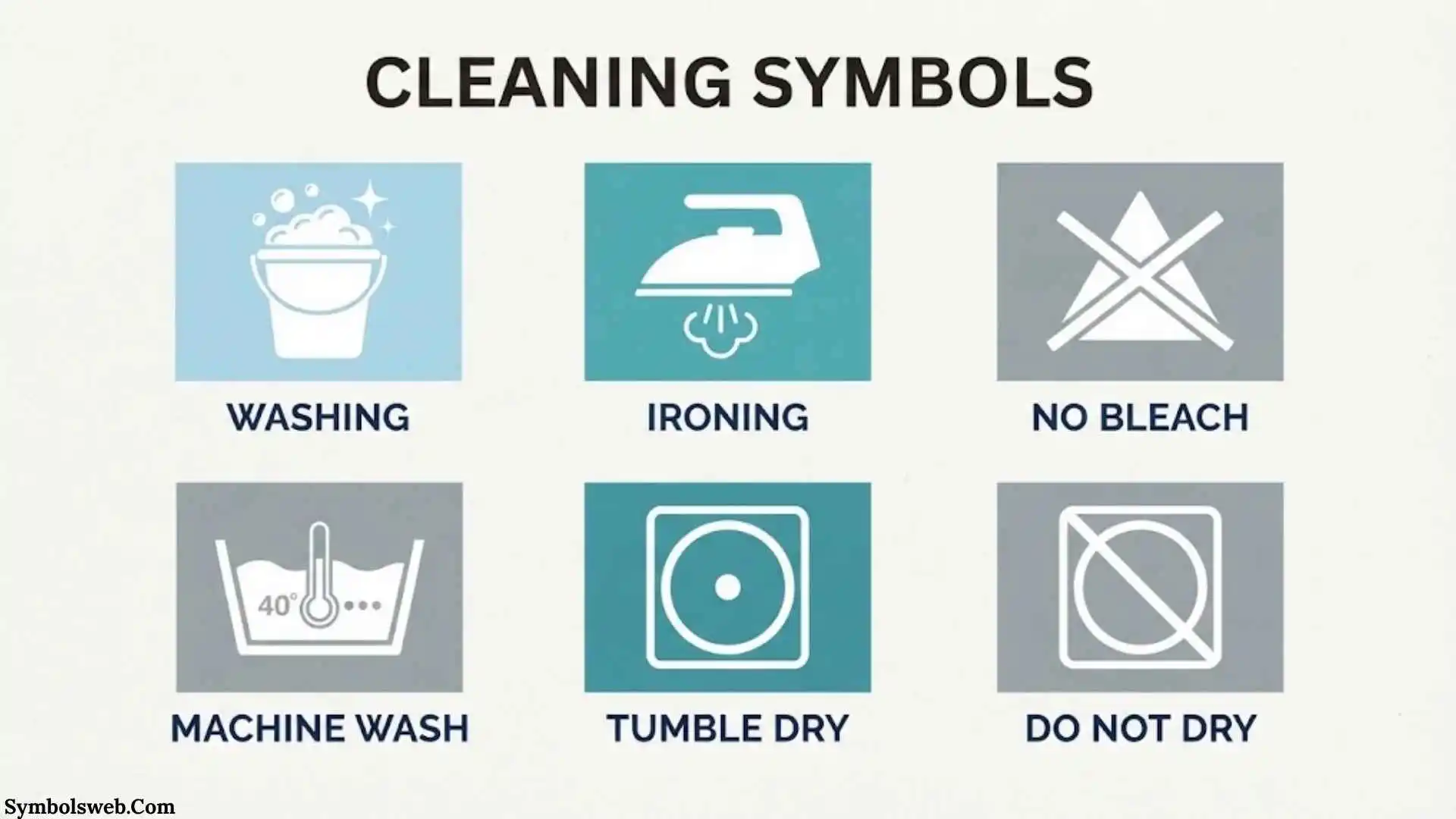
Cleaning symbols are small marks that most people see every day but rarely fully understand. Found on clothing labels, fabrics, and household textiles, these symbols quietly protect our favorite garments from damage
.Beyond their practical purpose, cleaning symbols tell a fascinating story about communication, standardization, and how humans use visual language to share important information across cultures and languages.
If you have ever wondered what a crossed-out triangle means or why a tiny basin appears on clothing tags, this guide will uncover the history, meanings, symbolism, and modern importance of cleaning symbols.
Cleaning Symbols: (Quick Answer)
Cleaning symbols are standardized visual icons used on clothing, fabrics, and textiles to provide instructions for washing, drying, bleaching, ironing, and professional cleaning. They help consumers care for items correctly, extend product lifespan, prevent damage, and communicate care instructions regardless of language.
Quick Facts About Cleaning Symbols
| Aspect | Information |
| Origin | Developed through international textile care standards in the 20th century |
| Historical Significance | Created to provide universal garment care instructions across different languages |
| Main Meaning | Guidance for proper cleaning, washing, drying, and maintenance |
| Spiritual Meaning | Symbolically represent care, preservation, renewal, and responsibility |
| Cultural Importance | Help global consumers understand fabric care regardless of nationality |
| Modern Usage | Found on clothing, bedding, upholstery, fashion items, and textiles worldwide |
What Are Cleaning Symbols?
Cleaning symbols are internationally recognized icons printed on labels attached to garments and textile products. They communicate essential instructions about how to wash, dry, iron, bleach, and professionally clean an item.
Before cleaning symbols became standardized, clothing manufacturers often used written instructions. However, as global trade expanded, language barriers created confusion. A shirt made in one country might be sold in dozens of others, making multilingual instructions impractical.
To solve this problem, textile organizations developed universal symbols that anyone could understand. Over time, these symbols became an international language of fabric care.
Today, cleaning symbols appear on:
- Clothing
- Towels
- Curtains
- Bedding
- Upholstery
- Sportswear
- Luxury fabrics
- Industrial textiles
Their primary purpose is simple: help consumers maintain products safely and effectively.
Deep Symbolic Meaning of Cleaning Symbols
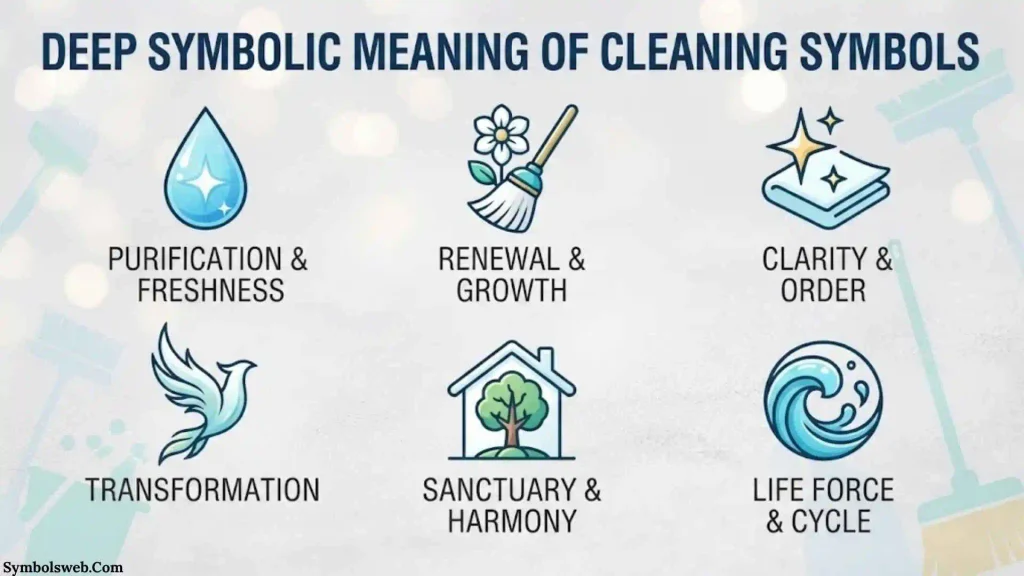
While cleaning symbols were designed for practical use, they also carry deeper symbolic meanings connected to human psychology and culture.
Spiritual Level
At a spiritual level, cleaning symbols can represent purification, renewal, and care.
Many spiritual traditions view cleaning as more than a physical activity. Washing and cleansing often symbolize:
- Removing negativity
- Beginning a fresh chapter
- Personal renewal
- Protection of valuable possessions
- Respect for resources
The wash basin symbol, for example, can be viewed as a representation of cleansing and transformation.
Throughout history, water has symbolized rebirth and purification in many cultures. Therefore, the washing symbol indirectly reflects these ancient human beliefs.
Psychological Level
From a psychological perspective, cleaning symbols connect to our desire for order and preservation.
Psychologist Carl Jung discussed universal archetypes and symbolic thinking. Humans naturally seek systems that create stability and predictability.
Cleaning symbols provide:
- Clarity
- Structure
- Security
- Confidence in decision-making
When people understand these symbols, they feel more in control of maintaining valuable possessions.
Cultural Level
Culturally, cleaning symbols represent cooperation on a global scale.
A person in Asia, Europe, Africa, or the Americas can recognize the same symbols despite speaking different languages.
These icons demonstrate how visual communication can unite people and simplify everyday life.
Imagine buying a silk garment while traveling abroad. Even if you cannot read the language on the label, the cleaning symbols immediately communicate how to care for it.
Types and Variations of Cleaning Symbols
Washing Symbol
Visual Description: Basin filled with water.
Meaning: Instructions for washing.
Symbolism: Cleansing, renewal, maintenance.
Where It Appears: Clothing labels, household textiles.
Common variations include:
- Machine wash
- Hand wash
- Do not wash
- Temperature-specific washing
Bleaching Symbol
Visual Description: Triangle.
Meaning: Whether bleach may be used.
Symbolism: Purification and stain removal.
Where It Appears: Fabric care labels.
Variations include:
- Any bleach allowed
- Non-chlorine bleach only
- Do not bleach
Drying Symbol
Visual Description: Square.
Meaning: Drying instructions.
Symbolism: Preservation and completion of the cleaning process.
Common variations:
- Tumble dry
- Line dry
- Flat dry
- Do not tumble dry
Ironing Symbol
Visual Description: Iron shape.
Meaning: Safe ironing temperature.
Symbolism: Refinement and presentation.
Common indicators include dots that represent heat levels.
Professional Cleaning Symbol
Visual Description: Circle.
Meaning: Dry cleaning instructions.
Symbolism: Expert care and specialized maintenance.
Often used for:
- Wool
- Silk
- Formal garments
- Delicate fabrics
Cleaning Symbols Across Different Cultures
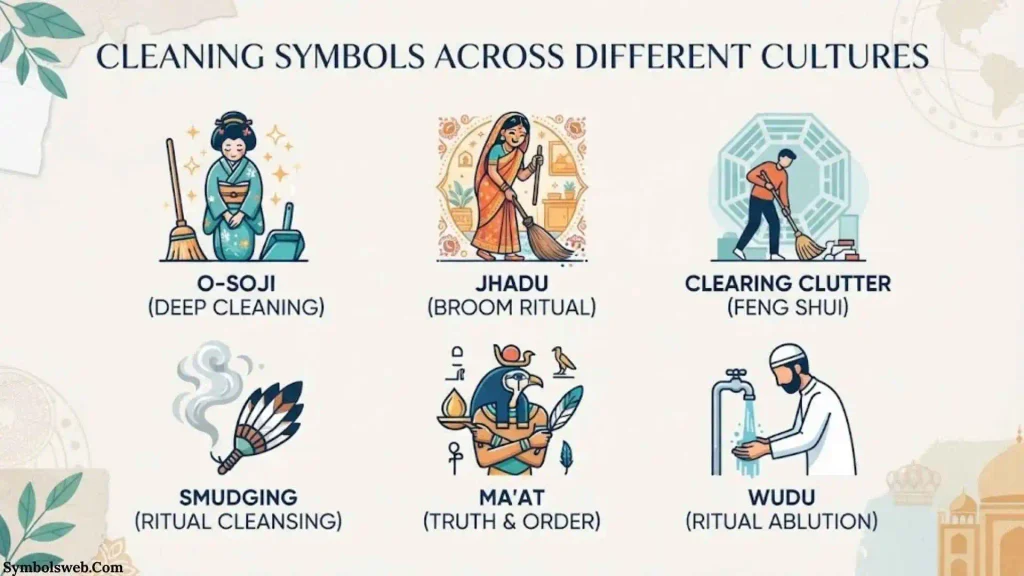
Ancient Egypt
Although modern cleaning symbols did not exist, Ancient Egyptians highly valued cleanliness.
Washing garments in the Nile and maintaining white linen clothing symbolized purity and social status.
Cleaning symbols today continue this emphasis on preserving garments and personal presentation.
Ancient Greece
The Greeks associated cleanliness with discipline, beauty, and civic responsibility.
Public baths and personal grooming played important social roles.
The concept behind cleaning symbols reflects these values by encouraging proper care and maintenance.
Roman Culture
Romans developed advanced systems for textile cleaning.
Professional cleaners called fullers used specialized techniques to maintain garments.
Modern professional cleaning symbols mirror the Roman appreciation for expert fabric care.
Eastern Traditions
Many Eastern philosophies emphasize balance, harmony, and cleanliness.
In traditions influenced by Buddhism, Taoism, and Shinto beliefs, cleaning can symbolize mindfulness and respect.
Cleaning symbols support these ideals by encouraging thoughtful garment care.
Indigenous Traditions
Many Indigenous communities around the world practiced sustainable clothing maintenance.
Garments were carefully repaired, cleaned, and preserved rather than discarded.
Modern cleaning symbols indirectly support sustainability by helping products last longer.
Modern Interpretations
Today, cleaning symbols represent:
- Sustainability
- Consumer education
- Resource conservation
- Responsible ownership
Many environmental advocates view proper garment care as a way to reduce waste and support sustainable living.
Similar Symbols and Their Meanings
| Symbol Type | Similarity | Difference |
| Cleaning Symbols | Provide instructions | Focus specifically on textile care |
| Safety Symbols | Use visual communication | Concern hazards and warnings |
| Recycling Symbols | Promote responsible behavior | Focus on waste management |
| Traffic Signs | Universal understanding | Guide transportation behavior |
| Medical Icons | Convey important information | Relate to healthcare and safety |
Common Misconceptions
Many people mistakenly believe:
- More dots always mean greater safety.
- Every symbol is universally identical.
- Professional cleaning symbols are optional.
In reality, each symbol provides specific care guidance that can significantly affect garment lifespan.
Cleaning Symbols in Mythology and Folklore
Cleaning symbols themselves are modern inventions, but their underlying themes appear throughout mythology.
Water and Purification Myths
Across civilizations, water frequently symbolizes cleansing and transformation.
Examples include:
- Sacred rivers
- Ritual washing ceremonies
- Purification rites
- Healing springs
The washing basin symbol echoes these ancient ideas of renewal.
Fire and Transformation
The ironing symbol indirectly relates to fire, which often represents transformation in mythology.
Many legends portray fire as a force that refines, strengthens, and purifies.
Ironing similarly transforms wrinkled fabric into a smoother, more refined state.
Preservation Stories
Folklore often celebrates caretakers who protect valuable items through wisdom and diligence.
Cleaning symbols continue this tradition by helping people preserve cherished belongings.
Cleaning Symbols in Art, Literature, Movies, and Pop Culture
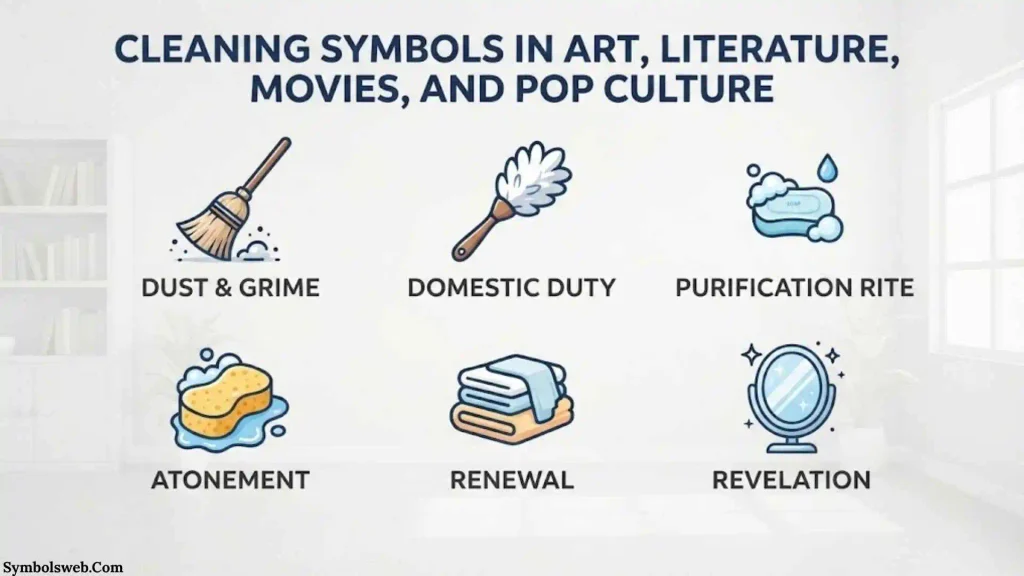
Art
Contemporary artists sometimes use laundry symbols to explore themes of:
- Consumer culture
- Identity
- Globalization
- Domestic life
Literature
Writers occasionally reference clothing care as a metaphor for:
- Personal growth
- Preservation of memories
- Responsibility
Poetry
Laundry imagery frequently symbolizes:
- Renewal
- Emotional cleansing
- Fresh beginnings
Movies and Television
Cleaning symbols often appear subtly in costume design and wardrobe departments.
Proper garment care ensures costumes remain consistent throughout production.
Tattoos
Some individuals choose laundry symbols as minimalist tattoos.
Popular choices include:
- Hand wash symbol
- Wash basin icon
- Do not bleach symbol
These tattoos can represent self-care, resilience, or humor.
Fashion and Design
Modern designers sometimes incorporate cleaning symbols into:
- Streetwear
- Graphic prints
- Branding
- Textile art
Spiritual and Dream Meaning of Cleaning Symbols
Dream interpretation is subjective, but cleaning symbols often carry symbolic messages.
Dreaming of Washing Symbols
May represent:
- Emotional healing
- Letting go of past experiences
- Personal renewal
Dreaming of Ironing Symbols
Can symbolize:
- Self-improvement
- Preparation
- Attention to detail
Dreaming of Bleaching Symbols
May suggest:
- Desire for purification
- Removing negativity
- Seeking clarity
Positive Messages
- Growth
- Fresh starts
- Healing
- Organization
Cautionary Messages
- Over-perfectionism
- Fear of mistakes
- Excessive control
- Anxiety about appearance
Positive and Negative Meanings of Cleaning Symbols
| Positive Meaning | Negative Meaning |
| Care and responsibility | Fear of damage |
| Preservation | Excessive caution |
| Cleanliness | Obsession with perfection |
| Renewal | Anxiety about mistakes |
| Sustainability | Rigidity |
| Organization | Overcontrol |
The meaning often depends on context and personal interpretation.
Why Humans Are Attracted to Cleaning Symbols
Humans naturally respond to symbols because our brains are designed to recognize patterns.
Cleaning symbols appeal to us because they:
Create Clarity
Simple icons reduce confusion and help us make decisions quickly.
Offer Control
People feel more confident when they understand how to care for valuable possessions.
Connect to Universal Communication
Cleaning symbols demonstrate that visual language can transcend words.
Reflect Human Values
They support qualities many people admire:
- Responsibility
- Carefulness
- Preservation
- Respect for resources
Trigger Cultural Memory
For generations, people have passed down knowledge about caring for clothing and household items.
Cleaning symbols modernize this tradition.
Modern Uses of Cleaning Symbols
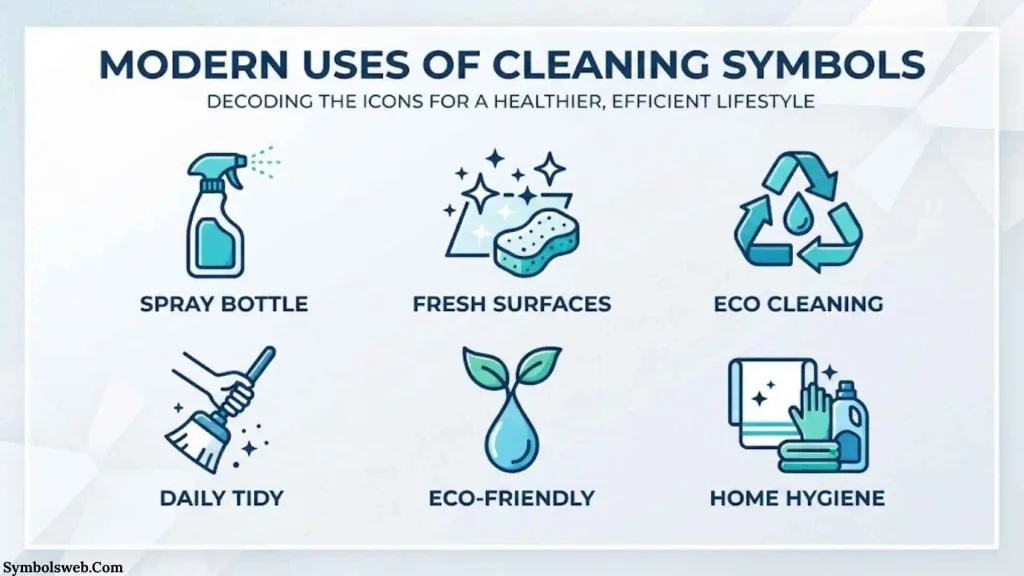
Tattoos
Minimalist designs inspired by laundry symbols have become increasingly popular.
Jewelry
Some jewelry designers use cleaning-symbol-inspired motifs to create modern geometric pieces.
Fashion
Fashion brands often incorporate oversized care symbols as artistic design elements.
Branding
Businesses use cleaning-related symbols to communicate reliability and maintenance services.
Social Media
Creative content creators use laundry symbols as visual storytelling tools.
Contemporary Spirituality
Some people view garment care as a mindfulness practice that promotes gratitude and intentional living.
Home Decor
Laundry-themed art and decorative signs frequently feature cleaning symbols.
Personal Expression
Many individuals appreciate these symbols because they combine practicality with visual simplicity.
Interesting Facts About Cleaning Symbols
- Cleaning symbols form one of the world’s most widely recognized visual languages.
- Most modern care symbols were standardized during the twentieth century.
- A single incorrect washing method can permanently damage certain fabrics.
- Silk, wool, and cashmere often require specialized care instructions.
- The number of dots inside ironing symbols indicates temperature levels.
- Cleaning symbols help reduce textile waste by extending garment lifespan.
- Many consumers ignore care labels despite their importance.
- International standardization allows clothing to be sold worldwide without extensive translation.
- Professional dry-cleaning symbols use letters that communicate specific cleaning processes.
- Care labels are required for many textile products in numerous countries.
Frequently Asked Questions
What do cleaning symbols mean on clothing labels?
Cleaning symbols provide instructions for washing, drying, bleaching, ironing, and professional cleaning to help prevent damage and extend the life of garments.
Why are cleaning symbols important?
They help consumers care for fabrics correctly, maintain quality, avoid shrinkage, and reduce unnecessary clothing waste.
Who invented cleaning symbols?
Cleaning symbols evolved through international textile organizations that sought a universal system for garment care instructions.
Are cleaning symbols the same worldwide?
Most cleaning symbols follow internationally recognized standards, although minor regional differences may exist.
What does a crossed-out washing symbol mean?
A crossed-out wash basin usually means the item should not be washed using standard washing methods.
Can ignoring cleaning symbols damage clothing?
Yes. Incorrect washing, drying, bleaching, or ironing can cause shrinking, fading, stretching, or permanent fabric damage.
Conclusion
In conclusion, cleaning symbols are an easy way to understand how to properly care for your clothes. Knowing these symbols helps prevent damage and keeps your garments looking fresh for longer.
By following the instructions on care labels, you can choose the right washing, drying, ironing, and cleaning methods with confidence. A basic understanding of cleaning symbols can make everyday laundry simpler and more effective.

Eliana Foster is a writer with a passion for exploring the meanings behind symbols, traditions, and cultural history. She enjoys breaking down complex topics into simple, engaging articles that are easy for everyone to understand. Eliana is also the fictional author of The Hidden Language of Silent Marks and Beyond the Circle of Ancient Signs, two original book concepts created for her author profile. When she’s not writing, she loves visiting museums, reading about mythology, and researching the stories behind symbols from around the world. Her goal is to help readers discover the fascinating meanings hidden in everyday signs and ancient emblems.
 Jordan Hayes
 Ethan Holloway