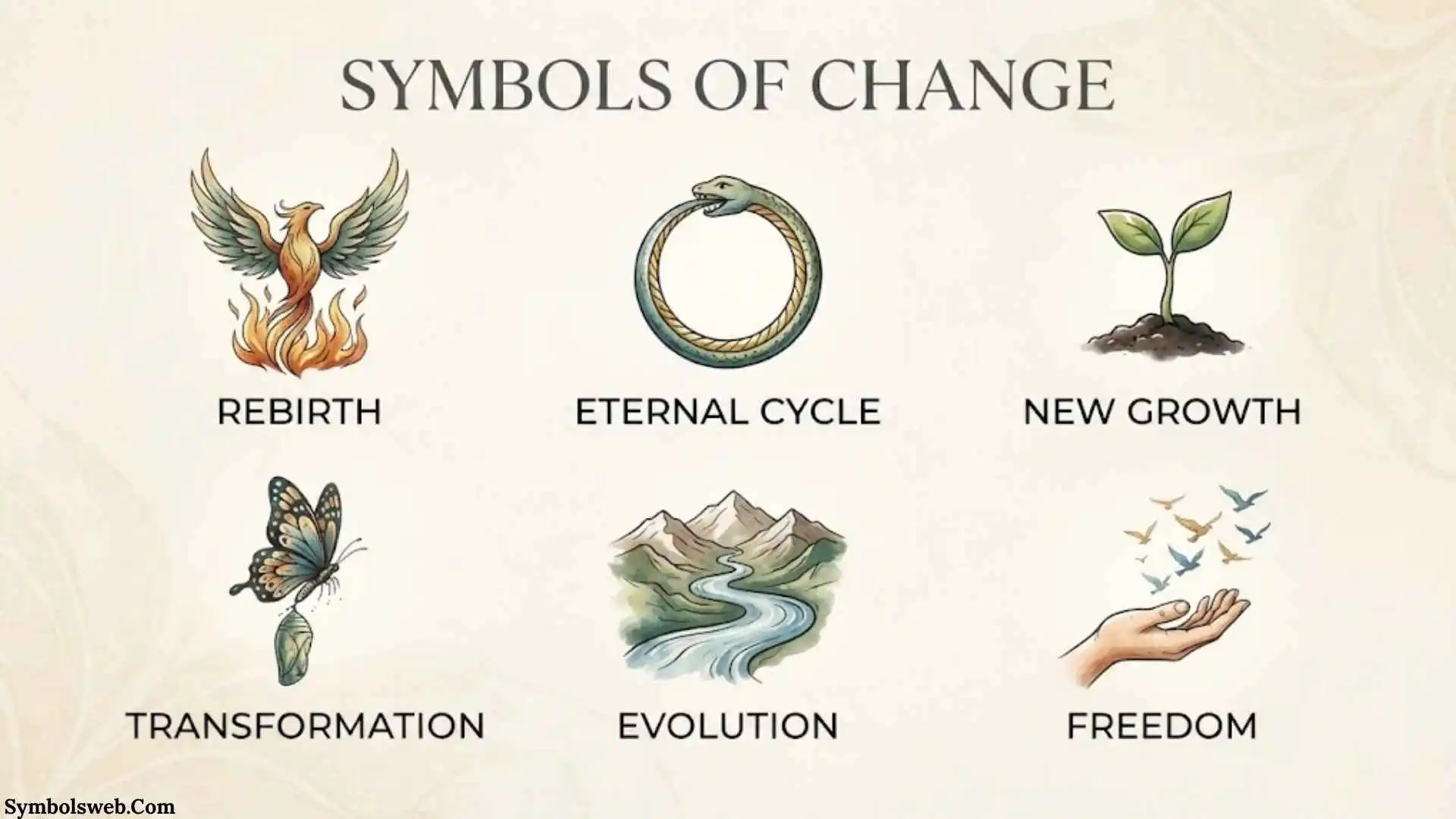
Change is a natural part of life, and you can often find its meaning reflected in powerful symbols around you. From ancient traditions to modern culture, Symbols of Change help you understand ideas such as growth, transformation, renewal, and new beginnings. When you recognize these symbols, you can see how different cultures express the journey from one stage of life to another.
In this guide, you will discover some of the most meaningful Symbols of Change and the stories behind them. I’ll help you explore what each symbol represents and why people have connected it with transformation for generations. Whether you are looking for inspiration, cultural meaning, or a deeper understanding of change, you can find useful insights here.
As you explore these symbols, you may notice that change does not always mean leaving the past behind. I’ll show you how symbols can represent personal growth, fresh opportunities, adaptation, and renewal. By the end, you will have a clearer understanding of how Symbols of Change can inspire you to embrace transformation in your own life.
Symbols of Change: (Quick Answer)
Symbols of change are visual, spiritual, cultural, or natural representations of transformation, growth, renewal, and new beginnings. They help people understand life’s transitions, personal development, spiritual evolution, and the movement from one stage of existence to another. Common symbols of change include butterflies, phoenixes, snakes, moons, and flowing water.
Quick Facts About Symbols of Change
| Aspect | Information |
| Origin | Found in ancient civilizations worldwide |
| Historical Significance | Represented transformation, rebirth, renewal, and evolution |
| Main Meaning | Change, growth, adaptation, and transition |
| Spiritual Meaning | Soul evolution, awakening, and inner transformation |
| Cultural Importance | Used in rituals, myths, art, and storytelling |
| Modern Usage | Tattoos, branding, personal development, spirituality, and social media |
What Are Symbols of Change?
Symbols of change are images, objects, animals, natural forces, or patterns that represent transformation. They help people understand events that may otherwise feel uncertain, emotional, or difficult.
Throughout history, humans have looked for ways to explain the cycles of life. Ancient communities observed nature and noticed that transformation happened everywhere. Caterpillars became butterflies. Seasons changed. Rivers reshaped landscapes. The moon transformed night after night.
These observations inspired powerful symbols that communicated ideas of growth, rebirth, and evolution.
Many ancient civilizations believed change was not simply a physical process. It was often viewed as a sacred journey involving the mind, spirit, and soul. As a result, symbols of transformation became central to religious practices, myths, ceremonies, and cultural traditions.
Today, these symbols continue to resonate because they reflect experiences everyone shares. Whether changing careers, healing from loss, starting a family, or pursuing personal growth, people naturally connect with symbols that represent transformation.
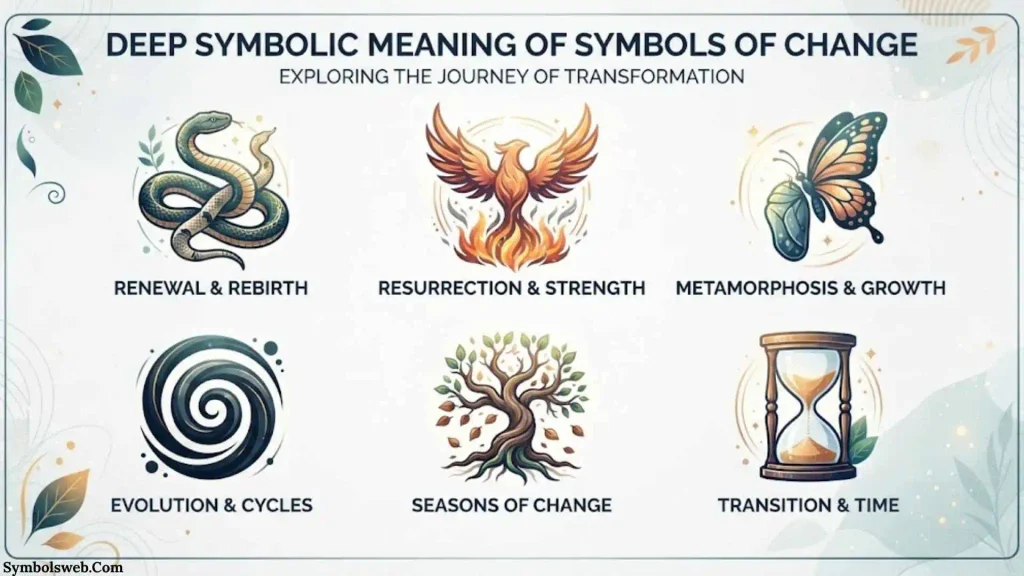
Deep Symbolic Meaning of Symbols of Change
Spiritual Level
At the spiritual level, symbols of change often represent awakening and evolution.
Many spiritual traditions teach that the soul grows through experience. Change becomes a pathway toward greater wisdom and understanding.
A butterfly emerging from a cocoon symbolizes spiritual rebirth. The phoenix rising from ashes represents renewal after hardship. Flowing water reflects the constant movement of life and consciousness.
These symbols remind people that endings often create space for new beginnings.
Psychological Level
Psychologically, symbols of change speak directly to human emotions.
Swiss psychiatrist Carl Jung believed that symbols emerge from the collective unconscious, a shared reservoir of human experiences and archetypes.
Transformation symbols often activate deep emotional responses because they mirror personal journeys.
They may represent:
- Healing after trauma
- Personal growth
- Identity development
- Emotional resilience
- Self-discovery
When people see a butterfly or a phoenix, they often project their own experiences onto the symbol.
Cultural Level
Culturally, symbols of change help communities explain life’s transitions.
Graduation ceremonies, weddings, funerals, and initiation rituals all use symbolic elements that represent movement from one stage of life to another.
These symbols create meaning and provide comfort during uncertain times.
Stories, traditions, and rituals reinforce the idea that transformation is a natural and necessary part of life.
Types and Variations of Symbols of Change
Butterfly
Visual Description: Delicate winged insect with colorful wings.
Meaning: Transformation and rebirth.
Symbolism: Personal growth through struggle.
Cultural Connection: Found worldwide as a symbol of renewal.
Where It Appears: Art, dreams, tattoos, literature, and spirituality.
Phoenix
Visual Description: Mythical bird reborn from its own ashes.
Meaning: Resurrection and renewal.
Symbolism: Rising stronger after adversity.
Cultural Connection: Ancient Mediterranean and Middle Eastern traditions.
Where It Appears: Mythology, fantasy literature, films, and tattoos.
Snake Shedding Its Skin
Visual Description: Serpent removing old skin.
Meaning: Renewal and personal evolution.
Symbolism: Letting go of the past.
Cultural Connection: Ancient Egypt, Greece, India, and Indigenous traditions.
Where It Appears: Religious symbolism, myths, dreams, and healing traditions.
Moon
Visual Description: Lunar phases changing throughout the month.
Meaning: Cycles and transformation.
Symbolism: Emotional and spiritual growth.
Cultural Connection: Nearly every civilization.
Where It Appears: Astrology, mythology, rituals, and meditation.
Flowing Water
Visual Description: Rivers, streams, waterfalls, and oceans.
Meaning: Adaptability and movement.
Symbolism: Constant change and life’s journey.
Cultural Connection: Universal.
Where It Appears: Religion, literature, dreams, and philosophy.
Spiral
Visual Description: Circular pattern expanding outward.
Meaning: Continuous growth.
Symbolism: Evolution of consciousness.
Cultural Connection: Ancient Celtic, Indigenous, and Eastern traditions.
Where It Appears: Sacred art, architecture, and spiritual teachings.
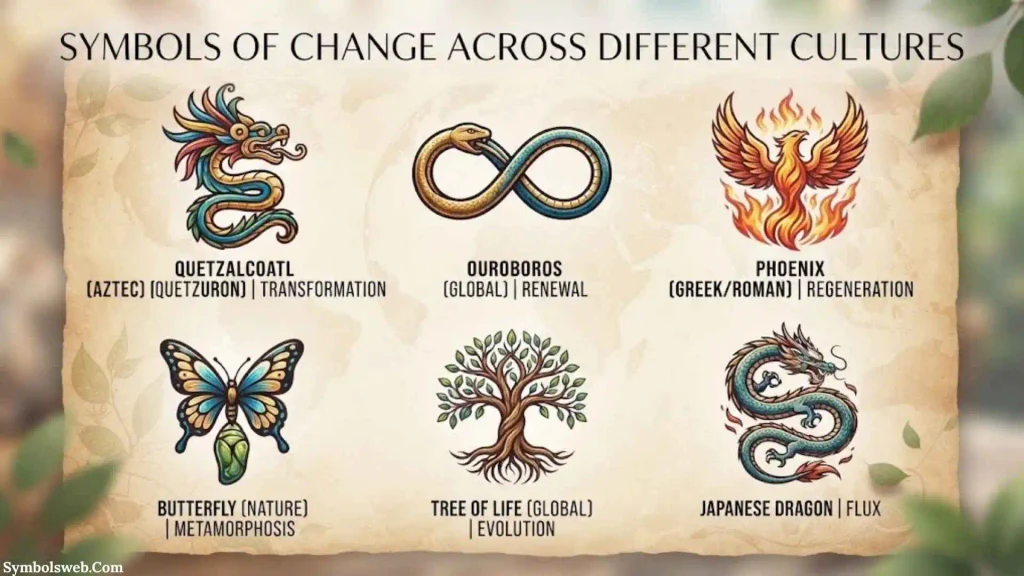
Symbols of Change Across Different Cultures
Ancient Egypt
In Ancient Egypt, transformation was closely tied to death and rebirth.
The scarab beetle became one of the most important symbols of change. Egyptians observed dung beetles rolling balls across the ground and associated them with the daily movement of the sun.
The scarab symbolized renewal, resurrection, and eternal life.
Ancient Greece
Greek mythology frequently explored transformation.
Stories in Metamorphoses describe humans, gods, and creatures constantly changing form.
The phoenix emerged as a powerful symbol of rebirth and immortality.
Transformation was seen as both a blessing and a consequence of divine intervention.
Roman Culture
Romans adopted many Greek transformation symbols.
They associated change with destiny, fate, and personal virtue.
Symbols of renewal appeared in festivals celebrating seasonal cycles and agricultural rebirth.
Eastern Traditions
In many Eastern philosophies, change is viewed as the fundamental nature of existence.
The concept of impermanence in Buddhism teaches that everything changes.
Lotus flowers symbolize spiritual transformation because they emerge from muddy waters and bloom beautifully above the surface.
Indigenous Traditions
Many Indigenous cultures see transformation as part of humanity’s connection with nature.
Animals that undergo dramatic life changes often become sacred symbols.
Butterflies, eagles, snakes, and rivers frequently represent spiritual journeys and personal evolution.
Modern Interpretations
Today, symbols of change appear everywhere.
People use them to represent recovery, self-improvement, resilience, and life transitions.
They continue to provide hope during uncertain times.
Similar Symbols and Their Meanings
| Symbol | Similarity | Difference |
| Butterfly | Transformation | Focuses on personal growth |
| Phoenix | Rebirth | Emphasizes recovery after destruction |
| Snake | Renewal | Highlights shedding the old self |
| Moon | Cycles | Represents recurring transformation |
| Water | Movement | Focuses on adaptability |
| Lotus | Spiritual growth | Emphasizes enlightenment |
Common Misconceptions
Many people assume all change symbols represent positive experiences.
However, transformation often involves struggle, uncertainty, and sacrifice before growth occurs.
The deeper symbolism includes both challenge and renewal.
Symbols of Change in Mythology and Folklore
Mythology is filled with transformation stories.
The phoenix is perhaps the most famous. According to legend, the bird burns at the end of its life and rises again from the ashes.
Greek myths often feature shape-shifting gods and heroes who transform physically and spiritually.
In Celtic folklore, magical journeys frequently involve transformation as a test of wisdom and character.
Native stories around the world use animals undergoing change to teach lessons about resilience and adaptation.
These myths helped people understand life’s uncertainties and inspired generations to embrace transformation rather than fear it.
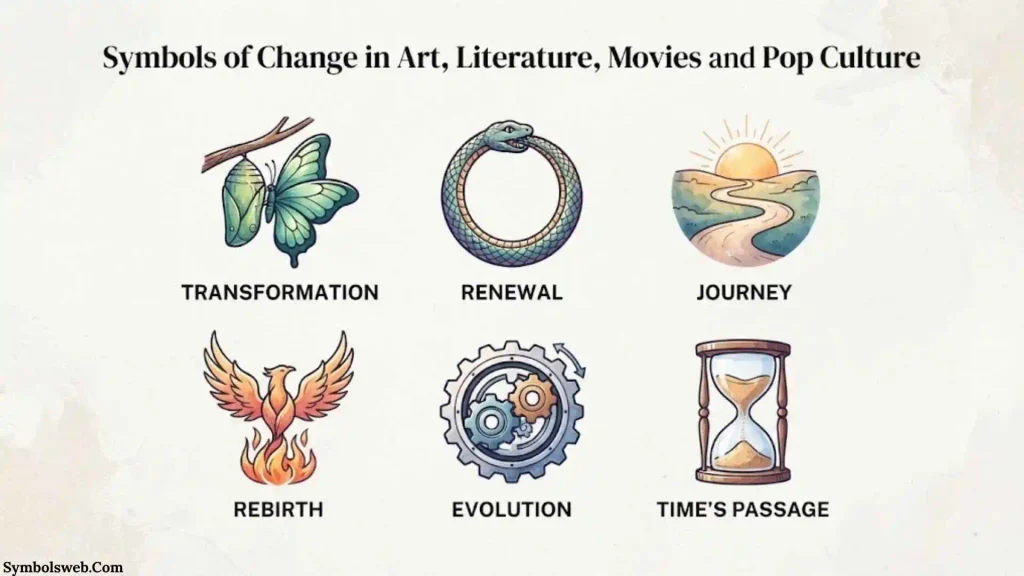
Symbols of Change in Art, Literature, Movies and Pop Culture
Paintings
Artists frequently use butterflies, rivers, moons, and seasons to symbolize personal growth and transformation.
Literature
Many classic novels focus on character transformation.
A character’s journey often mirrors symbolic change, moving from ignorance to wisdom or fear to courage.
Poetry
Poets use changing seasons, blooming flowers, and flowing water to explore emotional growth.
Movies
Films often rely on transformation symbols to show character development.
The phoenix, butterfly, and changing landscapes frequently appear in visual storytelling.
Television
Modern television series use symbolic transformations to represent redemption arcs and personal evolution.
Tattoos
Transformation tattoos remain among the most popular tattoo designs worldwide.
Butterflies, phoenixes, spirals, and lotus flowers are especially common.
Fashion
Designers use symbolic imagery to represent innovation, reinvention, and creativity.
Modern Design
Brands often incorporate transformation symbols to communicate growth, progress, and adaptability.
Spiritual and Dream Meaning of Symbols of Change
Dreams frequently use transformation symbols because the unconscious mind communicates through imagery.
Common Dream Interpretations
Butterfly Dreams
- Personal growth
- New opportunities
- Emotional healing
Phoenix Dreams
- Recovery from hardship
- Reinvention
- Inner strength
Snake Dreams
- Renewal
- Healing
- Releasing old habits
Water Dreams
- Emotional change
- Adaptability
- Spiritual cleansing
Meditation and Spiritual Experiences
During meditation, people sometimes visualize symbols of transformation as guides for personal growth.
These symbols can represent:
- Spiritual awakening
- Life transitions
- Inner healing
- Expanded awareness
Positive and Negative Meanings of Symbols of Change
| Positive Meaning | Negative Meaning |
| Growth | Uncertainty |
| Renewal | Loss of familiarity |
| Rebirth | Fear of the unknown |
| Adaptability | Emotional discomfort |
| Personal evolution | Instability |
| New opportunities | Difficult transitions |
The meaning often depends on context. Change can be exciting and liberating, but it can also feel uncomfortable. Symbols of transformation acknowledge both realities.
Why Humans Are Attracted to Symbols of Change
Humans are naturally drawn to transformation symbols because change is woven into every life story.
Psychologists suggest that people seek patterns that help them understand uncertainty.
Transformation symbols provide reassurance that growth is possible even during difficult times.
They also connect people to universal experiences shared across generations.
A butterfly emerging from a cocoon tells a story that requires no translation. Nearly everyone understands its message.
These symbols become powerful because they blend personal experience with collective human wisdom.
Modern Uses of Symbols of Change
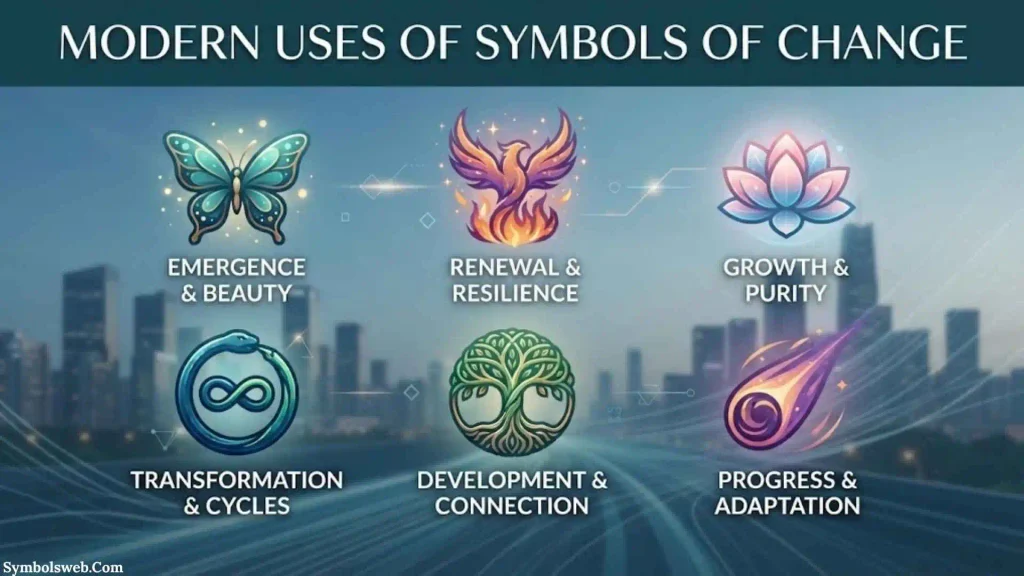
Tattoos
People choose transformation symbols to mark important life milestones.
Jewelry
Butterfly and phoenix jewelry often symbolize resilience and personal growth.
Fashion
Transformation imagery communicates individuality and reinvention.
Branding
Companies use change symbols to represent innovation and progress.
Social Media
Transformation symbols appear in motivational content, wellness communities, and personal development discussions.
Contemporary Spirituality
Modern spiritual practices frequently incorporate symbols of renewal and awakening.
Home Decor
Many people display transformation symbols as reminders of growth, hope, and resilience.
Personal Expression
Symbols help individuals communicate personal stories without words.
Interesting Facts About Symbols of Change
- The butterfly is one of the most recognized transformation symbols worldwide.
- The phoenix appears in multiple ancient cultures, not just Greek mythology.
- Spiral symbols date back thousands of years and appear in prehistoric art.
- Water is considered a sacred symbol of transformation in many religions.
- The moon’s changing phases inspired countless cultural symbols of renewal.
- Ancient Egyptians wore scarab amulets to symbolize rebirth.
- Many initiation ceremonies use symbolic transformation rituals.
- Jungian psychology views transformation symbols as universal archetypes.
- Lotus flowers are among the oldest spiritual symbols of change.
- Modern tattoo culture has made transformation symbols more popular than ever.
Frequently Asked Questions
What is the most powerful symbol of change?
The butterfly is often considered the most powerful symbol of change because its complete metamorphosis perfectly represents transformation, growth, and renewal.
What animal symbolizes change and transformation?
Butterflies, snakes, phoenixes, and frogs are among the most common animals associated with change and personal evolution.
What symbolizes positive change?
Butterflies, lotus flowers, rising suns, flowing water, and phoenixes commonly symbolize positive transformation and new beginnings.
What is the spiritual meaning of change symbols?
Spiritually, change symbols represent soul growth, awakening, renewal, and movement toward higher awareness and wisdom.
Are symbols of change found in every culture?
Yes. Nearly every culture throughout history has developed symbols representing transformation, growth, renewal, and life’s natural cycles.
Why are transformation symbols popular in tattoos?
People often choose them to commemorate personal growth, recovery from challenges, important life transitions, or spiritual awakenings.
Conclusion
Symbols of change remind us that transformation is one of life’s greatest constants. Across cultures, religions, myths, and personal stories, these symbols help people navigate uncertainty and embrace growth. If represented by a butterfly, phoenix, spiral, or flowing river, each symbol carries a timeless message: change is not merely an ending. It is often the beginning of something new, wiser, and stronger. By understanding these symbols, we gain deeper insight into both human history and our own evolving journeys.

Jordan Hayes is a writer with a passion for exploring the history, meanings, and cultural significance behind symbols from around the world. He enjoys turning complex topics into clear, engaging content that anyone can understand. Jordan is also the fictional author of The Silent Language of Ancient Marks and Hidden Symbols Beyond the Surface, two original book concepts created for his author profile. When he’s not writing, he spends time researching myths, traditions, and forgotten stories that inspire his work. His goal is to help readers discover the deeper meanings behind the symbols they encounter every day.
 Eliana Foster
 Ethan Holloway