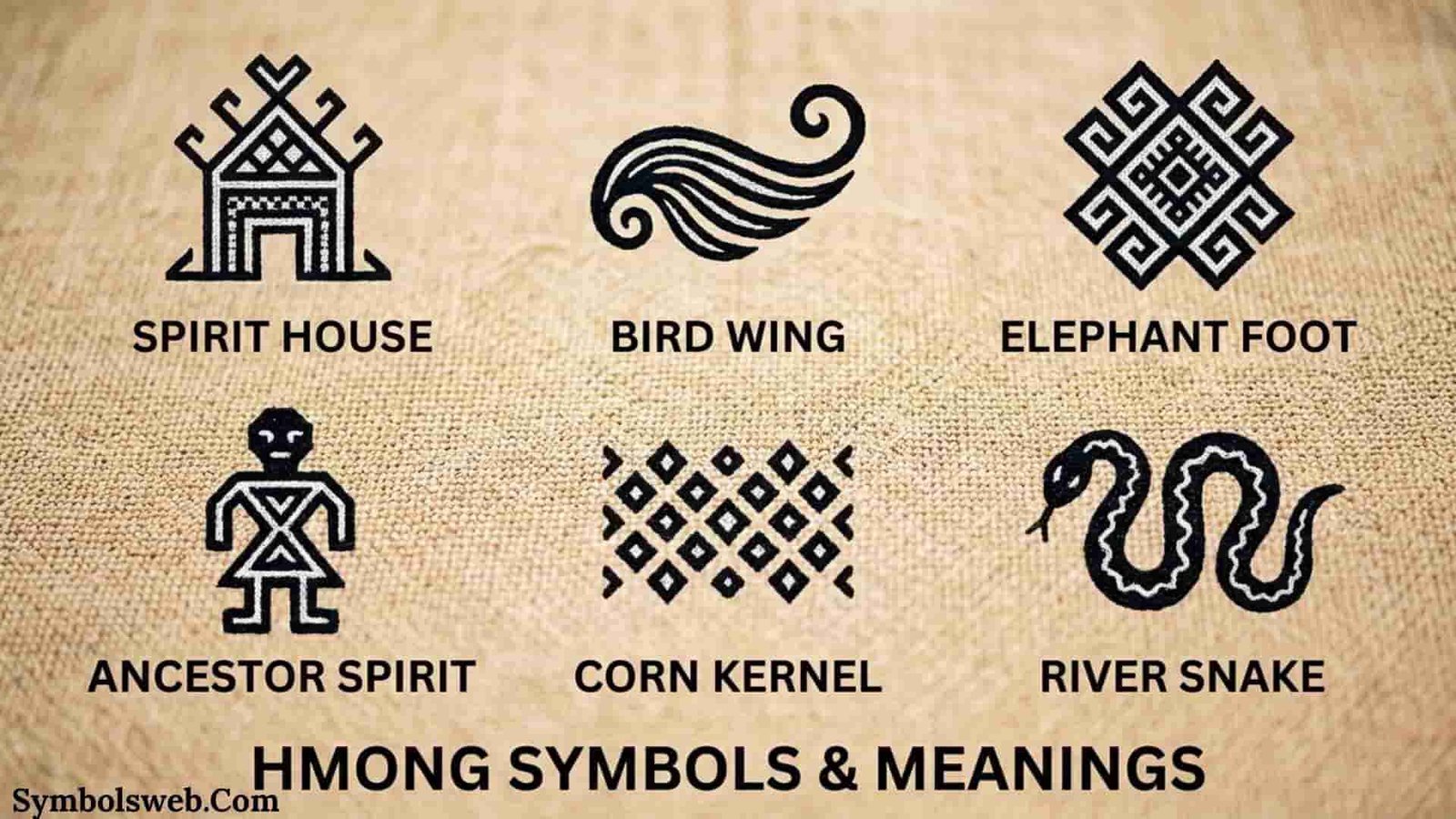
Hmong symbols tell a remarkable story of identity, survival, spirituality, and cultural memory. For centuries, these visual patterns have carried the history of the Hmong people across mountains, migrations, and generations. More than simple decorations, they act as a symbolic language woven into clothing, textiles, art, and everyday life.
Understanding Hmong symbols offers a fascinating glimpse into human creativity, ancestral wisdom, and the universal desire to preserve cultural heritage. Behind every pattern lies a deeper meaning waiting to be discovered.
Hmong Symbols: (Quick Answer)
Hmong symbols are traditional visual motifs used by the Hmong people to express cultural identity, spiritual beliefs, family heritage, nature connections, and historical memory. Commonly found in embroidery, textiles, clothing, and decorative arts, these symbols often represent protection, prosperity, ancestors, fertility, harmony, and the relationship between humans and the natural world.
Also Check This Post: 95+ The Outsiders Symbols: A Complete Guide to Their Meaning
Quick Facts About Hmong Symbols
| Aspect | Information |
| Origin | Traditional Hmong communities of China and Southeast Asia |
| Historical Significance | Preserved cultural identity and history across generations |
| Main Meaning | Heritage, family, nature, protection, and continuity |
| Spiritual Meaning | Connection to ancestors, spirits, and cosmic balance |
| Cultural Importance | Central to Hmong textile art, clothing, ceremonies, and storytelling |
| Modern Usage | Fashion, tattoos, cultural preservation, contemporary art, home décor |
What Are Hmong Symbols?
Hmong symbols are visual patterns, motifs, and geometric designs traditionally created by the Hmong people, an ethnic group with roots in southern China and large communities throughout Laos, Vietnam, Thailand, Myanmar, and the global diaspora.
Historically, the Hmong did not rely heavily on a written language. Instead, many cultural stories, beliefs, and traditions were preserved through oral storytelling and textile arts.
Women became the primary keepers of this visual heritage through a craft known as paj ntaub, often translated as “flower cloth.” These intricate embroidered textiles contain symbols that communicate identity, clan connections, spiritual beliefs, and historical experiences.
Over time, Hmong symbols evolved from practical decoration into powerful cultural markers. Today they continue to represent resilience, pride, and connection to ancestral roots.
Deep Symbolic Meaning of Hmong Symbols
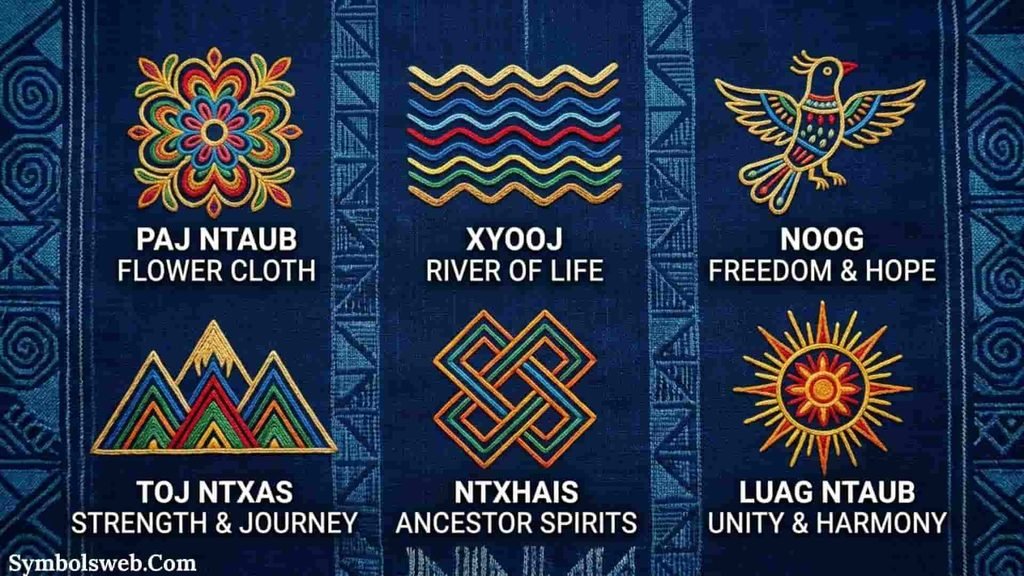
Spiritual Level
On a spiritual level, Hmong symbols often reflect the belief that the visible and invisible worlds are interconnected.
Many traditional motifs symbolize:
- Protection from harmful spirits
- Guidance from ancestors
- Cosmic harmony
- Cycles of life and death
- Spiritual balance
In traditional Hmong beliefs, ancestors play an active role in family life. Symbols incorporated into ceremonial clothing and textiles may help strengthen this sacred connection.
Certain geometric patterns are believed to create spiritual order, bringing harmony between people, nature, and the spirit world.
Inner Transformation
The repetitive creation of Hmong embroidery can also be viewed as a meditative process. Each stitch represents patience, discipline, and devotion.
Many artisans describe embroidery as more than craft. It is a way of honoring family, preserving memory, and expressing inner strength.
Psychological Level
From a psychological perspective, Hmong symbols speak to universal human needs.
These include:
- Belonging
- Identity
- Protection
- Meaning
- Connection
Psychologist Carl Jung suggested that recurring symbols across cultures often reflect shared archetypes within the collective unconscious.
Many Hmong patterns contain circles, spirals, pathways, and symmetrical forms that mirror archetypal symbols found worldwide.
These designs may unconsciously evoke feelings of:
- Safety
- Continuity
- Order
- Community
- Cultural pride
Cultural Level
For the Hmong people, symbols are living expressions of culture.
Imagine a young Hmong girl learning embroidery from her grandmother. As she stitches traditional patterns, she is not simply creating artwork. She is inheriting centuries of history and knowledge.
Each motif becomes a lesson about:
- Family values
- Community traditions
- Cultural survival
- Respect for ancestors
- Connection to nature
In this way, symbols function as cultural memory.
Types and Variations of Hmong Symbols
Snail Shell Pattern
Visual Description
A spiral or coiled geometric shape.
Meaning
Growth, continuity, and life’s journey.
Symbolism
Represents the unfolding path of existence and the cyclical nature of life.
Cultural Connection
Frequently appears in traditional embroidery and ceremonial garments.
Where It Appears
- Textiles
- Ceremonial clothing
- Decorative fabric
Elephant Foot Pattern
Visual Description
Large geometric square or stepped motif.
Meaning
Strength and stability.
Symbolism
Reflects endurance, grounding, and resilience.
Cultural Connection
Associated with power and protection.
Where It Appears
- Traditional skirts
- Jackets
- Ceremonial attire
Ram’s Horn Pattern
Visual Description
Curved spiral designs.
Meaning
Prosperity and abundance.
Symbolism
Represents wealth, vitality, and success.
Cultural Connection
Often linked to agricultural prosperity.
Where It Appears
- Paj ntaub embroidery
- Decorative textiles
Mountain Pattern
Visual Description
Triangular geometric shapes.
Meaning
Homeland and perseverance.
Symbolism
Represents the mountainous landscapes where many Hmong communities lived.
Cultural Connection
A reminder of ancestral origins.
Where It Appears
- Clothing
- Quilts
- Wall hangings
Cross and Star Motifs
Visual Description
Symmetrical geometric stars and crosses.
Meaning
Balance and direction.
Symbolism
Can symbolize harmony, guidance, and cosmic order.
Cultural Connection
Often incorporated into ceremonial designs.
Where It Appears
- Embroidered panels
- Traditional garments
Hmong Symbols Across Different Cultures
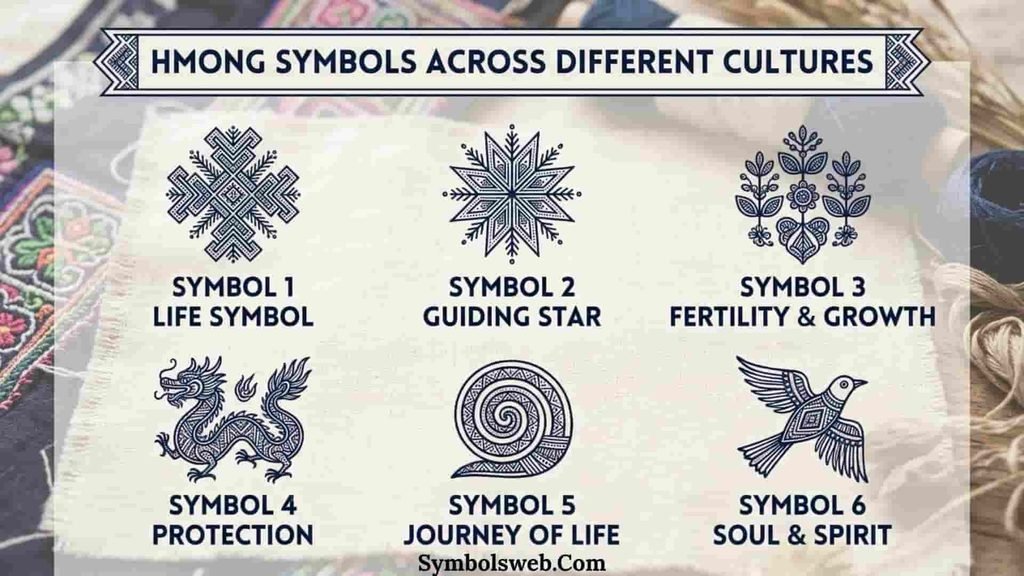
Although Hmong symbols are unique to Hmong culture, many of their themes appear throughout human civilization.
Ancient Egypt
Ancient Egyptians used symbols to communicate spiritual truths and divine protection.
Similarity
Both traditions use symbolic imagery to connect earthly life with spiritual realities.
Cultural Significance
Symbols acted as carriers of sacred knowledge.
Ancient Greece
Greek decorative art often incorporated geometric motifs representing balance and order.
Similarity
Hmong patterns also emphasize symmetry and harmony.
Historical Use
Both cultures used visual symbolism to express philosophical ideas.
Roman Culture
Roman mosaics frequently featured repeating geometric forms.
Similarity
The use of repeated patterns to create beauty and meaning.
Cultural Importance
Visual designs reflected social identity and cultural values.
Eastern Traditions
Many Eastern traditions emphasize balance between humanity and nature.
Similarity
Hmong symbols frequently reflect natural cycles and harmony.
Historical Use
Nature-inspired symbolism appears throughout Asian artistic traditions.
Indigenous Traditions
Many Indigenous cultures worldwide use textile designs as storytelling tools.
Similarity
Both preserve history through symbolic art.
Cultural Significance
Patterns become visual records of collective memory.
Modern Interpretations
Today, Hmong symbols are increasingly appreciated globally.
Modern artists use them to express:
- Cultural identity
- Heritage preservation
- Artistic innovation
- Social resilience
Also Check This Post: 85+ Strength Symbols: The Ultimate Guide to Powerful Meanings
Similar Symbols and Their Meanings
| Symbol | Similarity to Hmong Symbols | Key Difference |
| Celtic Knots | Continuous patterns | More focused on interwoven lines |
| Native American Textile Motifs | Storytelling through design | Different cultural narratives |
| Mandalas | Symmetry and spiritual meaning | More explicitly meditative |
| Chinese Cloud Patterns | Nature symbolism | Different philosophical origins |
| African Adinkra Symbols | Cultural wisdom | Often more direct symbolic meanings |
Common Misconceptions
One misconception is that every Hmong symbol has a single fixed meaning.
In reality, meanings often vary according to:
- Region
- Clan traditions
- Historical period
- Artistic interpretation
Context matters greatly.
Hmong Symbols in Mythology and Folklore
Hmong folklore contains stories involving ancestors, spirits, animals, and natural forces.
Many symbols emerge from these narratives.
Traditional stories often emphasize:
- Respect for elders
- Courage during hardship
- Harmony with nature
- Spiritual responsibility
Some scholars suggest that textile motifs preserve fragments of ancient stories that may no longer exist in written form.
In this sense, embroidery becomes a visual form of mythology.
The symbols act like memory maps connecting present generations to ancestral wisdom.
Hmong Symbols in Art, Literature, Movies, and Pop Culture
Art
Contemporary Hmong artists frequently incorporate traditional motifs into paintings, sculptures, and mixed-media works.
The symbols help bridge traditional heritage with modern expression.
Literature
Many Hmong writers use symbolic imagery to explore themes of:
- Migration
- Identity
- Family
- Cultural preservation
Traditional motifs often appear as metaphors for memory and belonging.
Poetry
Poets frequently reference embroidered patterns as symbols of ancestral voices speaking across generations.
Movies and Television
Films about Hmong communities often feature traditional clothing and textiles.
These visual elements communicate authenticity and cultural pride.
Tattoos
Hmong-inspired tattoos have become increasingly popular among younger generations.
Common meanings include:
- Family heritage
- Cultural pride
- Protection
- Personal resilience
Fashion
Designers worldwide have drawn inspiration from Hmong textile traditions.
Traditional motifs now appear in:
- Contemporary clothing
- Accessories
- Textile design
- Cultural fashion collections
Modern Design
Interior designers and artisans use Hmong-inspired patterns in:
- Wall art
- Pillows
- Rugs
- Decorative textiles
Their geometric beauty appeals to modern aesthetics while preserving cultural roots.
Spiritual and Dream Meaning of Hmong Symbols
Dreaming of Hmong symbols can have several interpretations.
Positive Meanings
- Reconnecting with heritage
- Personal growth
- Spiritual guidance
- Family support
- Cultural pride
Meditation Symbolism
During meditation, geometric patterns may symbolize:
- Inner balance
- Order
- Self-discovery
- Connection to ancestry
Cautionary Meanings
In some contexts, dreams involving damaged or incomplete patterns may symbolize:
- Lost identity
- Disconnection from roots
- Unresolved family issues
Dream interpretation remains highly personal and depends on individual experiences.
Positive and Negative Meanings of Hmong Symbols
| Positive Meaning | Negative Meaning |
| Protection | Fear of losing heritage |
| Community | Social pressure to conform |
| Identity | Cultural conflict |
| Spiritual connection | Anxiety about tradition fading |
| Strength | Burden of historical trauma |
| Continuity | Resistance to change |
Like many powerful symbols, their meaning depends on context and perspective.
Why Humans Are Attracted to Hmong Symbols
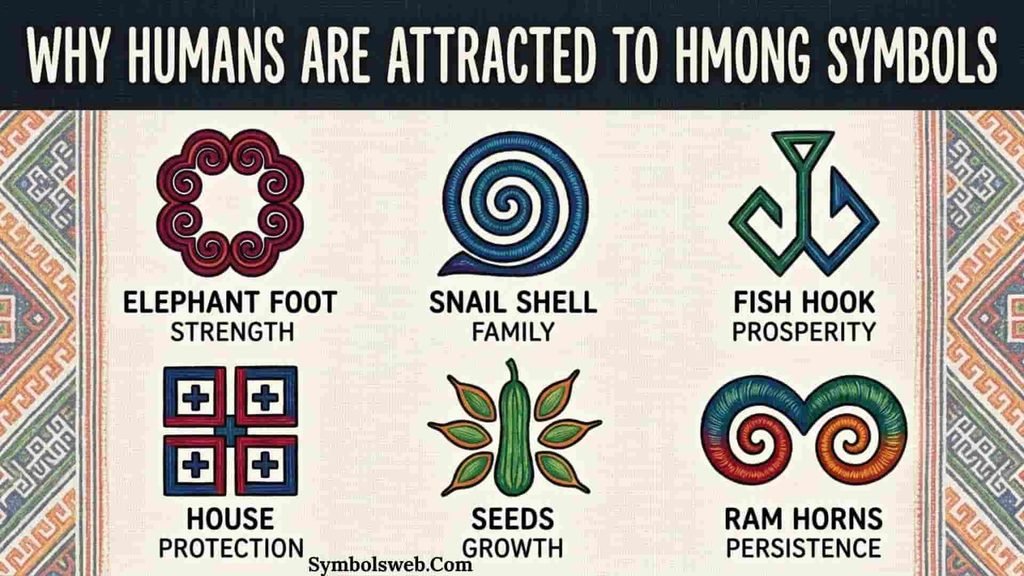
Humans naturally seek patterns.
Our brains are wired to recognize symmetry, repetition, and meaningful designs.
Hmong symbols satisfy this instinct beautifully.
They also appeal because they tell stories.
People are drawn to symbols that represent:
- Family
- Survival
- Belonging
- Purpose
There is something deeply moving about knowing that a pattern stitched centuries ago can still communicate meaning today.
These symbols connect individual lives to a larger human story.
That emotional connection explains much of their enduring appeal.
Modern Uses of Hmong Symbols
Tattoos
Used to celebrate ancestry, resilience, and cultural identity.
Jewelry
Appears in pendants, bracelets, earrings, and handmade accessories.
Fashion
Traditional motifs continue to inspire both Hmong and international designers.
Branding
Some organizations use Hmong-inspired designs to emphasize cultural heritage.
Social Media
Digital creators share symbolic artwork to educate younger generations.
Contemporary Spirituality
People often view traditional motifs as reminders of balance and interconnectedness.
Home Decor
Used in textiles, wall art, cushions, and handcrafted decorations.
Personal Expression
Many individuals use these symbols to communicate pride in their cultural roots.
Interesting Facts About Hmong Symbols
- Many Hmong symbols have been preserved through textile traditions rather than written records.
- Paj ntaub means “flower cloth” and is one of the most recognized forms of Hmong artistic expression.
- Traditional embroidery techniques can require hundreds of hours of work.
- Symbolic patterns often vary between Hmong subgroups.
- Many designs reflect mountains, animals, plants, and natural landscapes.
- Hmong textiles became internationally recognized after refugee communities shared their artwork globally.
- Some patterns function as visual storytelling tools.
- Traditional motifs continue evolving through modern art and fashion.
- Hmong symbols help preserve cultural identity across generations.
- Many contemporary museums now display Hmong textile art as an important cultural heritage tradition.
Frequently Asked Questions
What do Hmong symbols represent?
Hmong symbols commonly represent ancestry, protection, family, nature, prosperity, identity, and spiritual harmony. Their meanings often depend on cultural context and regional traditions.
What is the most common Hmong symbol?
The snail shell motif is among the most recognized Hmong symbols. It often represents continuity, growth, and the cyclical journey of life.
Why are Hmong symbols important?
They preserve cultural knowledge, history, beliefs, and identity. For many Hmong families, symbols act as visual records of heritage and ancestral wisdom.
Are Hmong symbols religious?
Some symbols have spiritual associations, particularly regarding ancestors and harmony with the spirit world. However, many are cultural rather than strictly religious.
Where can Hmong symbols be found?
They appear in traditional clothing, embroidery, quilts, jewelry, artwork, ceremonial objects, home décor, and contemporary fashion.
Can non Hmong people use Hmong symbols?
Yes, but respectful understanding is important. Learning the cultural meaning behind the symbols helps ensure appreciation rather than appropriation.
Conclusion
Hmong symbols are far more than decorative patterns. They are living expressions of history, identity, spirituality, and resilience. Every stitch, spiral, and geometric form carries the voice of generations who preserved their culture through art and storytelling.
If viewed through history, psychology, spirituality, or design, these symbols remind us that human beings have always used images to express meaning beyond words. In a rapidly changing world, Hmong symbols continue to stand as beautiful reminders of heritage, memory, and the enduring power of cultural connection.
Also Check This Post: 83+ Space Symbols: A Simple Beginner’s Guide to Every Type

Jordan Hayes is a writer with a passion for exploring the history, meanings, and cultural significance behind symbols from around the world. He enjoys turning complex topics into clear, engaging content that anyone can understand. Jordan is also the fictional author of The Silent Language of Ancient Marks and Hidden Symbols Beyond the Surface, two original book concepts created for his author profile. When he’s not writing, he spends time researching myths, traditions, and forgotten stories that inspire his work. His goal is to help readers discover the deeper meanings behind the symbols they encounter every day.
 Eliana Foster
 Ethan Holloway
[…] Naruto Village Symbols: A Complete Guide to Their Meanings 55+ Hmong Symbols: Meanings Names and Cultural Significance 95+ The Outsiders Symbols: A Complete Guide to Their Meaning 85+ Strength Symbols: The […]
[…] to Their Meaning and Origins 73+ Naruto Village Symbols: A Complete Guide to Their Meanings 55+ Hmong Symbols: Meanings Names and Cultural Significance 95+ The Outsiders Symbols: A Complete Guide to Their Meaning 85+ Strength Symbols: The […]
[…] to Their Meaning and Origins 73+ Naruto Village Symbols: A Complete Guide to Their Meanings 55+ Hmong Symbols: Meanings Names and Cultural Significance 95+ The Outsiders Symbols: A Complete Guide to Their […]