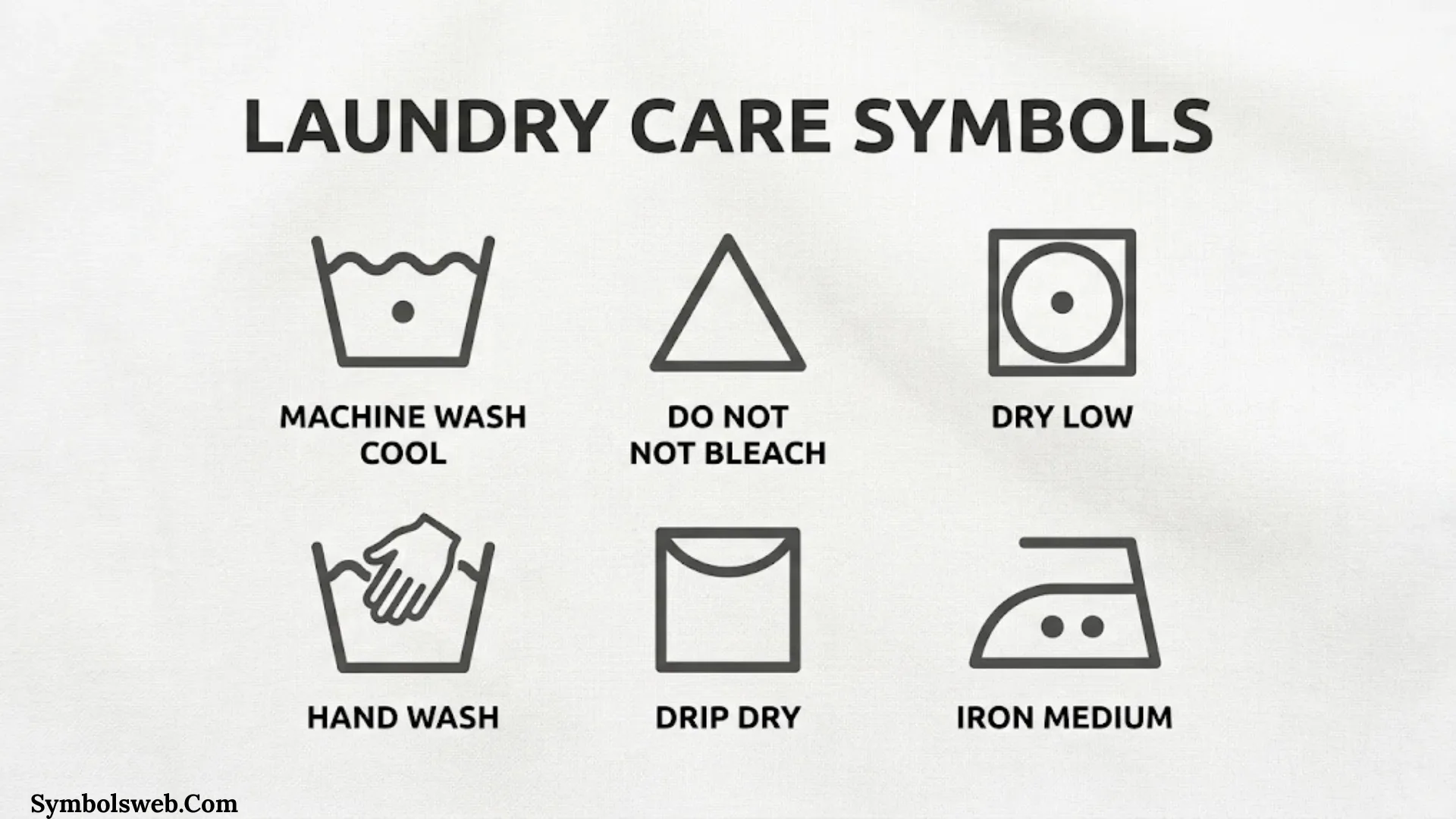
Laundry care symbols help you wash, dry, bleach, and iron clothes without damaging them. These small icons tell you how to care for each fabric and avoid common laundry mistakes. Once you understand them, clothing labels become much easier to read.
You don’t need to memorize every symbol at once. Most clothing labels use five main categories: washing, bleaching, drying, ironing, and professional textile care. Each category has its own shape and markings. A few simple details, such as dots, lines, and crosses, can change the meaning.
This guide explains common laundry symbols and meanings in plain English. You’ll learn how to read care labels, choose the right wash temperature, protect delicate fabrics, and avoid mistakes that can shrink, fade, or damage your clothes.
What Are Laundry Care Symbols?
Laundry care symbols are small instructions printed on clothing labels. They explain which cleaning methods a garment can safely handle. You’ll usually find them on a sewn-in tag inside a shirt, pants, jacket, dress, or other textile item.
These symbols use simple shapes instead of long written instructions. That makes them useful across different languages and countries.
The international system follows ISO 3758:2023, which covers domestic washing, bleaching, drying, ironing, and professional textile care. It also includes instructions for professional dry cleaning and wet cleaning.
The Five Main Laundry Symbol Categories
Most care labels follow five main symbols in a standard order:
| Symbol shape | Category | What it tells you |
| Washtub | Washing | How to wash the garment |
| Triangle | Bleaching | Whether bleach is safe |
| Square | Drying | How to dry the fabric |
| Iron | Ironing | How much heat to use |
| Circle | Professional textile care | Whether professional cleaning is recommended |
You may see extra marks inside or below these shapes. Numbers show washing temperatures. Dots indicate heat levels. Horizontal lines usually mean you should choose a gentler process. A cross means you must avoid the treatment.
GINETEX+1
Why Are Clothing Care Labels Important?
A care label helps you protect your clothes from avoidable damage. The wrong washing method can cause shrinking, fading, stretching, or permanent wrinkles.
For example, a wool sweater may shrink if you wash it with hot water. A delicate blouse may lose its shape during a fast spin cycle. High dryer heat can damage elastic fibers and some synthetic fabrics.
Care labels also help you:
- Choose the right washing machine cycle.
- Set a safe water temperature.
- Decide whether bleach is suitable.
- Prevent heat damage in a tumble dryer.
- Avoid scorching delicate fabrics while ironing.
- Know when to use a professional cleaner.
Remember: A care label generally shows the maximum treatment a garment can tolerate without damage. You can usually choose a milder process or a lower temperature.
GINETEX
How to Read Laundry Symbols on Clothing Labels
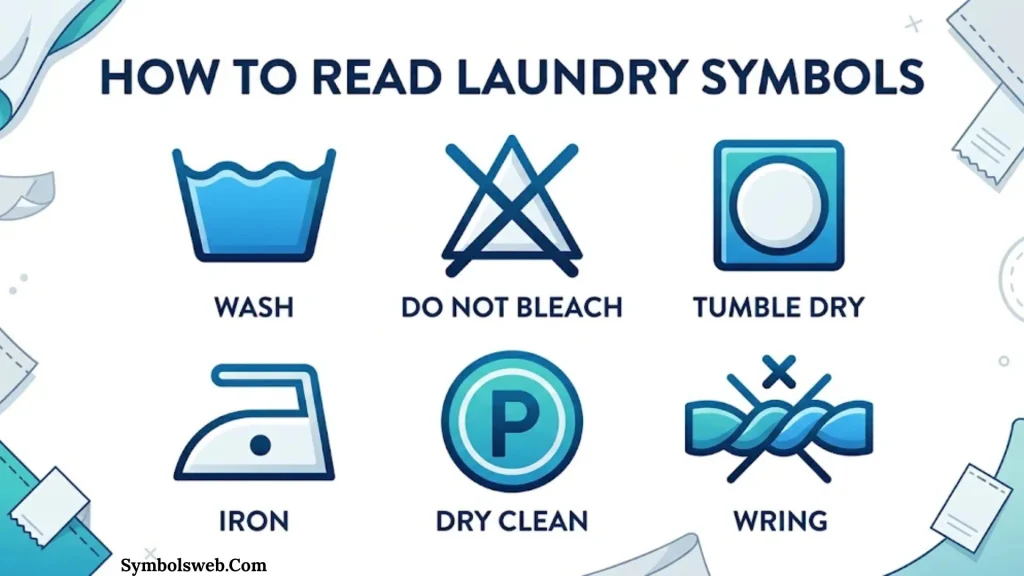
You don’t need to learn every symbol separately. Start by recognizing the five main shapes. Then look for the small marks inside or around each one.
Understand the Basic Symbol Markings
| Marking | General meaning |
| Number inside a wash tub | Maximum washing temperature in Celsius |
| One dot | Low heat |
| Two dots | Medium heat |
| Three dots | High heat |
| One horizontal bar underneath | Mild treatment |
| Two horizontal bars underneath | Very mild treatment |
| Cross over a symbol | Do not use that treatment |
| Triangle with diagonal lines | Use only non-chlorine bleach |
| Letter inside a circle | Professional cleaning instructions |
The exact meaning depends on the main symbol. For example, dots inside an iron indicate ironing heat. Dots inside a drying symbol indicate tumble-drying heat.
What Do Lines Under Laundry Symbols Mean?
Horizontal lines underneath a care symbol indicate a gentler process.
- No line: Use the normal process allowed by the symbol.
- One line: Choose a mild process with reduced mechanical action.
- Two lines: Choose a very mild process with much less agitation.
These markings are especially important for delicate clothing. A wool sweater with two lines under its washing symbol needs a much gentler cycle than a cotton T-shirt with a plain wash tub.
What Does a Cross Over a Laundry Symbol Mean?
A cross means the treatment shown by that symbol is not permitted.
For example:
- Crossed wash tub: Do not wash.
- Crossed triangle: Do not bleach.
- Crossed square with a dryer circle: Do not tumble dry.
- Crossed iron: Do not iron.
- Crossed circle: Do not use the professional cleaning method represented by that symbol.
Don’t ignore a crossed symbol. The restriction may protect the fabric, color, finish, or attached details.
Washing Symbols and Their Meanings
Washing symbols appear as a washtub with a wavy water line. They tell you whether a garment can go into a washing machine or needs hand washing.
The number inside the tub shows the maximum permitted washing temperature in degrees Celsius. A bar underneath indicates a gentler cycle.
Common Washing Machine Symbols
| Washing symbol description | Meaning |
| Plain washtub | Machine washing is permitted |
| Washtub with 30 | Wash at a maximum of 30°C |
| Washtub with 40 | Wash at a maximum of 40°C |
| Washtub with 50 | Wash at a maximum of 50°C |
| Washtub with 60 | Wash at a maximum of 60°C |
| Washtub with 70 | Wash at a maximum of 70°C |
| Washtub with 95 | Wash at a maximum of 95°C |
| Washtub with one line underneath | Use a mild wash cycle |
| Washtub with two lines underneath | Use a very mild wash cycle |
| Hand inside a washtub | Hand wash |
| Crossed washtub | Do not wash |
Machine Wash Symbol
A plain washtub means the garment can be washed using a domestic washing machine. However, check for a number or lines before selecting a cycle.
A garment marked for a mild wash may need a delicate or permanent-press setting. A very mild symbol may require a wool or hand-wash program.
Use the right detergent and avoid overloading the machine. Too many clothes can prevent proper rinsing and increase friction.
Hand Wash Symbol
A hand inside a washtub means you should wash the garment by hand.
This instruction often appears on wool, silk, lace, and other delicate materials. These fabrics may stretch, lose their shape, or suffer damage during a standard machine cycle.
Follow these steps:
- Fill a clean basin with cool or lukewarm water.
- Add a small amount of suitable detergent.
- Submerge the garment gently.
- Move it through the water without scrubbing or twisting.
- Rinse carefully with clean water.
- Press out excess water without wringing.
- Dry it according to the drying symbol.
Some updated care-label systems include a hand-wash symbol for washing at ambient temperature. This was one of the changes introduced in ISO 3758:2023.
GINETEX+1
Do Not Wash Symbol
A crossed washtub means you should not wash the garment at home.
Water and regular detergent may damage its fabric, shape, color, or finish. Check the professional textile-care symbol on the same label. If it allows professional cleaning, take the item to a qualified cleaner.
Never assume that a garment marked “Do Not Wash” can safely go through a quick or cold machine cycle.
Laundry Water Temperature Symbols and Their Meanings
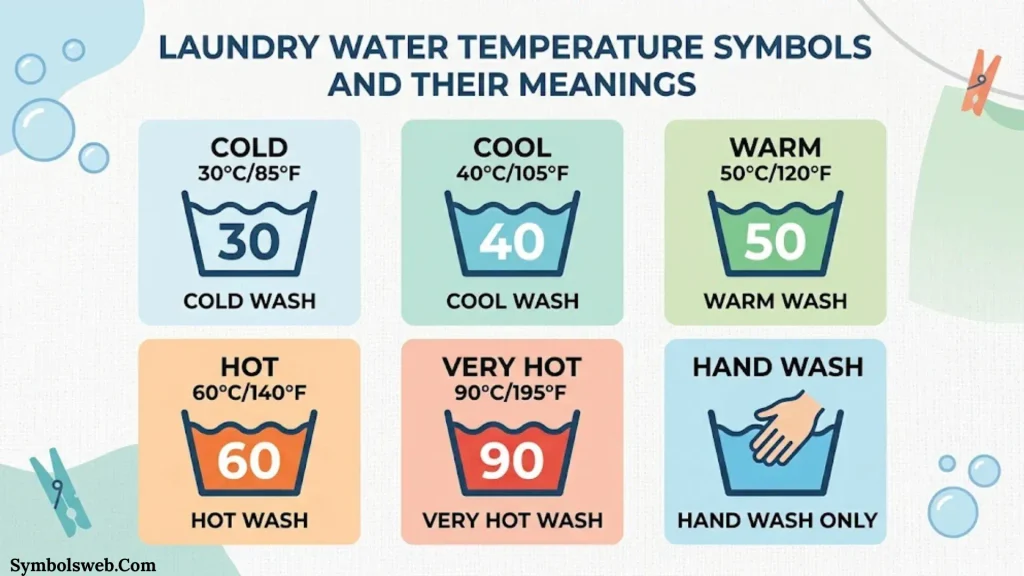
Water temperature plays an important role in clothing care. Hot water can help remove some soils, but it can also shrink fabrics, fade dyes, and damage delicate fibers.
The number inside the wash tub indicates the maximum permitted temperature. Common ISO wash temperatures include 30°C, 40°C, 50°C, 60°C, 70°C, and 95°C.
iTeh Standards+1
Common Laundry Temperature Guide
| Temperature | Fahrenheit equivalent | General use |
| 30°C | 86°F | Delicate clothing and lightly soiled items |
| 40°C | 104°F | Many everyday garments |
| 50°C | 122°F | Items whose labels permit warmer washing |
| 60°C | 140°F | Suitable textiles that need a hotter wash |
| 70°C | 158°F | Items specifically labeled for this temperature |
| 95°C | 203°F | Certain durable textiles that tolerate very hot washing |
These are maximum label temperatures, not instructions to use the hottest setting every time. A lower temperature may be a better choice when it cleans the garment effectively.
30°C Washing Symbol
A washtub marked 30 means the garment can be washed at a maximum of 30°C.
This cooler setting is useful for many colored clothes and delicate fabrics. It can also help reduce the risk of color fading and fabric shrinkage.
40°C Washing Symbol
A washtub marked 40 allows washing at up to 40°C.
Many everyday cotton and synthetic garments can tolerate this temperature. Always check the other symbols before choosing a cycle.
60°C Washing Symbol
A washtub marked 60 allows washing at up to 60°C.
Some durable cotton items and household textiles may carry this instruction. Don’t use this setting on delicate clothing unless its label allows it.
95°C Washing Symbol
A washtub marked 95 indicates that the textile can tolerate washing at up to 95°C.
This is a very hot wash. It is not suitable for most everyday clothing, so follow the label carefully.
Bleach Laundry Symbols and Their Meanings
Bleaching symbols appear as triangles. They tell you whether bleach is permitted and which type you can use.
Bleach can help remove stains and brighten some white fabrics. However, the wrong product can cause discoloration, weaken fibers, or leave permanent marks.
Common Bleaching Symbols
| Bleach symbol description | Meaning |
| Empty triangle | Bleaching is permitted |
| Triangle with two diagonal lines | Use non-chlorine bleach only |
| Crossed triangle | Do not bleach |
Empty Triangle: Bleaching Allowed
An empty triangle means the garment can be bleached when needed.
It does not mean every bleach product is suitable. Check the product label and use the correct amount. Test an inconspicuous area when you’re unsure about colorfastness.
Triangle With Two Diagonal Lines: Non-Chlorine Bleach Only
Two diagonal lines inside the triangle indicate that you should use non-chlorine bleach only.
This type is often called oxygen bleach or color-safe bleach. It is different from chlorine bleach, which can damage dyes and certain fibers.
Follow the garment label and the bleach manufacturer’s directions.
Crossed Triangle: Do Not Bleach
A crossed triangle means you should not use bleach on the garment.
Avoid chlorine bleach and oxygen-based bleaching products unless the manufacturer specifically confirms they are safe. Use a suitable detergent and a stain-removal method designed for the fabric instead.
When Should You Avoid Bleach?
Be careful with bleach when washing:
- Wool and cashmere.
- Silk.
- Leather and suede.
- Clothing with delicate dyes.
- Garments with special coatings or finishes.
- Items carrying a do-not-bleach symbol.
Never mix chlorine bleach with ammonia, vinegar, or other cleaning products. Dangerous fumes or chemical reactions can result.
Drying Symbols and Their Meanings
Drying symbols appear as squares. They explain how to remove moisture after washing.
Some garments can go into a tumble dryer. Others need to dry naturally on a line, hanger, or flat surface.
The square may contain a circle, lines, or other markings. Each detail changes the recommended drying method.
Common Clothes Drying Symbols
| Drying symbol description | Meaning |
| Square with a circle | Tumble drying is permitted |
| Square with a circle and one dot | Tumble dry at low heat |
| Square with a circle and two dots | Tumble dry at a higher permitted heat |
| Crossed square with a circle | Do not tumble dry |
| Square with a horizontal line | Dry flat |
| Square with a curved line at the top | Line dry |
| Square with vertical lines | Drip dry |
| Square with diagonal corner lines | Dry in the shade |
Tumble Dry Symbol
A square containing a circle means the garment can be tumble dried.
Check for dots inside the circle. They indicate the permitted heat level. A crossed symbol means you must avoid the tumble dryer.
Tumble drying can save time, but excessive heat may shrink clothing or damage elastic. Remove garments promptly when the cycle ends to reduce wrinkles.
Line Dry Symbol
A curved line near the top of a square represents line drying.
Hang the garment on a clothesline or suitable hanger. This method allows air to circulate around the fabric.
Line drying can be useful for many shirts, trousers, and other everyday garments. Support heavy wet items properly so they don’t stretch under their own weight.
Drip Dry Symbol
Vertical lines inside a square indicate drip drying.
Hang the garment while it is still wet and allow excess water to drip away. Avoid wringing or twisting the fabric.
This method can help protect delicate clothing that may stretch or lose its shape during spinning.
Dry Flat Symbol
A horizontal line inside a square means the garment should dry flat.
Place the item on a clean, dry surface. Reshape it gently while damp.
Wool sweaters and other stretchy garments often benefit from flat drying. Hanging them while wet can pull the fibers downward and distort their shape.
Dry in the Shade Symbol
Diagonal lines in the corner of a drying square indicate shade drying.
Keep the garment away from direct sunlight while it dries. Strong sunlight may fade some dyes and affect delicate fabrics.
This instruction is especially useful for dark colors and clothing that can lose color easily.
Tumble Dryer Symbols and Their Meanings
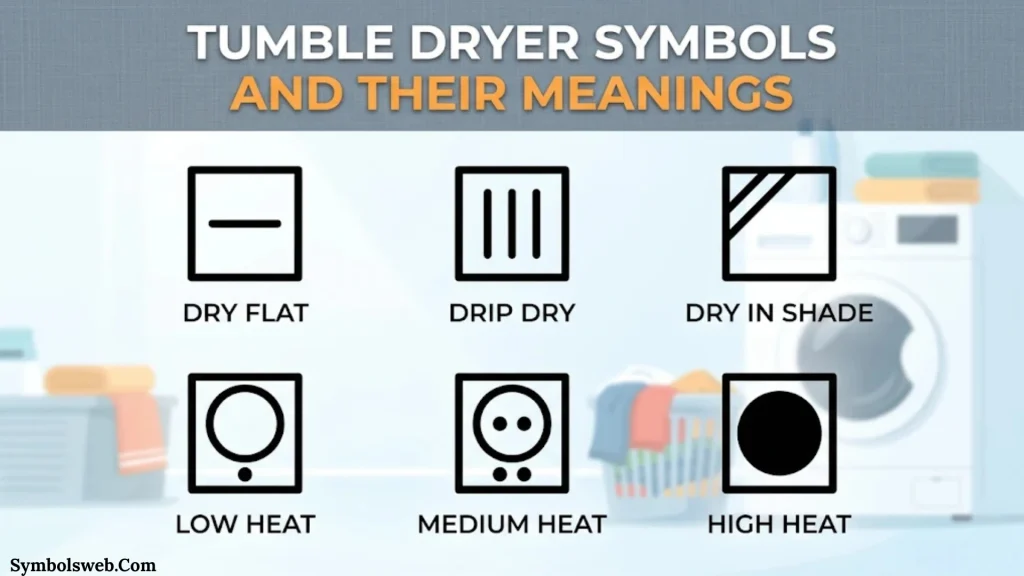
Tumble dryer symbols are especially important because heat can change the shape and texture of clothing. The symbol looks like a circle inside a square.
Dots inside the circle show the permitted heat level. A cross over the symbol means you should not use a tumble dryer.
One Dot: Low Heat
One dot means you should use a low-heat tumble-drying setting.
This setting is often suitable for heat-sensitive garments that carry a tumble-dry instruction. It can help reduce the risk of shrinking and damage.
Two Dots: Normal or Medium Heat
Two dots indicate a higher permitted drying temperature than one dot.
Use the setting recommended by your dryer and follow the garment’s care label. Avoid adding delicate items to a high-heat load.
Three Dots: High Heat
Three dots indicate that the garment can tolerate a high-heat tumble-drying setting.
Not every care-label system uses all three dot levels. Always follow the exact symbol and the instructions supplied with your appliance.
Crossed Tumble Dryer Symbol
A crossed square with a circle means do not tumble dry.
Choose an approved natural-drying method instead. Depending on the rest of the label, this may mean line drying, drip drying, or drying flat.
How to Prevent Shrinking in a Tumble Dryer
A few simple habits can protect your clothes:
- Check every garment’s drying symbol before starting the dryer.
- Separate delicate fabrics from durable items.
- Use a lower heat setting when the label allows it.
- Avoid leaving clothes in the dryer longer than necessary.
- Remove items promptly after the cycle.
- Reshape garments while they are still slightly damp when appropriate.
If a garment says not to tumble dry, don’t assume that a short cycle is safe. Use natural drying instead.
Ironing Symbols and Their Meanings
Ironing symbols look like small clothing irons. They tell you whether ironing is permitted and how much heat you can use.
Dots inside the iron indicate the permitted temperature level. A crossed iron means you should not iron the garment.
Common Ironing Symbols
| Iron symbol description | Meaning |
| Iron with one dot | Low-temperature ironing |
| Iron with two dots | Medium-temperature ironing |
| Iron with three dots | High temperature ironing |
| Crossed iron | Do not iron |
| Iron with crossed steam marks | Do not use steam |
| Iron with no steam marking | Follow the permitted ironing treatment |
One Dot: Low Temperature Ironing
One dot means you should use a low heat setting.
This is commonly suitable for heat-sensitive fabrics such as some synthetic materials. Place a clean pressing cloth between the iron and garment if the fabric needs extra protection.
Keep the iron moving. Leaving it in one spot can cause shine or heat damage.
Two Dots: Medium Temperature Ironing
Two dots indicate a medium ironing temperature.
Some wool, polyester blends, and other fabrics may carry this instruction. Check the fabric label because blends can behave differently depending on their fiber content.
Three Dots: High-Temperature Ironing
Three dots indicate that the garment can tolerate a higher ironing temperature.
Durable cotton and linen items may carry this marking. Use steam only when the label permits it.
Crossed Iron: Do Not Iron
A crossed iron means you should not use a household iron on the garment.
Heat may damage the fabric, melt fibers, or affect decorative details. Consider hanging the item properly after washing to reduce wrinkles.
No Steam Ironing Symbol
An iron with crossed steam marks means you should not use steam.
You may still be allowed to iron the garment without steam if the main iron symbol permits it. Use the temperature indicated by its dots.
ISO 3758:2023 introduced a new symbol for ironing without steam. This helps distinguish steam restrictions from a complete ban on ironing.
Tips for Ironing Different Fabrics
- Cotton: Use the temperature allowed by the label. Some cotton garments tolerate higher heat.
- Linen: Iron while slightly damp if the label permits it.
- Silk: Use low heat and avoid pressing too hard.
- Polyester: Choose a low setting to prevent melting or shine.
- Wool: Use gentle heat and a pressing cloth when ironing is permitted.
Never guess the heat setting. Start with the lowest permitted temperature and increase it only when necessary.
Dry Cleaning Symbols and Their Meanings
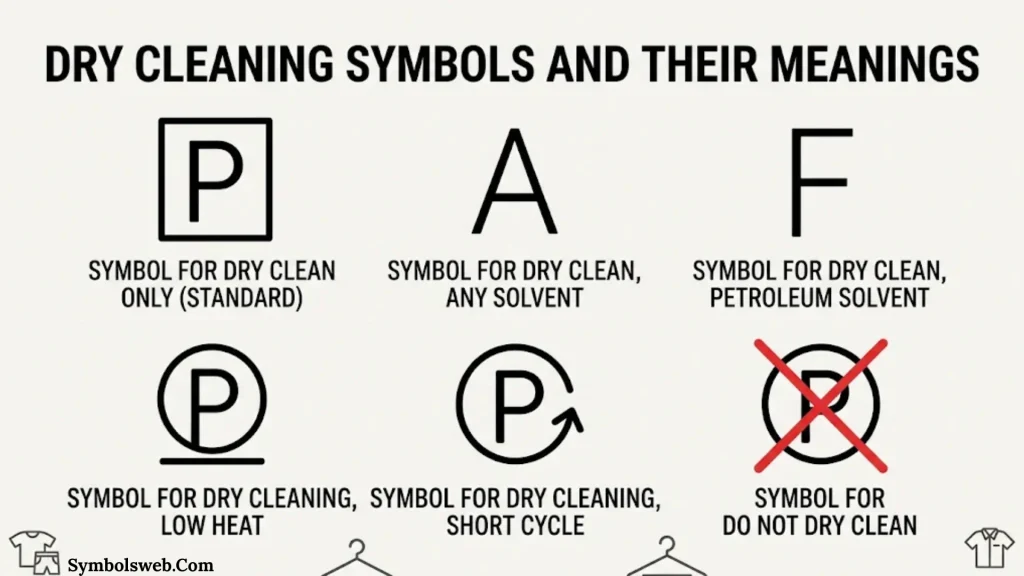
Professional textile-care symbols appear as circles. They tell you whether a garment needs professional cleaning and may include letters that identify the permitted cleaning process.
These symbols matter for suits, coats, structured garments, delicate dresses, and items with special finishes.
Common Professional Cleaning Symbols
| Circle symbol description | Meaning |
| Plain circle | Professional textile care is permitted |
| Circle with P | Professional cleaning under the specified P process |
| Circle with F | Professional cleaning under the specified F process |
| Circle with W | Professional wet cleaning |
| Crossed circle | Do not use the indicated professional cleaning treatment |
| Circle with one line underneath | Use a mild professional process |
| Circle with two lines underneath | Use a very mild professional process |
The letters inside professional-care symbols refer to cleaning methods and solvent categories. They are instructions for professional cleaners, not settings you should try at home. ISO 3758:2023 also includes updated solvent information.
GINETEX+1
P Inside a Circle
A P inside a circle indicates a professional dry-cleaning process using the solvents permitted for that symbol.
The cleaner must follow the applicable process and any extra markings. Don’t treat the letter as a recommendation to use a particular household cleaning product.
F Inside a Circle
An F inside a circle indicates a professional dry-cleaning process using the specified solvent category.
The distinction between P and F matters because different fabrics and finishes tolerate different cleaning processes. A professional cleaner can interpret the symbol and select the appropriate method.
W Inside a Circle
A W inside a circle indicates professional wet cleaning.
Professional wet cleaning is not the same as putting a garment through a regular home washing cycle. It uses specialized equipment, controlled processes, and suitable detergents to reduce the risk of damage.
Textiles
Crossed Circle: Do Not Dry Clean
A crossed circle means the indicated professional cleaning treatment is not permitted.
Check the rest of the care label for another approved cleaning method. If the garment has no safe home or professional cleaning option, ask the manufacturer or a qualified cleaner for advice.
Why Professional Dry Cleaning Matters
Some garments contain materials or construction details that make ordinary washing risky.
Professional cleaning may help protect:
- Structured jackets and suits.
- Coats with internal linings.
- Delicate dresses.
- Clothing with special trims or decorations.
- Fabrics that may react poorly to water.
- Items with finishes that need controlled treatment.
However, a dry-cleaning symbol does not mean every cleaner can use any method. The letters and lines provide important limits.
Laundry Symbol Chart: Quick Reference Guide
A quick laundry symbol chart can help you check clothing labels before washing. Use this table as a general guide and always follow the complete symbol printed on your garment.
| Symbol category | Common marking | Meaning |
| Washing | Washtub | Washing is permitted |
| Washing | Washtub with a number | Maximum wash temperature |
| Washing | Washtub with one line | Mild wash cycle |
| Washing | Washtub with two lines | Very mild wash cycle |
| Washing | Hand in washtub | Hand wash |
| Washing | Crossed washtub | Do not wash |
| Bleaching | Empty triangle | Bleaching permitted |
| Bleaching | Triangle with diagonal lines | Non-chlorine bleach only |
| Bleaching | Crossed triangle | Do not bleach |
| Drying | Square with circle | Tumble drying permitted |
| Drying | One dot in dryer symbol | Low heat |
| Drying | Two dots in dryer symbol | Higher permitted heat |
| Drying | Crossed dryer symbol | Do not tumble dry |
| Natural drying | Curved line in square | Line dry |
| Natural drying | Vertical lines in square | Drip dry |
| Natural drying | Horizontal line in square | Dry flat |
| Natural drying | Diagonal corner lines | Dry in the shade |
| Ironing | One dot | Low heat |
| Ironing | Two dots | Medium heat |
| Ironing | Three dots | High heat |
| Ironing | Crossed iron | Do not iron |
| Ironing | Crossed steam marks | Do not use steam |
| Professional care | Circle | Professional textile care |
| Professional care | Circle with P or F | Specified dry-cleaning process |
| Professional care | Circle with W | Professional wet cleaning |
| Professional care | Crossed circle | Do not use the indicated cleaning treatment |
Laundry Care Symbols for Different Fabrics
Different fabrics react differently to water, detergent, heat, and friction. A washing method that works for cotton may damage silk or wool.
Always check the garment label first. The fabric name alone does not tell you every detail because dyes, finishes, linings, and blended fibers can change the recommended treatment.
Cotton Care Symbols
Cotton is a common natural fiber used in T-shirts, shirts, jeans, towels, and bedding.
Many cotton garments can handle machine washing. However, the permitted temperature depends on the fabric, dye, construction, and finish.
Cotton care tips:
- Check the wash tub for the maximum temperature.
- Separate dark and light colors.
- Use a suitable detergent.
- Avoid excessive heat when drying.
- Follow the ironing dots before pressing.
Colored cotton may fade with repeated hot washes. A lower permitted temperature can help preserve its appearance.
Wool and Cashmere Care Symbols
Wool and cashmere need gentle handling. Strong agitation and unsuitable heat can cause shrinkage, matting, or loss of shape.
Look for a hand-wash symbol or a wash tub with two lines underneath. These markings indicate that the garment needs a gentle or very gentle process.
Wool and cashmere care tips:
- Use a detergent designed for wool when appropriate.
- Avoid twisting or wringing the garment.
- Use a suitable gentle cycle only when the label allows it.
- Dry flat when instructed.
- Avoid tumble drying unless the label specifically permits it.
A wool sweater can stretch under its own weight when wet. Reshape it gently and follow the drying instructions.
Silk Care Symbols
Silk is a delicate natural fiber. It can be affected by harsh detergents, rough handling, and high temperatures.
Some silk garments allow hand washing. Others require professional cleaning.
Silk care tips:
- Check the label before using water.
- Use a suitable gentle detergent when washing is permitted.
- Avoid aggressive rubbing.
- Keep the garment away from excessive heat.
- Follow the drying and ironing symbols carefully.
Don’t assume every silk item can be hand washed. The garment’s construction and finish also matter.
Polyester and Nylon Care Symbols
Polyester and nylon are synthetic fibers used in sportswear, jackets, shirts, and everyday clothing.
Many items made from these materials can be machine washed. However, high heat can damage some synthetic fibers or affect their shape.
Polyester and nylon care tips:
- Follow the maximum wash temperature.
- Use a gentle cycle when the label calls for one.
- Avoid high dryer heat unless permitted.
- Check the iron symbol before pressing.
- Avoid excessive fabric softener on performance clothing when the manufacturer advises against it.
Rayon and Viscose Care Symbols
Rayon and viscose can be sensitive to moisture and agitation. Some garments may stretch, shrink, or lose their shape when wet.
The correct treatment depends on the specific fabric and construction.
Rayon and viscose care tips:
- Read the label before washing.
- Use hand washing only when permitted.
- Avoid wringing the fabric.
- Support the garment while it is wet.
- Follow the drying instructions closely.
Some rayon and viscose items require professional cleaning. Don’t assume that a cold machine wash is safe.
Linen Care Symbols
Linen is a natural fiber often used in shirts, trousers, dresses, and bedding.
It wrinkles easily, but the correct care method depends on the garment’s construction and finish.
Linen care tips:
- Follow the wash temperature on the label.
- Avoid overcrowding the washing machine.
- Use the permitted drying method.
- Check the iron symbol before using high heat.
- Iron while slightly damp only when appropriate.
Linen blends may need different care from pure linen. Check the label rather than relying on the fabric name.
Denim Care Symbols
Denim is commonly made from cotton, but stretch denim may also contain elastane or other fibers.
Dark denim can lose color over repeated washes. Excessive heat may also affect stretch fibers.
Denim care tips:
- Turn jeans inside out before washing.
- Separate dark denim from light-colored clothes.
- Follow the permitted water temperature.
- Avoid high dryer heat when the label restricts it.
- Check the ironing instructions if the garment needs pressing.
Some jeans have special finishes or coatings. Those details can affect the correct cleaning method.
Blended Fabric Care Symbols
Blended fabrics combine two or more fibers, such as cotton and polyester or wool and nylon.
Their care instructions may differ from those of each fiber on its own. A blend may need gentler treatment because one component is more sensitive than another.
For example, a cotton-polyester shirt may tolerate machine washing but still require a low-heat drying setting.
The safest approach is simple: Follow the care label for the complete garment, not just the fiber that makes up the largest percentage.
Common Laundry Care Symbol Mistakes to Avoid
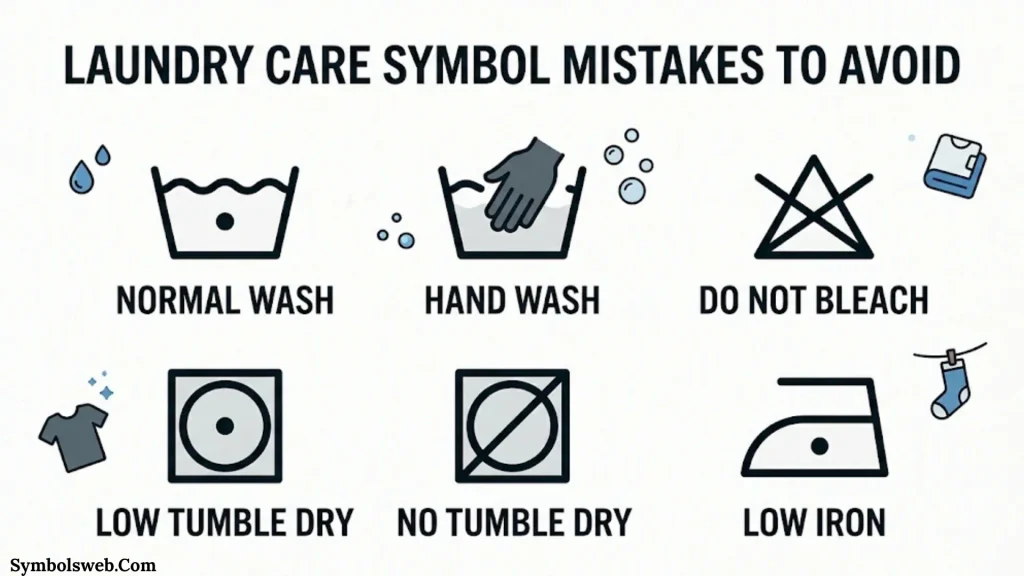
Even when you recognize the symbols, small mistakes can damage your clothes. Paying attention to the details helps you avoid unnecessary repairs and replacements.
Ignoring the Maximum Washing Temperature
The number inside a washtub shows the maximum permitted washing temperature. It doesn’t mean you must always use that temperature.
For example, a shirt marked 40 can usually be washed at a lower temperature when that setting cleans it effectively. Using cooler water may also help protect colors.
Confusing Hand Wash With Machine Wash
A hand inside a washtub means you should hand wash the garment. It doesn’t mean you can use any washing machine cycle.
Some modern machines offer hand-wash programs. However, don’t use one unless the garment’s instructions and the machine manufacturer support that method.
Using Chlorine Bleach on Every White Garment
White clothing isn’t automatically safe for chlorine bleach. Some white fabrics contain delicate fibers, special finishes, or decorative details.
Check the triangle symbol before using any bleaching product. A triangle with diagonal lines allows non-chlorine bleach only.
Putting Every Garment in the Tumble Dryer
Tumble drying is convenient, but it isn’t suitable for every fabric.
High heat can shrink clothing, damage elastic, and affect synthetic fibers. Always check the drying symbol before loading the machine.
Ignoring Lines Under Care Symbols
Lines underneath washing or professional-care symbols indicate a milder process.
A garment with two lines needs especially gentle treatment. Choosing a normal cycle instead may expose it to too much mechanical action.
Ironing Without Checking the Dots
An iron’s temperature setting matters. Excessive heat can scorch natural fibers or melt some synthetic materials.
Check the number of dots and choose the correct setting. If the label prohibits ironing, use another approved method to reduce wrinkles.
Assuming Every Circle Means the Same Thing
A circle represents professional textile care, but the letters and additional markings provide more specific instructions.
A P, F, or W inside the circle changes the meaning. Give the complete symbol to your professional cleaner rather than describing only the circle.
How to Use Laundry Care Symbols Before Washing Clothes
Understanding clothing care labels is easier when you follow a simple routine. Check the symbols before sorting your laundry or adding detergent.
Find the Care Label
Look for the sewn-in label inside the garment. Common locations include:
- Inside the side seam.
- Near the neckline.
- Inside the waistband.
- Along an inner pocket seam.
- Near the lower hem.
Some garments have more than one label. Check all available care instructions before cleaning the item.
Read the Washing Symbol
Start with the washtub symbol.
Check whether the garment allows machine washing, hand washing, or no washing. Then look at the number and any lines underneath.
Check the Bleaching Symbol
Look for the triangle.
An empty triangle allows bleaching. A triangle with diagonal lines limits you to non-chlorine bleach. A crossed triangle means you should avoid bleach.
Read the Drying Instructions
Find the square symbol.
Check whether the garment can go into a tumble dryer or needs natural drying. Pay attention to dots, lines, and diagonal marks.
Check the Ironing Symbol
Look for the iron shape.
Count the dots to identify the permitted heat level. Avoid steam or ironing entirely when the label restricts those treatments.
Check the Professional-Care Symbol
Look at the circle at the end of the label’s symbol sequence.
Letters and lines may identify a specific professional cleaning process. If you don’t understand the symbol, show the complete label to a qualified cleaner.
Sort Your Laundry
Once you’ve checked the labels, sort clothes according to their colors, fabrics, and care requirements.
Keep delicate items away from heavy garments with zippers or rough surfaces. Separate clothes that need different temperatures or washing cycles.
US vs. International Laundry Care Symbols
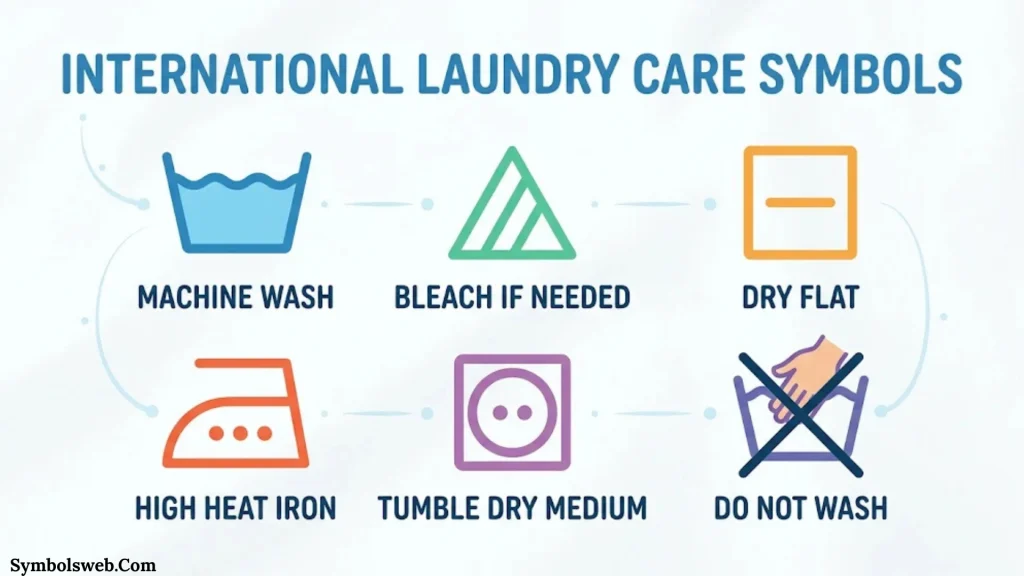
Laundry care labels can look different depending on the country and labeling system. However, many countries use the international symbol system established by ISO 3758.
The standard uses five main categories: washing, bleaching, drying, ironing, and professional textile care. The fourth edition, ISO 3758:2023, replaced the previous 2012 edition and introduced several updates.
Care labelling code using symbols+1
International ISO Laundry Symbols
The ISO system uses graphic symbols to communicate clothing care instructions across languages.
For example:
- A washtub represents washing.
- A triangle represents bleaching.
- A square represents drying.
- An iron represents ironing.
- A circle represents professional textile care.
Numbers and additional markings provide more specific instructions.
US Clothing Care Labels
In the United States, the Federal Trade Commission’s Care Labeling Rule requires manufacturers and importers to attach care instructions to covered textile wearing apparel.
The rule generally requires a washing or dry-cleaning instruction. It also addresses additional instructions and warnings needed to prevent damage during regular care.
GovInfo
US labels often include written instructions such as:
- The machine was cold.
- Tumble dry low.
- Do not bleach.
- Iron on low heat.
- Dry clean only.
These words can appear alongside symbols or instead of them, depending on the label and applicable requirements.
What Changed in ISO 3758:2023?
The 2023 edition introduced several changes to the international care-labeling standard.
These include:
- A new symbol for hand washing at ambient temperature.
- A new symbol for ironing without steam.
- Additional solvent information for professional cleaning.
- Graphical updates to selected washing, bleaching, and ironing symbols.
These updates help clarify care instructions and reflect changes in textile-cleaning practices.
Frequently Asked Questions About Laundry Care Symbols
What Are the Five Basic Laundry Care Symbols?
The five basic laundry care symbols represent washing, bleaching, drying, ironing, and professional textile care. They appear as a washtub, triangle, square, iron, and circle. Each shape provides a different type of clothing-care instruction.
What Does a Circle Mean on a Laundry Label?
A circle represents professional textile care. Letters inside it can identify a particular dry-cleaning or wet-cleaning process. Additional lines may indicate that the cleaner should use a milder treatment.
What Does a Triangle Mean on Clothing Labels?
A triangle represents bleaching instructions. An empty triangle means bleaching is permitted. A triangle with diagonal lines indicates non-chlorine bleach only. A crossed triangle means do not bleach.
What Does a Square Mean on Laundry Symbols?
A square represents drying instructions. A circle inside the square indicates tumble drying. Other markings can show line drying, drip drying, flat drying, or shade drying.
What Does a Washtub With a Number Mean?
A number inside a washtub indicates the maximum washing temperature in degrees Celsius. For example, 30 means the garment can be washed at up to 30°C. A lower temperature may also be suitable.
What Does One Line Under a Washing Symbol Mean?
One horizontal line underneath a washtub indicates a mild washing process. It generally means reduced mechanical action compared with a normal wash cycle.
What Do Two Lines Under a Washing Symbol Mean?
Two horizontal lines indicate a very mild washing process. Choose a gentle cycle with significantly reduced mechanical action. This marking often appears on labels for delicate garments.
What Does a Crossed Laundry Symbol Mean?
A cross means the treatment shown by that symbol is not permitted. A crossed washtub means do not wash. A crossed triangle means do not bleach. A crossed iron means do not iron.
Can I Wash Clothes at a Lower Temperature Than the Label Shows?
Yes. The temperature printed inside the washtub is the maximum permitted temperature, not a required setting. You can generally use a lower temperature when it cleans the garment effectively.
GINETEX
What Does P Mean on a Dry Cleaning Label?
A P inside a professional-care circle identifies a specific professional dry-cleaning process. The cleaner must follow the solvent and treatment requirements associated with that symbol.
What Does F Mean on a Dry Cleaning Label?
An F inside a professional-care circle identifies another professional dry-cleaning solvent category. It helps the cleaner select a suitable process for the garment.
What Does W Mean Inside a Laundry Circle?
A W inside a circle indicates professional wet cleaning. This process uses specialized equipment and controlled cleaning methods. It isn’t the same as an ordinary home washing cycle.
What Does an Iron With One Dot Mean?
One dot inside an iron indicates low-temperature ironing. Use the appropriate low setting and avoid excessive pressure. A pressing cloth can provide extra protection when suitable.
What Does an Iron With Three Dots Mean?
Three dots indicate a higher permitted ironing temperature. Some durable fabrics, including certain cotton and linen garments, may carry this symbol. Always follow the complete care label.
Can I Put Clothes in the Dryer if the Label Says Do Not Tumble Dry?
No. A crossed tumble dryer symbol means you should avoid that treatment. Choose an approved natural-drying method instead, such as line drying or drying flat.
Where Can I Find Laundry Symbols on My Clothes?
You can usually find laundry symbols on a sewn-in care label. Common locations include the inside side seam, neckline, waistband, or an inner pocket. Check every label because some garments have separate fabric and care information.
Conclusion
Laundry care symbols make it easier to protect your clothes during everyday cleaning. The five main shapes tell you how to wash, bleach, dry, iron, and professionally clean each garment. Once you recognize them, you can make better laundry decisions without guessing.
Before washing an item, take a moment to check its care label. Follow the maximum temperature, choose the correct cycle, and pay attention to dots, lines, and crossed symbols. These small details can help prevent shrinking, fading, stretching, and heat damage. A quick label check can save your favorite clothes from an expensive laundry mistake.

Eliana Foster is a writer with a passion for exploring the meanings behind symbols, traditions, and cultural history. She enjoys breaking down complex topics into simple, engaging articles that are easy for everyone to understand. Eliana is also the fictional author of The Hidden Language of Silent Marks and Beyond the Circle of Ancient Signs, two original book concepts created for her author profile. When she’s not writing, she loves visiting museums, reading about mythology, and researching the stories behind symbols from around the world. Her goal is to help readers discover the fascinating meanings hidden in everyday signs and ancient emblems.
 Ethan Holloway
 Jordan Hayes