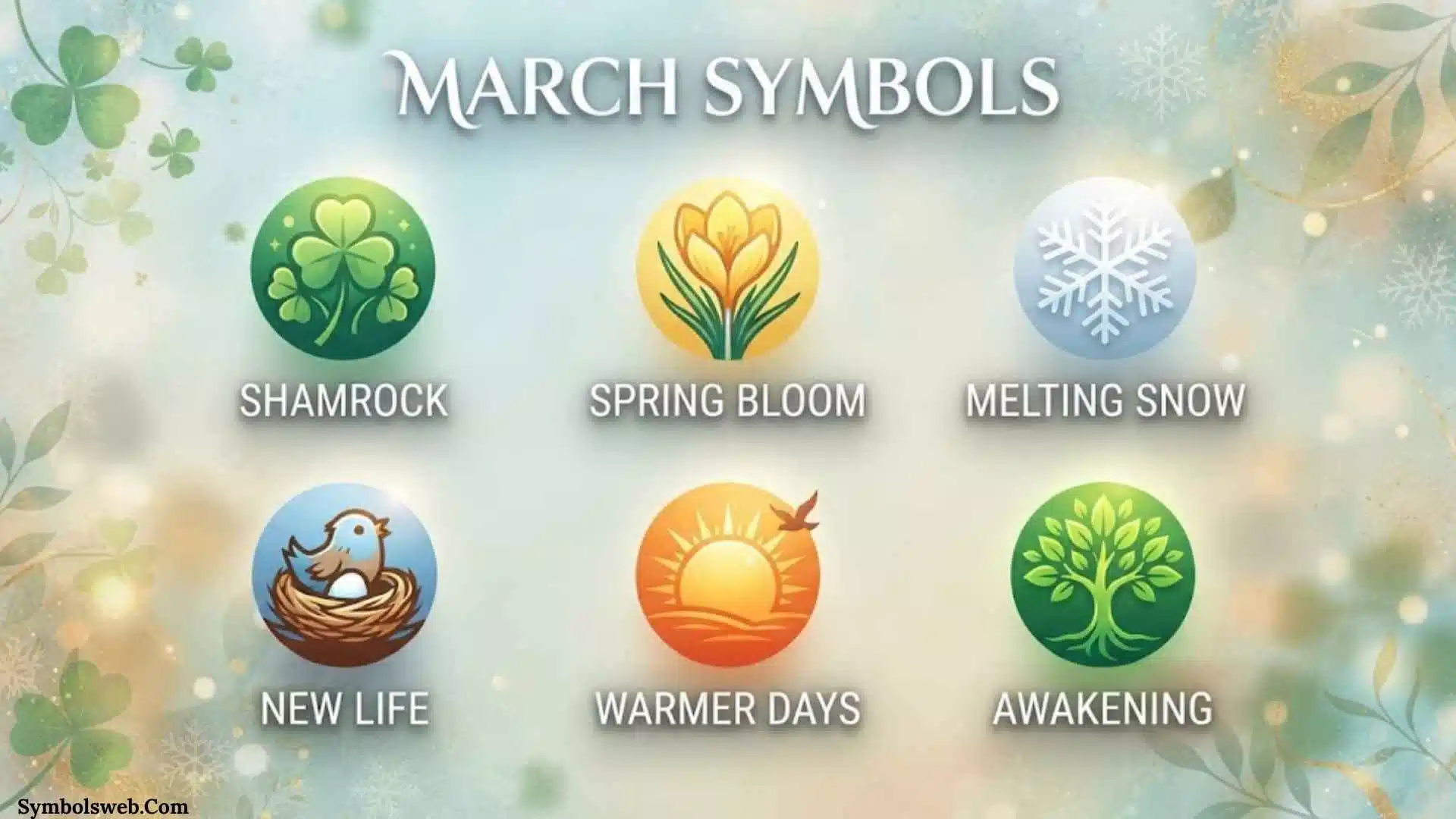
March symbols have fascinated people for centuries because they represent transition, renewal, courage, and the awakening of life after winter. As the third month of the year in the modern calendar, March carries deep historical, cultural, and spiritual meanings that reach far beyond changing weather.
From ancient Roman traditions to modern celebrations of spring, the symbols associated with March reflect humanity’s connection to nature, growth, and new beginnings.
If you are curious about birth month symbols, seasonal symbolism, spiritual meanings, or historical traditions, understanding March symbols reveals a rich world of fascinating stories and timeless wisdom.
Quick Answer
March symbols are symbolic representations associated with the month of March, including the daffodil, aquamarine gemstone, the zodiac signs Pisces and Aries, spring renewal imagery, and ancient Roman connections to Mars, the god of war. Together, these symbols represent rebirth, courage, transformation, hope, growth, and fresh beginnings.
Quick Facts About March Symbols
| Aspect | Information |
| Origin | Ancient Roman calendar and seasonal traditions |
| Historical Significance | Marked the beginning of the Roman year and military campaigns |
| Main Meaning | Renewal, transformation, growth, and courage |
| Spiritual Meaning | Awakening, rebirth, and personal evolution |
| Cultural Importance | Celebrates the arrival of spring in many regions |
| Modern Usage | Birthstones, flowers, zodiac symbolism, art, fashion, and spirituality |
What Are March Symbols?
March symbols are objects, signs, colors, flowers, gemstones, animals, and archetypes traditionally associated with the month of March.
These symbols developed through centuries of cultural evolution. Ancient civilizations carefully observed seasonal changes and attached symbolic meanings to natural events occurring during this time of year.
The name “March” originates from Mars, the Roman god of war. In ancient Rome, March was originally the first month of the calendar. It marked the end of winter and the beginning of military campaigns, agricultural activities, and civic celebrations.
Over time, March became associated not only with warfare and strength but also with renewal and rebirth. As winter retreated and spring emerged, people began viewing March as a symbol of hope and fresh opportunities.
Today, March symbols appear in:
- Birth month traditions
- Astrology
- Religious celebrations
- Seasonal festivals
- Literature
- Art
- Spiritual practices
- Personal symbolism
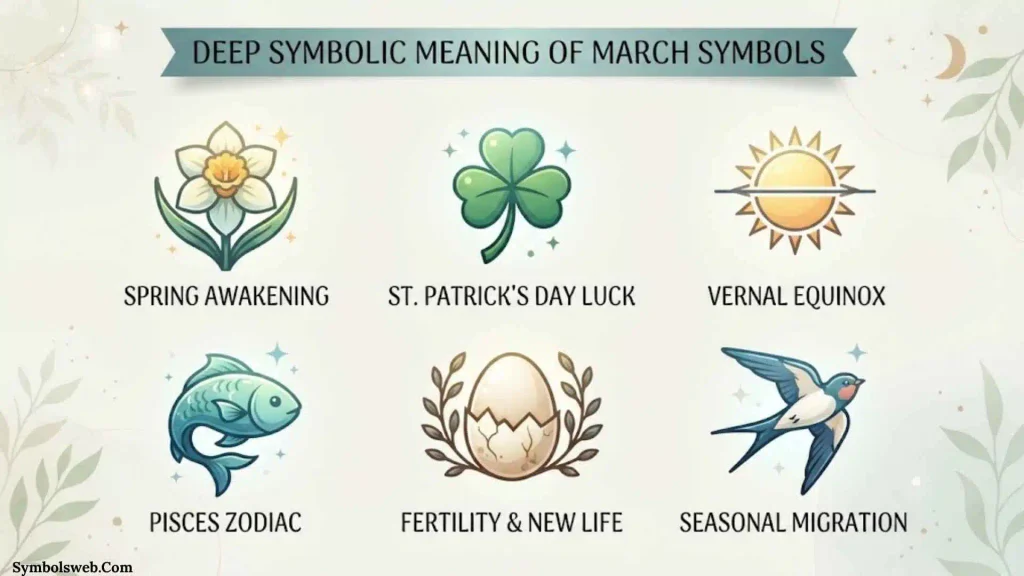
Deep Symbolic Meaning of March Symbols
Spiritual Level
Spiritually, March symbolizes awakening.
Nature begins emerging from winter dormancy. Trees bud, flowers bloom, and animals become more active. This transformation mirrors personal spiritual growth.
Many spiritual traditions view March as a time for:
- New beginnings
- Self-discovery
- Healing
- Renewal
- Inner transformation
- Increased awareness
The arrival of spring encourages individuals to release old patterns and embrace personal evolution.
March reminds us that growth often follows periods of difficulty.
Psychological Level
Psychologically, March represents transition and hope.
According to archetypal psychology, humans naturally respond to seasonal changes. The increasing daylight and visible signs of growth create feelings of optimism and motivation.
March embodies several important archetypes:
- The Warrior
- The Explorer
- The Rebirth Hero
- The Pioneer
The connection to Mars also symbolizes courage, determination, and action.
From a Jungian perspective, March often reflects the process of emerging from the unconscious into conscious awareness, much like spring emerging from winter darkness.
Cultural Level
Across cultures, March symbolizes collective renewal.
Communities throughout history have celebrated March through:
- Spring festivals
- Agricultural rituals
- Religious ceremonies
- Community gatherings
These traditions reinforce social bonds while honoring nature’s cycles.
Many cultures view March as a bridge between endings and beginnings, making it one of the most symbolically rich months of the year.
Types and Variations of March Symbols
Daffodil
Visual Description
A bright yellow flower with trumpet-shaped petals.
Meaning
Hope, renewal, joy, and rebirth.
Symbolism
The daffodil is among the first flowers to bloom after winter, making it a universal symbol of resilience and fresh beginnings.
Cultural Connection
Widely recognized as March’s birth flower.
Where It Appears
- Gardens
- Spring festivals
- Literature
- Paintings
- Greeting cards
Aquamarine
Visual Description
A blue-green gemstone resembling clear ocean water.
Meaning
Peace, clarity, courage, and protection.
Symbolism
Ancient sailors believed aquamarine protected them during sea voyages.
Cultural Connection
March birthstone.
Where It Appears
- Jewelry
- Spiritual practices
- Healing traditions
- Fashion
Pisces
Visual Description
Two fish swimming in opposite directions.
Meaning
Intuition, compassion, imagination.
Symbolism
Represents emotional depth and spiritual awareness.
Cultural Connection
Associated with individuals born during the early part of March.
Where It Appears
- Astrology
- Art
- Mythology
- Personal identity
Aries
Visual Description
A ram with curved horns.
Meaning
Leadership, courage, ambition.
Symbolism
Embodies action and new beginnings.
Cultural Connection
Associated with the latter part of March.
Where It Appears
- Astrology
- Ancient symbolism
- Modern personality interpretations
Spring Equinox
Visual Description
Equal lengths of day and night.
Meaning
Balance and harmony.
Symbolism
Represents equilibrium between opposing forces.
Cultural Connection
Celebrated worldwide.
Where It Appears
- Spiritual ceremonies
- Seasonal festivals
- Ancient monuments
March Symbols Across Different Cultures
Ancient Egypt
Ancient Egyptians closely observed seasonal cycles tied to the Nile River.
March-like renewal periods symbolized fertility, rebirth, and divine blessing. Emerging plant life was often connected to resurrection and eternal life.
Ancient Greece
The Greeks associated spring with the return of Persephone from the underworld.
Her return marked nature’s rebirth and symbolized hope after darkness.
March symbolism reflected:
- Renewal
- Life cycles
- Divine transformation
Roman Culture
Roman symbolism heavily influenced modern interpretations of March.
Named after Mars, the month represented:
- Courage
- Military strength
- Action
- Leadership
Yet it also marked agricultural renewal, creating a balance between strength and growth.
Eastern Traditions
Many Eastern cultures celebrate spring as a period of harmony and renewal.
March often symbolizes:
- Balance
- Spiritual awakening
- Natural flow
- Prosperity
The changing season reflects the interconnectedness of life.
Indigenous Traditions
Many Indigenous cultures view early spring as a sacred time of renewal.
Common themes include:
- Respect for nature
- Seasonal wisdom
- Community gathering
- Gratitude
March symbolism often emphasizes humanity’s relationship with the earth.
Modern Interpretations
Today, March symbols commonly represent:
- Personal growth
- New opportunities
- Positive change
- Fresh starts
- Emotional healing
These meanings continue to resonate across cultures and generations.
Similar Symbols and Their Meanings
| Symbol | Similarity to March Symbols | Key Difference |
| Butterfly | Transformation and renewal | Focuses more on personal metamorphosis |
| Phoenix | Rebirth after hardship | More dramatic resurrection symbolism |
| Sunrise | New beginnings | Daily rather than seasonal renewal |
| Cherry Blossom | Spring and beauty | Emphasizes impermanence |
| Seed | Growth potential | Represents beginnings before visible change |
Common Misconceptions
Many people assume March symbols only represent spring.
In reality, they also symbolize:
- Courage
- Action
- Leadership
- Spiritual awakening
- Emotional resilience
March Symbols in Mythology and Folklore
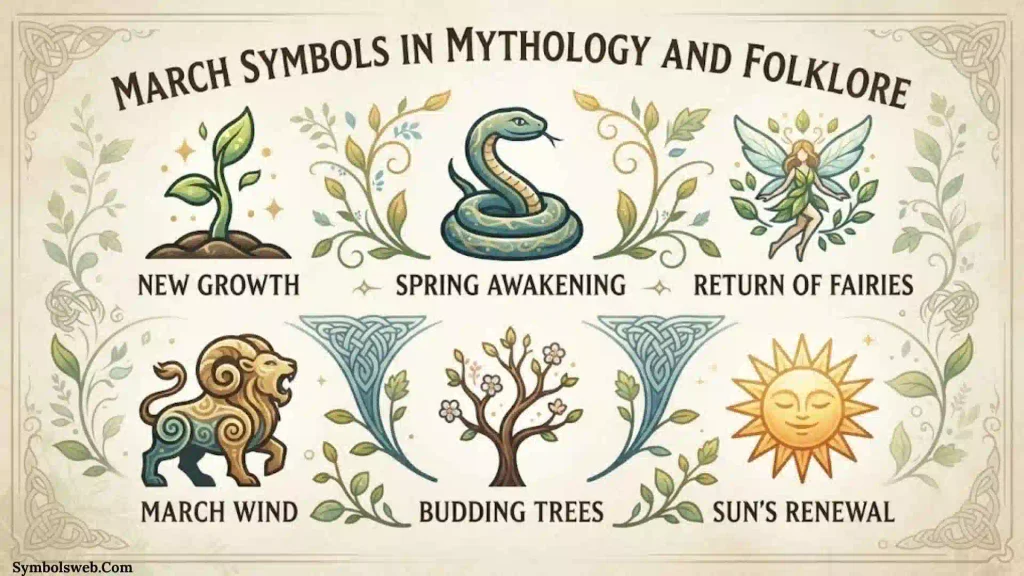
Mythology greatly shaped modern March symbolism.
Mars and Roman Legends
Mars was not merely a god of war.
Romans also viewed him as a protector of agriculture and growth.
This dual nature explains why March symbolizes both strength and renewal.
Persephone’s Return
Greek mythology tells the story of Persephone returning from the underworld each spring.
Her journey became one of the most powerful symbols of rebirth in Western culture.
Spring Folklore
European folklore often described March as a magical threshold between seasons.
People believed:
- Nature spirits awakened
- Fertility returned to the land
- Good fortune increased
These beliefs influenced many modern spring traditions.
March Symbols in Art, Literature, Movies and Pop Culture
Paintings
Artists frequently use March imagery to represent hope and transition.
Common visual elements include:
- Blooming flowers
- Bright skies
- Emerging greenery
Literature
Poets often portray March as a month of change.
It symbolizes:
- Emotional renewal
- Growth
- Anticipation
Poetry
Many poems use March as a metaphor for personal transformation and resilience.
Movies
Film creators often set pivotal turning points during spring-like March settings to symbolize new beginnings.
Television
March imagery frequently marks character development and fresh opportunities.
Tattoos
Popular March-inspired tattoos include:
- Daffodils
- Rams
- Fish
- Aquamarine designs
- Spring flowers
Fashion
Fashion designers often use March-inspired colors:
- Soft greens
- Sky blues
- Golden yellows
These shades evoke renewal and optimism.
Modern Design
March symbolism influences:
- Branding
- Seasonal marketing
- Home décor
- Wellness products
Spiritual and Dream Meaning of March Symbols
Dream Symbolism
Dreaming of March-related symbols often indicates:
- Personal growth
- New opportunities
- Emotional healing
- Positive change
Daffodil Dreams
May symbolize:
- Hope
- Recovery
- Happiness
Aquamarine Dreams
Often represent:
- Clarity
- Emotional balance
- Spiritual insight
Spring Dreams
Typically suggest:
- Renewal
- Creativity
- New beginnings
Positive Messages
March symbols may encourage:
- Courage
- Faith
- Growth
- Optimism
Cautionary Messages
They can also remind individuals that growth requires:
- Patience
- Adaptation
- Letting go of the past
Positive and Negative Meanings of March Symbols
| Positive Meaning | Negative Meaning |
| Renewal | Impulsiveness |
| Growth | Restlessness |
| Hope | Overconfidence |
| Courage | Aggression |
| Transformation | Fear of change |
| Leadership | Conflict |
| Rebirth | Uncertainty |
| New Opportunities | Risk-taking without planning |
March symbolism demonstrates that every powerful force contains both constructive and challenging aspects.
Why Humans Are Attracted to March Symbols
Humans naturally connect with March symbols because they reflect universal life experiences.
Everyone experiences periods of:
- Ending
- Waiting
- Growth
- Renewal
March mirrors this emotional journey.
Psychologists suggest that humans are deeply influenced by seasonal patterns. Seeing flowers bloom after winter creates a sense of hope and possibility.
Carl Jung’s concept of the collective unconscious helps explain why rebirth symbols appear across cultures. People instinctively recognize themes of renewal because they reflect fundamental human experiences.
March symbols remind us that change is possible, even after difficult seasons.
Modern Uses of March Symbols
Tattoos
Chosen to symbolize:
- Personal transformation
- Birth month identity
- Resilience
Jewelry
Aquamarine jewelry remains one of the most popular March-inspired accessories.
Fashion
Spring-themed colors and floral patterns dominate March fashion collections.
Branding
Businesses use March symbolism to communicate:
- Fresh starts
- Innovation
- Growth
Social Media
March symbols frequently appear in motivational content and seasonal campaigns.
Contemporary Spirituality
Many people use March symbolism during:
- Meditation
- Journaling
- Vision planning
- Goal setting
Home Decor
Popular March-inspired decorations include:
- Daffodils
- Floral arrangements
- Nature themes
- Bright seasonal colors
Personal Expression
People embrace March symbols to represent their personal journeys of growth and transformation.
Interesting Facts About March Symbols
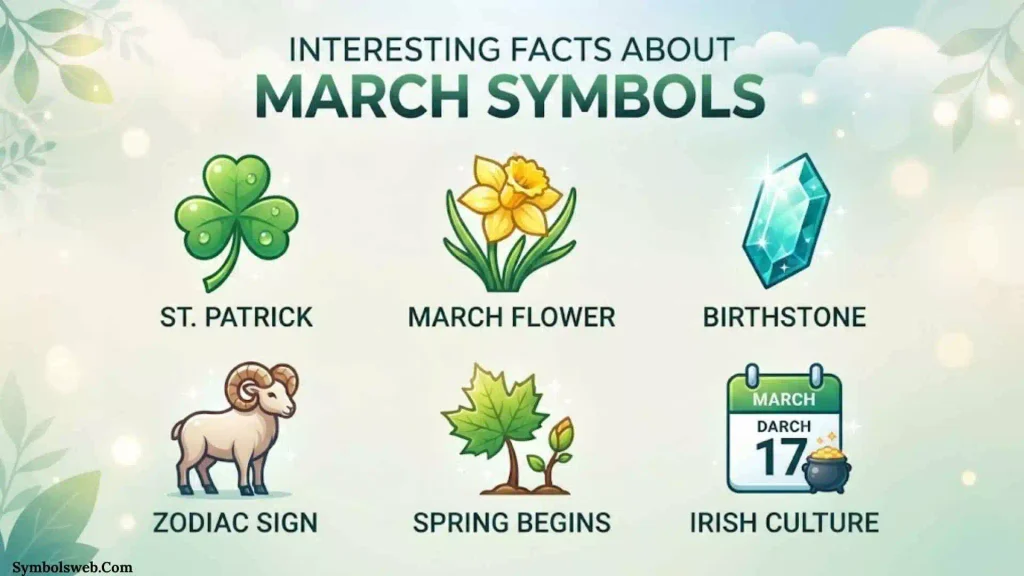
- March was once the first month of the Roman calendar.
- The daffodil can bloom even when snow remains on the ground.
- Aquamarine was believed to calm ocean storms.
- The spring equinox often occurs in March.
- Mars was associated with both war and agriculture.
- Pisces and Aries both share the month of March.
- Many ancient civilizations celebrated new year festivals around March.
- March symbols commonly represent both courage and renewal.
- Spring festivals dating back thousands of years often occur during March.
- Many cultures consider March a sacred season of transformation.
Frequently Asked Questions
What is the main symbol of March?
The daffodil is widely considered the primary symbol of March because it blooms at the beginning of spring and represents renewal, hope, and new beginnings.
What does March symbolize spiritually?
Spiritually, March symbolizes awakening, transformation, personal growth, and the transition from darkness into light.
Why is Mars connected to March?
March is named after Mars, the Roman god of war. Ancient Romans dedicated the month to him because military activities traditionally resumed after winter.
What is the March birthstone?
Aquamarine is the traditional March birthstone. It symbolizes peace, courage, clarity, and protection.
What animals symbolize March?
The fish of Pisces and the ram of Aries are the primary animal symbols associated with March through astrology.
What does dreaming about March symbols mean?
Dreaming about March symbols often suggests renewal, personal growth, healing, new opportunities, and positive life changes.
Conclusion
March symbols tell a timeless story of courage, renewal, and transformation. From the bright daffodil and calming aquamarine to ancient myths and seasonal celebrations, these symbols remind us that growth follows even the harshest winters.
Across cultures and centuries, March has represented hope, fresh beginnings, and the power of change. Its enduring symbolism continues to inspire people to embrace new opportunities, trust the process of renewal, and move forward with confidence.

Jordan Hayes is a writer with a passion for exploring the history, meanings, and cultural significance behind symbols from around the world. He enjoys turning complex topics into clear, engaging content that anyone can understand. Jordan is also the fictional author of The Silent Language of Ancient Marks and Hidden Symbols Beyond the Surface, two original book concepts created for his author profile. When he’s not writing, he spends time researching myths, traditions, and forgotten stories that inspire his work. His goal is to help readers discover the deeper meanings behind the symbols they encounter every day.
 Eliana Foster
 Ethan Holloway