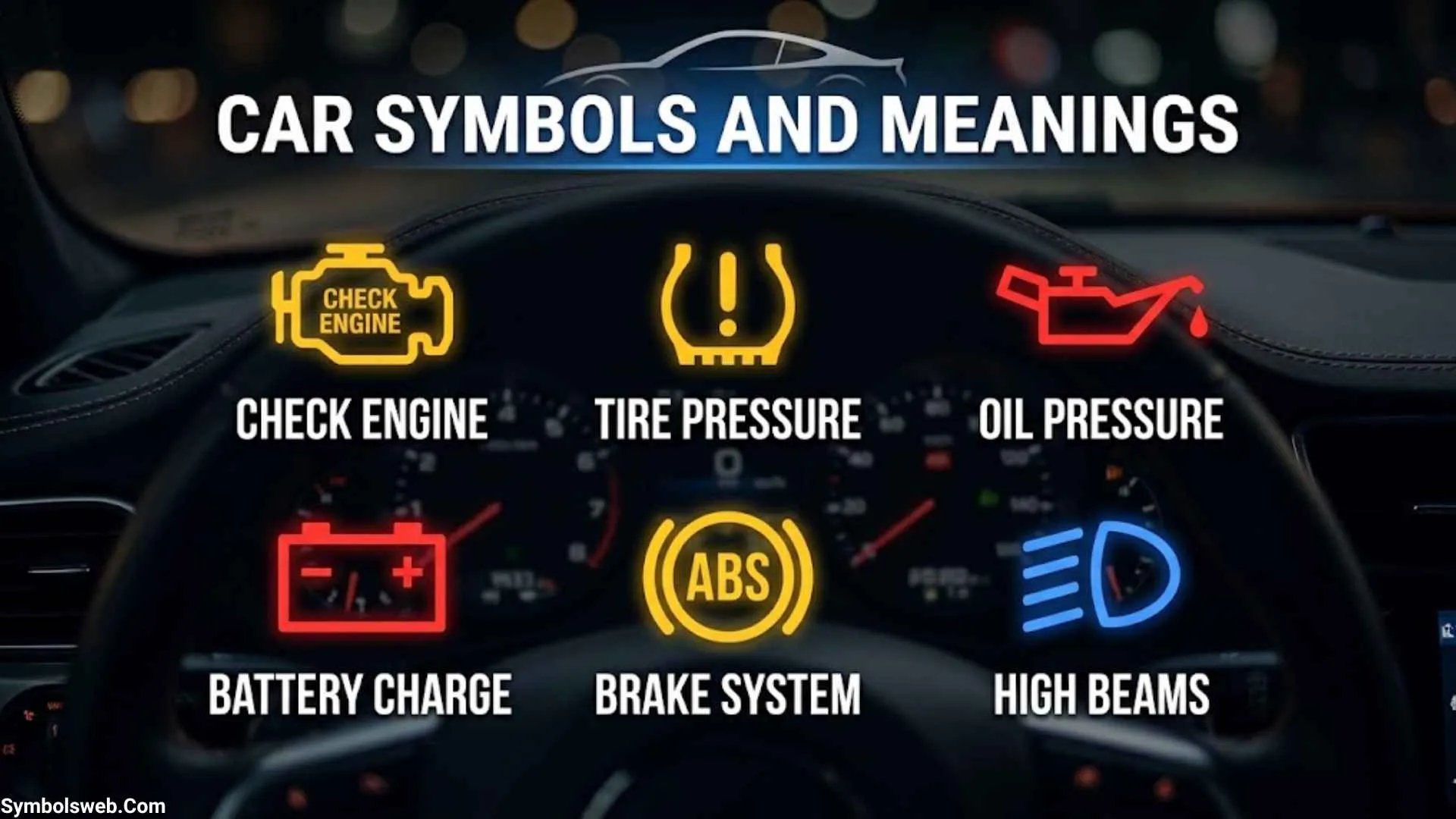
Your car’s dashboard can tell you a lot about what’s happening under the hood. A small oil can, an engine shaped icon, or a horseshoe with an exclamation mark may seem confusing at first, but each symbol communicates useful information about your vehicle.
Understanding car symbols helps you recognize potential problems, respond to safety alerts, and avoid unnecessary repair costs. Some dashboard lights simply confirm that your headlights or cruise control are active. Others warn you about low tire pressure, engine overheating, or a problem with your braking system.
However, not every illuminated symbol means something is broken. Some lights appear briefly when you start the engine as part of a normal system check. The key is knowing which symbols need immediate attention and which ones you can investigate soon.
What Do Car Symbols Mean?
Car symbols are visual indicators that communicate information about your vehicle’s condition, operating status, and safety systems. You’ll usually find them on the instrument cluster behind the steering wheel or on a digital dashboard display.
These vehicle dashboard symbols serve several purposes. They can alert you to mechanical problems, remind you to perform routine maintenance, or show that a particular feature is active.
For example, a fuel pump icon usually indicates low fuel, while a blue headlight symbol commonly shows that the high beams are switched on. An oil pressure warning, on the other hand, may indicate a problem that requires you to stop driving.
Dashboard symbols generally fall into three categories:
- Warning lights: Alert you to a potential fault or unsafe condition, such as low oil pressure or an overheating engine.
- Indicator lights: Confirm that a feature is active, such as turn signals, headlights, or cruise control.
- Maintenance reminders: Tell you that scheduled service, an oil change, or another routine task may be due.
Modern vehicles also use messages, sounds, and digital displays to explain certain warnings. A symbol may appear alongside instructions such as “Low Tire Pressure,” “Engine Overheating,” or “Service Required.”
Keep in mind that symbols aren’t identical across every vehicle. Your car’s make, model, year, and equipment can affect their appearance and meaning. When you’re unsure, check the vehicle owner’s manual or the manufacturer’s official guidance.
What Do Dashboard Warning Light Colors Mean?
The color of a dashboard light provides a useful first clue about its urgency. Although many manufacturers follow similar color conventions, dashboard light colors don’t replace the instructions in your owner’s manual.
<text color=”default”> </text>
| Light color | General meaning | What you should do |
| Red | Serious warning or urgent condition | Stop safely when the warning requires it and follow the manual |
| Yellow or amber | Fault or condition requiring attention | Investigate promptly and arrange service when necessary |
| Green | A feature or system is active | Usually no action is needed beyond normal driving |
| Blue | Often indicates a lighting status or engine temperature condition | Check the symbol and its accompanying message |
| White | Often provides information or shows a feature’s status | Check the manual if the symbol is unfamiliar |
These color categories are helpful, but they aren’t absolute. A flashing yellow check engine light, for instance, can signal a serious engine misfire. You should treat the behavior of the light and any changes in how your car drives as important clues.
Red Dashboard Warning Lights
Red dashboard warning lights often signal a serious mechanical problem or a safety concern that requires immediate attention. Common examples include the oil pressure warning, engine temperature warning, and brake system warning.
If a red light appears while you’re driving, look at the symbol and any message on the display. If it indicates low oil pressure, overheating, or a serious brake fault, pull over as soon as you can do so safely.
Don’t continue driving simply because the car still seems to run normally. Some mechanical problems can cause extensive damage before you notice any other symptoms.
A red seat belt reminder is different: it generally means someone needs to fasten a seat belt. Always interpret the symbol itself rather than relying on color alone.
Yellow or Orange Dashboard Warning Lights
Yellow dashboard warning lights and orange dashboard warning lights usually indicate a fault, a system limitation, or a condition that needs attention.
Common examples include:
- Check engine light
- Tire pressure monitoring system (TPMS) warning
- Anti-lock braking system (ABS) warning
- Traction control malfunction
- Maintenance reminder
An amber light doesn’t automatically mean you can keep driving without concern. A steady check engine light with no other symptoms may allow a cautious trip to a repair shop, depending on the vehicle and its manual. A flashing check engine light or an amber warning accompanied by severe engine trouble requires a more urgent response.
Read the message, notice any changes in performance, and arrange diagnosis as soon as appropriate.
Green Dashboard Indicator Lights
Green dashboard indicator lights typically show that a feature is switched on or operating. They usually don’t indicate a fault.
Examples include turn signals, low-beam headlights, cruise control, and certain driver assistance features.
However, a green light doesn’t always mean a system is controlling the car at that moment. Some vehicles use different symbols to distinguish between a feature being available, activated, or actively assisting you.
Blue and White Dashboard Symbols
Blue dashboard indicator lights often identify high-beam headlights. Some vehicles also use a blue thermometer symbol to indicate that the engine coolant is still cold.
When the engine is cold, drive gently and avoid hard acceleration until it reaches its normal operating temperature.
White indicators commonly communicate system status or provide information. Their meaning varies by manufacturer, so check your manual whenever a white symbol isn’t familiar.
What Does a Flashing Dashboard Warning Light Mean?
A flashing dashboard warning light may indicate that a system is actively operating, that a fault has been detected, or that you need to take action quickly.
For example, a traction control light may flash briefly when the system detects wheel slip on a wet or slippery road. That can be normal.
A flashing check engine light is more concerning because it may indicate an engine misfire that could damage the catalytic converter. Reduce engine load and stop safely if the light continues flashing, especially if the engine shakes, loses power, or makes unusual noises.
Never assume every flashing light means the same thing. Check the exact symbol and follow the manufacturer’s instructions.
Common Car Dashboard Symbols and Their Meanings
This quick-reference table covers some of the most common car dashboard warning lights. The descriptions explain their typical meanings, but the exact response depends on your vehicle.
| Dashboard symbol | Typical meaning | Recommended response |
| Oil can | Low engine oil pressure | Stop safely and switch off the engine |
| Tire-shaped horseshoe with an exclamation mark | Tire pressure warning or TPMS issue | Check tire pressure and inspect the tires |
| Thermometer over wavy lines | High engine coolant temperature | Stop safely and turn off the engine |
| Engine outline | Check engine or engine management fault | Check the manual and arrange diagnosis |
| Battery | Charging system fault | Stop safely if necessary and seek assistance |
| Brake symbol or exclamation mark | Parking brake or brake system warning | Release the parking brake; if the warning remains, assess safely |
| ABS inside a circle | Anti-lock braking system fault | Drive cautiously only if braking appears normal; seek service |
| Car with squiggly lines | Traction or stability control | Check whether the system is active or faulty |
| Person with a circle in front | Airbag or restraint system warning | Arrange a professional inspection |
| Seat belt with a person | Seat belt reminder | Fasten the seat belt |
| Fuel pump | Low fuel | Refuel soon |
| Windshield with spray | Washer fluid or washer system indicator | Check the washer fluid level |
| Headlamp symbol | Headlight or beam status | Check which lights are active |
| Car between lane markings | Lane assistance system status | Check the message and system availability |
| Gear or transmission temperature icon | Transmission warning, where equipped | Follow the manual and stop if overheating is indicated |
If your dashboard symbol doesn’t match the descriptions above, don’t guess. Look up the symbol in the owner’s manual for your exact vehicle.
Serious Car Warning Symbols You Should Never Ignore
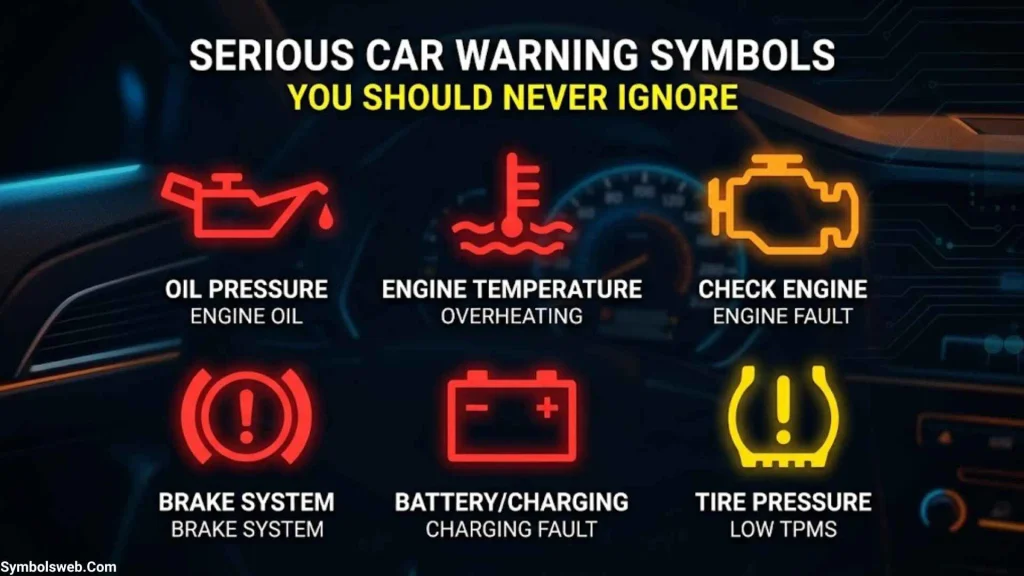
Some car warning light meanings are especially important because ignoring them can lead to engine damage, loss of vehicle control, or reduced occupant protection.
Oil Pressure Warning Light
The oil pressure warning light usually looks like an oil can with a dripping drop. When it illuminates while the engine is running, it can indicate that the engine isn’t receiving adequate oil pressure.
Engine oil creates a protective film between moving parts. The oil pump circulates it through the engine to reduce friction, carry heat, and limit wear. If oil pressure falls too low, critical components may suffer damage within a short period.
Possible causes include:
- Low engine oil level
- Oil leaks
- A failing oil pump
- A blocked oil filter or oil passage
- A faulty oil pressure sensor
What should you do?
Pull over safely and switch off the engine. Once the vehicle is parked on level ground and it’s safe to do so, check the oil level according to the owner’s manual.
If the level is low, adding the correct oil may help address the shortage. However, the oil pressure warning is not simply a low-oil-level indicator. If the level is normal or the warning remains after topping up, don’t continue driving. Arrange professional assistance.
A persistent oil pressure warning can signal a lubrication problem that a routine oil change won’t necessarily fix.
Engine Temperature Warning Light
The engine temperature warning light often resembles a thermometer above wavy lines. It may turn red when the engine coolant temperature becomes too high.
The cooling system circulates coolant through the engine and radiator to help control heat. If the system loses coolant or can’t remove heat effectively, the engine can overheat.
Common causes include:
- Coolant leaks
- A failing radiator fan
- A faulty thermostat
- Water pump problems
- A damaged radiator
- Low coolant level
If the temperature warning appears, pull over safely and turn off the engine. Don’t open the radiator cap or coolant reservoir while the system is hot because pressurized coolant can cause severe burns.
Wait for the engine to cool completely before checking coolant levels. If you see steam, a major leak, or repeated overheating, arrange roadside assistance or towing instead of continuing your journey.
Brake Warning Light
The brake warning light may appear as an exclamation mark inside a circle, the word “BRAKE,” or a similar manufacturer-specific symbol.
Sometimes, it simply means the parking brake is engaged. In other cases, it can indicate low brake fluid or a problem with the braking system.
Start by making sure the parking brake is fully released. If the warning remains on while driving, treat it seriously.
Pay attention to additional symptoms, including:
- A soft or sinking brake pedal
- Reduced braking performance
- Unusual grinding or scraping sounds
- Brake fluid leaking beneath the vehicle
If braking feels abnormal or the warning suggests a serious brake fault, stop safely and arrange towing. Don’t rely on the parking brake alone to stop a moving vehicle.
Battery Warning Light
The battery warning light typically looks like a small battery with plus and minus signs. Although many drivers assume it means the battery needs replacing, it often points to a problem with the vehicle’s charging system.
The alternator normally helps supply electrical power and recharge the battery while the engine runs. If it stops working properly, the vehicle may continue operating temporarily using stored battery power. Eventually, electrical systems may fail or the engine may stop.
Possible causes include:
- A faulty alternator
- Loose or damaged battery cables
- A worn or broken alternator belt
- A charging system fault
- A weak battery or electrical connection problem
If the battery light stays on while driving, switch off unnecessary electrical accessories when safe and seek assistance. Don’t assume a jump-start will fix the underlying problem.
Flashing Check Engine Light
The check engine light usually looks like an engine outline. It monitors the engine management and emissions systems, so its causes can range from a minor sensor issue to a serious engine problem.
A steady light often means the vehicle has detected a fault that needs diagnosis. A flashing light can indicate an active misfire that may damage the catalytic converter.
If the light flashes, reduce engine load and avoid hard acceleration. If the engine runs roughly, loses power, or makes unusual noises, stop in a safe place and seek assistance.
A loose fuel cap can trigger a check engine warning on some vehicles, but don’t assume that’s the cause. A diagnostic scan can retrieve trouble codes and help a technician identify the underlying issue.
Common Yellow and Orange Car Dashboard Symbols
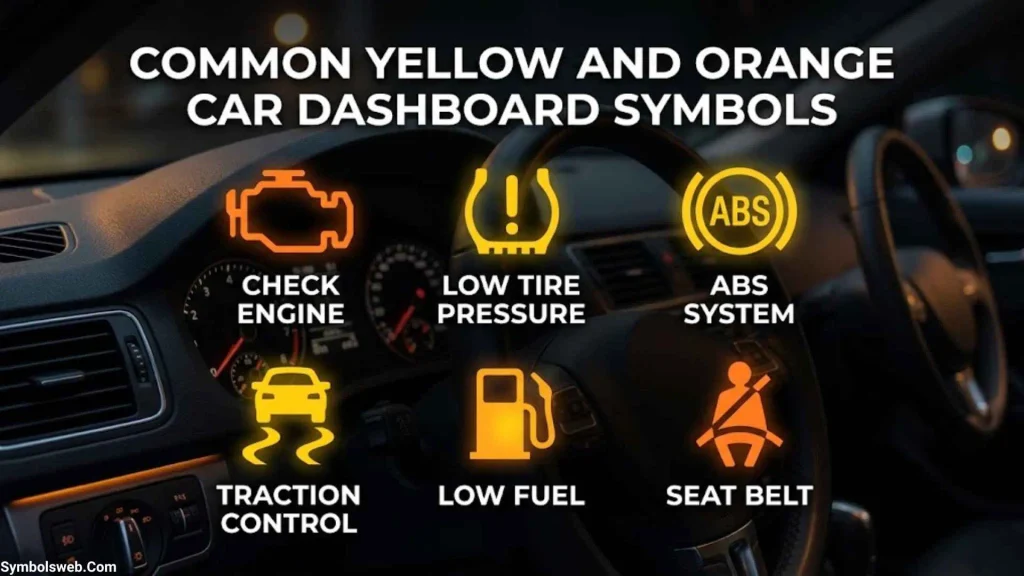
Not every warning requires you to stop immediately. However, yellow dashboard warning symbols still deserve attention because they can reveal problems before they become more expensive to repair.
Tire Pressure Warning Light (TPMS)
The tire pressure warning light usually looks like a flat tire or horseshoe with an exclamation mark in the center. It belongs to the Tire Pressure Monitoring System (TPMS), which monitors tire pressure through sensors or other monitoring technology.
The light may appear because one or more tires have low pressure. In some vehicles, it can also indicate a TPMS malfunction.
Common causes include:
- Underinflated tires
- A puncture or slow air leak
- Temperature changes that lower tire pressure
- A faulty tire pressure sensor
- A TPMS system fault
Low tire pressure can affect handling, braking, fuel economy, and tire life. Severely underinflated tires may also overheat and fail.
What should you do?
Check all tires when they’re cold and inflate them to the recommended pressures listed on the driver’s door-jamb label or in your owner’s manual. Don’t use the maximum pressure printed on the tire sidewall as the normal target.
If a tire looks flat or the vehicle handles unusually, stop somewhere safe and inspect it. If the warning flashes before staying on, your vehicle may be reporting a TPMS fault rather than ordinary low pressure.
Anti-Lock Braking System (ABS) Warning Light
The ABS warning light usually displays the letters “ABS” inside a circle. The anti-lock braking system helps prevent the wheels from locking during hard braking, allowing you to maintain more steering control.
When the ABS light stays on, the anti-lock function may be unavailable. Depending on the fault, conventional braking may still work, but you shouldn’t assume the entire braking system is functioning normally.
Possible causes include:
- A faulty wheel-speed sensor
- Damaged sensor wiring
- A problem with the ABS control module
- A damaged tone ring or related component
- An electrical fault
Drive cautiously only if the brakes feel normal and your owner’s manual permits it. Arrange an inspection promptly.
If the ABS light appears with the red brake warning light, or the brake pedal feels abnormal, stop safely and seek assistance. Both lights together can indicate a more serious problem.
Traction Control and Stability Control Lights
The traction control light often looks like a car with squiggly lines beneath it. It relates to systems that help reduce wheel spin and maintain vehicle stability.
When you accelerate on wet pavement, loose gravel, snow, or mud, a wheel may lose traction. The system can reduce engine power or apply braking to help the vehicle regain grip.
The light’s behavior matters:
- Flashing light: The system may be actively controlling wheel slip.
- Light stays on: The system may be switched off or have a detected fault.
- “OFF” indicator: The driver may have disabled traction control or stability assistance.
If the light flashes briefly on a slippery road, ease off the accelerator and drive smoothly. If it remains on in normal conditions, check the manual and arrange diagnosis.
Remember that traction control can’t overcome the limits of your tires or road conditions. Even with the system active, leave enough space to stop safely.
Airbag Warning Light
The airbag warning light usually depicts a seated person with a circle in front. It monitors parts of the supplemental restraint system, which may include airbags, crash sensors, and seat belt pretensioners.
If the light remains on after the normal startup check, the system may have detected a fault. Some airbags or restraint features might not operate as intended in a collision.
Potential causes include:
- A faulty crash sensor
- Wiring or electrical problems
- A seat occupancy sensor fault
- A malfunction in the restraint control system
Arrange a professional inspection promptly. Don’t attempt to repair airbag wiring or connectors yourself because these systems contain components designed to activate during a crash.
Also, don’t assume that the absence of an airbag warning means every safety system has passed every possible check. Follow the vehicle’s maintenance and inspection guidance.
Maintenance and Service Reminder
A dashboard maintenance light may show a wrench, a service message, or a mileage-based reminder. Unlike a warning for low oil pressure, a maintenance reminder usually tells you that scheduled service is due.
Depending on the vehicle, it may relate to:
- Engine oil and filter replacement
- Routine maintenance
- Scheduled inspections
- Tire rotation
- General servicing
Check the maintenance schedule for your specific vehicle. Service intervals differ by model, engine, driving conditions, and manufacturer recommendations.
Don’t reset a maintenance reminder until you’ve confirmed which service is due and completed the required work. Resetting the display doesn’t repair a fault or replace the maintenance itself.
Green, Blue, and White Car Indicator Symbols
Dashboard indicator lights help you understand which features are active. Many of these symbols are normal parts of everyday driving, but recognizing them still helps you operate your vehicle correctly.
Turn Signal and Hazard Light Indicators
Green arrows usually flash when you activate the left or right turn signal. A separate hazard warning indicator may illuminate when you switch on the emergency flashers.
If a turn signal starts blinking much faster than usual, a signal bulb may have failed on vehicles that use this behavior to alert drivers.
Check the exterior lights when parked safely. Make sure the signals work before turning or changing lanes.
Headlight and High-Beam Symbols
Headlight symbols indicate which exterior lighting features are active.
Common examples include:
- Low-beam headlights: Show that the regular driving headlights are on.
- High-beam indicator: Usually blue and indicates that the high beams are active.
- Fog lamp indicator: Shows that the front or rear fog lamps are switched on.
- Automatic headlight indicator: Appears on some vehicles to show the lighting system’s status.
High beams improve visibility in suitable conditions, but you should switch to low beams when approaching other drivers or following closely behind another vehicle.
Fog lights also vary by vehicle. Use them only when conditions justify their use and follow local road rules.
Cruise Control and Driver Assistance Indicators
Modern vehicles may display several symbols related to driver assistance systems.
These can include:
- Cruise control
- Adaptive cruise control
- Lane departure warning
- Lane-keeping assistance
- Blind-spot monitoring
- Automatic emergency braking
- Parking assistance
A symbol may show that a feature is available, switched on, or actively assisting you. Those states aren’t necessarily the same.
For example, an adaptive cruise control icon doesn’t always mean the system has detected a vehicle ahead or is currently controlling your speed. Look for a message or status change on the display.
Driver assistance features support safe driving; they don’t replace your attention. Keep your eyes on the road and remain ready to brake or steer when needed.
Other Common Status Indicators
Some cars display symbols for features such as Eco mode, start-stop systems, all-wheel drive, or an electric driving mode.
A green Eco indicator may show that an efficiency-focused driving mode is active. A start-stop indicator may show that the engine has temporarily shut off at a stop to save fuel.
On hybrid and electric vehicles, additional symbols may show battery charge, power delivery, regenerative braking, or high-voltage system warnings. The exact meanings depend on the vehicle, so consult the correct manual rather than applying gasoline-car guidance to every electric vehicle.
Other Car Symbols Drivers Should Know
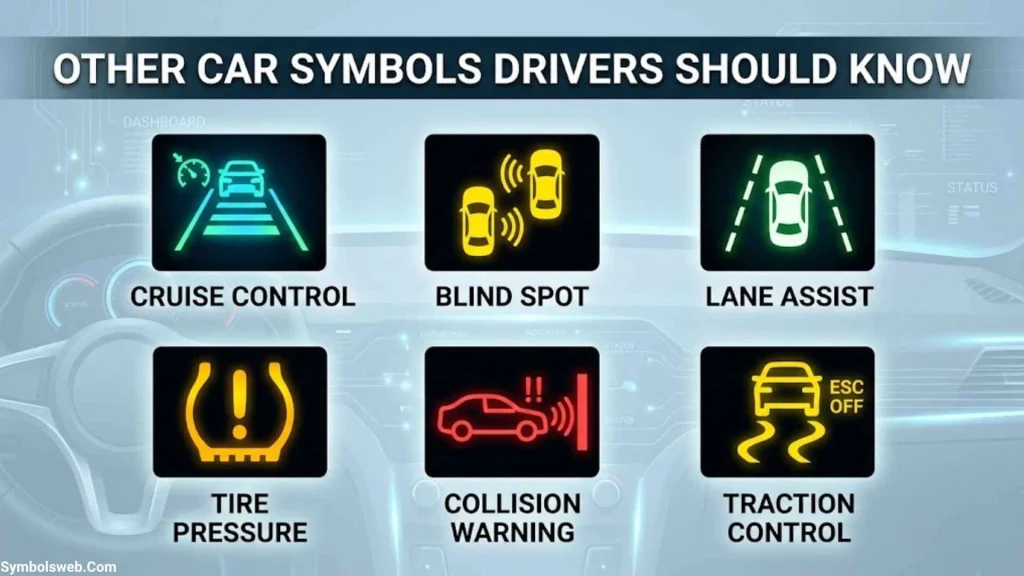
Some vehicle warning indicators don’t point to major mechanical failures, but they still affect convenience, visibility, or safe operation.
Low Fuel Warning Light
The low fuel indicator light usually looks like a fuel pump. It illuminates when the fuel level reaches a preset threshold.
The remaining range depends on fuel consumption, traffic, driving style, terrain, and the amount of fuel left in the tank. Treat the estimated range as a guide, not a guarantee.
When the warning appears:
- Find a suitable gas station.
- Avoid unnecessary detours.
- Don’t rely on repeatedly restarting the engine to estimate the remaining range.
- Refuel before the tank becomes critically low.
Many vehicles also show a small arrow beside the fuel pump icon. That arrow commonly indicates which side of the car has the fuel filler door.
Seat Belt Reminder
The seat belt reminder light typically shows a seated person wearing a belt. It may appear alongside an audible reminder.
Fasten your seat belt before driving and make sure all passengers do the same. Depending on the vehicle, a passenger seat sensor may also trigger a reminder when someone sits down without fastening their belt.
Some vehicles can activate a seat belt alert when a heavy object sits on a passenger seat. If the warning remains after everyone has buckled up, check the manual or arrange an inspection.
Seat belts are a key part of occupant protection. Airbags are designed to work alongside seat belts, not replace them.
Security and Immobilizer Symbol
The security indicator light often looks like a car with a key, a padlock, or a small security-related icon.
It may flash when the anti-theft system is armed while the vehicle is parked. That behavior can be normal.
However, if the car won’t start and a key or security symbol appears, the immobilizer may not recognize the key. Possible causes include a weak key-fob battery, an incorrect key, or a fault in the vehicle’s security system.
Try the manufacturer’s recommended key-recognition procedure. If the issue continues, consult the manual or contact a qualified technician.
Windshield Washer Fluid Symbol
The washer fluid indicator light often shows a windshield with spray marks. It may appear when the washer fluid reservoir is running low.
Washer fluid helps remove dirt, dust, road grime, and other material that can reduce visibility. In some conditions, a dirty windshield can make it harder to see pedestrians, road markings, and other vehicles.
Refill the reservoir with suitable washer fluid. If the warning remains after filling it, a sensor or wiring issue may be responsible.
Don’t confuse this symbol with the windshield defrost indicator, which generally relates to clearing fog or frost from the glass.
Automatic Shift Lock and Engine Start Indicators
Some automatic vehicles display an automatic shift lock indicator or a message telling you to press the brake pedal before shifting out of Park.
The shift-lock mechanism helps prevent unintended gear selection. Follow the instructions on the display and make sure the vehicle is secured before shifting.
Push-button start systems may also show a key symbol or a message indicating that the car can’t detect the key. A weak key-fob battery can cause this issue on some models.
Check your owner’s manual for the approved backup starting procedure. Don’t force the gear selector or attempt an unfamiliar override.
Transmission Temperature Warning
The transmission temperature warning light may appear as a gear-shaped symbol, a temperature indicator, or a dashboard message. It generally warns that the transmission fluid temperature is too high.
Automatic transmissions rely on fluid for lubrication, hydraulic operation, and heat management. Excessive temperature can accelerate fluid breakdown and damage internal parts.
Potential causes include:
- Heavy towing or hauling
- Repeated demanding driving
- A transmission cooling problem
- Low or degraded transmission fluid
- A mechanical fault
If the warning appears, follow the vehicle’s instructions. Stop safely if the manual directs you to do so, especially if the transmission slips, shifts harshly, or produces unusual smells.
Don’t add transmission fluid without confirming the correct type, checking procedure, and service requirements. Some transmissions require specific temperature conditions or equipment for an accurate level check.
Lane Departure Warning Symbol
The lane departure warning light may look like a car drifting between lane markings. It relates to a driver assistance system that detects lane boundaries and warns you when the vehicle may be drifting.
Depending on the vehicle, the system may use a camera near the windshield to identify road markings.
Heavy rain, snow, faded lines, glare, or a dirty windshield can affect detection. If a warning says the system is unavailable, clean the windshield area when safe and check the manual.
Always steer responsibly. Lane assistance can miss markings or misread road conditions, so you must remain in control of the vehicle.
What Should You Do When a Car Dashboard Symbol Appears?
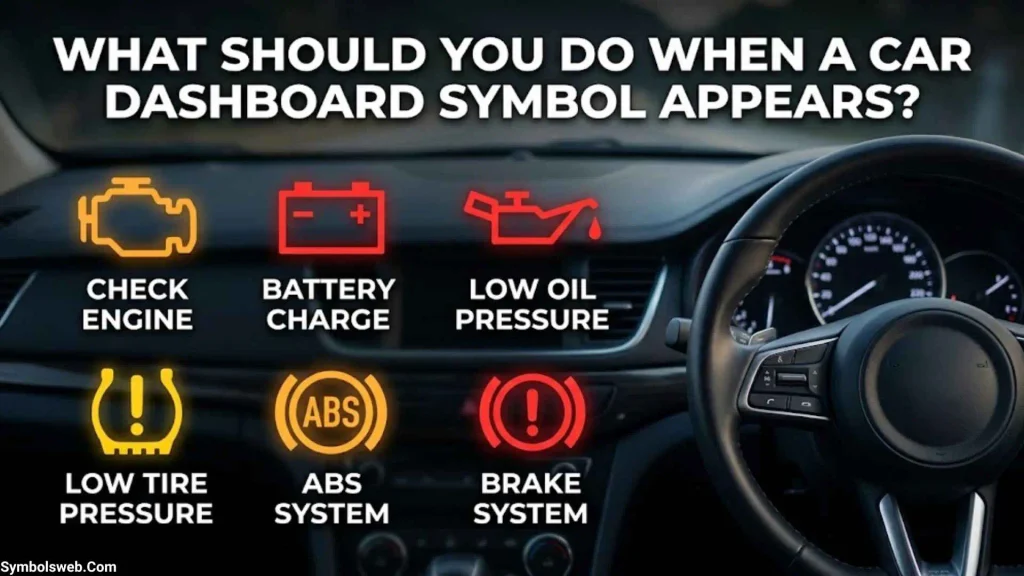
When an unfamiliar symbol lights up, a calm and methodical response can help you avoid making the situation worse.
Check the Light’s Color and Behavior
First, identify the symbol and its color. Then check whether it flashes, stays illuminated, or appears briefly during startup.
Look for a message on the instrument cluster. A message may provide more specific guidance than the icon alone.
Assess Immediate Safety
If the warning indicates oil pressure loss, engine overheating, or a serious brake problem, find a safe place to stop and follow the vehicle’s instructions.
Avoid stopping abruptly in moving traffic unless an immediate emergency leaves no safer option. Turn on your hazard lights if appropriate and choose a safe location away from traffic.
If the vehicle loses braking ability, steering assistance, or power in a dangerous location, prioritize your safety and contact emergency or roadside services as needed.
Consult Your Owner’s Manual
The vehicle owner’s manual is the best starting point for identifying an unfamiliar dashboard symbol.
Use the index or warning-light section to find the exact icon. Pay attention to any instructions about whether you should stop, reduce speed, switch off the engine, or arrange service.
If you don’t have a printed copy, many manufacturers provide digital manuals through their official websites.
Check Only What Is Safe
Some basic checks are appropriate when the vehicle is parked safely and the relevant components have cooled.
You may be able to check tire pressure, inspect for visible fluid leaks, or check engine oil level according to the manual.
However, never open a hot radiator cap, reach near moving engine components, or handle damaged high-voltage equipment. If you aren’t sure how to perform a check safely, leave it to a qualified technician.
Arrange Diagnosis or Roadside Assistance
If the warning persists or its meaning remains unclear, arrange professional diagnosis.
Tell the technician which symbol appeared, when it came on, and whether the light flashed. Mention any changes in braking, engine performance, temperature, steering, or electrical systems.
A diagnostic scan can retrieve fault codes from many electronic control systems. However, a code points toward a detected condition; it doesn’t always identify the failed part by itself.
Can You Drive With a Dashboard Warning Light On?
Whether you can continue driving depends on the specific warning, the vehicle, and any symptoms you notice.
Warning Lights That Usually Require Stopping Safely
Stop as soon as it’s safe when a warning indicates a critical condition such as:
- Low engine oil pressure
- Engine overheating
- A serious brake system problem
- A charging or electrical fault accompanied by unsafe vehicle behavior
- A warning accompanied by smoke, severe vibration, or major fluid leakage
Follow the owner’s manual because some warnings require immediate engine shutdown. Continuing to drive may cause severe damage or put you at risk.
Warning Lights That May Allow a Short Drive to Service
Some warnings may allow cautious driving to a nearby repair facility, provided the manual permits it and the car behaves normally.
Examples can include a steady check engine light without other symptoms or an ABS light when conventional braking still works normally.
That doesn’t mean every amber warning is safe to ignore. If the light starts flashing, the vehicle loses power, or another serious symptom appears, reassess immediately.
When You Should Call for a Tow
Arranged towing when driving could damage the vehicle or put you and others at risk.
A tow is often the safer choice for persistent oil pressure warnings, engine overheating, suspected brake failure, severe misfires, or major fluid leaks.
When in doubt, follow the manufacturer’s emergency instructions rather than testing whether the car can make it to the repair shop.
Why Do Dashboard Warning Lights Turn On?
Illuminated dashboard symbols can appear for several reasons. Some indicate a genuine fault, while others are part of the vehicle’s normal operation.
Common causes include:
- Startup system checks: Many warning lights briefly illuminate when you switch on the ignition.
- Low fluid levels: Engine oil, coolant, brake fluid, or washer fluid may fall below the relevant threshold.
- Tire pressure changes: Temperature shifts or air leaks can trigger a TPMS warning.
- Sensor faults: A damaged sensor or wiring issue may cause a warning even when a component appears normal.
- Mechanical wear: Parts in the engine, brakes, transmission, or cooling system may need attention.
- Electrical problems: Battery, alternator, or connection faults can affect several systems.
- Scheduled maintenance: A service reminder may appear when the vehicle reaches a programmed interval.
- Driver assistance limitations: Poor visibility or unclear road markings can temporarily disable certain features.
The light usually identifies a system that needs attention, not the precise part that has failed. A proper diagnosis helps separate a genuine mechanical fault from a sensor or electrical issue.
How to Identify Unknown Car Dashboard Symbols
If you see a symbol that doesn’t match the examples in this guide, use a few reliable steps to identify it.
Start with the vehicle details. Find the make, model, and year. If the vehicle has multiple trims or powertrain options, use the information that matches your specific version.
Look up the icon in the owner’s manual. Search the warning-light section, instrument cluster guide, or dashboard display section.
Read any accompanying message. A text alert may explain the issue more clearly than the symbol.
Notice when it appears. A light that comes on during startup may have a different significance from one that appears under acceleration or while braking.
Use the manufacturer’s official website. Search its support pages or digital manual library rather than relying only on images from unrelated vehicles.
Seek help when safety is uncertain. If you can’t identify a warning and the car shows unusual behavior, stop safely and contact a qualified mechanic or roadside assistance provider.
Avoid resetting the light simply to make it disappear. Clearing a warning without addressing its cause can hide useful diagnostic information and leave the underlying problem unresolved.
Do Dashboard Symbols Differ by Car Make and Model?
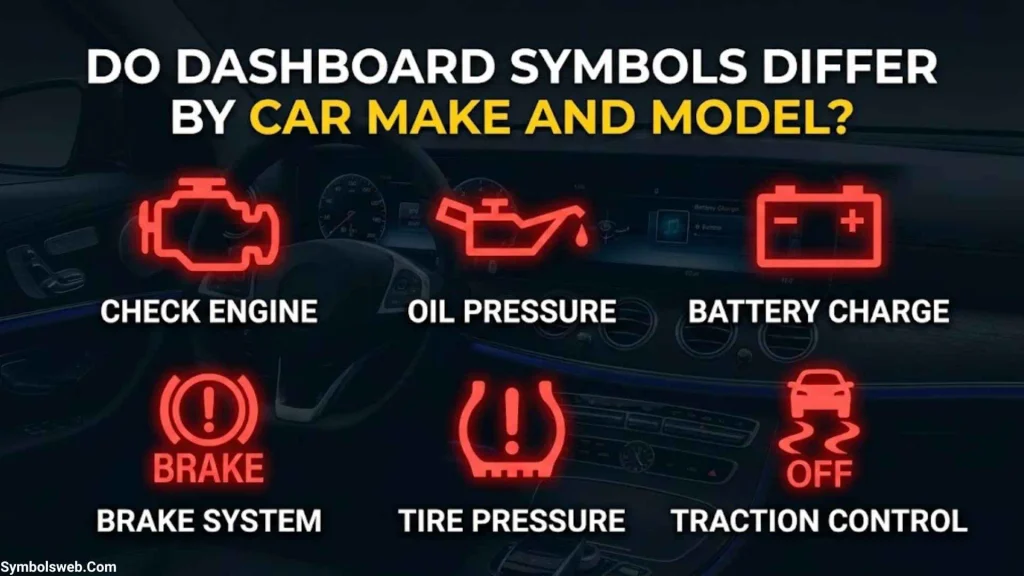
Yes. Vehicle dashboard symbols can vary by manufacturer, model year, trim level, and available equipment.
Some symbols are widely standardized, including the oil pressure, tire pressure, and seat belt indicators. Others differ in appearance or meaning depending on how the manufacturer designed the system.
Hybrid and electric vehicles add further variations. They may display high-voltage battery warnings, charging alerts, regenerative braking indicators, or electric drive system messages that aren’t found in conventional gasoline vehicles.
Driver assistance systems also introduce model-specific symbols for features such as adaptive cruise control, lane centering, blind-spot monitoring, and automatic emergency braking.
Even when two vehicles use similar icons, their instructions may differ. One model may tell you to stop immediately, while another may display a service message and recommend inspection.
For that reason, a general car dashboard light guide is useful for identifying common symbols, but your vehicle’s owner’s manual should guide the final decision.
Frequently Asked Questions About Car Symbols
What Do All the Symbols on My Car Dashboard Mean?
Car dashboard symbols communicate information about your vehicle’s systems, safety features, maintenance needs, and mechanical condition. Red lights often indicate urgent warnings, while amber lights commonly signal a fault requiring attention. Green and blue indicators usually show that a feature is active or provide operating information. Check your owner’s manual to identify the exact symbol for your car.
What Is the Most Serious Dashboard Warning Light?
The oil pressure warning light is among the most urgent because inadequate oil pressure can damage an engine quickly. Engine overheating and serious brake warnings also require immediate attention. If one appears while driving, stop safely and follow the manufacturer’s instructions.
What Does a Yellow Dashboard Light Mean?
A yellow or amber dashboard light generally indicates a fault, system limitation, or condition that needs investigation. Common examples include the check engine light, TPMS warning, and ABS warning. Some amber lights can signal serious problems, especially when they flash or appear with other symptoms.
Can You Drive With the Check Engine Light On?
A steady check engine light may allow cautious driving to a repair shop if the vehicle behaves normally and the owner’s manual permits it. A flashing check engine light can indicate an engine misfire that may damage the catalytic converter. Reduce engine load and stop safely if the warning persists or the vehicle runs roughly.
Why Is My Tire Pressure Light On When My Tires Look Fine?
A tire can be underinflated without looking visibly flat. Cold weather can also reduce tire pressure. Check every tire with a pressure gauge and use the recommended cold pressure listed on the driver’s door-jamb label. If the pressure is correct but the warning remains, the TPMS may need inspection.
Why Does a Dashboard Warning Light Flash?
A flashing light may indicate active system operation or a fault requiring urgent attention. For example, traction control may flash when it detects wheel slip. A flashing check engine light is more concerning because it can signal a serious misfire. Always identify the exact symbol before deciding what to do.
How Do You Reset Dashboard Warning Lights?
Some maintenance reminders can be reset through the vehicle’s dashboard settings after completing the required service. Fault-related warnings may require repair and diagnostic equipment. Don’t reset or disconnect the battery just to hide a warning, because doing so may erase useful diagnostic information without fixing the problem.
Where Can You Find the Meaning of a Dashboard Symbol?
Check the owner’s manual for your exact make, model, and year. You can also visit the manufacturer’s official website for digital manuals and warning-light guidance. If the symbol remains unclear or suggests a safety problem, ask a qualified automotive technician.
Final Thoughts on Car Symbols and Their Meanings
Understanding car symbols and meanings helps you recognize what your vehicle needs and respond before a minor issue becomes a major problem. Red oil pressure, overheating, and serious brake warnings can require immediate action, while amber lights often call for prompt investigation. Green, blue, and white indicators usually communicate system status, although their exact meanings depend on the vehicle.
When a warning appears, identify the symbol, check its color and behavior, and read any message on the dashboard. Use your owner’s manual as the final reference, and don’t ignore a persistent warning just because the car still drives. Taking the right action at the right time can protect your vehicle, your passengers, and your safety.

Eliana Foster is a writer with a passion for exploring the meanings behind symbols, traditions, and cultural history. She enjoys breaking down complex topics into simple, engaging articles that are easy for everyone to understand. Eliana is also the fictional author of The Hidden Language of Silent Marks and Beyond the Circle of Ancient Signs, two original book concepts created for her author profile. When she’s not writing, she loves visiting museums, reading about mythology, and researching the stories behind symbols from around the world. Her goal is to help readers discover the fascinating meanings hidden in everyday signs and ancient emblems.
 Jordan Hayes
 Ethan Holloway