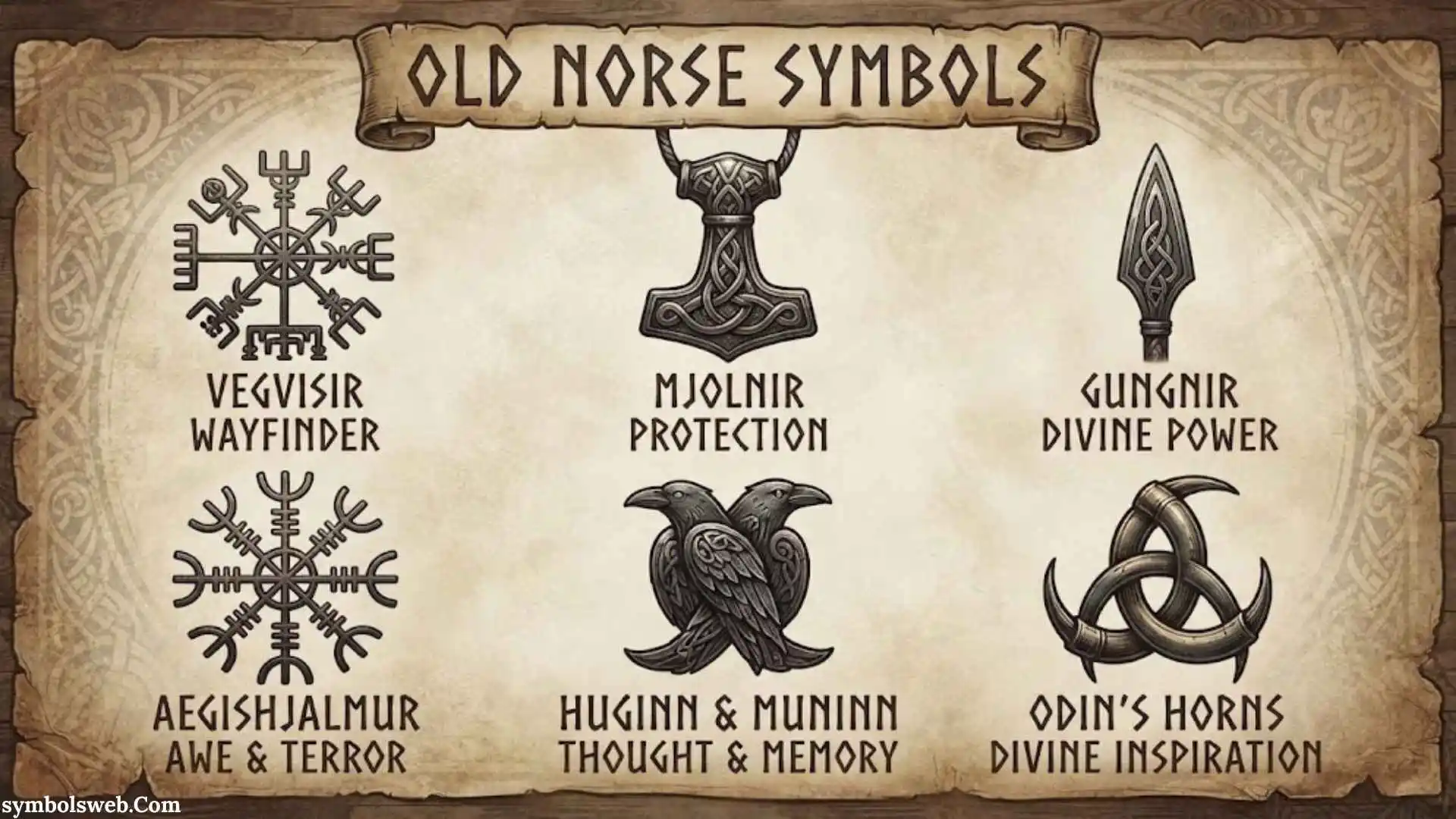
When you explore old Norse symbols, you discover a fascinating part of Norse culture, mythology, and history. These symbols were used to represent ideas such as protection, strength, courage, fate, and spiritual beliefs. If you are curious about Viking traditions, understanding these symbols can help you connect with the meanings and stories behind them.
In this guide, you will learn about some of the most important old norse symbols and what they traditionally represented. I will explain their meanings in simple language so you can easily understand each symbol and its historical context. Whether you are a beginner or already interested in Norse mythology, you can use this guide to explore these fascinating ancient signs.
As you continue reading, you will also discover how different old norse symbols were connected to gods, beliefs, and everyday life. I will cover their origins, meanings, and common interpretations while keeping the information easy to follow. By the end, you will have a clearer understanding of these symbols and why they still attract so much interest today.
Old Norse Symbols: (Quick Answer)
Have you ever wondered what old norse symbols mean? If you are curious about Viking culture and Norse mythology, you can explore these ancient signs to learn about ideas like strength, protection, courage, and fate. I will explain their meanings simply so you can understand them quickly.
Quick Facts About Old Norse Symbols
| Aspect | Information |
| Origin | Scandinavia during the Norse and Viking Age (approximately 793–1066 CE) |
| Historical Significance | Used in religion, communication, magic, warfare, and cultural identity |
| Main Meaning | Protection, wisdom, fate, courage, strength, and connection to the divine |
| Spiritual Meaning | Guidance, transformation, cosmic balance, and ancestral connection |
| Cultural Importance | Central to Norse mythology, Viking traditions, and Scandinavian heritage |
| Modern Usage | Tattoos, jewelry, artwork, literature, gaming, spirituality, and fashion |
What Are Old Norse Symbols?
Old Norse symbols are visual representations associated with the culture, beliefs, mythology, and traditions of ancient Norse societies. They emerged throughout Scandinavia, particularly in present-day Norway, Sweden, Denmark, Iceland, and parts of northern Europe influenced by Viking expansion.
Many of these symbols were carved into stone, engraved on weapons, painted on ships, worn as amulets, or recorded in manuscripts.
Their purposes varied widely:
- Religious devotion
- Magical protection
- Communication through runes
- Honoring gods and ancestors
- Marking ownership
- Preserving cultural stories
Unlike modern logos, Old Norse symbols often carried multiple layers of meaning. A single symbol could represent a god, a spiritual force, a natural phenomenon, and a personal virtue simultaneously.
Their significance grew through oral storytelling traditions, where myths and legends gave symbols deeper meaning over generations.
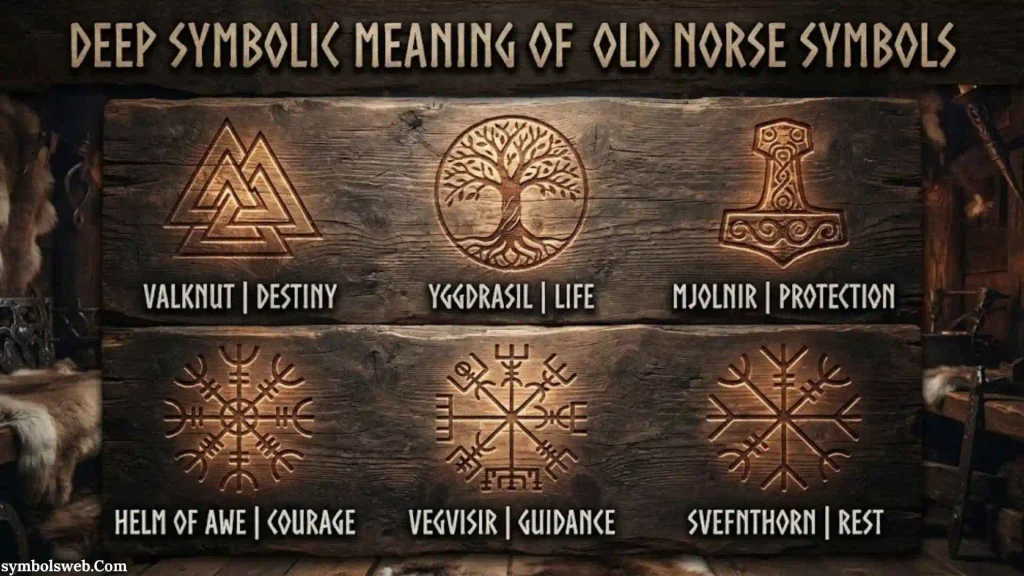
Deep Symbolic Meaning of Old Norse Symbols
Spiritual Level
Spiritually, Old Norse symbols represented humanity’s relationship with unseen forces.
The Norse universe was viewed as interconnected through powerful cosmic energies. Symbols served as reminders of this connection.
Common spiritual themes included:
- Divine guidance
- Protection from chaos
- Balance between worlds
- Destiny and fate
- Personal transformation
- Connection to ancestors
Many Vikings believed symbols could attract spiritual protection and favor from the gods.
Psychological Level
From a psychological perspective, Old Norse symbols embody timeless human archetypes.
According to Jungian psychology, people are naturally drawn to symbols because they communicate deep truths beyond words.
For example:
- Valknut symbolizes mystery and mortality.
- Yggdrasil represents growth and interconnectedness.
- Thor’s Hammer symbolizes protection and strength.
These images resonate because they mirror universal human experiences such as courage, sacrifice, wisdom, and resilience.
Cultural Level
In Norse society, symbols strengthened community identity.
They connected people through shared stories and beliefs.
A Viking carrying Thor’s Hammer was not simply wearing jewelry. He was expressing loyalty to cultural values such as bravery, honor, and perseverance.
Symbols helped preserve traditions in a world where storytelling was often more important than written records.
Types and Variations of Old Norse Symbols
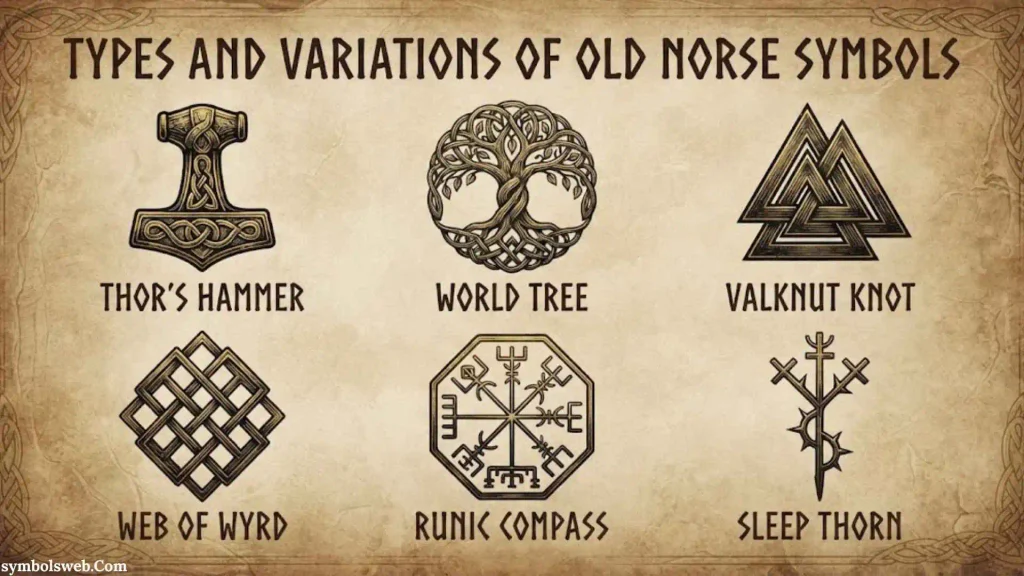
Yggdrasil
Visual Description: A massive cosmic tree with roots and branches extending across worlds.
Meaning: The structure of the universe.
Symbolism:
- Life
- Growth
- Wisdom
- Cosmic unity
Cultural Connection: Central to Norse cosmology.
Where It Appears:
- Mythology
- Artwork
- Spiritual practices
- Modern tattoos
Valknut
Visual Description: Three interlocking triangles.
Meaning: Associated with Odin and the afterlife.
Symbolism:
- Death
- Transformation
- Warrior destiny
- Spiritual transition
Cultural Connection: Frequently found on Viking memorial stones.
Where It Appears:
- Burial sites
- Art
- Modern Norse-inspired designs
Mjölnir (Thor’s Hammer)
Visual Description: A hammer with a short handle.
Meaning: Divine protection and power.
Symbolism:
- Strength
- Courage
- Blessings
- Defense against evil
Cultural Connection: One of the most beloved Viking symbols.
Where It Appears:
- Jewelry
- Religious artifacts
- Modern fashion
Vegvísir
Visual Description: A magical compass-like symbol.
Meaning: Guidance and safe travel.
Symbolism:
- Direction
- Protection
- Perseverance
Cultural Connection: Often associated with Icelandic magical traditions.
Where It Appears:
- Tattoos
- Art
- Spiritual symbolism
Aegishjalmur (Helm of Awe)
Visual Description: Eight-armed radial design.
Meaning: Protection and psychological strength.
Symbolism:
- Fearlessness
- Defense
- Victory
Cultural Connection: Warrior protection symbol.
Where It Appears:
- Talismans
- Modern spiritual practices
Runes
Visual Description: Angular alphabetic characters.
Meaning: Communication and mystical wisdom.
Symbolism:
- Knowledge
- Fate
- Magic
- Divine messages
Cultural Connection: Sacred writing system of the Norse world.
Where It Appears:
- Stone carvings
- Manuscripts
- Divination practices
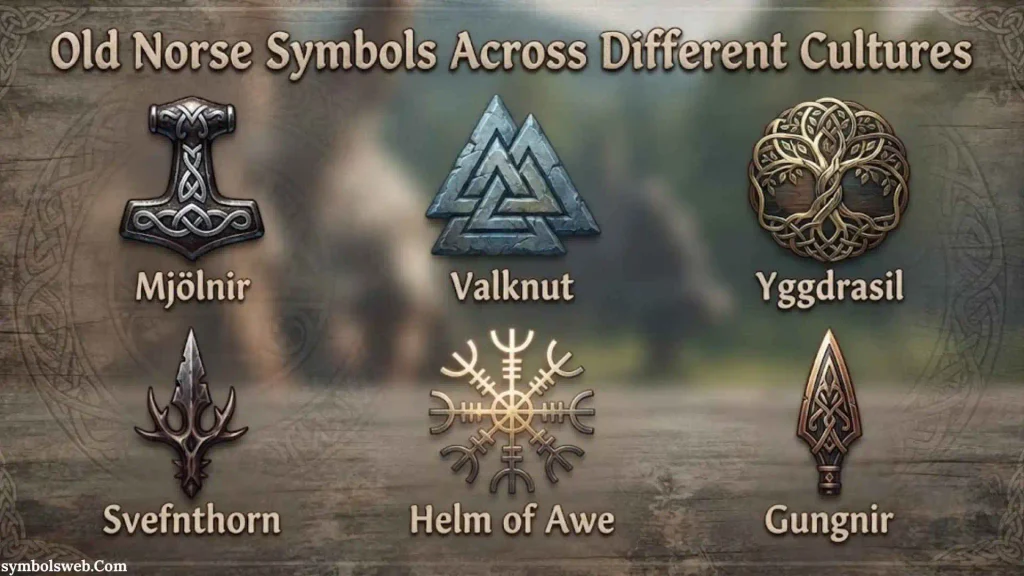
Old Norse Symbols Across Different Cultures
Ancient Egypt
Egyptians used symbols such as the Ankh to represent life and immortality.
Like Norse symbols, Egyptian symbols connected physical existence with spiritual realities.
Ancient Greece
Greek culture employed symbols tied to gods, heroes, and fate.
The Greek concept of destiny shares similarities with Norse beliefs surrounding the Norns, who controlled fate.
Roman Culture
Roman military symbols represented power, authority, and divine favor.
Similarly, Norse symbols often reinforced warrior identity and social cohesion.
Eastern Traditions
In Hinduism and Buddhism, sacred symbols communicate spiritual truths and cosmic balance.
Yggdrasil’s concept of universal interconnectedness parallels many Eastern philosophical ideas.
Indigenous Traditions
Many Indigenous cultures use symbolic imagery to express relationships with nature, ancestors, and spiritual forces.
This resembles the Norse emphasis on harmony between humans, nature, and the divine.
Modern Interpretations
Today, Old Norse symbols have become global cultural icons.
People use them to express:
- Personal strength
- Heritage
- Spiritual exploration
- Appreciation of mythology
- Identity and resilience
Similar Symbols and Their Meanings
| Symbol | Similarity to Old Norse Symbols | Key Difference |
| Ankh | Spiritual significance | Focuses on eternal life |
| Celtic Knot | Interconnectedness | Celtic rather than Norse origin |
| Yin Yang | Balance and harmony | Eastern philosophical roots |
| Tree of Life | Cosmic connection | Appears in multiple cultures |
| Triskelion | Movement and cycles | Different cultural origins |
Common Misconceptions
Many people assume every Viking-era symbol had a fixed meaning.
In reality, meanings often evolved over time and varied across regions.
Some symbols widely associated with Vikings today may come from later medieval Icelandic traditions rather than the Viking Age itself.
Old Norse Symbols in Mythology and Folklore
Norse mythology is filled with symbolic imagery.
Odin and the Search for Wisdom
Odin sacrificed one of his eyes and hung upon Yggdrasil to gain wisdom and knowledge of the runes.
This story transformed runes into symbols of enlightenment, sacrifice, and hidden understanding.
Thor and Mjölnir
Thor’s hammer protected gods and humans from destructive forces.
As a result, Mjölnir became a symbol of security, justice, and divine protection.
The Norns and Fate
Three powerful beings called the Norns controlled destiny.
Many Norse symbols reflect the belief that fate shapes every life while courage determines how one responds to it.
Ragnarok
The Norse apocalypse known as Ragnarok symbolizes destruction followed by renewal.
This cycle reinforces themes of resilience, rebirth, and transformation that appear throughout Old Norse symbolism.
Old Norse Symbols in Art, Literature, Movies and Pop Culture
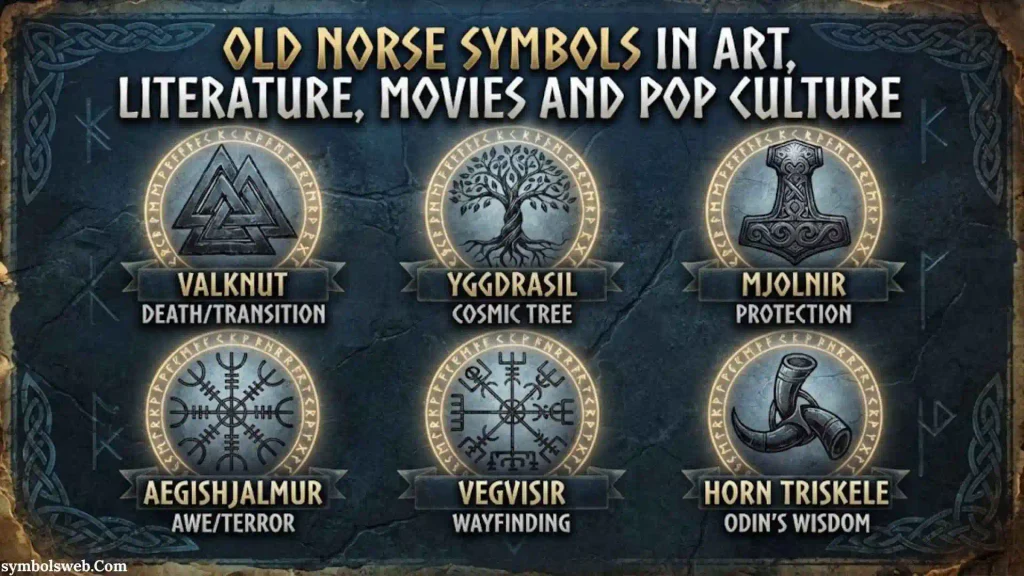
Paintings
Artists often depict Yggdrasil, Odin, Thor, and runes to explore themes of heroism and spirituality.
Literature
Norse symbols appear in countless fantasy novels and historical works.
Their rich mythology continues inspiring authors worldwide.
Poetry
Ancient skaldic poetry used symbolic imagery to communicate wisdom, bravery, and destiny.
Movies
Modern films frequently draw upon Norse symbolism.
Thor’s Hammer is among the most recognizable mythological symbols in contemporary entertainment.
Television
Fantasy and historical television series often feature runes, Viking artifacts, and symbolic designs inspired by Norse traditions.
Tattoos
Old Norse symbols are highly popular tattoo choices.
People often choose them to represent:
- Personal strength
- Guidance
- Family heritage
- Spiritual growth
Fashion and Design
Designers use Norse motifs in jewelry, clothing, home décor, and branding because they evoke authenticity, resilience, and timeless wisdom.
Spiritual and Dream Meaning of Old Norse Symbols
Dreams involving Old Norse symbols often reflect inner transformation and personal growth.
Common Dream Interpretations
Yggdrasil
May symbolize life changes, growth, and interconnected relationships.
Runes
Often suggest hidden knowledge or important decisions.
Thor’s Hammer
Can indicate protection, confidence, and overcoming challenges.
Valknut
May symbolize transition, endings, or spiritual awakening.
Positive Messages
- Courage during uncertainty
- Spiritual guidance
- Personal development
- Inner wisdom
- Protection
Cautionary Messages
- Resistance to change
- Fear of transformation
- Unresolved emotional issues
- Overattachment to control
Positive and Negative Meanings of Old Norse Symbols
| Positive Meaning | Negative Meaning |
| Wisdom | Obsession with power |
| Protection | Fear of enemies |
| Courage | Recklessness |
| Transformation | Loss and endings |
| Destiny | Fatalism |
| Spiritual growth | Escapism |
| Strength | Aggression |
| Loyalty | Tribal conflict |
Like many ancient symbols, Old Norse imagery contains both light and shadow. Their meanings depend on context, interpretation, and personal perspective.
Why Humans Are Attracted to Old Norse Symbols
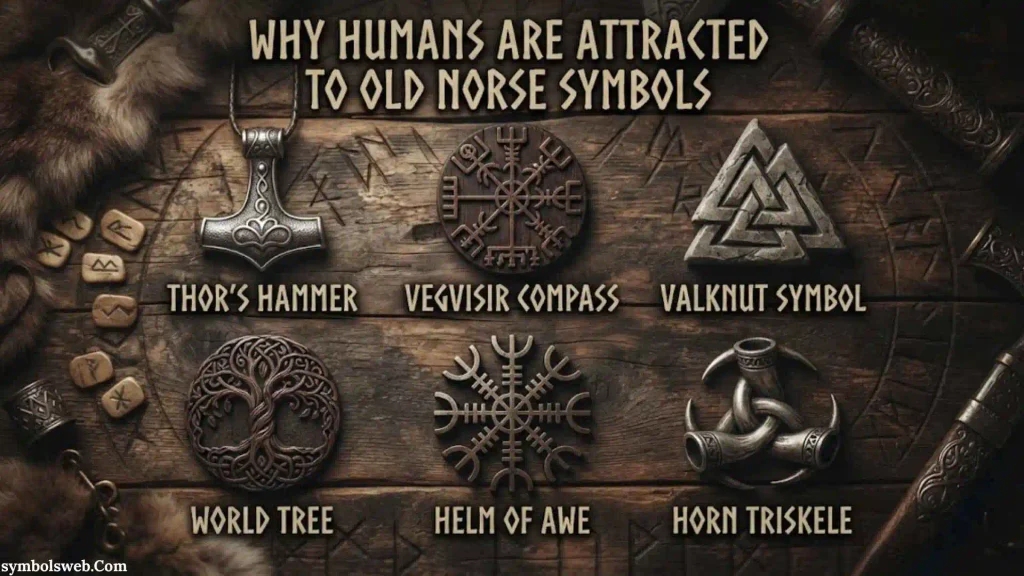
Humans naturally seek meaning through stories and symbols.
Old Norse symbols attract us because they address universal questions:
- Who are we?
- What is our purpose?
- How do we face adversity?
- What happens after death?
Psychologists suggest symbolic images connect with deep archetypes stored within the collective unconscious.
A warrior carrying Mjölnir, a traveler following Vegvísir, or a seeker contemplating Yggdrasil all represent timeless human journeys.
These symbols survive because they speak to emotional truths that remain relevant today.
They remind us that courage, wisdom, resilience, and transformation are part of every human life.
Modern Uses of Old Norse Symbols
Tattoos
Among the most common uses today.
Popular choices include:
- Valknut
- Vegvísir
- Mjölnir
- Yggdrasil
- Rune inscriptions
Jewelry
Pendants and rings featuring Norse symbols often symbolize protection, identity, or spiritual connection.
Fashion
Viking-inspired designs appear on clothing, accessories, and outdoor gear.
Branding
Businesses sometimes use Norse-inspired imagery to communicate strength, endurance, and tradition.
Social Media
Many users adopt Norse symbols as profile images or personal identity markers.
Contemporary Spirituality
Modern spiritual practitioners often explore runes and Norse symbolism as tools for reflection and self-discovery.
Home Décor
Wood carvings, wall art, and decorative objects frequently feature ancient Norse designs.
Interesting Facts About Old Norse Symbols
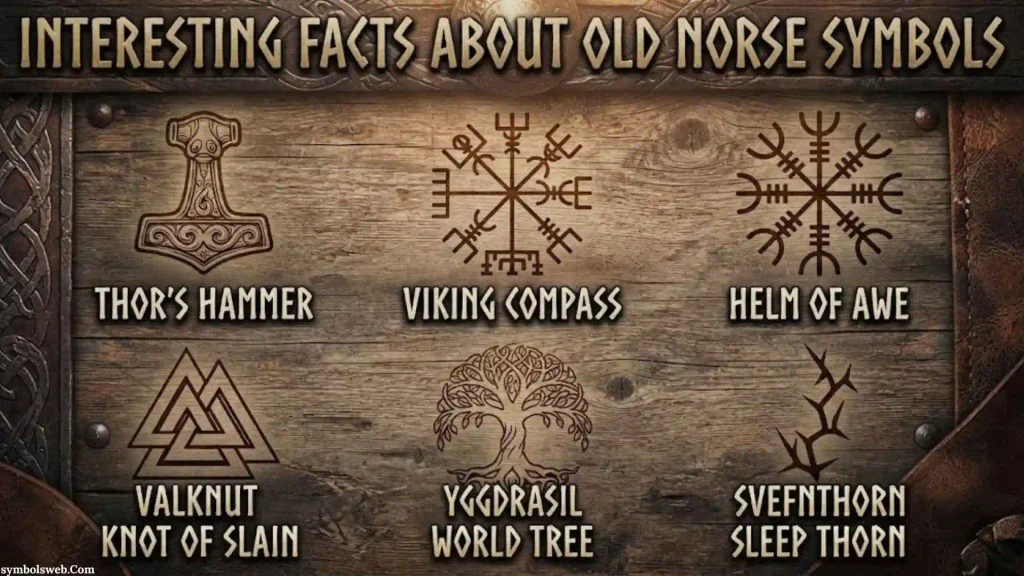
- The rune alphabet is known as the Futhark, named after its first six letters.
- Odin was believed to have discovered the runes through sacrifice and spiritual revelation.
- Mjölnir pendants became especially popular during the Viking Age.
- Yggdrasil connects the Nine Worlds of Norse cosmology.
- Some Viking-age symbols remain archaeologically debated by scholars.
- The Valknut appears on numerous Scandinavian memorial stones.
- Many modern tattoos use symbols that are over a thousand years old.
- Norse symbols influenced fantasy literature, gaming, and entertainment worldwide.
- Some symbols served both practical and sacred purposes.
- Interest in Norse symbolism has grown dramatically in the twenty-first century.
Frequently Asked Questions
What is the most powerful Old Norse symbol?
Many consider Mjölnir, Thor’s Hammer, the most powerful Old Norse symbol because it represents protection, strength, divine authority, and blessing.
Are Old Norse symbols the same as Viking symbols?
Not exactly. Viking symbols are generally part of the broader category of Old Norse symbols, but some Norse symbols originated before or after the Viking Age.
What does the Valknut symbolize?
The Valknut is commonly associated with Odin, warrior culture, death, sacrifice, and the transition between worlds.
Is Vegvísir a Viking symbol?
Vegvísir is often called a Viking symbol, but historical evidence places it in later Icelandic manuscripts rather than the Viking Age itself.
What do Norse runes mean?
Runes served as both letters and symbolic representations of concepts such as wealth, protection, wisdom, journey, and destiny.
Are Old Norse symbols still used today?
Yes. They are widely used in tattoos, jewelry, art, literature, spiritual practices, fashion, and cultural heritage celebrations.
Conclusion
Old Norse symbols are far more than ancient designs carved into stone or metal. They are windows into a worldview shaped by courage, mystery, wisdom, and a deep respect for the forces of life and fate.Through symbols such as Yggdrasil, Valknut, Mjölnir, Vegvísir, and the runes, the Norse people expressed timeless human hopes and fears.
Their meanings continue to resonate because they speak to universal experiences of growth, resilience, transformation, and purpose. Even after a thousand years, these powerful symbols still invite us to explore the deeper stories hidden within ourselves.

Jordan Hayes is a writer with a passion for exploring the history, meanings, and cultural significance behind symbols from around the world. He enjoys turning complex topics into clear, engaging content that anyone can understand. Jordan is also the fictional author of The Silent Language of Ancient Marks and Hidden Symbols Beyond the Surface, two original book concepts created for his author profile. When he’s not writing, he spends time researching myths, traditions, and forgotten stories that inspire his work. His goal is to help readers discover the deeper meanings behind the symbols they encounter every day.
 Eliana Foster
 Ethan Holloway