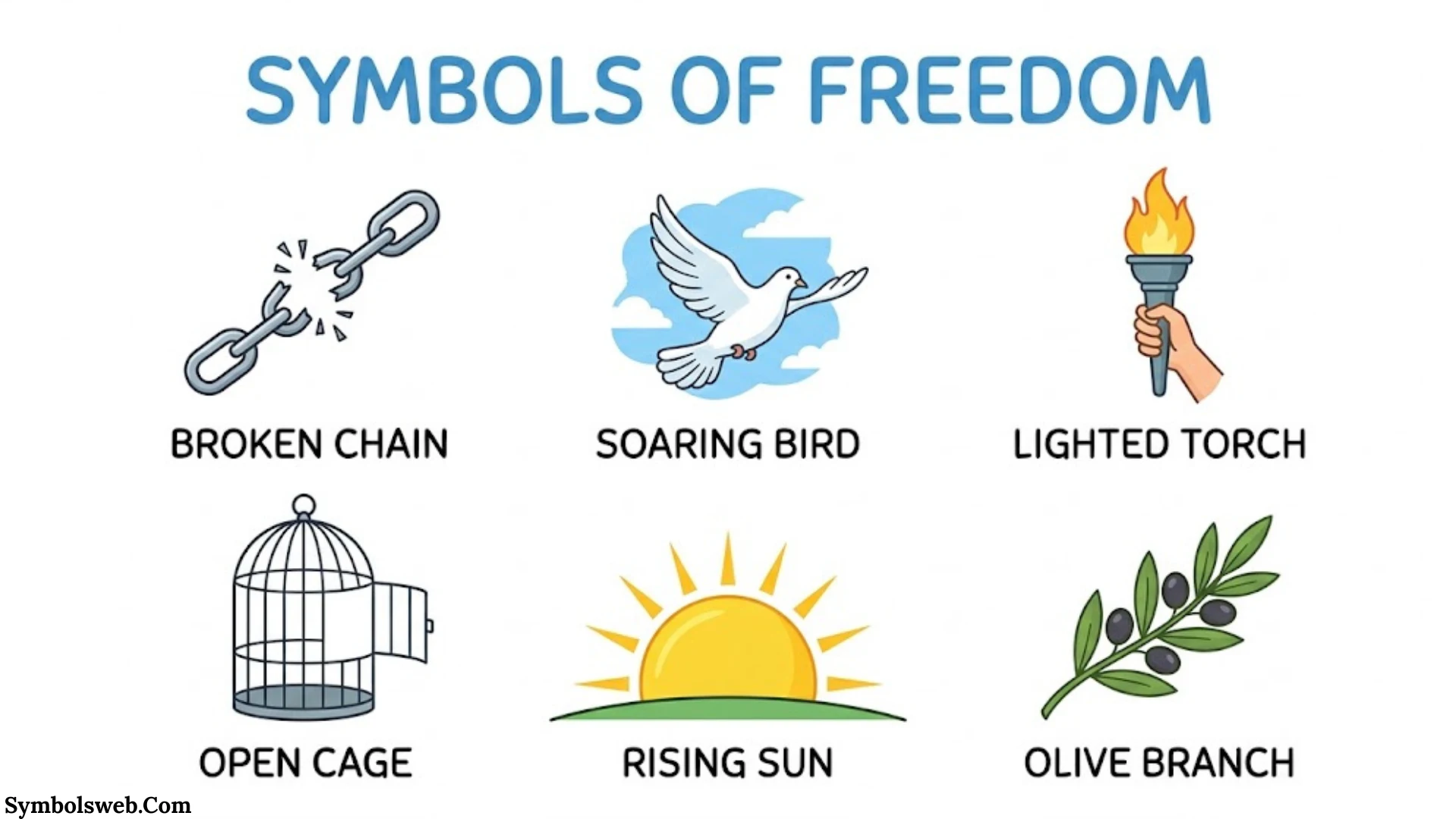
Freedom is one of the most powerful ideas in human history. It represents the right to make choices, express yourself, live without oppression, and build a future on your own terms. Across cultures and generations, people have used meaningful images, objects, animals, and monuments to express this desire for independence.
The symbols of freedom tell stories that words alone sometimes cannot capture. A broken chain can represent emancipation. A bird flying across an open sky can suggest independence. The Statue of Liberty stands as a powerful reminder of liberty, opportunity, and hope. Each symbol carries its own history and meaning.
However, not every freedom symbol represents the same thing. Some celebrate national independence, while others express human rights, spiritual liberation, equality, or personal growth. Understanding these differences helps you appreciate why certain symbols remain meaningful in art, literature, cultural traditions, and movements for social change.
This guide explores more than 30 freedom symbols and their meanings, including their historical backgrounds, cultural associations, and modern interpretations. You’ll also discover symbols of liberty, animals that represent freedom, ancient emblems of liberation, and ways people use these symbols today.
What Is the Universal Symbol of Freedom?

There is no single symbol that represents freedom universally across every culture. However, several widely recognized symbols communicate ideas of liberty, independence, liberation, and human dignity.
The Statue of Liberty is among the best-known symbols of freedom worldwide. Broken chains often represent freedom from oppression, while birds in flight suggest unrestricted movement. The torch symbolizes enlightenment and knowledge, and the raised fist frequently represents resistance and solidarity.
The meaning of a symbol depends on its historical and cultural context. For example, the American flag represents national identity and independence for many Americans. The rainbow Pride flag represents LGBTQ+ identity, visibility, and inclusion. Both can relate to freedom, but they communicate different experiences.
Freedom itself has several dimensions:
- Personal freedom: The ability to make choices about your own life.
- Political freedom: The ability to participate in government and express political views.
- Social freedom: The opportunity to participate in society without unfair discrimination.
- Intellectual freedom: The ability to explore ideas, learn, and think independently.
- Spiritual freedom: Liberation from suffering, ignorance, or restrictive attachments within particular spiritual traditions.
- National independence: A country’s ability to govern itself without foreign control.
Recognizing these differences makes it easier to understand the many symbols associated with freedom.
30+ Powerful Symbols of Freedom and Their Meanings
Freedom symbols appear in monuments, flags, paintings, religious traditions, and everyday objects. Some have documented historical origins, while others gained their meanings through literature and modern artistic expression.
The table below provides a quick overview before exploring each symbol in greater detail.
| Symbol | Main Meaning | Common Association |
| Broken Chains | Liberation | Freedom from oppression |
| Statue of Liberty | Liberty and opportunity | American ideals |
| Bald Eagle | Strength and independence | United States |
| Flying Birds | Freedom of movement | Personal independence |
| Wild Horse | Untamed freedom | Natural independence |
| Dove | Peace | Reconciliation |
| Torch | Enlightenment | Knowledge and liberty |
| Raised Fist | Resistance | Solidarity and social justice |
| Liberty Bell | Liberty | American history |
| American Flag | National independence | Sovereignty and identity |
| Declaration of Independence | Individual rights | American independence |
| Phoenix | Renewal | Rebirth and transformation |
| Olive Branch | Peace | Reconciliation and diplomacy |
| Peace Symbol | Peace and nonviolence | Nuclear disarmament |
| Rainbow Pride Flag | Identity and inclusion | LGBTQ+ rights |
| Dharma Wheel | Spiritual liberation | Buddhist teachings |
| Wings | Independence | Freedom from limitations |
| Open Cage | Escape | Personal liberation |
| Key | Opportunity | Unlocking possibilities |
| Open Book | Knowledge | Intellectual freedom |
| Open Road | Independence | Exploration and choice |
| Rising Sun | Hope | New beginnings |
| Dandelion Seeds | Wishes and possibility | Modern artistic symbolism |
| Tree of Life | Growth | Renewal and interconnectedness |
| Anchor | Stability | Security and resilience |
| Blue Sky | Openness | Possibility and hope |
| Starry Night Sky | Exploration | Dreams and discovery |
| Open Wilderness | Untamed independence | Nature and self-reliance |
| Manumission Documents | Legal emancipation | Freedom from slavery |
| Mandela’s Prison Number 46664 | Resistance | Anti-apartheid activism |
| Liberty Cap | Emancipation | Freedom in classical and revolutionary imagery |
Broken Chains: Freedom from Oppression
Broken chains are among the clearest symbols of freedom and liberation. They represent the end of captivity, the removal of restrictions, and the ability to live without unjust control.
Historically, chains and shackles were physical instruments of imprisonment and enslavement. When artists depict those restraints breaking apart, the image communicates a powerful change: someone who once lacked freedom can now pursue independence.
Broken chains have a particularly strong connection with the abolition of slavery. They also appear in political artwork, memorials, and campaigns against oppression.
What broken chains symbolize:
- Freedom from slavery and bondage.
- Liberation from unjust laws or oppressive systems.
- Resistance against tyranny.
- Personal independence and self-determination.
- Hope after a period of suffering.
The symbol also has an important place in the Statue of Liberty’s design. Broken shackles lie near the statue’s feet, reinforcing its association with liberty and emancipation.
Statue of Liberty: Liberty, Democracy, and Hope
The Statue of Liberty is one of the world’s most recognizable symbols of liberty. France gave the monument to the United States, and it was dedicated on October 28, 1886.
Its formal name, Liberty Enlightening the World, expresses its central message. The statue depicts Libertas, the Roman goddess of liberty, holding a torch and a tablet. The tablet bears the date July 4, 1776, in Roman numerals.
Each feature contributes to its symbolism:
- Torch: Enlightenment, knowledge, and the spread of liberty.
- Tablet: Law and the historical foundation of American independence.
- Broken chains: Liberation from oppression.
- Crown: Seven rays commonly interpreted as representing the seven seas and seven continents.
The monument’s meaning has evolved over time. Its association with immigration became especially powerful as newcomers arrived in New York Harbor and later encountered the poem The New Colossus by Emma Lazarus.
Today, the statue represents liberty, opportunity, democracy, and the hope of building a new life. Its symbolism also invites questions about whether a society fulfills the freedoms its monuments celebrate.
Bald Eagle: Strength and Independence

The bald eagle is an enduring symbol of American independence. Its powerful wings, sharp vision, and ability to soar have made it a natural image of strength and authority.
The United States adopted the bald eagle for the Great Seal in 1782. The eagle carries an olive branch in one talon and arrows in the other, combining symbols of peace and the power to wage war.
Its national symbolism includes:
- Independence and sovereignty.
- Strength and vigilance.
- National identity and patriotism.
- Protection and authority.
The eagle does not represent freedom in exactly the same way everywhere. In the United States, its meaning is strongly connected to national identity. In other cultural traditions, eagles may symbolize spiritual power, courage, or a connection with the heavens.
Flying Birds: Freedom of Movement
A bird crossing an open sky is a familiar symbol of personal freedom. Flight offers a simple visual expression of movement without the barriers that confine people on the ground.
Artists often depict birds leaving cages, flying over mountains, or traveling toward distant horizons. These scenes suggest independence, escape, and the possibility of choosing a new direction.
Flying birds can represent:
- Freedom from restrictive circumstances.
- Personal growth and independence.
- Exploration and adventure.
- Hope after a difficult period.
- The courage to pursue new opportunities.
Unlike a national flag or historical monument, birds in flight do not have one fixed meaning across all cultures. Their symbolism often depends on the artwork, story, or personal experience in which they appear.
Wild Horse: Natural Freedom and Independence
A wild horse running across an open landscape can represent untamed freedom, physical strength, and independence. Unlike a domesticated horse, a wild horse is not ordinarily managed by a human owner in the same way.
Wild horses and mustangs are particularly associated with the American West. Their image appears in Western art, films, and literature as a representation of open spaces and self-reliance.
The symbolism often includes:
- Independence and autonomy.
- Physical strength and endurance.
- Freedom of movement.
- A connection with nature.
- Resistance to confinement.
However, wild horses are also real animals with complex ecological and management issues. Their symbolic association with freedom should not be confused with the claim that they live without environmental pressures or human interference.
Dove: Peace and Freedom
The dove is a widely recognized symbol of peace, hope, and reconciliation. Although it does not represent freedom in every context, it often appears alongside freedom imagery because peaceful societies can provide better conditions for people to exercise their rights.
In the biblical story of Noah’s Ark, a dove returns with an olive leaf, signaling that the floodwaters have receded. This story helped establish the dove and olive branch as familiar images of hope and renewal.
Doves also appear in modern peace campaigns and artwork opposing war.
Their symbolic meanings include:
- Peaceful coexistence.
- Reconciliation after conflict.
- Hope for a safer future.
- Freedom from violence.
- Spiritual peace in some religious traditions.
A dove may therefore represent freedom indirectly: not necessarily the right to govern oneself, but the hope of living without fear or violence.
Torch: Knowledge, Enlightenment, and Liberty
A torch provides light in darkness. This practical purpose has made it a lasting metaphor for knowledge, truth, and enlightenment.
In freedom symbolism, the torch often represents the ideas and awareness that help people recognize injustice and pursue change. Education can expand a person’s choices, while access to information helps communities question unfair systems.
The Statue of Liberty’s raised torch is a famous example of this imagery.
A torch can symbolize:
- Knowledge and education.
- Truth and awareness.
- Hope during difficult times.
- Guidance toward a better future.
- The spread of liberty and democratic ideals.
The torch also appears in religious ceremonies, commemorations, and artistic representations of learning. Its exact meaning depends on its setting, but light frequently serves as a metaphor for understanding.
Raised Fist: Resistance and Solidarity

The raised fist is a recognizable symbol of resistance, strength, and collective action. It appears in labor movements, political protests, and campaigns for civil rights.
Unlike symbols that emphasize peaceful escape or individual independence, the raised fist often communicates organized resistance. It suggests that people can join together to challenge injustice.
Its meanings may include:
- Solidarity among people pursuing a shared goal.
- Opposition to oppression.
- Collective strength.
- Resistance against discrimination.
- Empowerment and social change.
The raised fist has appeared in different movements with different political aims. Its meaning therefore depends on the people using it and the cause they support.
It is not simply a symbol of anger. In many contexts, it represents determination and the belief that collective action can challenge established power.
Liberty Bell: American Liberty
The Liberty Bell is a historic American symbol associated with liberty and the nation’s founding ideals.
Commissioned in 1752 for the Pennsylvania State House, the bell became closely associated with American independence and the development of national identity. Its famous inscription refers to liberty and release throughout the land.
The bell’s symbolic importance grew over time. Abolitionists adopted it as an emblem of their campaign against slavery, and later generations connected it with civil liberties and democratic participation.
The Liberty Bell represents:
- Liberty and independence.
- The struggle against slavery.
- The right to speak and protest.
- Democratic ideals.
- The ongoing pursuit of equality.
Its history shows how symbols can acquire new meanings. Although the bell existed before the American Revolution, its association with freedom strengthened as later movements connected it with their own struggles.
American Flag: National Freedom and Sovereignty
The American flag, often called the Stars and Stripes, represents the United States and its national identity. Its association with freedom comes largely from the country’s independence movement and the ideals attached to its founding.
The flag has 13 stripes representing the original thirteen colonies and 50 stars representing the states.
For many Americans, it symbolizes:
- National independence.
- Sovereignty and self-government.
- Patriotism and shared identity.
- The sacrifices associated with national history.
- The ideals of liberty and equality.
However, national flags can carry different meanings for different people. Some view the American flag primarily as a symbol of freedom and unity, while others associate it with historical conflicts over whether those ideals have been extended equally to everyone.
Understanding the flag’s symbolism means recognizing both its national significance and the historical debates surrounding its meaning.
Declaration of Independence: Individual Rights and Liberty
The United States Declaration of Independence is a founding document that announced the thirteen American colonies’ separation from Great Britain.
Its language emphasizes equality, unalienable rights, and the pursuit of happiness. These principles have influenced later discussions about democracy, political freedom, and individual rights.
The document is significant because it expresses freedom as more than a national condition. It also discusses the rights of individuals and the purpose of government.
Its central associations include:
- Independence from foreign rule.
- Equality as a political ideal.
- Individual rights.
- Self-government.
- The pursuit of happiness.
The Declaration did not establish equal freedom for everyone in practice. Slavery continued, and many people lacked political rights. Its principles nevertheless became important reference points for later movements seeking a broader application of liberty and equality.
Phoenix: Rebirth and Liberation

The phoenix is a mythical bird associated with renewal and rebirth. In familiar versions of its story, the bird dies or burns and emerges again from the ashes.
This image makes the phoenix a compelling symbol of hope and transformation. It suggests that hardship does not always mark the end of a journey.
In modern art and personal symbolism, the phoenix can represent:
- Recovery after a difficult experience.
- Renewal after loss.
- The strength to begin again.
- Transformation and personal growth.
- Freedom from a painful past.
The phoenix has ancient mythological roots, although its specific stories vary across traditions. Its modern association with personal liberation often comes from the broader image of emerging stronger after destruction.
Olive Branch: Peace and Reconciliation
The olive branch has a long history as a symbol of peace. In ancient Greek culture, olive branches had associations with victory and sacred occasions. The biblical story of Noah’s Ark also helped establish the olive leaf as a sign of renewed hope.
The symbol appears in diplomacy, political imagery, and national emblems.
It can represent:
- Peace between opposing groups.
- Reconciliation after conflict.
- Hope for cooperation.
- The desire to avoid violence.
- The restoration of peaceful relations.
On the Great Seal of the United States, the eagle holds an olive branch alongside arrows. The combination expresses the relationship between peace and the capacity for defense.
The olive branch is therefore best understood as a symbol of peace that can support freedom indirectly, especially when conflict threatens people’s safety and rights.
Peace Symbol: Freedom from Violence
The familiar circular peace symbol originated in 1958. British designer Gerald Holtom created it for the Campaign for Nuclear Disarmament.
Its original purpose was specific: to support efforts against nuclear weapons. It later spread through antiwar demonstrations and broader peace movements.
Today, the peace symbol commonly represents:
- Opposition to war.
- Nuclear disarmament.
- Nonviolent action.
- Peaceful coexistence.
- Hope for a world with less violence.
Its association with freedom comes from the idea that people should be able to live without the threat of war and widespread violence.
The symbol’s history also demonstrates how an emblem created for one campaign can gain wider cultural meaning as different groups adopt it.
Rainbow Pride Flag: Equality and Personal Freedom
Gilbert Baker created the original rainbow Pride flag in 1978. The flag became an important emblem of LGBTQ+ visibility, identity, and community.
Its connection with freedom centers on the ability to express one’s identity and participate in society without discrimination. It is especially meaningful in discussions about equal rights, acceptance, and personal autonomy.
The flag commonly represents:
- LGBTQ+ pride and visibility.
- Freedom of identity and expression.
- Equality and inclusion.
- Community and solidarity.
- Resistance to discrimination.
Different versions of the Pride flag have emerged over time, including designs that emphasize the experiences of additional communities.
The rainbow flag is not a universal symbol of every kind of freedom. Its particular importance lies in LGBTQ+ identity, rights, and inclusion.
Dharma Wheel: Spiritual Liberation
The Dharma Wheel, or Dharmachakra, is an important symbol in Buddhism. It represents the Buddha’s teachings and the path toward understanding and liberation.
Its eight spokes are commonly associated with the Noble Eightfold Path, a framework for ethical conduct, mental discipline, and wisdom.
The wheel connects with spiritual freedom through ideas such as:
- Understanding the nature of suffering.
- Developing ethical conduct.
- Practicing mindfulness and concentration.
- Overcoming ignorance.
- Moving toward liberation from suffering.
In Buddhist teachings, freedom is not simply the ability to do whatever one wants. It involves understanding the causes of suffering and developing the wisdom to move beyond them.
The Dharma Wheel should therefore be understood within its Buddhist context rather than treated as a generic emblem of political independence.
Wings: Independence and Limitless Possibilities
Wings often symbolize the ability to rise above restrictions. Their connection with flight makes them a natural image of independence and movement.
In artwork, mythology, and modern design, wings can express both physical and metaphorical freedom.
They may represent:
- Personal independence.
- Freedom from limitations.
- Ambition and aspiration.
- Spiritual transcendence.
- The courage to pursue new possibilities.
Wings also appear in religious imagery, where they can represent divine messengers or spiritual protection. In tattoos and jewelry, their meaning often reflects personal experiences or individual goals.
Unlike symbols with a specific historical origin, wings have many meanings across cultures. Their interpretation depends on the imagery and tradition involved.
Open Cage: Breaking Free from Restrictions

An open cage or an empty birdcage can represent the moment when confinement ends. The image suggests that a person or creature can finally move beyond a restrictive environment.
Artists may use an open cage to explore emotional freedom, independence, or the desire to escape unfair control.
Common interpretations include:
- Freedom from restrictive circumstances.
- Breaking away from harmful relationships or environments.
- Independence and self-determination.
- Emotional release.
- New opportunities.
An open cage does not have one established historical meaning across cultures. Its association with freedom comes mainly from the contrast between confinement and escape.
That contrast makes it an effective image in modern art, storytelling, and personal symbolism.
Key: Opportunity and Liberation
A key opens a door, unlocks a barrier, or provides access to something previously unavailable. This practical function gives the key its symbolic association with opportunity and freedom.
In artwork and personal symbolism, a key can represent the ability to make progress after encountering an obstacle.
Its meanings include:
- Access to new opportunities.
- Freedom from restrictions.
- Knowledge and discovery.
- Personal agency.
- The ability to make independent choices.
Keys also have historical and religious meanings. In some Christian traditions, keys appear in imagery associated with Saint Peter. Such uses have specific theological contexts and should not be confused with the broader modern metaphor of unlocking personal potential.
Open Book: Intellectual Freedom
An open book represents learning, knowledge, and the freedom to explore ideas. It is especially relevant to intellectual freedom, which involves the ability to seek information, examine different viewpoints, and develop independent judgments.
Books can support freedom by giving readers access to history, science, literature, and political ideas.
An open book may symbolize:
- Education and literacy.
- Freedom of thought.
- Access to information.
- Independent reasoning.
- Creativity and intellectual exploration.
However, access to books does not automatically guarantee intellectual freedom. Censorship, unequal educational opportunities, and restrictions on publishing can limit what people are able to read and discuss.
The symbol is most meaningful when connected with the broader principles of open inquiry and access to knowledge.
Open Road: Personal Independence and Adventure
An open road stretching toward the horizon often represents choice, exploration, and the freedom to pursue a different direction.
Unlike symbols associated with national independence, the open road usually expresses freedom at a personal level. It suggests that a person can leave familiar surroundings, discover new places, or make decisions about the future.
Its common meanings include:
- Personal independence.
- Travel and exploration.
- New opportunities.
- Self-discovery.
- Freedom to choose a direction.
The open road is especially common in American literature, films, and popular culture. Its meaning can range from excitement about adventure to uncertainty about what lies ahead.
Rising Sun: Hope and New Beginnings
Sunrise marks the transition from darkness to daylight. Across many artistic and cultural contexts, it symbolizes renewal, hope, and the start of a new phase.
In freedom symbolism, a rising sun can represent the beginning of a period after oppression, conflict, or personal hardship.
Its associations include:
- Hope for the future.
- Renewal and transformation.
- New opportunities.
- Awakening and discovery.
- Optimism after adversity.
The rising sun has different meanings in different cultural traditions. It should not be assigned one universal religious or political meaning without considering the specific context.
Dandelion Seeds: Wishes and Possibility
Dandelion seeds carried by the wind appear in contemporary art, illustrations, and personal designs. Their movement suggests that something can travel beyond its starting point and reach unfamiliar places.
This image often represents hope, wishes, and the freedom to explore new possibilities.
Dandelion seeds may symbolize:
- Dreams and aspirations.
- Resilience in changing conditions.
- Personal growth.
- Freedom of movement.
- New beginnings.
Unlike the Statue of Liberty or the Roman liberty cap, dandelion seeds are not a widely established historical emblem of political freedom. Their meaning is primarily interpretive and modern.
Tree of Life: Growth and Personal Freedom
The Tree of Life appears in various religious, mythological, and cultural traditions. Its meanings differ, but recurring themes include life, connection, growth, and renewal.
Its roots, trunk, and branches provide a useful metaphor for personal development. Roots suggest foundations, while branches can represent opportunities and expanding horizons.
The Tree of Life may symbolize:
- Personal growth and development.
- Connection between individuals and communities.
- Resilience through changing circumstances.
- Renewal and continuity.
- Spiritual meaning in particular traditions.
Its association with freedom is generally indirect. A growing tree can represent the ability to develop, adapt, and reach toward new possibilities.
Anchor: Stability and Inner Freedom

An anchor keeps a vessel from drifting. As a result, it often symbolizes stability, security, and resilience.
Although anchors are not direct symbols of political liberation, they can represent the foundation that allows a person to pursue freedom without losing a sense of direction.
An anchor may symbolize:
- Emotional stability.
- Hope during uncertainty.
- Strength through adversity.
- Security and commitment.
- Staying grounded while pursuing change.
Anchors also appear in Christian symbolism, where they have associations with hope and steadfast faith.
In modern personal symbolism, the anchor’s meaning depends on the wearer or artwork. For some, it represents remaining grounded. For others, it represents the strength needed to explore unfamiliar territory.
Blue Sky: Openness and Possibility
A clear blue sky can create a feeling of openness. Without visible walls or ceilings, the sky provides a natural image of space and possibility.
Artists often use expansive skies to suggest freedom, calmness, and hope.
The imagery may represent:
- Openness and independence.
- Peace and tranquility.
- Hope for the future.
- Freedom from confinement.
- Limitless possibilities.
Blue does not have one universal meaning. In flags, religious traditions, and artistic works, it can represent different values. Its association with freedom is often shaped by the surrounding imagery.
Starry Night Sky: Exploration and Discovery
The night sky has inspired exploration, navigation, mythology, and scientific inquiry for thousands of years.
As a symbol, a star-filled sky can represent the desire to discover what lies beyond familiar boundaries. It also offers a reminder of how much remains unknown.
Its common interpretations include:
- Exploration and curiosity.
- Dreams and aspirations.
- Discovery and learning.
- Wonder and possibility.
- The freedom to imagine new futures.
The night sky is not a universal historical symbol of political freedom. Its connection with independence usually comes from artistic interpretations of exploration and limitless space.
Open Wilderness: Untamed Independence
Forests, mountains, deserts, and other expansive landscapes often appear in stories about independence. These settings can represent distance from social rules, familiar routines, or external control.
The American West is particularly associated with frontier imagery, although that tradition also reflects complicated histories of settlement, Indigenous displacement, and land ownership.
Wilderness symbolism can suggest:
- Self-reliance.
- Exploration.
- Freedom of movement.
- Connection with nature.
- Independence from familiar social structures.
It is important to distinguish artistic ideas about wilderness from the reality of natural environments. Open landscapes have their own ecological limits and do not necessarily provide unlimited freedom to the people who inhabit them.
Manumission Documents: Freedom from Slavery
Manumission refers to the legal act of freeing an enslaved person. Historical manumission documents recorded such acts in societies where slavery existed.
These documents offer a direct historical connection to freedom because they could establish a person’s legal change in status.
They symbolize:
- Legal emancipation.
- The transition from enslavement to freedom.
- Recognition of individual status.
- The historical struggle over human rights.
However, manumission was not the same as abolishing slavery. A legal process that freed particular individuals did not automatically end the wider institution or eliminate discrimination.
This distinction is essential when discussing the history of freedom and emancipation.
Mandela’s Prison Number 46664: Resistance and Human Rights
Nelson Mandela became an international figure in the struggle against apartheid in South Africa. He spent 27 years in prison before his release in 1990.
The number 46664 was associated with his imprisonment on Robben Island. It later became the name of a humanitarian campaign supporting efforts to fight HIV/AIDS.
The number’s modern associations include:
- Resistance to racial oppression.
- Human dignity and equality.
- Political freedom.
- Perseverance under imprisonment.
- Human rights activism.
The significance of 46664 comes from its connection with Mandela’s life and later activism. It is not an ancient or universally recognized freedom symbol, but it carries a specific modern historical meaning.
Liberty Cap: Emancipation and Freedom
The liberty cap is an important historical symbol with roots in classical imagery.
In ancient Rome, the pileus was associated with freed people. During ceremonies of manumission, a cap could signify that an enslaved person had been formally freed. The Roman goddess Libertas also appeared in imagery associated with liberty.
A related cap, the Phrygian cap, later became a prominent emblem of liberty and revolution, particularly during the French Revolution.
The liberty cap can represent:
- Emancipation from slavery.
- Freedom from tyranny.
- Republican ideals.
- Political independence.
- Resistance to oppressive rule.
The two caps have distinct historical backgrounds, even though artists and political movements sometimes connected their symbolism.
Animals That Symbolize Freedom

Animals are powerful symbols because their behavior and physical traits offer familiar ways to express human ideas. A bird’s flight, a horse’s speed, or an eagle’s soaring wings can suggest independence without requiring a written explanation.
However, animal symbolism varies across cultures. An eagle may represent national sovereignty in one country and spiritual power in another.
Eagle: Strength and Independence
Eagles often symbolize courage, strength, vision, and authority. Their ability to soar high above the landscape makes them natural symbols of independence.
The bald eagle has a particularly strong connection with American national identity. Other eagle traditions have different historical and cultural meanings.
Dove: Peaceful Freedom
Doves commonly represent peace and reconciliation. Their symbolism is especially relevant when freedom means living without war, persecution, or violence.
A dove carrying an olive branch combines two familiar images of peaceful hope.
Wild Horse: Untamed Independence
Wild horses represent strength, mobility, and independence in much of modern Western imagery. Their movement across open landscapes suggests a life beyond human confinement.
The symbol is especially familiar in stories about the American West.
Birds in Flight: Liberation and Movement
Birds leaving cages or flying across open skies often represent escape from restrictive conditions. They can symbolize independence, personal growth, and the courage to explore unfamiliar possibilities.
This is a flexible artistic symbol rather than a single emblem with one fixed historical meaning.
Phoenix: Renewal After Adversity
The phoenix represents rebirth and transformation in familiar mythological traditions. In modern contexts, it often symbolizes recovery after hardship and the strength to begin again.
Its meaning connects with freedom when a person or community moves beyond a difficult past.
Historical Symbols of Freedom and Independence
Historical freedom symbols reflect the struggles, political ideals, and social changes that shaped different societies. Some emerged during revolutions, while others became important through campaigns against slavery, discrimination, or war.
Understanding their origins helps separate documented historical meanings from later interpretations.
American Revolution and the Symbols of Independence
The American Revolution produced several symbols that remain closely connected with national independence.
The Declaration of Independence announced the colonies’ separation from Great Britain in 1776. The American flag represents national identity, while the bald eagle became an emblem of the new nation’s sovereignty. The Liberty Bell later developed into a widely recognized symbol of liberty.
The Statue of Liberty added another powerful image of freedom when France presented it to the United States in the nineteenth century.
Together, these symbols communicate several related but distinct ideas:
- National independence from foreign rule.
- Self-government and sovereignty.
- Individual liberty as a political ideal.
- Hope and opportunity.
- The ongoing debate over equality and rights.
These ideals were not applied equally at the country’s founding. Enslaved people remained in bondage, and many groups lacked political rights. Later reformers drew on the language of liberty to challenge those exclusions.
Abolitionist Movement and the Fight Against Slavery
The abolitionist movement sought to end slavery. Its activists used speeches, publications, images, and public campaigns to expose the injustice of enslavement and demand emancipation.
Broken chains and shackles became particularly effective visual symbols because they showed the difference between captivity and liberation.
Manumission documents also offer a historical perspective on freedom. Unlike a symbolic image, these documents could record the legal release of an enslaved person.
Important symbols and concepts associated with abolition include:
- Broken chains and shackles.
- Manumission and emancipation.
- Freedom papers and legal documents.
- The struggle for equal rights.
- Human dignity and resistance to oppression.
These symbols remind readers that freedom has often required more than declaring an ideal. It has also required changing laws, institutions, and social practices.
Civil Rights Movement and Symbols of Resistance
The American Civil Rights Movement challenged racial segregation and discrimination. Activists used demonstrations, speeches, songs, signs, and other forms of public expression to demand equal treatment.
The raised fist became one of several visual symbols associated with resistance and solidarity. Freedom banners and protest signs communicated demands for justice and political change.
The movement also demonstrated that the right to assemble, speak, vote, and participate in public life forms an essential part of meaningful freedom.
Its broader themes include:
- Equality before the law.
- Freedom from racial discrimination.
- Voting rights and political participation.
- Freedom of assembly.
- Equal access to public institutions.
Symbols of resistance can be powerful, but their meaning depends on their historical context and the movement using them.
Anti-Apartheid Movement and Nelson Mandela
Apartheid was a system of racial segregation and discrimination enforced by South Africa’s government. Resistance to apartheid involved political organizing, protests, international campaigns, and efforts to secure equal rights.
Nelson Mandela became one of the movement’s most recognized figures. His imprisonment and eventual release made his story an international symbol of resistance and the struggle for political freedom.
The number 46664 later became associated with a humanitarian campaign bearing that name.
Mandela’s legacy connects freedom with more than the end of imprisonment. It also highlights equality, political participation, dignity, and the challenge of building a society after institutionalized discrimination.
Peace Movements and Freedom from Violence
Peace movements often use the dove, olive branch, and modern peace symbol to communicate opposition to war and support for peaceful solutions.
The peace symbol has a specific historical origin in the Campaign for Nuclear Disarmament. It later spread to broader anti war movements.
These symbols express the belief that people should be able to live without the constant threat of violence. They also connect peace with the conditions needed for people to exercise their rights safely.
Ancient Symbols of Freedom Across Different Cultures

Ancient symbols of freedom often represented legal status, political ideals, spiritual liberation, or resistance to tyranny. Their original meanings can differ considerably from the way people interpret them today.
Ancient Greek Symbols of Liberty
Ancient Greek societies developed rich traditions of political thought, citizenship, and artistic personification. However, citizenship and political participation were limited, and many people remained excluded from civic rights.
Olive branches had associations with peace and victory. Torch imagery could represent light, knowledge, or religious activity, depending on its context.
These symbols should not automatically be labeled ancient Greek emblems of freedom. Their relationship with liberty depends on the particular artwork, ritual, or historical setting.
Roman Symbols of Freedom
The Roman goddess Libertas personified liberty. Artists depicted her with attributes associated with freedom, including the pileus, a cap linked with emancipation.
The pileus had a direct historical association with the freeing of enslaved people. During Roman manumission ceremonies, it could signify a person’s change in legal status.
Roman liberty imagery also influenced later European and American political art.
The liberty cap became a recognizable emblem of emancipation and political freedom, especially during revolutionary periods.
Buddhist Symbols of Spiritual Liberation
In Buddhism, liberation concerns freedom from suffering and the ignorance or attachments that contribute to it.
The Dharma Wheel represents the Buddha’s teachings. Its eight spokes are commonly associated with the Noble Eightfold Path, which addresses understanding, intention, speech, action, livelihood, effort, mindfulness, and concentration.
This tradition presents freedom as a process of learning and practice rather than simply escaping external control.
Ancient Egyptian Symbols and the Concept of Liberation
Ancient Egyptian traditions emphasized concepts such as order, justice, truth, and balance. Ma’at personified these ideals and played an important role in Egyptian religious thought.
Ma’at should not be described as a direct equivalent of modern political liberty. Its relevance lies in the broader relationship between justice, social order, and the conditions that allow a community to function.
This distinction matters because ancient concepts do not always map neatly onto modern political vocabulary.
Celtic Symbols and Personal Independence
Celtic knotwork appears in historical art and manuscripts associated with Celtic cultural traditions. Its interlacing patterns are often interpreted today as representing continuity, connection, or eternity.
Modern designs sometimes associate Celtic knots with personal freedom and independence. However, those specific meanings should not be presented as universal ancient beliefs without supporting historical evidence.
The Tree of Life also appears in different cultural and religious traditions. Its symbolism depends on the tradition in which it occurs rather than a single universal Celtic interpretation.
Spiritual Symbols of Freedom and Their Meanings
Spiritual freedom differs from political independence. In many religious traditions, it involves a change in understanding, conduct, or one’s relationship with suffering.
Several symbols communicate this kind of inner transformation.
Dharma Wheel: Freedom from Suffering
The Dharma Wheel represents Buddhist teachings and the path toward liberation. Its eight spokes connect it with the Noble Eightfold Path.
Its central message concerns developing wisdom, ethical conduct, and mental discipline to understand and overcome suffering.
Phoenix: Spiritual Rebirth
The phoenix often symbolizes transformation after hardship. In modern spiritual interpretations, it can represent renewed purpose or a new stage of personal development.
Its meaning varies across traditions and artistic settings.
Tree of Life: Growth and Connection
The Tree of Life appears in different religious and cultural contexts. It can represent growth, interconnectedness, continuity, and spiritual development.
Its connection with freedom is usually interpretive: growth suggests the ability to develop beyond previous limitations.
Dove: Peace and the Human Spirit
The dove has religious associations, including its role in biblical stories and Christian imagery. In broader modern symbolism, it represents peace and hope.
These meanings may overlap with spiritual freedom when peace involves reconciliation, forgiveness, or release from fear.
Rising Sun: Awakening and Renewal
Sunrise is a common metaphor for a fresh start. In spiritual or artistic contexts, it can represent awakening, renewed understanding, and hope after uncertainty.
Its exact meaning depends on the tradition or work of art.
Wings: Spiritual Liberation
Wings can represent transcendence, aspiration, and movement beyond ordinary limitations. Religious art sometimes uses winged figures to represent divine messengers or spiritual beings.
In modern personal symbolism, wings may express the desire to grow, explore, or move beyond restrictive circumstances.
Symbols of Freedom in Different Countries and Cultures

Freedom symbols reflect national history and cultural identity. The same image may have different meanings in different societies, and some symbols carry several meanings even within one country.
United States: Liberty and Independence
American freedom symbolism includes the Statue of Liberty, American flag, bald eagle, Liberty Bell, and Declaration of Independence.
These symbols represent different aspects of the national story:
- The Statue of Liberty represents liberty and opportunity.
- The flag represents national identity and sovereignty.
- The bald eagle represents strength and national authority.
- The Liberty Bell represents liberty and the struggle for rights.
- The Declaration of Independence expresses ideals of equality and individual rights.
The history behind these symbols also reveals tensions between national ideals and the unequal distribution of rights.
South Africa: Freedom from Apartheid
South Africa’s struggle against apartheid produced powerful symbols of resistance and political change.
Nelson Mandela became a central figure in the movement. His imprisonment, release, and later presidency made his life an international reference point for the pursuit of equality and democracy.
The number 46664 later became associated with a humanitarian campaign.
These associations reflect the broader struggle against racial oppression and the effort to build a society based on equal political rights.
France: Liberty and Republican Values
French revolutionary symbolism includes Marianne, the French Tricolor, and the Phrygian cap.
Marianne personifies the French Republic. The Tricolor represents the French nation and its republican history, while the Phrygian cap became a recognizable emblem of liberty and revolution.
The revolutionary motto Liberté, Égalité, Fraternité means “Liberty, Equality, Fraternity.”
These symbols connect freedom with citizenship, republican government, and the ideal of equality.
India: Independence and National Identity
India’s national symbols reflect its independence movement and the establishment of a sovereign republic.
The Indian national flag features three horizontal bands of saffron, white, and green, with a navy-blue Ashoka Chakra at the center.
The Ashoka Chakra has 24 spokes and draws on the wheel imagery associated with Ashoka and Buddhist traditions. In the national flag, it is commonly explained through ideas of movement, progress, and righteousness.
India’s independence movement also drew on a range of political strategies, including nonviolent resistance associated with Mahatma Gandhi.
These historical associations connect the national flag with independence, civic identity, and the responsibilities of self-government.
Buddhist Cultures: Spiritual Freedom
The Dharma Wheel is an important Buddhist symbol. It represents the Buddha’s teachings and the path toward liberation from suffering.
Its meaning differs from a national flag or revolutionary emblem because it focuses on spiritual practice and understanding rather than national sovereignty.
LGBTQ+ Communities: Freedom of Identity and Expression
The rainbow Pride flag represents LGBTQ+ visibility, identity, community, and inclusion.
Its association with freedom centers on the ability to express one’s identity and participate in society without discrimination.
The flag has become an important symbol in campaigns for equal rights and acceptance, although its meaning is specifically connected with LGBTQ+ communities rather than every form of freedom.
Natural Symbols of Freedom

Nature offers some of the most familiar images of independence. Birds, wind, open landscapes, and distant horizons can suggest movement and possibility because they appear to extend beyond ordinary boundaries.
These meanings often develop through artistic interpretation rather than a single documented historical tradition.
Flying Birds and Open Skies
Birds flying across an open sky often represent unrestricted movement. Their ability to travel between places makes them effective symbols of exploration and independence.
In paintings and illustrations, birds may represent escape from confinement or the courage to pursue a different future.
Wild Horses and Open Wilderness
Wild horses represent natural strength and mobility in many modern artistic contexts. Open wilderness can reinforce this symbolism by suggesting distance from crowded or restrictive environments.
However, wilderness imagery should not be confused with the idea that nature offers unlimited freedom. Animals still face environmental pressures, and human communities have their own relationships with the land.
Wind and Air
Wind is difficult to see directly, yet its movement affects everything around it. This quality makes it a useful metaphor for change, movement, and invisible forces.
In poetry and visual art, wind may represent freedom from restrictions or the arrival of new possibilities.
Its meaning is usually interpretive rather than tied to one universal historical symbol.
Sunrise and Open Horizons
A sunrise marks the beginning of a new day. An open horizon suggests a destination that has not yet been reached.
Together, these images can represent hope, renewal, and the freedom to choose a new direction.
Mountains and Open Landscapes
Mountains often symbolize challenges, achievement, and exploration. Their open surroundings can also suggest independence and distance from familiar routines.
In literature and art, a person standing on a mountain may represent the freedom to explore, reflect, or begin again.
Dandelion Seeds
Dandelion seeds carried by the wind frequently appear in contemporary designs about wishes, resilience, and possibility.
Their symbolism comes from the image of seeds traveling away from their original plant. This makes them a fitting metaphor for personal growth, although their association with freedom is largely modern and interpretive.
Colors That Symbolize Freedom
Colors can communicate freedom, hope, resistance, or peace. However, color symbolism varies across cultures and historical contexts. A color that represents one idea in a particular flag may communicate something different in another setting.
| Color | Common Symbolic Associations | Possible Connection with Freedom |
| Blue | Calmness, openness, trust | Open skies and peaceful independence |
| White | Peace, purity, surrender | Hope for reconciliation and freedom from conflict |
| Red | Courage, sacrifice, revolution | Resistance and struggles for independence |
| Green | Nature, growth, renewal | Personal growth and new beginnings |
| Rainbow colors | Diversity, identity, inclusion | LGBTQ+ visibility and freedom of expression |
Blue: Peace, Openness, and Liberty
Blue often evokes the sky and ocean, both of which can suggest openness and possibility.
In some national flags, blue also carries specific political or historical meanings. Its connection with freedom therefore depends on the flag or artwork in which it appears.
White: Peace and Freedom from Conflict
White flags are widely associated with surrender or requests for a ceasefire. In other contexts, white represents peace, purity, or reconciliation.
These meanings are related but not identical. A white flag does not necessarily symbolize liberation, even though it may appear during efforts to end conflict.
Red: Resistance and Revolution
Red appears in the flags and imagery of many revolutionary, labor, and political movements. Depending on the context, it may represent courage, sacrifice, solidarity, or revolutionary change.
Its meaning should be interpreted through the movement’s history rather than treated as a universal symbol of freedom.
Green: Renewal and Hope
Green commonly connects with plants, growth, and renewal. In personal symbolism, it can represent the opportunity to begin again or develop beyond previous limitations.
Green also has specific meanings in national flags and religious traditions.
Rainbow Colors: Diversity and Inclusion
Rainbow colors are strongly associated with LGBTQ+ Pride through the rainbow flag created by Gilbert Baker in 1978.
In that context, the colors represent community, identity, visibility, and inclusion. Their connection with freedom comes from the ability to live openly and seek equal rights.
Symbols of Freedom in Art, Literature, and Modern Society

Freedom symbolism continues to evolve. Artists, writers, activists, and individuals use familiar images to communicate ideas about independence and personal identity.
Freedom Symbols in Paintings and Sculptures
Visual art can express freedom through physical movement, open space, and the breaking of restrictions.
Common images include:
- Broken chains representing emancipation.
- Birds in flight representing independence.
- Open cages representing escape.
- Torches representing knowledge and enlightenment.
- Monuments representing national liberty.
- Raised fists representing solidarity and resistance.
Historical context matters. A broken chain in an abolitionist illustration carries a more specific meaning than the same image in a modern abstract painting.
Freedom in Literature and Poetry
Writers often use freedom symbols to communicate emotions that are difficult to describe directly.
An open road may represent the choice to leave a familiar life. A bird may represent a character seeking independence. A rising sun may suggest hope after a period of suffering.
These symbols allow readers to connect a character’s experiences with broader themes of autonomy, identity, and personal growth.
Freedom in literature can also mean something less straightforward than escape. A character may gain physical independence while still struggling with fear, social expectations, or painful memories.
Freedom Symbols in Tattoos
Freedom tattoos allow people to express personal beliefs, experiences, and aspirations through images.
Popular designs include:
- Broken chains: Freedom from restrictions or a difficult past.
- Birds in flight: Independence and new possibilities.
- Phoenix: Renewal after hardship.
- Wings: Personal growth and liberation.
- Open cage: Escape from confinement.
- Key: Opportunity and access to new possibilities.
- Dandelion seeds: Wishes and change.
These interpretations are common contemporary associations rather than fixed meanings. A tattoo may represent a personal event that has little connection with traditional symbolism.
Before choosing a design, consider its cultural or religious background, especially if it comes from a tradition you do not know well.
Freedom Symbols in Jewelry
Jewelry often uses small objects to communicate larger ideas. A pendant shaped like a key may represent opportunity, while a dove may express peace or hope.
Common designs include wings, birds, trees, and symbolic keys.
People may choose these pieces to mark a personal milestone, celebrate independence, or remember a difficult period they have overcome.
Freedom Symbols in Flags and Public Protests
Flags and protest signs make symbolic messages visible to large groups.
The rainbow Pride flag communicates LGBTQ+ identity and inclusion. National flags express collective identity and sovereignty. Raised fists often convey solidarity, while peace symbols communicate opposition to war.
These symbols can bring people together around shared goals. Their impact depends on the history of the movement, the message being communicated, and the audience interpreting it.
What Is the Difference Between Freedom, Liberty, Independence, and Liberation?
These terms overlap, but they do not mean exactly the same thing. Understanding their differences helps explain why different symbols represent different aspects of freedom.
| Concept | Meaning | Example |
| Freedom | The ability to act, choose, or live without certain restrictions | Freedom of expression |
| Liberty | Rights and protections that allow people to exercise freedom | Civil liberties |
| Independence | Freedom from control by another person, group, or country | National independence |
| Liberation | The process of becoming free from oppression or confinement | Emancipation from slavery |
Freedom: The Ability to Make Your Own Choices
Freedom is a broad concept that includes the ability to make decisions, express opinions, and pursue personal goals.
A bird flying from an open cage can represent this idea visually. The image emphasizes the ability to move beyond restrictions and choose a direction.
However, freedom does not mean that every choice lacks consequences. People can exercise their rights while still respecting the rights of others.
Liberty: Protection of Individual Rights
Liberty often refers to the rights and legal protections that allow people to exercise their freedoms.
Examples include freedom of speech, freedom of religion, and protection from unlawful imprisonment.
The Statue of Liberty and the liberty cap are particularly relevant symbols because their histories connect them with political liberty and emancipation.
Independence: Freedom from External Control
Independence means being free from another person’s or country’s control in a particular relationship.
For a country, independence generally means the ability to govern itself rather than being ruled by a foreign power. For an individual, independence may involve making personal decisions without unnecessary outside control.
The American flag is a familiar symbol of national independence.
Liberation: The Process of Becoming Free
Liberation emphasizes the transition from oppression or confinement to freedom.
Broken chains provide a clear visual representation of this process. Manumission documents provide a historical example of legal emancipation.
Liberation can also refer to spiritual freedom in traditions that focus on overcoming suffering or ignorance.
How to Choose a Symbol That Represents Freedom

The best symbol depends on the kind of freedom you want to express. A symbol associated with national independence may not communicate the same message as one representing emotional recovery or spiritual growth.
Start by identifying the idea that matters most to you.
Symbols for Personal Freedom
Consider these symbols if you want to represent independence, choice, or the ability to begin a new chapter:
- Flying birds.
- Open road.
- Open cage.
- Key.
- Wings.
A bird in flight may work well for someone who values independence. An open road may better express the desire to explore unfamiliar places.
Symbols for Strength and Resistance
If your message concerns overcoming oppression or standing against injustice, consider:
- Broken chains.
- Raised fist.
- Phoenix.
- Liberty cap.
Broken chains have a direct association with emancipation, while the raised fist often communicates collective resistance.
Symbols for Peace and Hope
For a message about reconciliation or a peaceful future, consider:
- Dove.
- Olive branch.
- Rising sun.
- Peace symbol.
The dove and olive branch have longstanding peace associations. The modern peace symbol has a more specific history connected with nuclear disarmament.
Symbols for Spiritual Freedom
If you want to represent spiritual development, explore symbols within their original religious contexts.
The Dharma Wheel is closely associated with Buddhist teachings and liberation from suffering. Wings and the Tree of Life may also communicate spiritual growth in particular artistic or cultural settings.
Research the tradition before using a sacred symbol as decoration.
Symbols for National Independence
National independence symbols often include flags, historical documents, monuments, and revolutionary emblems.
Examples include the American flag, the Declaration of Independence, the Statue of Liberty, and the Phrygian cap.
Choose a symbol that reflects the historical or political message you intend to communicate.
Frequently Asked Questions About Symbols of Freedom
What Is the Most Recognized Symbol of Freedom?
The Statue of Liberty is one of the world’s most recognizable symbols of freedom. Located in New York Harbor, it represents liberty, opportunity, and democratic ideals. Broken chains are another widely understood symbol, representing emancipation and freedom from oppression.
What Animal Best Represents Freedom?
Birds and wild horses are common symbols of freedom. Birds in flight suggest unrestricted movement, while wild horses represent independence, strength, and untamed nature. The bald eagle has a specific association with American national identity and sovereignty.
What Bird Symbolizes Freedom?
Birds flying across an open sky often symbolize freedom and independence. Eagles also represent strength and sovereignty in several cultural contexts. Doves, meanwhile, are more commonly associated with peace and reconciliation.
What Flower Represents Freedom?
Dandelions are often associated with freedom, resilience, wishes, and new beginnings in contemporary art. Their seeds drifting through the wind create an image of movement and possibility. However, the dandelion is not a universally established historical symbol of freedom.
What Color Represents Freedom?
No single color universally represents freedom. Blue can suggest openness and possibility, while red may represent revolution or resistance. White often symbolizes peace, and rainbow colors have a specific association with LGBTQ+ Pride, identity, and inclusion.
What Does a Broken Chain Symbolize?
A broken chain represents liberation from captivity, oppression, or unjust restrictions. It has a particularly strong historical association with the abolition of slavery. In modern imagery, it can also represent personal independence and resistance to oppressive systems.
What Does the Dove Symbolize?
The dove is widely recognized as a symbol of peace, hope, and reconciliation. Its connection with freedom is usually indirect, expressing the desire to live without violence or conflict. The dove carrying an olive branch is a familiar image of peaceful hope.
What Does the Raised Fist Represent?
The raised fist commonly represents resistance, solidarity, and collective strength. It has appeared in labor movements, civil rights campaigns, and political protests. Its specific meaning depends on the movement and historical context in which people use it.
What Are Some Ancient Symbols of Freedom?
Several historical symbols have documented associations with liberty and emancipation.
- Roman pileus: A cap associated with the emancipation of enslaved people.
- Phrygian cap: A cap that became an emblem of liberty and revolution.
- Libertas: The Roman personification of liberty.
- Dharma Wheel: A Buddhist symbol associated with the Buddha’s teachings and spiritual liberation.
These symbols come from different historical and religious traditions, so their meanings should not be treated as interchangeable.
What Is a Spiritual Symbol of Freedom?
The Dharma Wheel is an important Buddhist symbol associated with the path toward liberation from suffering. The phoenix can represent renewal, while wings may symbolize spiritual transcendence in particular artistic traditions. Their meanings depend on the religious or cultural context.
What Symbol Represents Freedom and Independence?
The Statue of Liberty, American flag, bald eagle, and broken chains are prominent examples. The Statue of Liberty represents liberty and opportunity, while the American flag and bald eagle have strong associations with American national identity. Broken chains more directly represent liberation from oppression.
Are Freedom and Peace Symbols the Same?
No. Freedom generally concerns the ability to act, choose, or live without certain restrictions. Peace concerns the absence of conflict or the pursuit of peaceful relationships.
The two concepts overlap because violence and conflict can threaten people’s ability to exercise their rights. However, a symbol of peace does not automatically represent every form of freedom.
Conclusion: The Meaning Behind Symbols of Freedom
The symbols of freedom communicate powerful ideas about independence, liberty, equality, and the human desire to live without oppression. Broken chains represent emancipation, birds in flight suggest unrestricted movement, and the Statue of Liberty stands as a prominent emblem of liberty and opportunity. Other symbols express peace, spiritual liberation, resistance, or personal growth.
History gives some symbols their meaning, while cultural traditions and artistic interpretations shape others. The liberty cap connects freedom with emancipation in classical and revolutionary imagery. The Dharma Wheel represents a spiritual path toward liberation from suffering. The rainbow Pride flag expresses LGBTQ+ identity, visibility, and inclusion. Each symbol tells a different story about what freedom means.
Ultimately, choosing a meaningful symbol starts with understanding the message you want to communicate. Whether you value personal independence, national sovereignty, equal rights, or spiritual growth, the right symbol can express those ideals in a memorable way. Freedom is not just an idea represented by a symbol; it is also the ability to make choices, exercise rights, and live with dignity.

Jordan Hayes is a writer with a passion for exploring the history, meanings, and cultural significance behind symbols from around the world. He enjoys turning complex topics into clear, engaging content that anyone can understand. Jordan is also the fictional author of The Silent Language of Ancient Marks and Hidden Symbols Beyond the Surface, two original book concepts created for his author profile. When he’s not writing, he spends time researching myths, traditions, and forgotten stories that inspire his work. His goal is to help readers discover the deeper meanings behind the symbols they encounter every day.
 Ethan Holloway