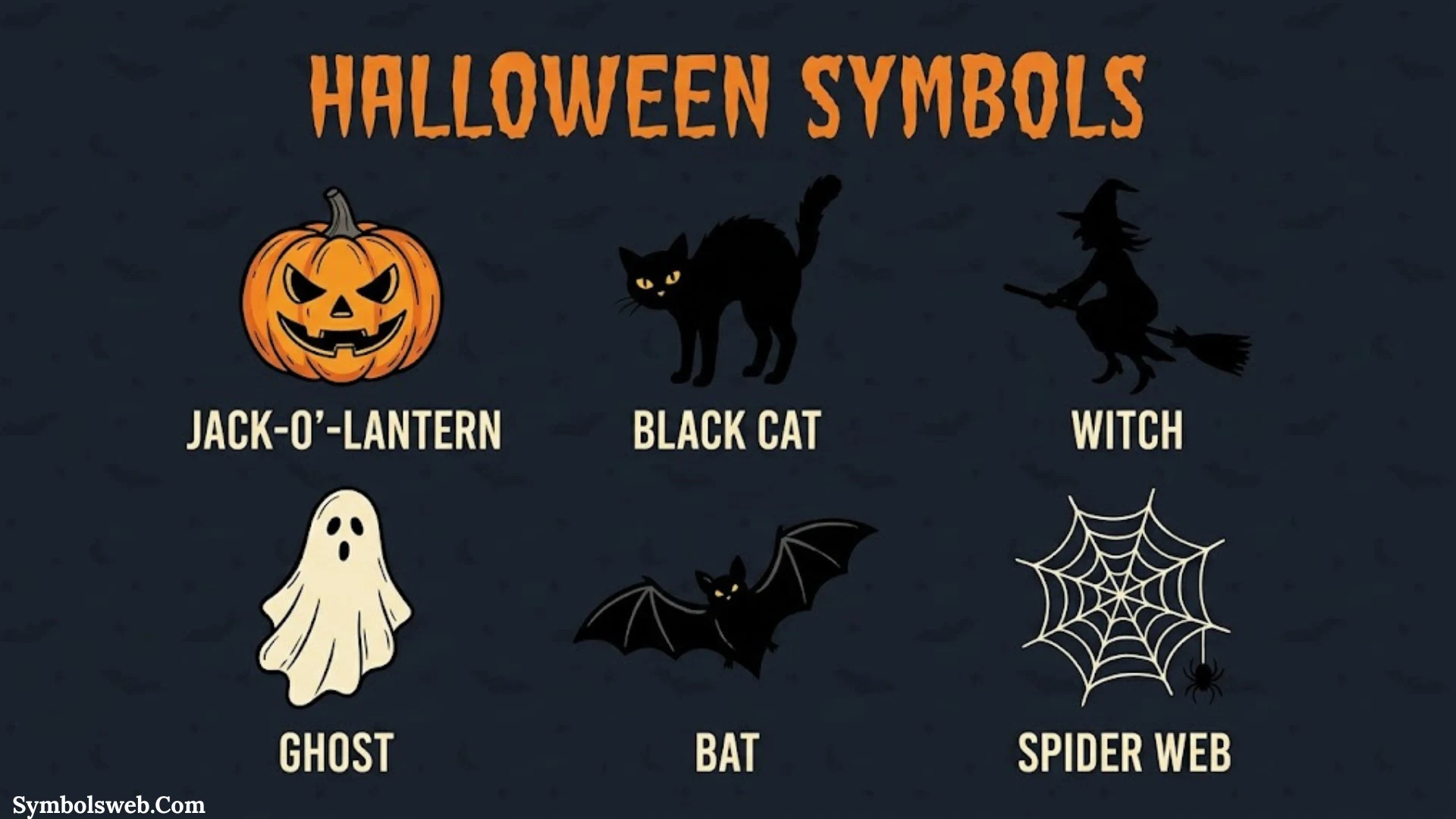
Halloween symbols have a fascinating way of turning ordinary objects into images of mystery, fear, and celebration. A carved pumpkin, a black cat, or a floating ghost can instantly remind you of October 31. However, these familiar images carry meanings that reach far beyond seasonal decorations.
Many Halloween symbols come from European folklore, harvest celebrations, religious traditions, and stories about the supernatural. Some represent death and the afterlife while others connect with protection, transformation, magic, and the changing seasons.
The Jack o’ lantern, for example, has roots in Irish folklore and traditional turnip lanterns. Witches reflect centuries of beliefs and fears surrounding magic and witchcraft. Meanwhile, skeletons remind us of human mortality and the shortness of life.
Today, Halloween imagery blends these older traditions with American popular culture, horror movies, costumes, and creative decorations. Understanding the history behind these images makes Halloween even more interesting.
Whether you enjoy decorating your home, choosing a costume, or exploring the stories behind familiar traditions, learning about Halloween symbols and meanings reveals the fascinating history behind this spooky celebration.
What Are Halloween Symbols?
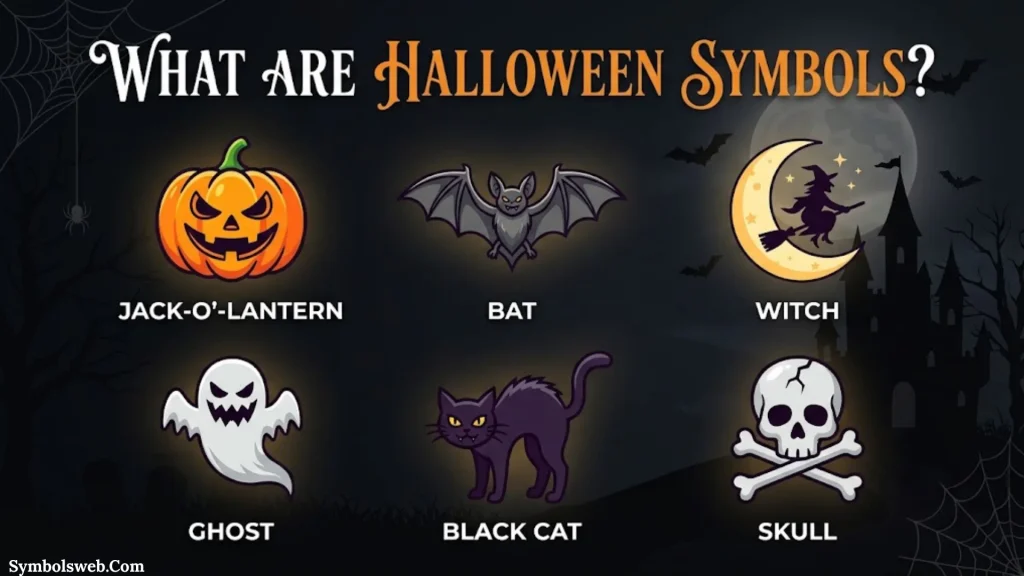
Halloween symbols are objects, animals, characters, colors, and images associated with Halloween celebrations. They communicate ideas about death, spirits, magic, fear, harvest, and supernatural folklore.
Some symbols have historical connections to religious observances and traditional beliefs. Others became popular through literature, movies, commercial decorations, and modern Halloween entertainment.
For example, a pumpkin with a frightening face represents the familiar Jack o’ lantern tradition. A black cat often suggests mystery and witchcraft while a skeleton reminds people of death and mortality.
Halloween symbols generally fall into several categories:
- Supernatural symbols: Ghosts, witches, vampires, werewolves, and haunted houses.
- Death symbols: Skulls, skeletons, tombstones, and graveyards.
- Animal symbols: Bats, black cats, owls, ravens, and spiders.
- Harvest symbols: Pumpkins, scarecrows, autumn leaves, and corn.
- Magical symbols: Broomsticks, cauldrons, full moons, and spell-related imagery.
- Seasonal symbols: Orange and black colors, candles, lanterns, and autumn decorations.
Although these images often appear together, they don’t all share the same historical origin. Some come from traditional folklore while others developed much later through popular entertainment.
List of Popular Halloween Symbols and Their Meanings
Halloween has many recognizable symbols. Each one contributes something different to the holiday’s atmosphere and cultural identity.
| Halloween symbol | Meaning and common association |
| Pumpkin | Autumn harvest and Halloween celebrations |
| Jack-o’-lantern | Irish folklore, lantern traditions, and protection |
| Witch | Witchcraft, magic, and supernatural beliefs |
| Witch hat | Modern witch imagery and Halloween costumes |
| Bat | Nighttime, darkness, and vampire folklore |
| Black cat | Mystery, superstition, and witchcraft |
| Ghost | Spirits, death, and the afterlife |
| Skeleton | Human mortality and death |
| Skull | Mortality, danger, and remembrance |
| Spider | Fear, mystery, and folklore |
| Cobweb | Abandoned places, age, and neglect |
| Scarecrow | Agriculture, harvest, and rural life |
| Full moon | Nighttime mystery and supernatural stories |
| Owl | Night, wisdom, and superstition |
| Raven | Omens, death, and Gothic literature |
| Vampire | Blood, immortality, and supernatural horror |
| Werewolf | Transformation and animal instincts |
| Mummy | Ancient Egyptian burial traditions and horror fiction |
| Haunted house | Ghost stories, fear, and supernatural legends |
| Tombstone | Death, burial, and remembrance |
| Candle | Light, remembrance, and traditional customs |
| Candy corn | American Halloween treats and seasonal celebrations |
These are among the most recognizable examples of traditional Halloween imagery. Their meanings sometimes overlap, but each has its own cultural background.
Halloween Pumpkin and Jack o’ Lantern: Meaning, History, and Origins
The pumpkin is perhaps the most recognizable Halloween symbol. Its bright orange color immediately brings autumn celebrations to mind. Its carved face also creates one of the holiday’s most familiar decorations.
What Does a Halloween Pumpkin Symbolize?
A Halloween pumpkin commonly represents:
- Autumn harvest: Pumpkins grow during the warm months and become especially visible in fall.
- Seasonal abundance: Their large size and plentiful harvest make them familiar autumn decorations.
- Halloween celebrations: Carved pumpkins have become a central part of October festivities.
- Folklore and tradition: The Jack o’ lantern connects pumpkins with older stories about wandering spirits.
Pumpkins also reflect the agricultural history of North America. Farmers have grown them for generations as food and seasonal crops.
What Is the Meaning of a Jack o’ Lantern?
A Jack o’ lantern is a hollowed-out pumpkin or another vegetable carved with a face and illuminated from inside.
Traditionally, people placed lanterns near doors and windows. Folklore associated these lights with keeping harmful spirits away or representing wandering souls.
The name comes from the Irish legend of Stingy Jack. Over time, the lantern became a familiar part of Halloween celebrations.
The Irish Legend of Stingy Jack
The story of Stingy Jack is one of Halloween’s best-known legends.
According to popular Irish folklore, Jack was a clever but dishonest man who repeatedly tricked the Devil. In one version, Jack invited the Devil for a drink and persuaded him to transform into a coin to pay the bill.
Jack then placed the coin beside a silver cross, preventing the Devil from changing back.
Later, Jack made another agreement with the Devil to escape punishment. However, his tricks eventually caught up with him.
When Jack died, neither Heaven nor Hell welcomed him according to the legend. The Devil sent him away with a burning coal to light his journey through the darkness.
Jack placed the coal inside a carved turnip and wandered with his lantern. People eventually called him Stingy Jack of the Lantern, which helped inspire the term Jack-o’-lantern.
This is folklore rather than a documented historical account. Different versions of the story contain slightly different details.
From Turnip Lanterns to Carved Pumpkins
Before pumpkins became popular Halloween decorations, people in Ireland and parts of Scotland carved turnips and other root vegetables into lanterns.
These vegetables were hollowed out and given frightening faces. A small light placed inside created an eerie glow.
When Irish immigrants arrived in North America during the 19th century, they brought their Halloween customs with them. Pumpkins offered a practical alternative because they were larger, easier to carve, and widely available.
This change helped establish the modern pumpkin Jack-o’-lantern.
Different Jack o’ Lantern Faces and Their Meanings
The expression carved into a pumpkin changes its appearance and mood.
- Smiling faces: Represent playful Halloween celebrations.
- Scary faces: Create a frightening atmosphere.
- Angry expressions: Give decorations a sinister appearance.
- Funny faces: Add humor to seasonal displays.
- Traditional triangular faces: Reflect the familiar classic Jack-o’-lantern design.
Modern Halloween Pumpkin Decorations
Today, people decorate pumpkins in several ways:
- Traditional pumpkin carving.
- Painted pumpkin designs.
- Illuminated Jack-o’-lanterns.
- Miniature pumpkins for table decorations.
- Pumpkin window displays.
- Pumpkin-shaped lanterns and artificial decorations.
Pumpkin carving remains one of the most recognizable Halloween traditions in the United States.
Witch Symbols and Their Meanings in Halloween Traditions
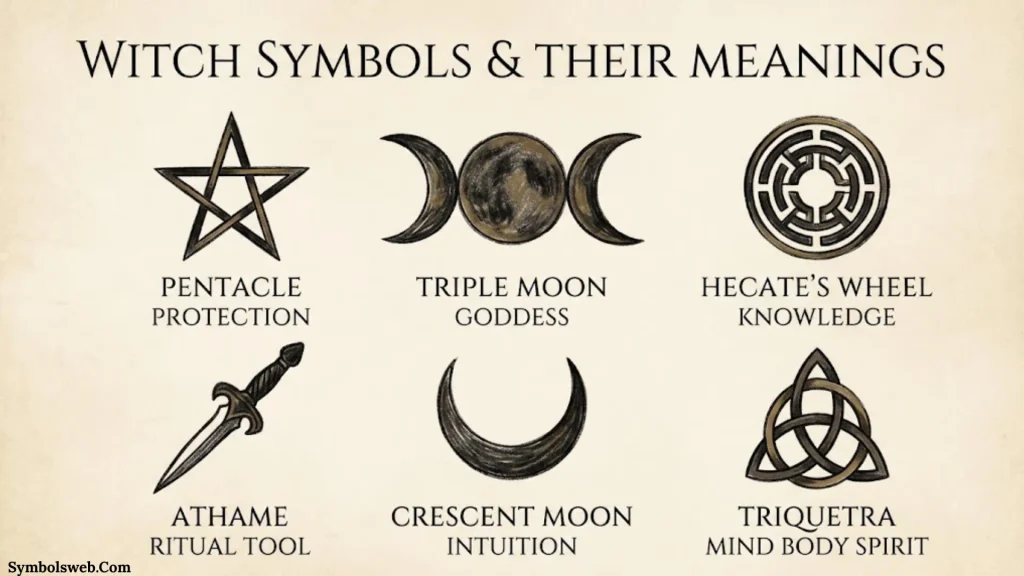
Witches are among the most recognizable spooky Halloween symbols. Pointed hats, broomsticks, bubbling cauldrons, and mysterious spells create the familiar image of a Halloween witch.
However, the history of witch symbolism is more complicated than Halloween costumes suggest.
What Does a Witch Symbolize?
A witch commonly represents:
- Witchcraft: Traditional and supernatural beliefs about magical practices.
- Mystery: Hidden knowledge and unexplained events.
- Magic: Spells, potions, and supernatural abilities.
- Transformation: The ability to change appearances in folklore.
- Fear and persecution: Historical accusations and trials involving alleged witchcraft.
Historically, societies held different beliefs about witches. Some people associated folk healers and herbal practitioners with wisdom while others feared individuals accused of harmful magic.
During parts of medieval and early modern Europe, witchcraft accusations led to serious persecution and executions. These historical events helped shape the frightening witch imagery found in modern Halloween culture.
Witch Hat: Meaning and Symbolism
The witch hat is one of Halloween’s most recognizable costume accessories.
Its tall pointed shape has become closely associated with fictional witches. However, historians haven’t established one simple origin for the familiar design.
Over time, illustrations, theatrical performances, books, and movies helped establish the pointed black hat as a standard witch costume.
Today, it represents:
- Witchcraft and magical identity.
- Halloween costumes.
- Supernatural characters.
- Mystery and fantasy.
Witch’s Broomstick: Flying and Supernatural Powers
The broomstick is another familiar part of Halloween witch symbolism.
European folklore includes stories about witches flying through the night. Historical accounts of witchcraft accusations sometimes connected broomsticks with supposed magical journeys and supernatural gatherings.
Modern Halloween imagery transformed these stories into a recognizable visual symbol.
A witch flying across a full moon on a broomstick now represents magical powers, nighttime adventure, and supernatural fantasy.
Witch’s Cauldron: Potions and Magical Rituals
Vintage witcher cauldron with books and magic potions for Halloween
A witch’s cauldron represents potions, magical preparations, and mysterious rituals.
Cauldrons themselves have a much older practical history. People used large metal vessels for cooking, heating liquids, and preparing ingredients.
Folklore and literature later connected them with witches and magical potions.
In Halloween decorations, bubbling green liquid, smoke, and strange ingredients create the familiar image of a magical laboratory.
Black Magic, Spells, and Witchcraft Symbols
Halloween witches often appear with:
- Spell books.
- Magical potions.
- Cauldrons.
- Broomsticks.
- Magical wands.
- Crystal balls.
- Mystical symbols.
These objects mostly reflect fictional and folkloric ideas about witchcraft rather than a single historical system of magical practice.
Witch Silhouettes and Full Moon Imagery
A witch flying across a full moon creates one of the most popular Halloween illustrations.
The moon provides a dramatic nighttime background. Meanwhile, the witch’s silhouette suggests mystery, magic, and supernatural activity.
This design appears on Halloween greeting cards, costumes, posters, decorations, and seasonal advertisements.
Halloween Bat Symbolism and Meaning
Bats are classic Halloween symbols because their nighttime activity, dark silhouettes, and unusual appearance create an atmosphere of mystery.
These flying mammals often appear in horror stories, haunted-house decorations, and vampire illustrations. However, their real behavior is quite different from their frightening fictional reputation.
What Do Bats Symbolize?
Bats commonly represent:
- Darkness: Many bat species become active after sunset.
- Mystery: Their nighttime habits make them familiar figures in folklore.
- Transformation: Bats appear in stories about supernatural changes.
- Fear: Their sudden movements and unusual appearance often feature in horror imagery.
- Vampire folklore: Their association with blood-feeding creatures helped strengthen their spooky reputation.
Why Are Bats Associated With Halloween?
Bats naturally fit Halloween’s nighttime atmosphere. They fly at dusk, gather in caves, and sometimes appear in large colonies.
Their silhouettes against the moon also create striking Halloween decorations.
Historically, European folklore connected bats with darkness and supernatural creatures. Gothic literature and horror entertainment later strengthened these associations.
Bats and Vampire Folklore
Halloween Background Free Stock Photo – Public Domain Pictures
Vampire bats are real animals, but only three living bat species feed on blood. They live in Central and South America and generally feed on birds or mammals.
The common vampire bat (Desmodus rotundus) primarily feeds on blood from mammals.
However, most bats eat insects, fruit, nectar, or other food sources. They don’t attack people or drink human blood as a normal part of their behavior.
Bram Stoker’s Dracula and Bat Imagery
Bram Stoker’s novel Dracula, published in 1897, played an important role in shaping modern vampire imagery.
The story helped popularize the image of a vampire who could transform into a bat. Earlier vampire literature had already explored connections between vampires and animals.
The Victorian Gothic tradition brought these ideas together through mysterious castles, dark landscapes, supernatural transformations, and blood-drinking monsters.
The Victoria and Albert Museum’s history of vampires explores how Dracula influenced vampire representations in literature, art, and film.
Halloween Bat Decorations and Costumes
Common bat decorations include:
- Black paper bat silhouettes.
- Hanging plastic bats.
- Flying bat window stickers.
- Bat-shaped lights.
- Bat costumes with pointed wings.
- Vampire-inspired makeup and accessories.
Bats remain popular because even a simple black silhouette can create an instantly recognizable Halloween scene.
Black Cat Symbols and Their Meanings
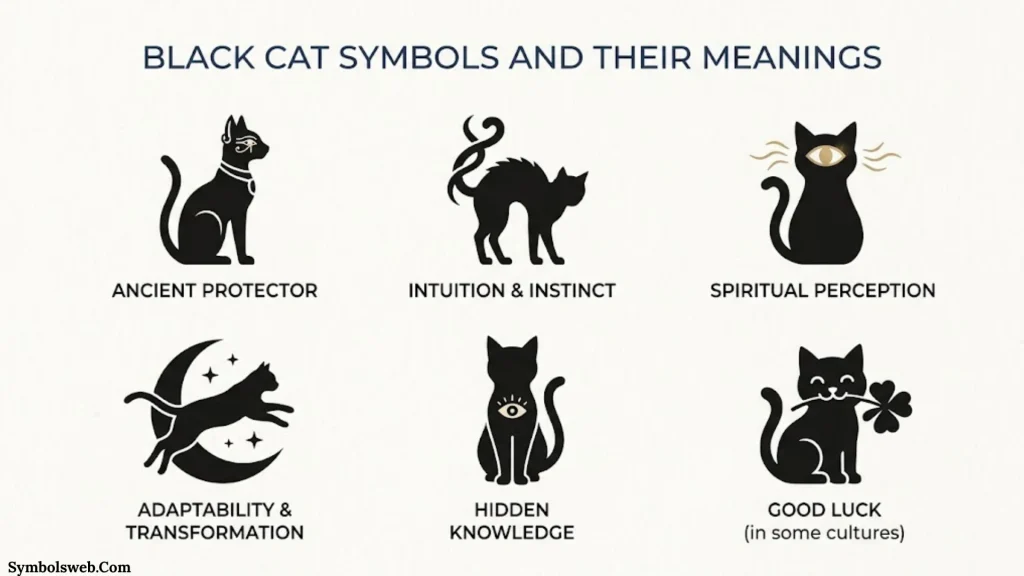
Black cats are among the most familiar Halloween animal symbols. Their dark fur, bright eyes, and quiet movements have inspired countless superstitions.
Some traditions consider them unlucky while others associate them with prosperity and good fortune.
What Does a Black Cat Symbolize?
A black cat can represent:
- Mystery and secrecy.
- Superstition and folklore.
- Witchcraft and supernatural beliefs.
- Independence and curiosity.
- Good luck or bad luck, depending on cultural traditions.
Unlike many Halloween images, black cats don’t have one universal symbolic meaning.
Why Are Black Cats Associated With Halloween?
The connection largely developed through European folklore and historical witchcraft beliefs.
During the medieval period, some communities associated black cats with the Devil and supernatural powers. These beliefs contributed to the idea that witches kept cats as magical companions.
Later Halloween illustrations and costumes turned the black cat into a familiar symbol of witchcraft and mystery.
Black Cats and Medieval Witchcraft Beliefs
In 1233, Pope Gregory IX issued a papal document known as Vox in Rama. It described alleged heretical practices involving a black cat.
The document contributed to the association between black cats, evil, and religious fears in parts of medieval Europe.
As witchcraft accusations spread, cats sometimes became linked to supposed witches’ companions or familiars.
However, these were superstitious beliefs rather than evidence of supernatural abilities.
Are Black Cats Symbols of Good Luck or Bad Luck?
Their meaning changes across cultures.
| Cultural association | Traditional interpretation |
| Parts of medieval Europe | Bad omens and witchcraft |
| Ancient Egypt | Cats were connected with divine protection |
| Scotland | A black cat appearing at a home could signal prosperity |
| Japan | Black cats can represent good fortune |
| Parts of Britain | Black cats have been associated with good luck and marriage |
These differences show why black cat symbolism shouldn’t be reduced to bad luck alone.
Natural History Museum+2
Black Cat Decorations and Halloween Costumes
Black cats appear in many Halloween designs:
- Cats with glowing yellow eyes.
- Arched-back cat silhouettes.
- Black cats sitting beside pumpkins.
- Witch costumes featuring cat companions.
- Cat-shaped window decorations.
- Black cat illustrations on greeting cards.
Their recognizable shape makes them useful for both simple decorations and elaborate Halloween displays.
Ghost Symbols and Their Meanings
Ghosts are central to Halloween symbolism because they represent the connection between death, memory, and the supernatural.
Stories about spirits returning from the dead appear in many cultures. Halloween adopted these ideas through centuries of folklore and religious traditions.
What Does a Ghost Symbolize?
A ghost commonly represents:
- Spirits of deceased people.
- The afterlife and life beyond death.
- Unfinished business and lingering memories.
- Fear of the unknown.
- The boundary between the living and the dead.
Some stories portray ghosts as lost souls. Others describe them as familiar spirits returning to visit loved ones.
Why Are Ghosts Associated With Halloween?
Irish Halloween traditions included beliefs about spirits and the dead returning during the festival period.
The National Museum of Ireland explains that Halloween was traditionally known as a night when souls of the dead might return to their family homes. People also wore disguises and made frightening masks.
National Museum of Ireland+1
These customs helped establish ghosts as recognizable Halloween figures.
Ghosts and the Boundary Between Life and Death
Ghost stories often explore what happens after a person dies.
Different religions and cultures have different beliefs about the afterlife. Some describe spirits entering another world while others include stories about ancestors visiting their families.
Halloween ghost imagery draws on these broad ideas without representing one specific religious belief.
Friendly Ghosts and Evil Ghosts
Ghosts appear in two common forms.
Friendly ghosts:
- Protect or guide living people in stories.
- Return to visit family members.
- Provide warnings or helpful messages.
- Represent memories of loved ones.
Frightening ghosts:
- Haunt buildings and abandoned places.
- Appear in dark hallways.
- Seek revenge in supernatural stories.
- Represent fear, loss, or unresolved events.
The difference often depends on the story rather than any universal definition of a ghost.
Haunted Houses and Wandering Spirits
Haunted houses combine ghost symbolism with fear of abandoned places.
Their familiar features include:
- Creaking doors and floors.
- Empty rooms and dark hallways.
- Broken furniture.
- Strange noises.
- Ghostly figures.
- Old photographs and mysterious objects.
These details create an unsettling atmosphere and make haunted houses popular Halloween attractions.
Skeleton and Skull Symbols: Death, Mortality, and Remembrance
Skeletons and skulls are powerful Halloween symbols associated with death. They remind people of the human body’s structure and the temporary nature of life.
Although people often use them interchangeably, skeletons and skulls have slightly different visual meanings.
What Does a Skeleton Symbolize?
A skeleton represents the human body stripped down to its basic structure.
Its common symbolic associations include:
- Human mortality.
- Death and the afterlife.
- The passage of time.
- The physical reality beneath appearance.
- Remembrance of deceased people.
Skeleton imagery also appears in medieval European artwork and religious traditions.
What Does a Skull Symbolize?
A skull is often a direct reminder of mortality.
It can represent death, danger, warning, and remembrance. Its appearance on certain signs also communicates serious hazards.
The skull and crossbones, for example, became a recognizable warning symbol associated with poison and toxic substances.
Why Are Skeletons Associated With Halloween?
Medieval European art frequently explored death and the temporary nature of human life.
One important tradition was the Danse Macabre, also called the Dance of Death. Artwork associated with this theme showed skeletons dancing with people from different social classes.
The message was simple: death comes for everyone regardless of wealth, power, or status.
This imagery helped establish skeletons as familiar representations of mortality. Modern Halloween decorations later transformed them into frightening and entertaining characters.
Skull and Crossbones: Meaning and Origins
Common warning symbol
The skull and crossbones consists of a human skull positioned above two crossed bones.
Its common meanings include:
- Poison and toxic substances.
- Death and danger.
- Serious health hazards.
- Mortality and warning.
It also appears in pirate imagery and historical illustrations.
Día de los Muertos and Mexican Skull Symbolism
Mexican skull symbolism deserves special attention because it has a cultural meaning distinct from Halloween horror imagery.
Día de los Muertos, or Day of the Dead, is a celebration honoring deceased relatives and remembering their lives.
It takes place on November 1 and 2 in many Mexican communities.
Important symbols include:
- Calaveras: Decorative skulls representing death and remembrance.
- Sugar skulls: Colorful skull-shaped sweets decorated with icing.
- Marigolds: Flowers traditionally used to decorate altars and guide spirits.
- Ofrendas: Family altars containing photographs, candles, food, and personal offerings.
- Papel picado: Decorative cut-paper banners used during celebrations.
The Mexican artist José Guadalupe Posada helped popularize modern calavera imagery through his satirical skeleton illustrations. His famous La Catrina became an important figure in Mexican visual culture.
The celebration honors loved ones rather than simply trying to frighten people.
Modern Halloween Skeleton Decorations
Common skeleton decorations include:
- Full size skeleton figures.
- Hanging plastic bones.
- Skull shaped candles.
- Skeleton costumes.
- Graveyard displays.
- Animated skeleton props.
These decorations combine traditional death imagery with modern horror entertainment.
Halloween Spider and Cobweb Symbols
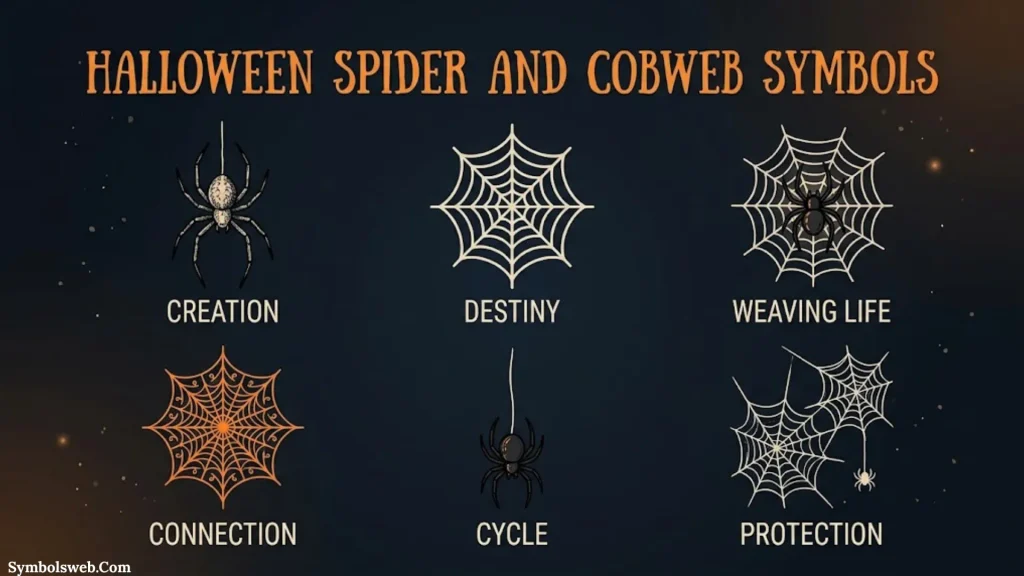
Spiders and cobwebs create an eerie atmosphere in Halloween decorations. Their association with dark corners, abandoned buildings, and frightening creatures makes them familiar seasonal symbols.
What Does a Spider Symbolize?
Spiders can represent several ideas:
- Fear and danger.
- Patience and careful construction.
- Creativity and web-building.
- Mystery and hidden places.
- Fate and destiny in certain mythological traditions.
Their symbolism varies considerably across cultures.
Why Are Spiders Associated With Halloween?
Spiders often appear in places people associate with neglect, darkness, and abandonment.
An old web hanging in a dusty room creates an impression that nobody has visited for years. This makes cobwebs especially useful in haunted-house decorations.
Spiders also appear in horror films and frightening Halloween illustrations because many people find their appearance unsettling.
Spider Web Symbolism and Meaning
A spider web has several possible symbolic associations.
Abandonment: Old cobwebs suggest neglected buildings and unused spaces.
Creativity: Spiders construct intricate webs that demonstrate natural engineering.
Patience: Building a web requires time and careful movement.
Fate and destiny: Some mythological traditions portray supernatural weavers as figures who influence human destiny.
These associations don’t mean every spider web has a traditional Halloween meaning. Many connections developed through folklore and artistic interpretation.
Spiders and Witchcraft Folklore
Spiders sometimes appear in fictional depictions of witches, potions, and magical ingredients.
However, there isn’t one universal historical belief that connects spiders directly with witchcraft. Their modern association mostly reflects their appearance in supernatural stories and horror imagery.
Halloween Spider Decorations and Costumes
Popular options include:
- Artificial spiderwebs.
- Giant plastic spiders.
- Spider-shaped window decorations.
- Spider costumes.
- Spider makeup.
- Hanging web decorations.
A large artificial spider placed in a doorway can transform an ordinary entrance into a frightening Halloween display.
Scarecrow Symbols and Their Meanings
Scarecrows connect Halloween with the agricultural history of autumn. Unlike ghosts and witches, their original purpose had little to do with supernatural beliefs.
What Does a Scarecrow Symbolize?
A scarecrow commonly represents:
- Harvest season.
- Farming and agriculture.
- Crop protection.
- Rural life.
- Fear and eerie countryside imagery.
Its familiar appearance comes from its practical role in protecting fields.
The Historical Purpose of Scarecrows
Farmers have used human-shaped figures to discourage birds from eating crops.
Traditional scarecrows often feature:
- Wooden frames.
- Old clothing.
- Straw stuffing.
- Hats.
- Fabric faces.
Their main purpose is to make birds believe a person is standing nearby.
Modern farmers also use reflective materials, moving devices, and other bird-deterrent methods.
Why Are Scarecrows Associated With Halloween?
Scarecrows fit naturally into autumn decorations because harvest season and Halloween occur around the same time.
Their weathered clothes, straw-filled bodies, and empty expressions also make them suitable for horror-inspired displays.
Pumpkin-Headed Scarecrows and Their Symbolism
A pumpkin-headed scarecrow combines two familiar harvest images.
The pumpkin represents autumn abundance while the scarecrow represents crop protection and rural farming.
Together, they create a recognizable Halloween character.
Scary Scarecrow Costumes and Decorations
Popular scarecrow designs include:
- Torn shirts and old trousers.
- Straw sticking out of sleeves.
- Weathered hats.
- Painted or stitched faces.
- Artificial blood and frightening masks.
- Pumpkin heads.
These designs transform an ordinary farm figure into a horror character.
Full Moon Symbols and Their Meanings
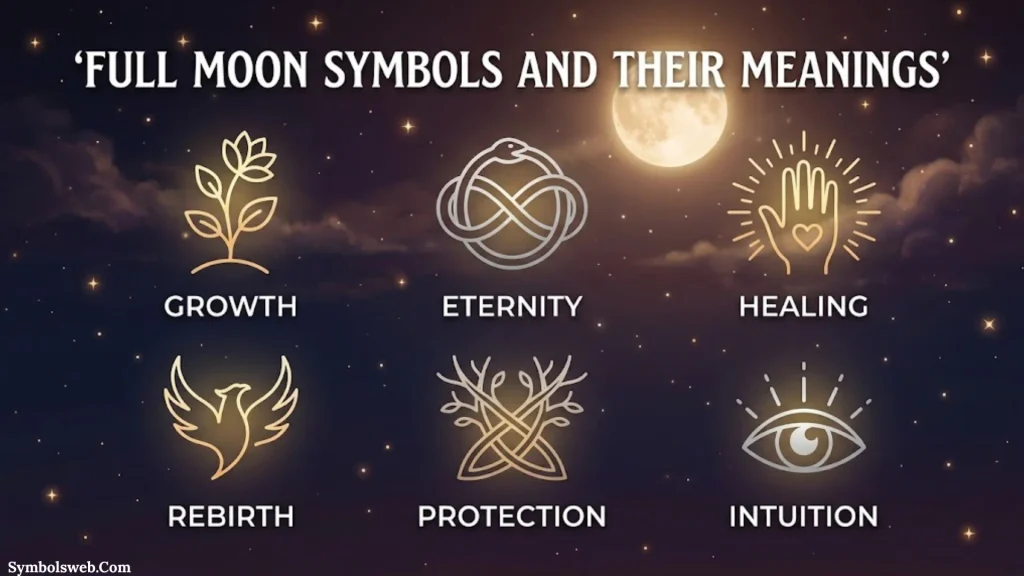
The full moon creates one of Halloween’s most recognizable nighttime images. Its bright appearance against a dark sky makes it a natural background for witches, bats, and supernatural creatures.
What Does a Full Moon Symbolize?
A full moon commonly represents:
- Mystery and nighttime.
- Change and transformation.
- Natural cycles.
- Supernatural beliefs.
- Uncertainty and the unknown.
Its meaning depends on cultural traditions and storytelling.
Why Is the Full Moon Associated With Halloween?
Folklore and popular entertainment often connect the full moon with supernatural events.
Witches, werewolves, ghosts, and other fictional creatures frequently appear under moonlight.
Halloween decorations use this imagery because a glowing moon creates a dramatic contrast against dark trees and silhouettes.
Full Moon and Werewolf Symbolism
Werewolves are legendary creatures that transform from humans into wolves.
European folklore contains different stories about people changing into animals. However, the familiar idea that a full moon triggers werewolf transformations became especially popular through modern literature, films, and entertainment.
The full moon now acts as a recognizable visual symbol of werewolf stories.
Full Moon Decorations and Halloween Imagery
Common designs include:
- Witches flying across a full moon.
- Bats circling a glowing moon.
- Werewolves standing on hills.
- Dark forests beneath moonlight.
- Haunted houses against a moonlit sky.
Other Important Halloween Symbols and Their Meanings
Beyond the main Halloween symbols, several other creatures and objects contribute to the holiday’s recognizable appearance.
Owl: Wisdom, Darkness, and Superstition
Owls are nocturnal birds with large eyes and distinctive calls.
They commonly symbolize:
- Wisdom and knowledge.
- Nighttime mystery.
- Observation and silence.
- Omens in certain folklore traditions.
Ancient Greek mythology associated the owl with Athena, the goddess of wisdom. However, other cultures connected owls with death or misfortune.
Their nighttime behavior makes them suitable for Halloween decorations.
Raven: Death, Omens, and Mystery
Ravens appear in mythology, folklore, and Gothic literature.
They often represent death, intelligence, mystery, and foreboding.
Edgar Allan Poe’s famous poem The Raven helped strengthen their connection with darkness, grief, and haunting imagery.
Ravens also appear in stories involving witches, haunted forests, and supernatural events.
Vampire: Blood, Immortality, and Horror
Vampires are supernatural creatures traditionally associated with drinking blood and surviving beyond normal human lifespans.
Their symbolism includes:
- Immortality.
- Blood and life force.
- Darkness and fear.
- Supernatural transformation.
- Temptation and danger.
Eastern European folklore contributed many familiar vampire legends. Bram Stoker’s Dracula later helped establish the modern fictional vampire.
Werewolf: Transformation and the Wild
Werewolves represent transformation between human and animal forms.
Their stories explore themes such as:
- Human instincts.
- Loss of control.
- Animal nature.
- Fear of the unknown.
- Transformation and identity.
Modern Halloween costumes often feature wolf masks, artificial fur, claws, and torn clothing.
Mummy: Ancient Egypt and the Afterlife
Mummies connect Halloween imagery with ancient Egyptian burial practices.
Ancient Egyptians preserved certain bodies through a process of mummification. This practice formed part of religious beliefs about death and the afterlife.
Modern horror fiction transformed mummies into supernatural characters that awaken from ancient tombs.
The mummy costume remains a popular Halloween choice.
Haunted House: Fear, Spirits, and Mystery
A haunted house symbolizes fear of the unknown and supernatural activity.
Its familiar features include dark corridors, strange noises, abandoned furniture, and ghostly appearances.
Haunted houses are popular Halloween attractions because visitors experience controlled fear in an entertaining environment.
Tombstones and Gravestones: Death and Remembrance
Tombstones represent burial, remembrance, and mortality.
Their use in Halloween decorations creates the appearance of a haunted cemetery.
Common decorative designs include:
- Weathered gravestones.
- Artificial cracks.
- Skeleton hands.
- Cemetery gates.
- Crosses and other grave markers.
Candles and Lanterns: Light in the Darkness
Candles and lanterns represent illumination in dark surroundings.
In different traditions, people use lights for remembrance, religious observances, and seasonal celebrations.
Halloween lanterns also connect with Jack-o’-lantern folklore and traditional customs involving light and protection.
Candy Corn: Halloween Treats and Seasonal Tradition
Candy corn is one of America’s most recognizable Halloween sweets.
The confection first appeared in the late 19th century and became associated with autumn through its yellow, orange, and white layers.
Its colors resemble corn kernels, connecting the candy with agricultural imagery.
Today, candy corn is a familiar Halloween treat rather than an ancient supernatural symbol.
Halloween Colors and Their Symbolic Meanings
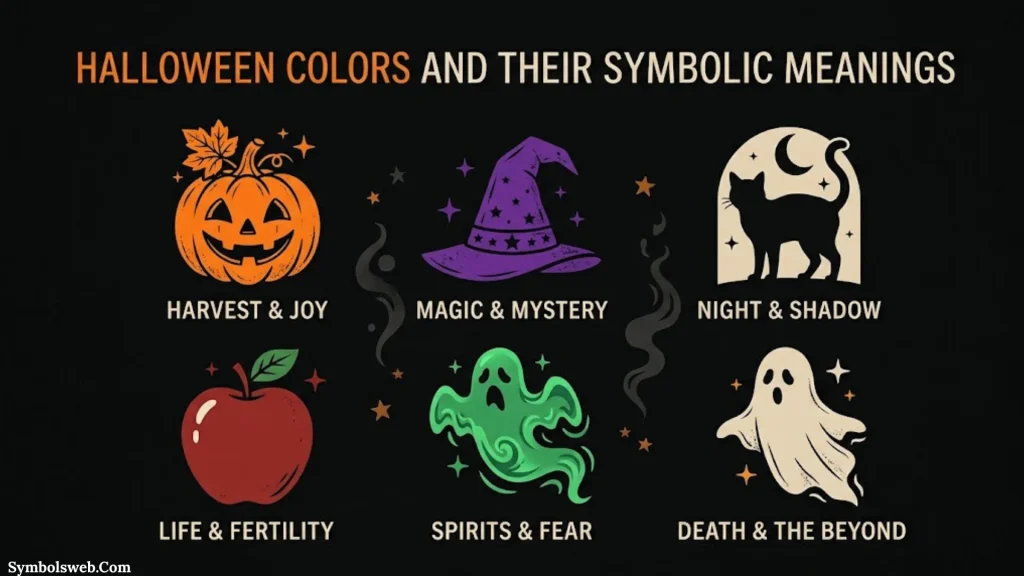
Colors play an important role in Halloween symbolism. Orange, black, purple, green, red, and white appear throughout seasonal decorations, costumes, and illustrations.
Each color contributes a different mood or association.
Orange: Autumn, Pumpkins, and Harvest
Orange is one of the most recognizable Halloween colors.
It represents autumn leaves, pumpkins, harvest celebrations, and the changing seasons. Its bright appearance also creates a warm contrast with darker Halloween decorations.
Common orange Halloween objects include:
- Pumpkins and Jack-o’-lanterns.
- Autumn leaves.
- Candy corn.
- Orange candles.
- Harvest wreaths.
Black: Darkness, Death, and Mystery
Black represents darkness, nighttime, mystery, and death in many Halloween designs.
Its association with the unknown makes it especially useful for creating spooky decorations.
Black appears in:
- Witch costumes.
- Black cat illustrations.
- Bat silhouettes.
- Haunted-house decorations.
- Gothic clothing and accessories.
However, black doesn’t represent evil in every culture. Its meaning depends on context and tradition.
Purple: Magic, Mystery, and Witchcraft
Purple has become a popular color in modern Halloween decorations.
It often represents magical energy, fantasy, mystery, and supernatural characters.
You’ll commonly see purple in:
- Witch costumes.
- Magical potion decorations.
- Halloween lighting.
- Spell books and fantasy illustrations.
- Monster costumes.
Its use reflects modern visual storytelling more than one specific ancient Halloween tradition.
Green: Witches, Monsters, and Supernatural Creatures
Green frequently appears in Halloween monster and witch imagery.
The famous green-skinned Wicked Witch of the West in The Wizard of Oz (1939) helped establish this appearance in popular culture.
Green also appears in fictional potions, monsters, glowing eyes, and supernatural decorations.
Red: Blood, Danger, and Horror
Red represents blood, danger, violence, and warning in horror imagery.
Its association with vampires makes it especially recognizable during Halloween.
Common examples include:
- Vampire costumes.
- Red artificial blood.
- Red candles.
- Horror themed lighting.
- Blood red decorative lettering.
White: Ghosts, Spirits, and Skeletons
White is commonly associated with ghostly figures and supernatural appearances.
Traditional ghost costumes often use white sheets, while skeleton decorations use white bones against dark backgrounds.
White can also represent purity, peace, and remembrance in different cultural traditions.
The History and Origins of Halloween Symbols
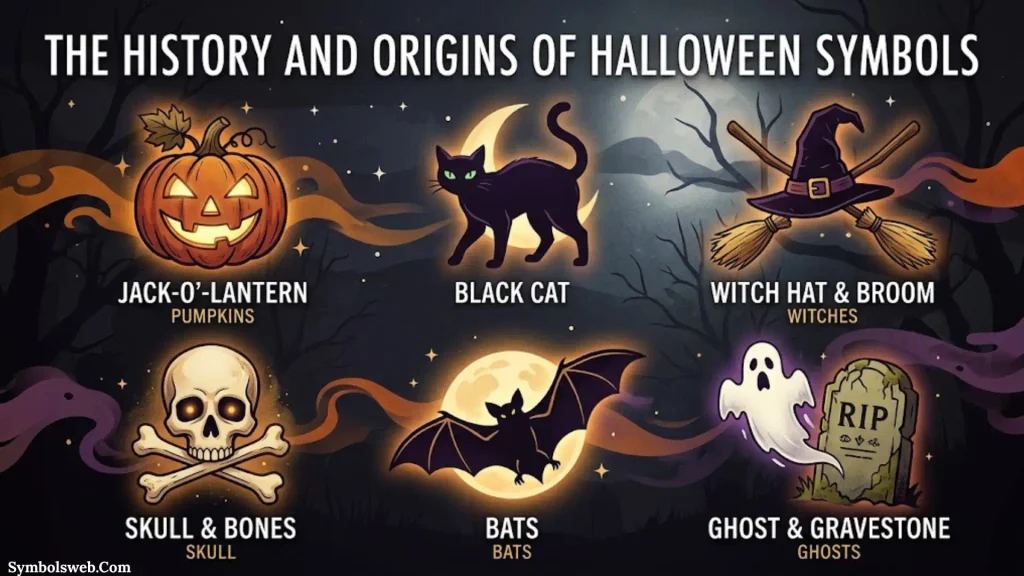
The history of Halloween symbols involves several overlapping traditions. Ancient seasonal festivals, Christian observances, European folklore, and American popular culture all contributed to the holiday’s development.
Understanding these influences helps explain why modern Halloween includes such a wide range of images.
Samhain and Its Connection to Halloween
Samhain was an important seasonal festival in the traditional Irish calendar. It marked the transition into winter and was observed around November 1.
The main celebrations took place on the evening before, October 31.
Traditional Samhain customs included:
- Feasting after the harvest.
- Lighting bonfires.
- Playing seasonal games.
- Wearing disguises and masks.
- Fortune-telling.
- Stories about spirits and supernatural beings.
Some traditional beliefs held that the boundary between the living and the dead became thinner during this period.
However, historians should distinguish documented customs from later interpretations. Not every modern Halloween symbol can be traced directly to Samhain.
The National Museum of Ireland’s research on Samhain and Halloween provides useful historical context.
National Museum of Ireland+1
All Saints’ Day and All Souls’ Day
Christian observances also influenced Halloween’s development.
All Saints’ Day, celebrated on November 1 in the Western Christian calendar, honors saints and holy people.
All Souls’ Day, observed on November 2 in the Western Catholic tradition, focuses on remembering the dead.
The evening before All Saints’ Day became known as All Hallows’ Eve. Over time, the name developed into Halloween.
These observances helped connect late October and early November with remembrance, death, and religious traditions.
Irish and Scottish Halloween Folklore
Ireland and Scotland contributed several customs that remain recognizable today.
Traditional practices included:
- Carving frightening faces into turnips.
- Wearing masks and disguises.
- Playing fortune-telling games.
- Lighting bonfires.
- Telling stories about supernatural creatures.
- Sharing seasonal food.
The Irish turnip lantern eventually inspired the American pumpkin Jack-o’-lantern.
Scottish and Irish traditions also included guising, in which people wore costumes and visited homes for entertainment or treats.
Ireland.ie+1
Halloween Traditions in Medieval Europe
Medieval European culture helped develop several familiar Halloween associations.
Religious artwork often portrayed death through skeletons, skulls, and scenes of judgment. Stories about witches, demons, and spirits also shaped supernatural folklore.
Some important influences included:
- Memento mori: Artwork and objects reminding people of mortality.
- Danse Macabre: Artistic representations of death involving dancing skeletons.
- Witchcraft accusations: Historical fears surrounding alleged magical practices.
- Ghost stories: Accounts of spirits returning from the dead.
- Religious observances: Traditions connected with saints and deceased relatives.
These influences contributed to the imagery that later appeared in Halloween art and decorations.
Halloween in America
A major turning point in modern Halloween culture
Irish and Scottish immigrants brought many traditional Halloween customs to North America during the 19th century.
As these traditions developed, pumpkins became more popular than turnips for making lanterns.
American communities gradually introduced new activities and decorations.
Important developments included:
- Pumpkin carving and Jack-o’-lantern displays.
- Costume parties and neighborhood celebrations.
- Halloween greeting cards.
- Trick-or-treating.
- Commercial costumes and decorations.
- Horror movies and television specials.
Trick-or-treating became especially widespread in the United States during the 20th century. Its modern form developed through older customs involving disguises, visiting homes, and requesting food or treats.
Smithsonian Gardens+2
How Halloween Symbols Changed Over Time
Halloween imagery continues to evolve.
Older symbols once connected with folklore and religious beliefs now serve many purposes in entertainment and decoration.
For example:
- Turnip lanterns became pumpkin Jack-o’-lanterns.
- Historical witch imagery became a popular costume.
- Vampire folklore inspired famous horror characters.
- Skeleton artwork became animated Halloween decorations.
- Traditional ghost stories became haunted attractions.
Modern Halloween combines historical traditions with creativity, commercial entertainment, and popular culture.
Halloween Symbols in Different Cultures and Traditions
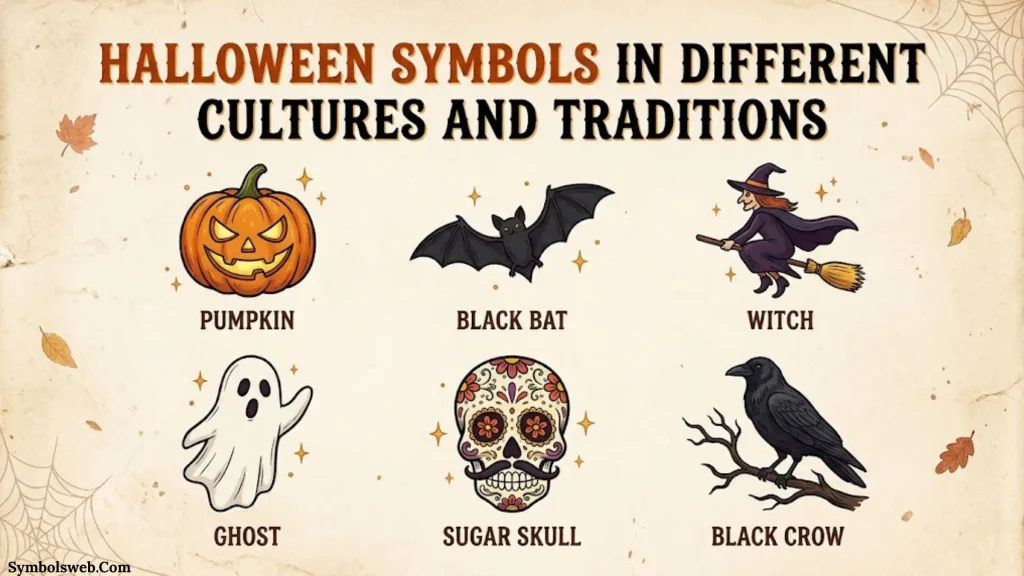
Halloween imagery doesn’t exist in isolation. Different countries have their own seasonal celebrations, remembrance customs, and supernatural folklore.
Some traditions share themes with Halloween while maintaining distinct histories.
Irish Halloween Symbols and Traditions
Ireland has an important place in Halloween’s historical development.
Traditional Irish customs included:
- Carved turnip lanterns.
- Bonfires.
- Disguises and masks.
- Fortune-telling games.
- Seasonal feasts.
- Stories about wandering spirits.
The Stingy Jack legend also contributed to the modern Jack-o’-lantern tradition.
Scottish Halloween Symbols and Traditions
Scottish Halloween traditions include several customs associated with the changing seasons.
Examples include:
- Guising and costumes.
- Turnip lanterns.
- Bonfires.
- Traditional games.
- Fortune telling practices.
Guising involved disguising oneself and visiting homes for entertainment or treats. It helped influence later Halloween activities in North America.
American Halloween Symbols
American Halloween celebrations brought many older customs together.
Popular symbols include:
- Pumpkins.
- Witches.
- Black cats.
- Ghosts.
- Bats.
- Skeletons.
- Candy corn.
- Haunted houses.
Movies, television, advertising, and seasonal retail displays helped make these images recognizable across the country.
Mexican Skull Symbolism and Día de los Muertos
A distinct cultural celebration
Día de los Muertos is one of the most recognizable Mexican celebrations involving skull imagery.
It honors deceased relatives and remembers their lives through family gatherings, offerings, and traditional decorations.
Its important symbols include calaveras, sugar skulls, marigolds, candles, photographs, and decorated altars.
The celebration has roots in Indigenous Mesoamerican traditions and developed through later cultural and religious influences.
It isn’t simply a Mexican version of Halloween. Its focus is remembrance and honoring loved ones rather than frightening people.
The Smithsonian Institution’s guide to Día de los Muertos explains its history and important symbols.
Smithsonian Institution+1
European Halloween and All Saints’ Traditions
European countries have different customs connected with remembering the dead.
Some communities visit cemeteries, decorate graves, light candles, and attend religious services.
These traditions reflect regional religious practices rather than one universal European Halloween celebration.
Asian Halloween Celebrations and Modern Imagery
Halloween has also become popular in parts of Asia, particularly through modern entertainment, shopping events, and costume celebrations.
Japan, for example, has developed large Halloween events featuring elaborate costumes and themed decorations.
Common imagery includes witches, ghosts, skeletons, pumpkins, and horror characters.
These celebrations often reflect international popular culture rather than direct connections with ancient European Halloween customs.
Halloween Symbols in Costumes, Decorations, and Popular Culture
Halloween symbols have moved beyond traditional folklore. Today, they influence costumes, home decorations, entertainment, advertising, and digital media.
Traditional Halloween Costume Symbols
Costumes allow people to transform themselves into familiar supernatural characters.
Popular choices include:
- Witch costumes: Pointed hats, black clothing, and broomsticks.
- Ghost costumes: White sheets and pale makeup.
- Skeleton costumes: Printed bones and skull masks.
- Vampire costumes: Dark capes, fangs, and pale makeup.
- Bat costumes: Black wings and pointed ears.
- Scarecrow costumes: Straw, old clothes, and stitched faces.
- Werewolf costumes: Fur, claws, and animal masks.
Common Halloween Decoration Symbols
Halloween decorations use familiar images to create a spooky atmosphere.
Popular choices include:
- Carved pumpkins on doorsteps.
- Hanging bats and artificial spiders.
- Cobwebs across windows.
- Skeletons in front yards.
- Ghost figures near entrances.
- Artificial tombstones.
- Haunted-house props.
- Full moon and witch silhouettes.
Halloween Symbols in Movies and Literature
Literature and movies have helped shape modern Halloween imagery.
Some important examples include:
| Work | Symbol or character | Cultural influence |
| Dracula by Bram Stoker | Vampire | Popularized modern vampire imagery |
| The Raven by Edgar Allan Poe | Raven | Connected ravens with mystery and grief |
| Frankenstein by Mary Shelley | Artificial monster | Influenced modern monster imagery |
| The Wizard of Oz | Wicked Witch of the West | Popularized a recognizable witch design |
| The Legend of Sleepy Hollow by Washington Irving | Headless Horseman | Influenced supernatural Halloween storytelling |
These works helped turn traditional supernatural figures into lasting characters in popular culture.
Halloween Symbols in Modern Media
Modern Halloween imagery appears across digital platforms and entertainment.
Common examples include:
- Halloween emojis and icons.
- Seasonal social media graphics.
- Halloween greeting cards.
- Digital illustrations.
- Video game characters.
- Movie posters.
- Seasonal advertisements.
These modern designs continue to use traditional symbols while introducing new visual styles.
What Do Halloween Symbols Have in Common?
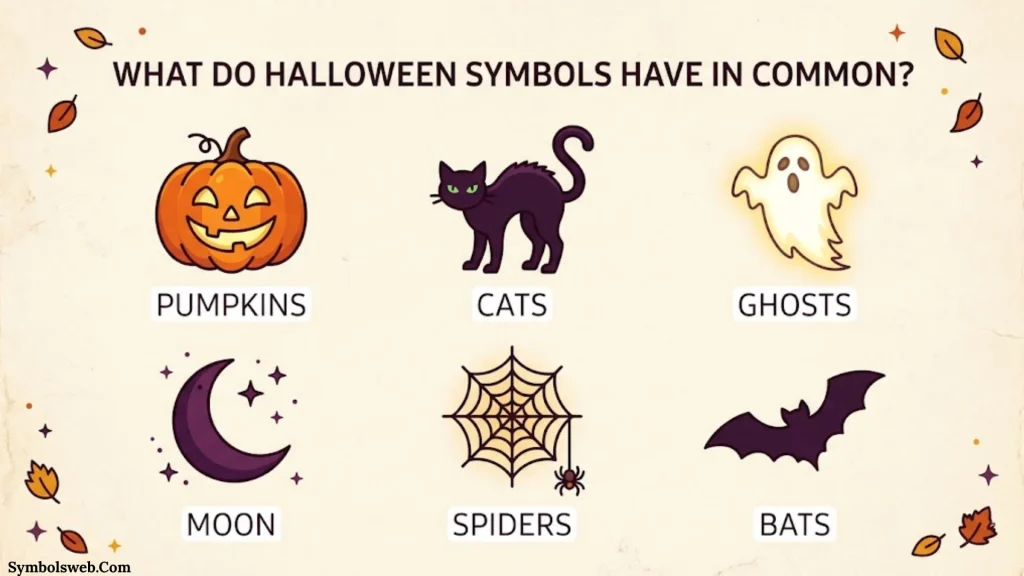
Although Halloween symbols look different, many share a few major themes.
Understanding these connections makes their meanings easier to remember.
Death and Mortality
Some symbols remind people of human mortality and the afterlife.
Examples include:
- Skulls.
- Skeletons.
- Tombstones.
- Ghosts.
These images appear in Halloween decorations because of the holiday’s historical connections with death and remembrance.
Mystery and the Supernatural
Other symbols represent unexplained events and supernatural beliefs.
Examples include:
- Witches.
- Full moons.
- Black cats.
- Ravens.
- Cauldrons.
They often appear in stories about magic, mysterious powers, and supernatural creatures.
Darkness and Fear
Halloween also celebrates the thrill of being frightened.
Common symbols include:
- Bats.
- Spiders.
- Vampires.
- Haunted houses.
- Werewolves.
These images create suspense and make horror-themed entertainment more recognizable.
Harvest and Seasonal Change
Not every Halloween symbol represents something frightening.
Pumpkins, scarecrows, autumn leaves, and candy corn connect the holiday with harvest traditions and seasonal celebrations.
They remind people of the agricultural origins and autumn atmosphere surrounding Halloween.
Protection and Superstition
Some traditional Halloween customs involved protecting homes against unwanted spirits or bad luck.
Examples include:
- Jack-o’-lanterns.
- Turnip lanterns.
- Disguises and masks.
- Traditional household protective customs.
These practices reflect historical folklore and beliefs rather than proven supernatural protection.
Frequently Asked Questions About Halloween Symbols
What Are the Most Popular Halloween Symbols?
The most popular Halloween symbols include pumpkins, Jack-o’-lanterns, witches, black cats, ghosts, bats, skeletons, skulls, spiders, and scarecrows. These images represent autumn, death, mystery, supernatural folklore, and Halloween celebrations.
What Do Halloween Symbols Mean?
Halloween symbols represent different themes, including death, harvest, fear, magic, protection, and the supernatural. For example, pumpkins represent autumn and Halloween traditions while skeletons symbolize human mortality. Black cats often represent mystery and superstition.
Why Is the Pumpkin a Symbol of Halloween?
Pumpkins became Halloween symbols through Irish and Scottish lantern traditions. People originally carved turnips into frightening faces and placed lights inside them. Irish immigrants brought this custom to North America where pumpkins became the preferred carving material.
Why Are Witches Associated With Halloween?
Witches became associated with Halloween through European folklore, historical witchcraft beliefs, and supernatural stories. Modern Halloween imagery features pointed hats, broomsticks, cauldrons, and magical spells.
Why Are Black Cats Associated With Halloween?
Black cats became associated with Halloween because of European superstitions connecting them with witches and supernatural powers. However, different cultures have viewed black cats as symbols of good luck and prosperity.
What Does a Ghost Symbolize on Halloween?
A ghost represents spirits of deceased people, the afterlife, and the connection between the living and the dead. Ghost stories also explore memory, loss, fear, and unfinished business.
Why Are Bats Associated With Halloween?
Bats are associated with Halloween because they are nocturnal animals frequently connected with darkness and supernatural folklore. Vampire stories and Gothic literature strengthened their place in Halloween imagery.
What Do Skeletons and Skulls Represent?
Skeletons and skulls represent death, human mortality, and the temporary nature of life. In Mexican traditions, colorful skulls called calaveras also represent remembrance and honoring deceased loved ones.
Why Are Spiders and Cobwebs Used in Halloween Decorations?
Spiders and cobwebs create an eerie atmosphere because people associate them with dark corners, abandoned buildings, and frightening creatures. Spider webs can also symbolize patience, creativity, and fate in different traditions.
What Does a Scarecrow Symbolize?
A scarecrow represents agriculture, harvest traditions, and crop protection. In modern Halloween decorations, its weathered appearance and frightening costumes give it a connection with rural horror stories.
What Is the Meaning of Orange and Black Halloween Colors?
Orange represents autumn, pumpkins, and harvest celebrations. Black represents darkness, mystery, and nighttime. Together, these colors create the familiar appearance of traditional Halloween decorations.
Are Halloween Symbols Based on Ancient Celtic Traditions?
Some Halloween customs have connections with Samhain, a traditional Celtic seasonal festival. However, modern Halloween symbols developed through several influences, including Irish and Scottish folklore, Christian observances, European traditions, and American popular culture.
¿Es el Día de los Muertos the Same as Halloween?
No. Día de los Muertos is a Mexican celebration honoring deceased relatives. Families use colorful skulls, marigolds, candles, photographs, and offerings to remember loved ones. Halloween has different historical origins and traditions.
What Does the Full Moon Symbolize on Halloween?
The full moon represents nighttime mystery, transformation, and supernatural folklore. It frequently appears in stories about witches, werewolves, and other mysterious creatures.
Why Do People Decorate Their Homes With Halloween Symbols?
People decorate their homes with Halloween symbols to celebrate the season, express creativity, and create a spooky atmosphere. Pumpkins, ghosts, witches, skeletons, and cobwebs are popular choices for indoor and outdoor displays.
Conclusion: The Meaning Behind Halloween Symbols
Halloween symbols bring together centuries of folklore, seasonal customs, religious traditions, and popular entertainment. Pumpkins connect the holiday with harvest celebrations and Irish lantern folklore. Witches and black cats reflect historical superstitions while ghosts, skeletons, and skulls explore themes of death and remembrance.
Other familiar images have equally interesting backgrounds. Bats connect with nighttime activity and vampire stories while scarecrows represent agriculture and autumn traditions. Full moons, spiders, ravens, and haunted houses add mystery and suspense to Halloween celebrations.
Today, these Halloween symbols and meanings continue to shape costumes, decorations, movies, and seasonal traditions. Understanding their origins reveals that Halloween is more than a spooky celebration. It is a fascinating blend of history, folklore, cultural identity, and creativity.

Jordan Hayes is a writer with a passion for exploring the history, meanings, and cultural significance behind symbols from around the world. He enjoys turning complex topics into clear, engaging content that anyone can understand. Jordan is also the fictional author of The Silent Language of Ancient Marks and Hidden Symbols Beyond the Surface, two original book concepts created for his author profile. When he’s not writing, he spends time researching myths, traditions, and forgotten stories that inspire his work. His goal is to help readers discover the deeper meanings behind the symbols they encounter every day.
 Ethan Holloway