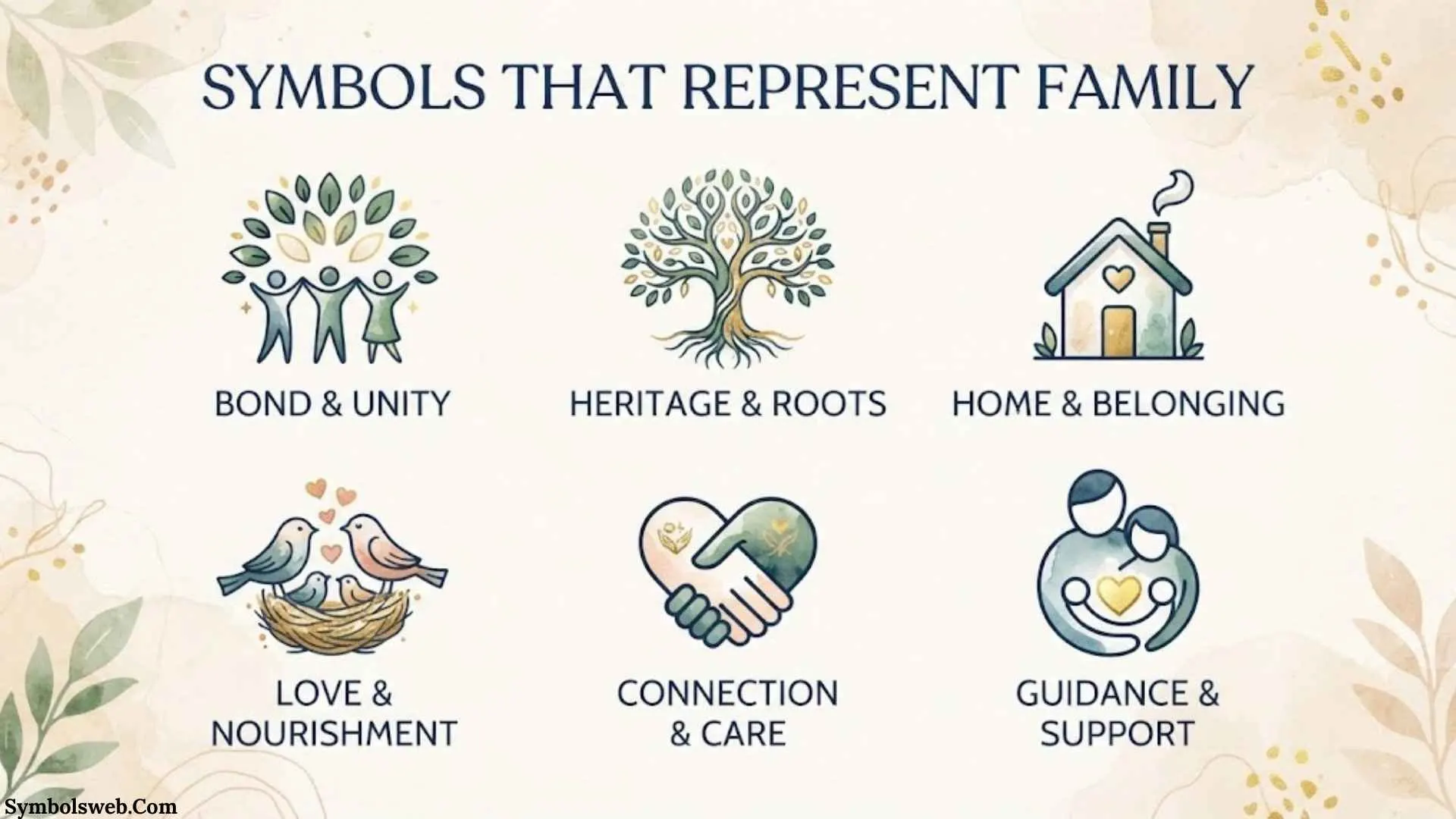
When I think about family, I think about love, connection, belonging, and the people who stand by you through every stage of life. Symbols that represent family can express these feelings in a simple but powerful way. From ancient symbols to meaningful animals, trees, and cultural designs, you can find many ways to represent the bond you share with your family.
You may be looking for a family symbol because you want a meaningful tattoo, jewelry design, artwork, gift, or personal keepsake. Whatever your reason, the right symbol can help you express something words sometimes cannot. You can choose a symbol based on its history, appearance, cultural meaning, or the personal connection it has with you and your loved ones.
In this guide, I’ll explore symbols that represent family and explain what they can mean. You’ll discover traditional, natural, spiritual, and modern symbols that can represent unity, protection, strength, love, and togetherness. As you explore these ideas, you can choose the symbol that feels most meaningful to you and reflects the unique bond your family shares.
Symbols That Represent Family: (Quick Answer)
If you’re looking for symbols that represent family, you can choose from meaningful designs such as the family tree, Celtic knot, infinity symbol, elephant, heart, and anchor. Each one can represent ideas like love, unity, strength, protection, and an unbreakable family bond.
I’d choose a symbol based on what your family means to you. For example, you can use a family tree to represent your roots and generations, while an infinity symbol can show everlasting love. You can also combine symbols to create a personal design that tells your family’s unique story.
Quick Facts About Symbols That Represent Family
| Aspect | Information |
| Origin | Ancient civilizations worldwide |
| Historical Significance | Used to honor ancestry, lineage, and kinship |
| Main Meaning | Unity, love, belonging, and connection |
| Spiritual Meaning | Interconnected souls and generational wisdom |
| Cultural Importance | Preserves heritage and family identity |
| Modern Usage | Tattoos, jewelry, family crests, home décor, and social media |
What Are Symbols That Represent Family?
Symbols that represent family are visual representations of relationships, heritage, and emotional bonds among relatives. These symbols appear in art, religion, mythology, architecture, tribal traditions, and family histories.
The idea of family symbolism dates back to the earliest human societies. Ancient clans often used animals, plants, or geometric designs to identify their family groups. These symbols helped people recognize their community, preserve traditions, and pass down stories through generations.
As civilizations evolved, family symbols became more sophisticated. Noble families developed coats of arms.Indigenous leagues used totems. Religious traditions adopted sacred images representing lineage and kinship.
Today, family symbols remain important because they provide a visual reminder of belonging, identity, and continuity. In an increasingly fast-paced world, these symbols help people stay connected to their roots.
Deep Symbolic Meaning of Symbols That Represent Family
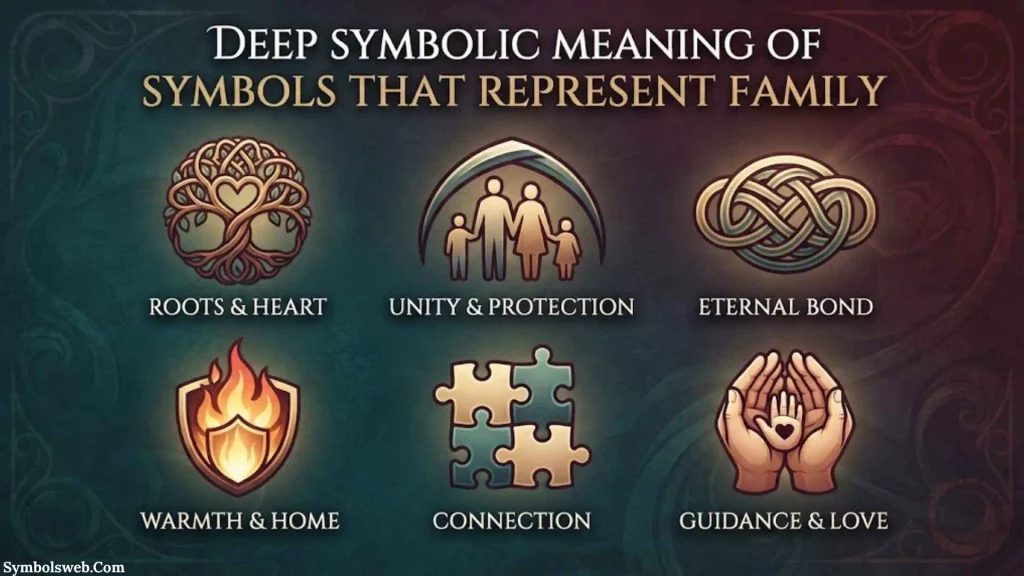
Spiritual Level
From a spiritual perspective, family symbols often represent the interconnectedness of souls.
Many traditions believe family members share spiritual lessons and karmic connections. Symbols such as the Tree of Life illustrate how every generation grows from the same roots while reaching toward new possibilities.
Family symbols can also represent:
- Divine protection
- Sacred ancestry
- Generational wisdom
- Spiritual inheritance
- Eternal connection beyond physical life
Many people use these symbols during meditation or prayer to honor ancestors and seek guidance.
Psychological Level
Psychologically, family symbols satisfy a fundamental human need for belonging.
According to the theories of psychologist Carl Jung, humans connect deeply with archetypes that appear across cultures. Family symbols often reflect universal archetypes such as:
- The Mother
- The Father
- The Ancestor
- The Protector
- The Clan
These images trigger feelings of safety, identity, and emotional security.
When people wear family-related tattoos or display family symbols in their homes, they often reinforce their sense of connection and personal history.
Cultural Level
Every culture develops symbols that express family values.
Imagine a grandmother passing down a necklace bearing a family emblem. The object becomes more than jewelry. It becomes a story, a memory, and a bridge between generations.
Family symbols often communicate:
- Loyalty
- Responsibility
- Heritage
- Respect for elders
- Community belonging
They help preserve traditions even when families move across continents and cultures.
Types and Variations of Symbols That Represent Family
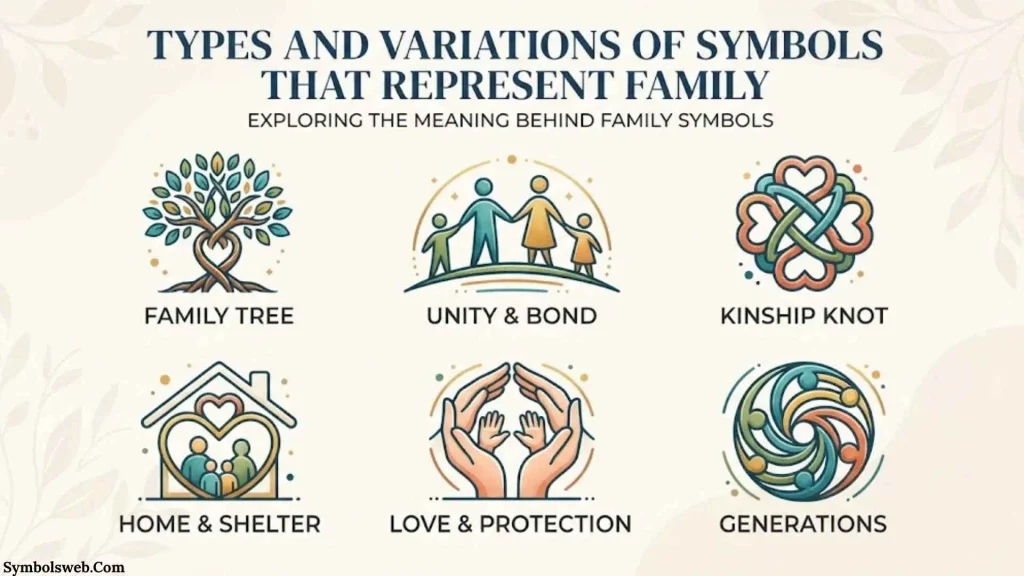
Family Tree
Visual Description: A tree with branches, leaves, and roots.
Meaning: Lineage and ancestry.
Symbolism: Every family member grows from shared roots.
Cultural Connection: Found globally in genealogy and family history.
Where It Appears:
- Family records
- Genealogy charts
- Artwork
- Home décor
Tree of Life
Visual Description: A large tree with interconnected roots and branches.
Meaning: Growth and continuity.
Symbolism: Connection between generations.
Cultural Connection: Appears in Celtic, Norse, and Eastern traditions.
Where It Appears:
- Religious art
- Spiritual teachings
- Jewelry
- Tattoos
Celtic Trinity Knot
Visual Description: Three interwoven loops with no beginning or end.
Meaning: Eternal family bonds.
Symbolism: Unity among family members.
Cultural Connection: Ancient Celtic traditions.
Where It Appears:
- Jewelry
- Wedding gifts
- Family tattoos
Circle
Visual Description: A continuous round shape.
Meaning: Wholeness and unity.
Symbolism: Family connections without end.
Cultural Connection: Universal symbol across civilizations.
Where It Appears:
- Ceremonies
- Sacred art
- Family logos
Elephant
Visual Description: Adult elephant with younger members.
Meaning: Family loyalty and protection.
Symbolism: Strong family bonds and memory.
Cultural Connection: African and Asian traditions.
Where It Appears:
- Artwork
- Folklore
- Home decorations
Wolf Pack Symbol
Visual Description: Wolves traveling together.
Meaning: Loyalty and cooperation.
Symbolism: Family protection and teamwork.
Cultural Connection: Indigenous and Northern traditions.
Where It Appears:
- Tribal stories
- Tattoos
- Modern symbolism
Ancestral Crest
Visual Description: Heraldic shield or emblem.
Meaning: Family heritage.
Symbolism: Identity and lineage.
Cultural Connection: European nobility.
Where It Appears:
- Family records
- Flags
- Historical documents
Symbols That Represent Family Across Different Cultures
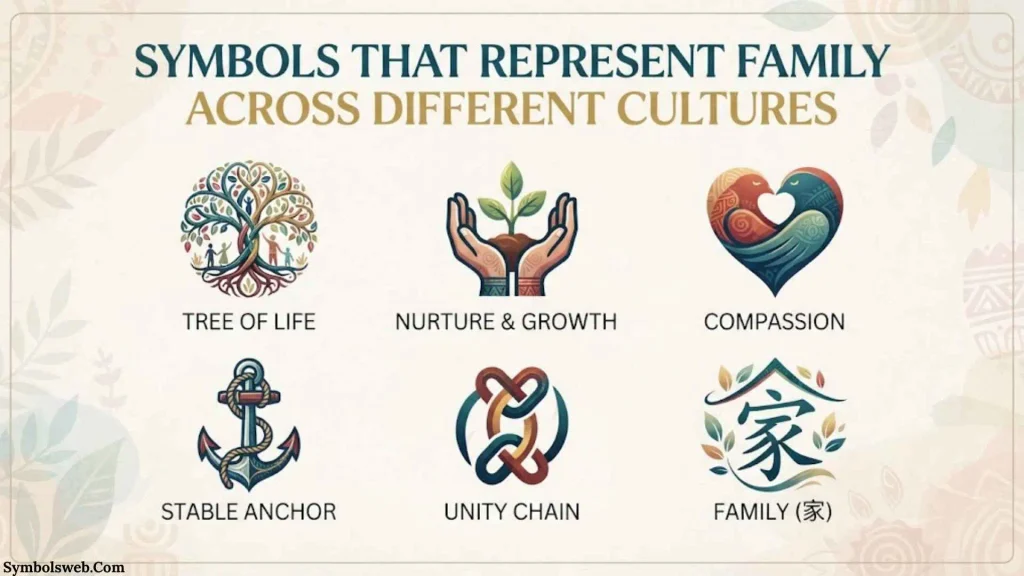
Ancient Egypt
Ancient Egyptians placed enormous importance on family continuity.
Symbols such as the scarab and family tomb imagery emphasized the belief that family relationships extended into the afterlife. Ancestors remained active participants in family life even after death.
Ancient Greece
Greek culture celebrated family through myths involving powerful family lineages.
Family honor was central to social identity. Household shrines honored ancestors, reinforcing the sacred nature of kinship.
Roman Culture
Romans viewed family as the foundation of society.
The concept of familia extended beyond parents and children to include ancestors and household members. Family symbols often appeared on rings, monuments, and household altars.
Eastern Traditions
In Chinese culture, family remains one of society’s most important values.
Ancestor tablets, family seals, and the character for family symbolize harmony, respect, and continuity.
Many Eastern philosophies teach that honoring family strengthens both society and individual character.
Indigenous Traditions
Many Indigenous communities use clan symbols and animal totems to represent family groups.
These symbols connect living members with ancestors, nature, and spiritual teachings.
Totems often communicate family responsibilities and shared identity.
Modern Interpretations
Today, family symbols are often personalized.
People combine names, birthstones, family trees, infinity signs, and meaningful animals into unique designs that celebrate their loved ones.
Similar Symbols and Their Meanings
| Symbol | Similarity to Family Symbols | Key Difference |
| Tree of Life | Represents connection | Includes spiritual growth |
| Infinity Symbol | Eternal bonds | Broader than family relationships |
| Heart | Love and affection | Focuses primarily on emotion |
| Circle | Unity and wholeness | Less focused on ancestry |
| Knot Symbols | Interconnected relationships | Often represent eternity rather than lineage |
Common Misconceptions
Many people assume all family symbols mean the same thing. In reality, some focus on ancestry, while others emphasize protection, unity, or spiritual connection.
Understanding cultural context is essential for accurate interpretation.
Symbols That Represent Family in Mythology and Folklore
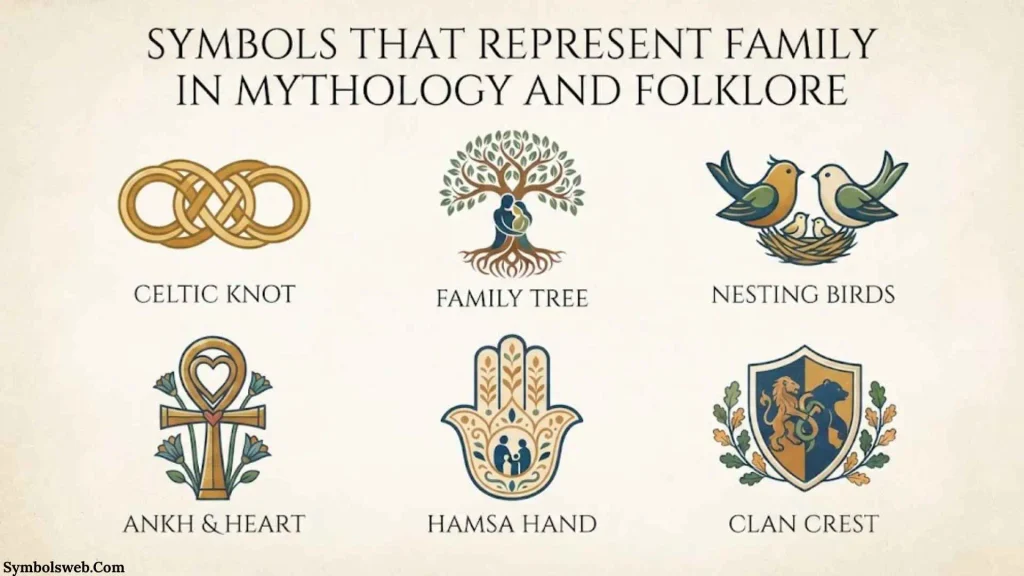
Family symbolism appears throughout mythology.
In Norse mythology, the great world tree Yggdrasil connects all realms and generations. The image mirrors the idea of a family tree connecting descendants to ancestors.
Many Native American traditions tell stories of clan animals guiding and protecting family groups.
Greek myths frequently explore family loyalty, inheritance, and generational destiny.
Folklore around the world often portrays families as sacred units protected by special symbols, animals, or ancestral spirits.
These stories helped shape how modern cultures understand family connections today.
Symbols That Represent Family in Art, Literature, Movies, and Pop Culture
Paintings
Artists frequently use trees, circles, and household scenes to symbolize family bonds.
Family portraits became especially popular during the Renaissance, preserving lineage and identity.
Literature
Classic literature often uses family symbols to explore themes of inheritance, loyalty, and belonging.
Trees, heirlooms, and ancestral homes commonly symbolize family continuity.
Poetry
Poets use family imagery to express memory, love, sacrifice, and generational connection.
Movies and Television
Modern films frequently use symbolic objects to represent family.
Examples include:
- Family photographs
- Rings
- Lockets
- Shared homes
- Ancestral artifacts
These objects visually communicate emotional bonds.
Tattoos
Family tattoos have become one of the most popular modern uses of family symbols.
Common choices include:
- Family trees
- Celtic knots
- Wolves
- Elephants
- Infinity symbols
- Names and dates
Fashion and Design
Many people wear jewelry featuring family symbols as daily reminders of loved ones.
Designers also incorporate family-inspired motifs into clothing, décor, and branding.
Spiritual and Dream Meaning of Symbols That Represent Family
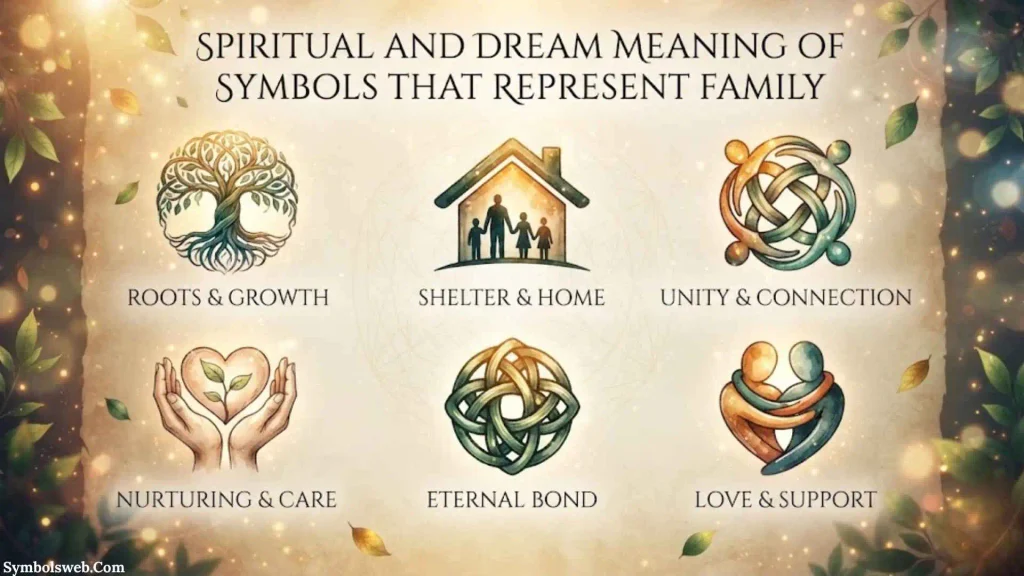
Dreams involving family symbols often reflect emotional relationships and personal growth.
Common Dream Interpretations
Family Tree
May symbolize self-discovery and ancestral wisdom.
Circle
Often suggests unity and emotional completeness.
Wolf Pack
Can indicate loyalty, support, and protection.
Elephant
May represent wisdom inherited from previous generations.
Positive Messages
- Support from loved ones
- Personal growth
- Strong foundations
- Ancestral guidance
- Emotional security
Cautionary Messages
- Family conflict
- Unresolved generational issues
- Fear of separation
- Need for stronger connections
Dream interpretation always depends on personal circumstances and emotions.
Positive and Negative Meanings of Symbols That Represent Family
| Positive Meaning | Negative Meaning |
| Love | Overdependence |
| Protection | Control |
| Loyalty | Obligation |
| Unity | Loss of individuality |
| Heritage | Attachment to the past |
| Belonging | Exclusion of outsiders |
| Support | Family pressure |
Family symbols contain both light and shadow aspects because human relationships are complex.
Why Humans Are Attracted to Symbols That Represent Family
Humans are naturally social beings.
From infancy, survival depends on connection with caregivers. Because of this, our brains are wired to value belonging and attachment.
Family symbols trigger deep emotional responses because they remind us of:
- Safety
- Love
- Identity
- Shared history
- Emotional support
Psychologists suggest these symbols activate powerful memories and collective cultural patterns that have shaped human communities for thousands of years.
A simple family tree can instantly remind someone of grandparents, childhood stories, and future generations yet to come.
That emotional depth explains why family symbols remain meaningful across cultures and eras.
Modern Uses of Symbols That Represent Family
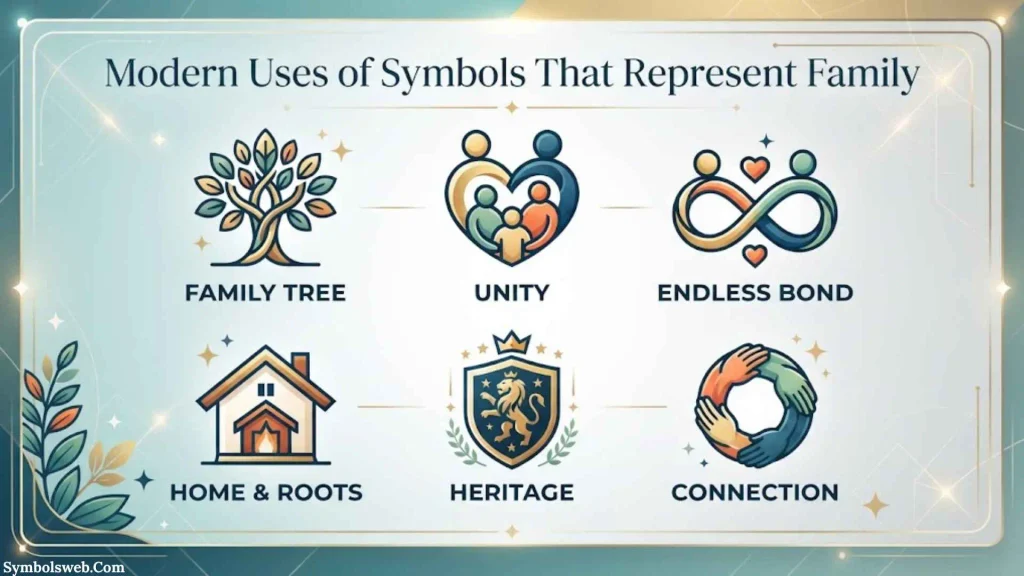
Tattoos
Family-themed tattoos remain among the most requested tattoo designs worldwide.
Jewelry
Necklaces, bracelets, and rings often feature family trees, birthstones, and symbolic knots.
Fashion
Family symbols appear on clothing and accessories as expressions of identity.
Branding
Some businesses use family symbols to communicate trust, tradition, and reliability.
Social Media
People frequently share family-inspired symbols in profiles, memorial tributes, and celebrations.
Contemporary Spirituality
Many individuals use family symbols during meditation and ancestor-honoring practices.
Home Décor
Wall art, sculptures, and personalized family trees remain popular decorative choices.
Interesting Facts About Symbols That Represent Family
- The family tree is one of the oldest family symbols still used today.
- Many ancient clans identified themselves through animal symbols.
- The Celtic knot has no visible beginning or end, symbolizing eternal connection.
- Elephants are widely admired because real elephant herds maintain strong family structures.
- Family crests became common during the Middle Ages.
- Tree symbolism appears independently in many unrelated cultures.
- Ancestor worship traditions often include special family symbols.
- Modern genealogy has revived interest in ancestral family emblems.
- Family tattoos are among the most meaningful forms of body art.
- Circular symbols appear in nearly every major civilization as representations of unity.
Frequently Asked Questions
What is the most common symbol that represents family?
The family tree is generally considered the most recognized family symbol because it visually represents ancestry, growth, and generational connections.
What animal symbolizes family?
Elephants, wolves, and bears are commonly associated with family because they demonstrate protection, loyalty, and strong social bonds.
What symbolizes family unity?
The circle, Celtic knot, and Tree of Life are among the strongest symbols of family unity and interconnectedness.
What is a spiritual symbol for family?
The Tree of Life is one of the most powerful spiritual family symbols because it represents shared roots, growth, wisdom, and eternal connection.
What flower symbolizes family?
Hydrangeas, peonies, and lilacs are often associated with family, gratitude, harmony, and enduring relationships.
Can family symbols be used in tattoos?
Yes. Family symbols are extremely popular tattoo choices because they honor loved ones, ancestry, and lifelong bonds.
Conclusion
When you choose symbols that represent family, you’re choosing more than just a beautiful design. I believe the best symbol is one that reflects the love, strength, memories, and connection you share with the people who matter most to you. Whether you prefer a family tree, Celtic knot, heart, infinity symbol, or another meaningful design, you can use it to express a bond that words may not fully capture.
I hope these ideas help you find a symbol that feels personal and meaningful to you. You can choose one for a tattoo, necklace, artwork, home decor, or a special gift. Ultimately, the right family symbol is the one that reminds you of where you come from, who you love, and the connection you’ll always carry with you.

Jordan Hayes is a writer with a passion for exploring the history, meanings, and cultural significance behind symbols from around the world. He enjoys turning complex topics into clear, engaging content that anyone can understand. Jordan is also the fictional author of The Silent Language of Ancient Marks and Hidden Symbols Beyond the Surface, two original book concepts created for his author profile. When he’s not writing, he spends time researching myths, traditions, and forgotten stories that inspire his work. His goal is to help readers discover the deeper meanings behind the symbols they encounter every day.
 Eliana Foster
 Ethan Holloway