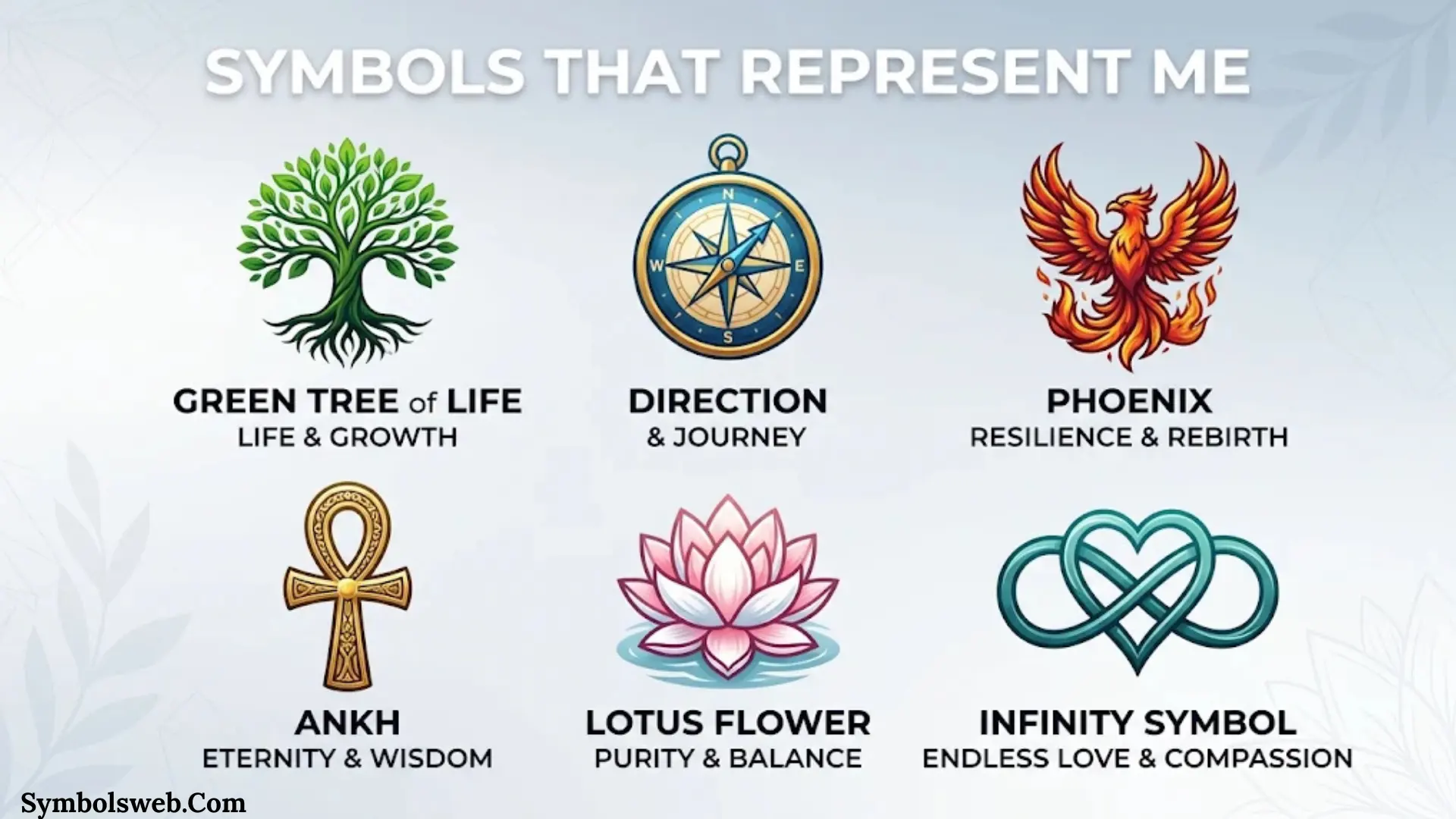
A symbol can say something about you without using a single word. It might reflect your courage, kindness, independence, beliefs, or the experiences that shaped your life. A phoenix may represent your ability to rise after difficult times. A compass might reflect your desire to find your own direction. Even a simple flower can express growth, beauty, and individuality.
The best symbols that represent you don’t have to be rare or complicated. They simply need to connect with something meaningful in your life. You might identify with an animal, a natural element, a geometric shape, an ancient symbol, or an everyday object. Its meaning can come from an established cultural tradition or from a personal memory only you understand.
This guide explores more than 75 personal symbols and their meanings. You’ll discover symbols associated with personality traits, emotions, life experiences, spirituality, and cultural traditions. You’ll also learn how to choose a symbol that reflects who you are rather than simply picking one that looks attractive.
What Are Symbols That Represent You?
Personal symbols are images, objects, patterns, or signs that express something about your identity. They can represent your personality, values, beliefs, memories, relationships, or life experiences.
For example, someone who values independence might choose an eagle. A person who has overcome difficult experiences might connect with a phoenix. Someone who treasures family could choose a tree with deep roots.
These choices help turn abstract ideas into something you can see and recognize.
Personal Symbols and Identity Symbols
A personal symbol acts like a small visual summary of something important to you. It might represent one personality trait or several parts of your life.
Consider these examples:
- A wolf might represent loyalty, independence, and strong instincts.
- A lotus flower might reflect personal growth and inner peace.
- A compass might represent purpose, direction, and confidence in your decisions.
- A heart might express compassion, affection, and emotional connection.
- A mountain might symbolize determination and the ability to face challenges.
You don’t need to fit every part of your personality into one image. One symbol can represent your values while another reflects your experiences.
Universal Symbols vs. Personal Meanings
Some symbols have well established meanings in particular cultures or traditions. The ankh, for example, represented life in ancient Egyptian writing and imagery. The scarab also had important associations with renewal and rebirth in ancient Egyptian beliefs.
Other meanings come from personal experiences. A particular songbird might remind you of a grandparent. A road might remind you of a fresh start. A simple stone could represent a difficult period you survived.
Both types of meaning can matter. However, personal interpretation doesn’t erase a symbol’s cultural or religious background. Understanding both helps you choose a symbol thoughtfully.
75+ Symbols That Represent Me and Their Meanings
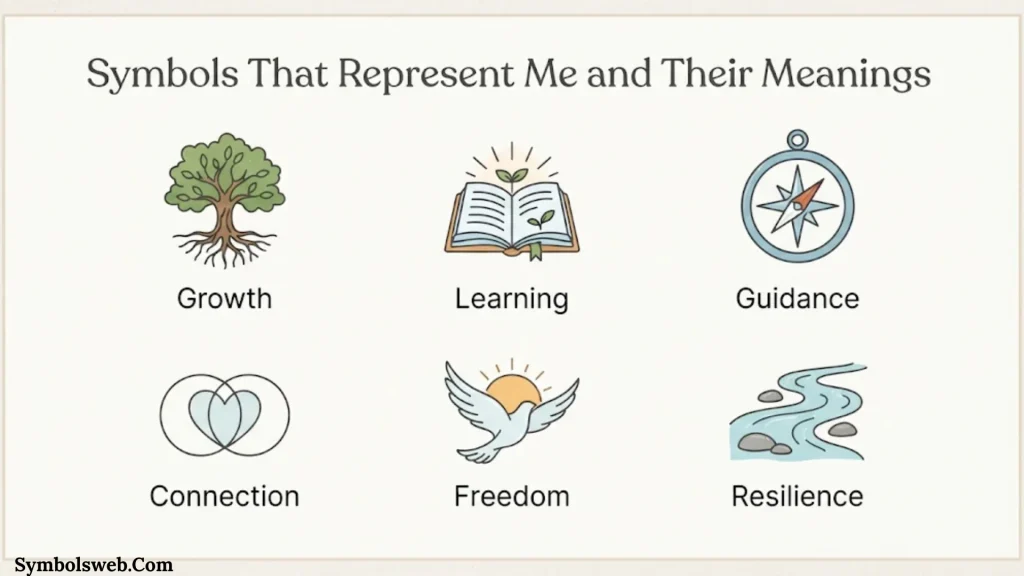
The following symbols offer ideas for representing your personality, values, emotions, and life story. Their meanings are common associations rather than fixed rules. Your own experiences may give each one a different meaning.
Animal Symbols That Represent Your Personality
Animals make powerful symbols of identity because people often associate them with recognizable qualities. Some represent strength and leadership. Others suggest wisdom, loyalty, freedom, or gentleness.
1. Phoenix: Rebirth and Resilience
The phoenix symbol represents renewal, transformation, and the ability to rise after hardship. In mythology, this legendary bird is associated with death and rebirth.
Choose the phoenix if you’ve experienced major changes and found the strength to begin again. It can represent a person who refuses to let difficult chapters define the rest of their life.
2. Butterfly: Change and Freedom
A butterfly represents transformation, freedom, beauty, and personal growth. Its life cycle offers a natural image of change, from caterpillar to chrysalis to adult butterfly.
This symbol may suit you if you’re exploring a new identity, leaving old habits behind, or becoming more confident in yourself.
3. Lion: Courage and Leadership
The lion is widely associated with courage, strength, confidence, and leadership. Its powerful presence makes it a natural choice for someone who values bravery and responsibility.
A lion may represent your willingness to stand up for others, face challenges, or lead with confidence.
4. Wolf: Loyalty and Independence
The wolf can represent loyalty, instinct, endurance, and independence. Its association with packs also makes it a fitting symbol for people who value close relationships and family bonds.
Choose the wolf if you care deeply about your trusted circle but still need room to follow your own path.
5. Eagle: Freedom and Vision
The eagle symbol often represents freedom, ambition, strength, and a broad perspective. Its ability to soar high makes it a popular image of independence and vision.
It may reflect your desire to think beyond immediate problems and work toward bigger goals.
6. Owl: Wisdom and Observation
The owl represents wisdom, knowledge, patience, and observation in many modern symbolic settings. Its quiet nature and night vision make it an appealing symbol for thoughtful people.
An owl may describe you if you prefer to listen, understand a situation, and think before making decisions.
7. Fox: Cleverness and Adaptability
The fox is associated with cleverness, quick thinking, curiosity, and adaptability. Folklore often portrays it as a resourceful animal that can find a way through difficult situations.
It may represent your ability to solve problems creatively and adjust when plans change.
8. Bear: Strength and Protection
The bear can symbolize strength, courage, protection, and resilience. It may also represent a caring nature, especially when people connect it with the protective behavior of a mother bear.
Choose this symbol if you’re strong in difficult moments and protective of the people you love.
9. Deer: Gentleness and Sensitivity
The deer often represents gentleness, grace, sensitivity, and peacefulness. It can reflect someone who values kindness and notices the emotions of others.
A deer may be a meaningful choice if you believe strength doesn’t always need to be loud.
10. Dolphin: Joy and Connection
The dolphin is often linked with playfulness, communication, intelligence, and social connection. Its lively nature makes it a fitting symbol for an outgoing and friendly personality.
It may represent your ability to bring joy into relationships and connect with people.
11. Horse: Freedom and Energy
The horse symbolizes freedom, movement, endurance, and independence in many modern interpretations. It can represent a strong desire to explore and make your own choices.
Choose a horse if you feel most like yourself when you’re moving forward rather than standing still.
12. Snake: Transformation and Renewal
The snake symbol can represent transformation, healing, wisdom, danger, or temptation depending on the culture and context. Its ability to shed its skin makes renewal a common modern association.
It may reflect a period when you’ve outgrown an old version of yourself.
13. Crow: Intelligence and Mystery
The crow often represents intelligence, curiosity, mystery, and adaptability. Crows are known for their problem-solving abilities, which makes them a useful symbol for resourceful thinkers.
This symbol may suit you if you enjoy learning, observing details, and exploring ideas others overlook.
14. Turtle: Patience and Endurance
The turtle represents patience, protection, persistence, and a steady approach to life. Its shell can also suggest personal boundaries and emotional security.
Choose this symbol if you believe progress matters more than speed.
15. Dragon: Power and Wisdom
The dragon can represent power, wisdom, protection, and strength. Its meaning changes considerably across cultures. In Chinese traditions, dragons have often carried auspicious associations rather than simply representing destructive monsters.
A dragon may reflect ambition, confidence, imagination, or a desire to protect what matters to you.
Nature Symbols That Represent Who You Are
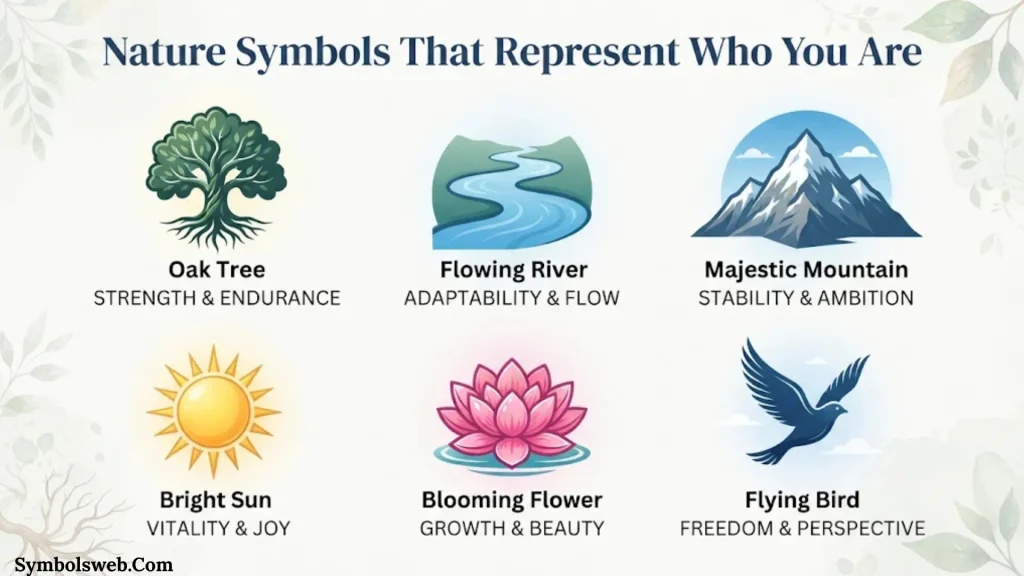
Nature offers some of the most recognizable symbols of personal growth. Plants, flowers, weather, and natural landscapes can express the way you respond to change and experience the world.
16. Lotus Flower: Growth and Inner Strength
The lotus flower is associated with purity, spiritual significance, and enlightenment in Hindu and Buddhist traditions. Its growth from muddy water also makes it a modern symbol of resilience and personal development.
Choose the lotus if you’ve learned to grow through difficult circumstances without losing your sense of purpose.
17. Tree of Life: Family and Connection
The Tree of Life represents growth, connection, continuity, and the relationship between different parts of existence. Its roots can suggest heritage while its branches can represent new opportunities.
It may suit you if family, belonging, personal development, or your connection with nature matters deeply.
18. Sun: Optimism and Vitality
The sun symbol often represents life, energy, warmth, confidence, and hope. It can reflect a cheerful personality or a person who helps others feel supported.
Choose the sun if you value optimism and try to bring light into challenging situations.
19. Moon: Reflection and Intuition
The moon represents cycles, change, reflection, and mystery in many symbolic traditions. Its changing appearance can remind you that life moves through different phases.
It may describe someone who values introspection, emotional awareness, and personal growth.
20. Stars: Hope and Inspiration
Stars often symbolize hope, guidance, dreams, and inspiration. People have also used stars for navigation, making them meaningful images of direction.
A star may represent your goals or the people who guide you through uncertain times.
21. Mountain: Strength and Determination
The mountain symbol represents endurance, stability, ambition, and overcoming obstacles. Reaching a summit can serve as a metaphor for working toward a difficult goal.
Choose a mountain if you’ve learned to keep going even when progress feels slow.
22. River: Movement and Life’s Journey
A river can represent change, movement, renewal, and the passage of time. It keeps flowing even when its path bends around obstacles.
This symbol may suit you if you value growth and understand that life rarely follows a straight line.
23. Ocean: Emotional Depth and Mystery
The ocean represents emotional depth, freedom, mystery, and vast possibilities in modern personal symbolism. Its calm surface and powerful waves can reflect different sides of human emotion.
Choose the ocean if you have a thoughtful, imaginative, or emotionally expressive personality.
24. Flower: Beauty and Individuality
A flower can represent beauty, growth, affection, and individuality. Different flowers have different cultural and historical associations, so you can choose one that reflects your own story.
A flower may suit you if you value kindness, creativity, or the freedom to grow in your own way.
25. Bamboo: Flexibility and Resilience
Bamboo is often used as a symbol of flexibility, endurance, and resilience. It bends in strong winds, which makes it a useful image of adapting without losing your foundation.
Choose bamboo if you can adjust to difficult situations while remaining true to your values.
26. Cherry Blossom: Beauty and Impermanence
The cherry blossom is strongly associated with spring in Japan. Its brief flowering period has also made it an important image of life’s temporary beauty.
It may represent your appreciation for meaningful moments and your understanding that change is part of life.
27. Koi Fish: Perseverance and Courage
The koi fish has important associations in Japanese visual and cultural traditions. In modern symbolism, it often represents perseverance, determination, and the ability to keep moving against a current.
Choose it if you believe that challenges can make you more determined.
28. Feather: Freedom and Lightness
A feather can represent freedom, lightness, hope, and spiritual connection. Its meaning depends on the bird, culture, and context.
It may reflect a desire to release emotional weight and live with greater independence.
29. Fire: Passion and Transformation
Fire represents energy, passion, warmth, purification, and transformation. It can also suggest destruction when its power becomes uncontrolled.
Choose fire if you have a passionate personality or see major life changes as opportunities to rebuild.
30. Rain: Renewal and Fresh Beginnings
Rain can represent renewal, emotional release, cleansing, and fresh beginnings. It gives life to plants and can transform a dry landscape.
It may describe someone who finds hope after a difficult period and understands that growth sometimes begins with discomfort.
Geometric and Abstract Symbols of Identity
Simple shapes can carry powerful meanings. Their clean forms make them especially useful for tattoos, logos, jewelry, artwork, and personal emblems.
31. Circle: Wholeness and Unity
The circle symbol often represents wholeness, unity, continuity, and connection. Its unbroken shape can suggest completeness and a sense of belonging.
Choose a circle if you value harmony, lasting relationships, or the idea of being comfortable with yourself.
32. Infinity Symbol: Endless Possibilities
The infinity symbol represents something without an apparent end. In personal expression, it often stands for lasting love, endless possibilities, and continuing connection.
It may suit you if you value lifelong relationships or believe personal growth never truly stops.
33. Yin Yang: Balance and Complementary Forces
The Yin Yang symbol comes from Chinese philosophy. It represents complementary forces that relate to and depend on one another.
It may express your belief that life includes different experiences and qualities that help create balance.
34. Spiral: Growth and Life Cycles
A spiral can represent development, movement, cycles, and the journey toward deeper understanding. Unlike a straight line, it suggests that growth may revisit familiar experiences from a new perspective.
Choose it if your personal journey has involved learning, reflection, and repeated transformation.
35. Triangle: Stability and Direction
A triangle can represent stability, strength, direction, or a three-part relationship. Its meaning depends on its orientation and the tradition using it.
It may suit you if you value structure, balance, or a clear sense of purpose.
36. Arrow: Progress and Ambition
An arrow often represents direction, focus, movement, and progress. It points toward a destination, making it a popular modern symbol for ambition.
Choose an arrow if you are goal-oriented and prefer to keep moving forward.
37. Broken Chains: Freedom and Independence
Broken chains are a recognizable symbol of liberation, resistance, and freedom from restrictions. They can represent independence after a difficult or limiting experience.
This symbol may reflect your determination to make your own choices and leave unhealthy situations behind.
38. Star: Guidance and Hope
A star shape can symbolize hope, ambition, achievement, and direction. Its meaning may change according to the number of points and cultural setting.
Choose a star if you want a simple reminder to keep your goals in sight.
39. Heart: Love and Compassion
The heart symbol is widely used to express love, affection, compassion, and emotional connection. Its familiar shape makes it easy to recognize across many forms of communication.
It may represent your caring nature or the relationships that shape your identity.
40. Mandala: Wholeness and Reflection
A mandala is a structured geometric design with religious and spiritual uses in Hindu and Buddhist traditions. It can serve as a focus for meditation and represent an ordered or integrated whole.
Choose a mandala if you value reflection, balance, and a sense of connection between different parts of life.
Everyday Objects That Can Represent You
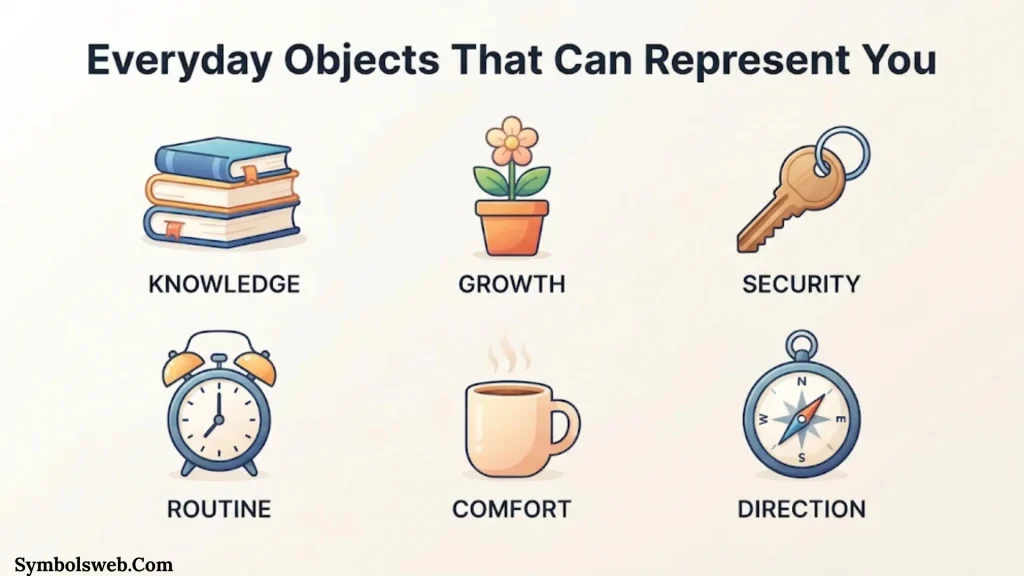
An ordinary object can become a meaningful symbol of who you are when it connects with a memory, goal, or personal value. These symbols are especially useful because they can tell a story that feels unique to you.
41. Compass: Purpose and Direction
A compass represents direction, guidance, exploration, and purpose. It can remind you to trust your values when life presents difficult choices.
Choose it if you want to stay focused on your goals without losing sight of what matters.
42. Anchor: Stability and Security
An anchor symbol represents stability, security, and staying grounded. It is also associated with maritime life and the ability to hold a vessel in place.
It may reflect your loyalty, steady nature, or connection to someone who gives you a sense of home.
43. Key: Opportunity and Discovery
A key can represent opportunity, access, knowledge, and discovery. It may symbolize finding a solution or entering a new stage of life.
Choose this symbol if you value curiosity and see learning as a way to unlock new possibilities.
44. Mirror: Self-Reflection and Identity
A mirror represents self-awareness, reflection, and the search for identity. It can remind you to understand yourself rather than rely only on other people’s opinions.
It may suit you if personal development and honest self-examination are important parts of your life.
45. Book: Knowledge and Learning
A book represents education, imagination, knowledge, and personal growth. It can also reflect a love of stories and new ideas.
Choose it if learning shapes your identity or if books have helped you understand yourself and the world.
46. Pen: Creativity and Communication
A pen can symbolize creativity, expression, communication, and storytelling. It represents the ability to turn thoughts into words and ideas into something lasting.
It may describe you if writing, teaching, or sharing your ideas is central to your personality.
47. Camera: Memories and Perspective
A camera represents memories, observation, creativity, and perspective. It captures moments that might otherwise disappear with time.
Choose it if you value experiences and enjoy noticing details that other people might miss.
48. Candle: Hope and Remembrance
A candle can represent hope, guidance, remembrance, and reflection. Its small flame often suggests that even a little light can make darkness feel less overwhelming.
It may be meaningful if you want to honor someone or remember the hope that carried you through a difficult time.
49. Watch: Time and Awareness
A watch represents time, responsibility, awareness, and the importance of each moment. It can remind you to use your time according to your values.
Choose it if you appreciate discipline or want to live more intentionally.
50. Road: Choices and Life’s Journey
A road symbolizes movement, decisions, exploration, and personal direction. A winding road can suggest uncertainty while an open road may represent freedom.
It may reflect your belief that life is a journey shaped by the choices you make.
51. Map: Exploration and Possibility
A map represents exploration, planning, discovery, and direction. It can also symbolize your desire to understand where you are and where you want to go.
Choose it if you enjoy travel, learning, or finding your own way through unfamiliar situations.
52. Ring: Commitment and Connection
A ring often represents commitment, unity, continuity, and lasting relationships. Its circular form can suggest an unbroken bond.
It may reflect your commitment to a partner, family member, personal promise, or important value.
53. Photograph: Memories and Relationships
A photograph represents memory, connection, and meaningful experiences. It can preserve a moment that still influences your identity.
Choose it if particular people, places, or milestones have shaped the person you are today.
54. Family Crest: Heritage and Ancestry
A family crest can represent ancestry, heritage, family history, and shared identity. Traditional coats of arms have specific historical rules and meanings, so not every decorative family emblem is an authentic historical crest.
This symbol may suit you if your roots and family stories are an important part of your identity.
55. Crown: Leadership and Responsibility
A crown often represents authority, leadership, achievement, and responsibility. It can express confidence, but it can also remind you that leadership involves serving others.
Choose it if you value taking responsibility and setting a positive example.
Ancient and Spiritual Symbols That Represent You
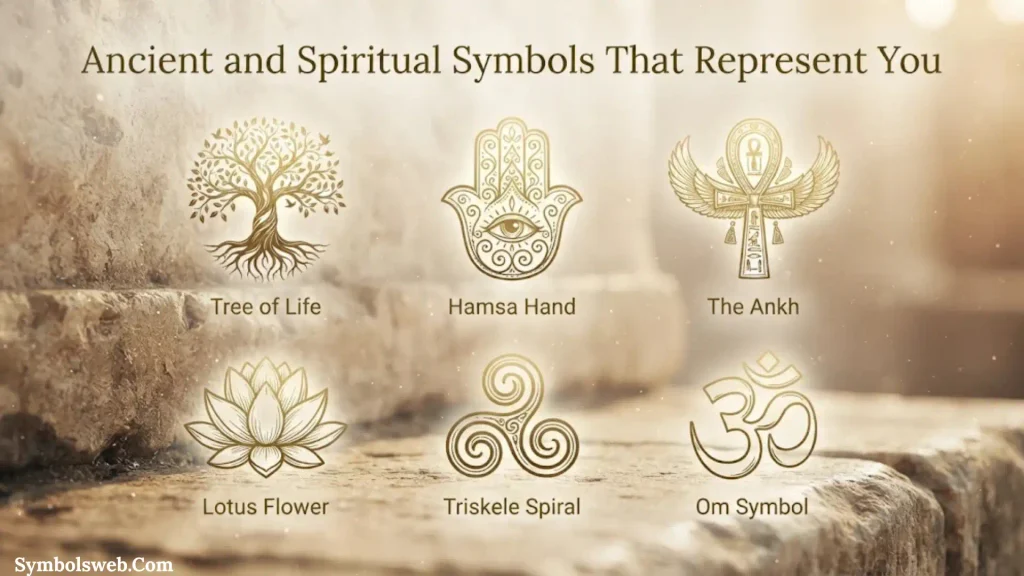
Ancient and spiritual symbols can carry meanings that developed over centuries. Some are connected to specific religious traditions, while others appear in historical art, mythology, and cultural practices.
If you choose one of these designs, learn about its background before using it as a personal emblem.
56. Ankh: Life and Continuity
The Ankh symbol is an ancient Egyptian hieroglyph associated with life. It appears in Egyptian art and religious imagery, often held by gods or presented to rulers.
It may appeal to you if you want a symbol connected with life, continuity, and the value of existence.
57. Eye of Horus: Protection and Well-Being
The Eye of Horus, also called the wedjat, was used in ancient Egypt as a protective symbol and amulet. It was associated with well-being and protection.
It may represent your interest in protection, well-being, and strength. Remember that its historical meaning is more specific than the broad modern label of a general protection symbol.
58. Scarab: Renewal and Rebirth
The scarab beetle held religious significance in ancient Egypt. Its association with the sun and the idea of new life made it an important image of regeneration and rebirth.
Choose it if you want to represent renewal, transformation, or the beginning of a new chapter.
59. Celtic Knot: Connection and Continuity
A Celtic knot is a decorative pattern made from interlacing lines. Modern interpretations often associate these designs with continuity, connection, and eternity.
It may represent family bonds, lasting relationships, or the way different experiences connect throughout your life. Specific knot designs do not all have one universally agreed ancient meaning.
60. Triskelion: Movement and Threefold Patterns
The triskelion is an ancient three-part spiral or rotational design found in several historical contexts. Modern interpretations often connect it with movement, cycles, and threefold ideas.
Choose it if you see your identity as a balance of three important qualities, such as mind, body, and spirit.
61. Om: Sacred Sound and Spiritual Reality
Om, also written Aum, is a sacred sound and symbol in Hindu traditions. It also appears in other Indian religious contexts, including Buddhism and Jainism, with meanings shaped by each tradition.
It may be meaningful if your spiritual practice or connection with Hindu philosophy is an important part of your identity.
62. Hamsa Hand: Protection and Good Fortune
The Hamsa Hand is a palm-shaped symbol used in several religious and cultural traditions. It is commonly associated with protection and good fortune, although its interpretations vary.
Choose it only after understanding the tradition and context that matter to you.
63. Cross: Faith and Sacrifice
The Christian cross is a central symbol of Christianity. It represents the crucifixion of Jesus and is associated with faith, sacrifice, salvation, and hope.
It may reflect your Christian faith or the role of spiritual commitment in your life.
64. Laurel Wreath: Achievement and Honor
The laurel wreath was associated with victory and honor in ancient Greek and Roman traditions. It was used in different forms to recognize achievement and distinction.
Choose it if you value hard work, accomplishment, and the effort behind success.
65. Valknut: Norse Symbolism and the Afterlife
The Valknut is a design made of three interlocking triangles found in some Viking Age contexts. It is often discussed in connection with Norse mythology and Odin, but its exact historical meaning remains uncertain.
It may interest you if you study Norse history or mythology. Avoid presenting one modern interpretation as a proven explanation.
66. Helm of Awe: Protection in Icelandic Tradition
The Helm of Awe, or Ægishjálmur, appears in later Icelandic magical tradition. It is associated with protection and power in texts and magical practices.
It may appeal to people interested in Icelandic folklore and historical magical symbols. It should not be treated as a universally used Viking Age emblem.
67. Chinese Dragon: Power and Good Fortune
The Chinese dragon has a long history in Chinese art and culture. It is commonly associated with power, auspiciousness, authority, and good fortune.
Choose it if you feel connected to Chinese culture or appreciate its traditional associations with strength and prosperity.
68. Japanese Crane: Longevity and Good Fortune
The crane appears in Japanese art and cultural traditions. It is commonly associated with longevity and good fortune.
It may represent your hope for a long, meaningful life or your appreciation for patience and grace.
69. Buddhist Dharma Wheel: Teachings and the Path
The Dharma Wheel, also known as the Dharmachakra, represents the Buddha’s teachings in Buddhist traditions. Its spokes are interpreted in different ways across Buddhist schools.
It may be meaningful if Buddhist teachings, ethical living, or the pursuit of liberation are important to you.
70. Eye of Providence: Divine Watchfulness
The Eye of Providence is an eye often shown within a triangle and sometimes surrounded by rays of light. In some Christian and later Western contexts, it represents divine providence or God’s watchfulness.
Choose it if this religious or historical association reflects your beliefs. Its meaning should not be reduced to one universal interpretation.
Symbols That Represent Different Personality Traits
Sometimes choosing a symbol becomes easier when you start with a personality trait. Think about the qualities people notice in you and the values you want to express.
The following combinations can help you find symbols that represent your personality.
| Personality trait | Symbols to consider | What they express |
| Strength and courage | Lion, bear, phoenix, mountain, dragon | Bravery, resilience, determination |
| Intelligence and wisdom | Owl, fox, crow, book, tree | Knowledge, observation, thoughtful decisions |
| Loyalty and love | Wolf, heart, ring, infinity symbol | Commitment, affection, connection |
| Independence and freedom | Eagle, horse, butterfly, broken chains | Self-reliance, freedom, individuality |
| Peace and kindness | Deer, lotus, dove, olive branch | Compassion, calmness, harmony |
| Creativity and imagination | Pen, camera, spiral, star | Original thinking, expression, inspiration |
| Patience and perseverance | Turtle, bamboo, mountain, koi fish | Endurance, flexibility, steady progress |
| Confidence and leadership | Lion, crown, eagle, sun | Responsibility, ambition, self-belief |
| Sensitivity and empathy | Deer, heart, moon, flower | Emotional awareness, kindness, understanding |
Symbols That Represent Strength and Courage
If you’re brave, determined, or protective, consider symbols that communicate resilience.
- Lion: Confidence and leadership.
- Bear: Protection and physical or emotional strength.
- Phoenix: The ability to recover after hardship.
- Mountain: Standing firm when life becomes difficult.
- Dragon: Power, courage, and determination.
- Fire: Passion and the strength to create change.
Symbols That Represent Wisdom and Intelligence
If you enjoy learning and thinking deeply, symbols of knowledge may describe you better than symbols of physical strength.
- Owl: Wisdom and observation.
- Fox: Cleverness and adaptability.
- Crow: Intelligence and problem-solving.
- Book: Learning and knowledge.
- Tree: Growth and accumulated experience.
- Mirror: Self-awareness and reflection.
Symbols That Represent Love and Loyalty
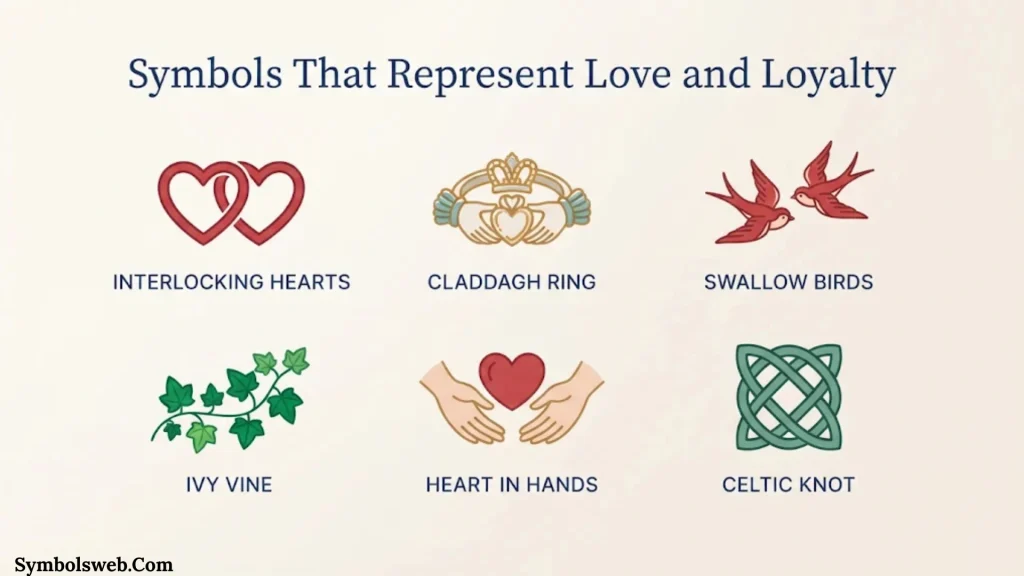
Some people define themselves through their relationships and commitment to others.
- Heart: Love and compassion.
- Wolf: Loyalty and connection.
- Infinity symbol: Lasting relationships.
- Ring: Commitment and unity.
- Celtic knot: Interconnection and continuity.
- Tree of Life: Family roots and belonging.
Symbols That Represent Freedom and Independence
If independence is one of your strongest values, choose an image that suggests movement, space, and personal choice.
- Eagle: Freedom and vision.
- Horse: Independence and movement.
- Butterfly: Transformation and freedom.
- Broken chains: Liberation from restrictions.
- Feather: Lightness and freedom.
- Open road: New experiences and personal direction.
Symbols That Represent Peace and Kindness
A peaceful personality doesn’t need a loud symbol. Gentle images can express compassion and emotional strength.
- Dove: Peace and hope.
- Lotus: Spiritual growth and purity.
- Deer: Gentleness and sensitivity.
- Olive branch: Peace and reconciliation.
- Circle: Unity and wholeness.
- Water: Calmness and renewal.
Symbols That Represent Your Life Experiences and Emotions
Your personality isn’t shaped only by natural traits. Relationships, difficult experiences, personal achievements, and major changes also influence who you become.
A symbol can help you remember an important chapter without explaining your entire story to everyone.
Symbols of Personal Growth
If you’ve learned from your experiences and become more confident, consider these choices:
- Butterfly: Becoming a different version of yourself.
- Tree of Life: Developing strong roots and reaching new heights.
- Spiral: Continuous learning and personal development.
- Lotus: Growing through difficult conditions.
- Bamboo: Adapting while staying grounded.
Symbols of Transformation and Rebirth
Major life changes can make you feel like a different person. These symbols can represent that transformation.
- Phoenix: Rising after a difficult experience.
- Snake: Renewal and transformation.
- Butterfly: Moving into a new stage of life.
- Scarab: Rebirth in ancient Egyptian symbolism.
- Fire: Change, energy, and transformation.
Symbols of Healing and Recovery
Healing doesn’t always mean returning to the person you were before. Sometimes it means learning to live differently and becoming stronger through self-understanding.
Consider these symbols:
- Lotus: Growth and spiritual development.
- Water: Renewal and emotional release.
- Tree: Stability and continued growth.
- Crescent moon: Change and new phases.
- Phoenix: Recovery and renewed strength.
Symbols of Hope and New Beginnings
If you’re entering a new chapter, choose something that reminds you to keep looking forward.
- Sunrise: A fresh start.
- Stars: Hope and guidance.
- Candle: Light during uncertain times.
- Spring flower: New growth and possibility.
- Phoenix: Renewal after an ending.
Symbols of Survival and Resilience
Some symbols represent the quiet strength required to keep going.
- Mountain: Endurance through difficult situations.
- Bear: Strength and protection.
- Turtle: Patience and persistence.
- Phoenix: Recovery and renewal.
- Bamboo: Flexibility under pressure.
Symbols of Protection and Security
If you value safety, boundaries, and emotional stability, these symbols may connect with your personality.
- Hamsa Hand: Protection and good fortune in several traditions.
- Eye of Horus: Protection and well-being in ancient Egyptian symbolism.
- Anchor: Stability and security.
- Turtle: Protection and patience.
- Shield: Defense, courage, and boundaries.
Symbols of Family and Connection
Family and relationships can become central parts of personal identity. These symbols may help express that connection.
- Heart: Love and affection.
- Tree of Life: Family roots and relationships.
- Infinity symbol: Lasting bonds.
- Wedding ring: Commitment and partnership.
- Celtic knot: Connection and continuity.
Symbols of Ambition and Success
If you’re motivated by achievement, progress, and personal goals, consider:
- Arrow: Direction and ambition.
- Eagle: Vision and independence.
- Mountain: Reaching challenging goals.
- Laurel wreath: Achievement and honor.
- Compass: Purpose and direction.
Spiritual Symbols That Represent Your Beliefs
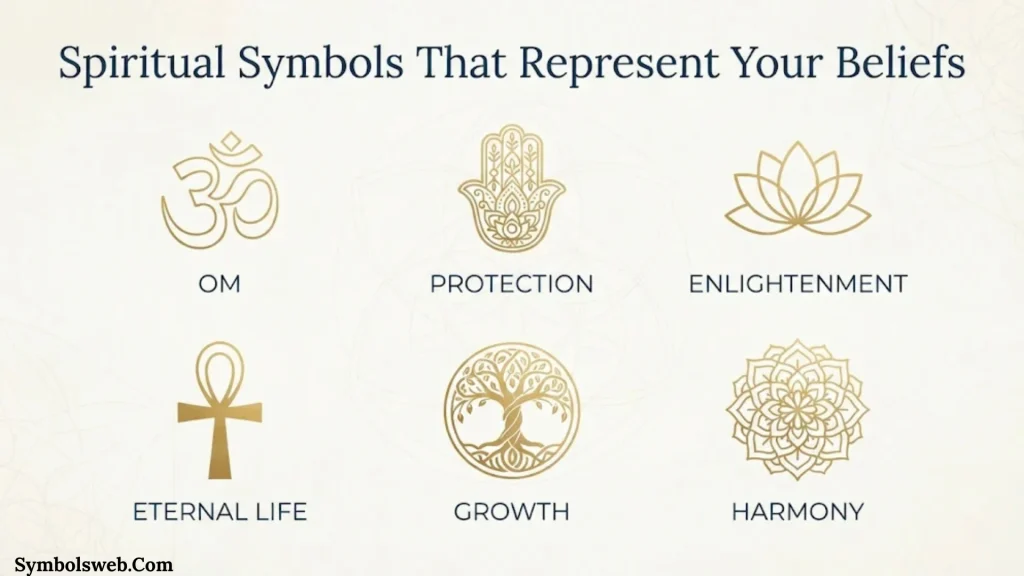
Spirituality can influence the way you understand yourself and the world. If faith, reflection, or a search for deeper meaning matters to you, a spiritual symbol may feel especially personal.
However, these symbols often belong to specific traditions. Their historical meanings deserve respect.
Symbols of Faith and Spiritual Connection
- Cross: Christian faith and the significance of Jesus’s crucifixion.
- Om: A sacred sound and symbol in Hindu traditions.
- Dharma Wheel: The Buddha’s teachings and the Buddhist path.
- Ankh: Life in ancient Egyptian symbolism.
Symbols of Protection and Guidance
- Hamsa Hand: Protection and good fortune in several cultural and religious settings.
- Eye of Horus: Well-being and protection in ancient Egypt.
- Helm of Awe: Protection and power in later Icelandic magical tradition.
Symbols of Enlightenment and Self-Awareness
- Lotus: Spiritual significance and enlightenment in Hindu and Buddhist traditions.
- Mandala: Sacred geometry, contemplation, and religious practice.
- Bodhi Tree: Associated with the Buddha’s enlightenment.
- Dharma Wheel: The teachings and path of Buddhism.
Symbols of Balance and Universal Connection
- Yin Yang: Complementary forces in Chinese philosophy.
- Celtic knot: Interlacing patterns often interpreted today as connection and continuity.
- Spiral: Movement and cycles.
- Sacred geometry: Geometric patterns used in various spiritual, artistic, and philosophical contexts.
Symbols of Eternal Life and Continuity
- Ankh: Life and eternal existence in ancient Egyptian symbolism.
- Infinity symbol: Endless continuation in modern mathematical and personal contexts.
- Ouroboros: A serpent or dragon eating its own tail, commonly interpreted as a cycle of renewal and return.
- Tree of Life: Connection, continuity, and growth in different cultural traditions.
Cultural Symbols That Can Represent Your Identity
Your cultural background may be an important part of your personal identity. Symbols connected with family heritage, language, religion, and history can help express that connection.
However, cultural symbols rarely have one universal meaning. Traditions also change over time.
Egyptian Symbols
Ancient Egyptian art and religious practices used many symbols to express ideas about life, protection, kingship, and the afterlife.
- Ankh: Life.
- Eye of Horus: Protection and well-being.
- Scarab: Renewal and rebirth.
These meanings are documented by educational institutions such as the British Museum.
Celtic Symbols
Celtic art includes intricate patterns and interlacing designs that appear in manuscripts, metalwork, and stone carving.
- Celtic knot: Often interpreted today as connection and continuity.
- Triskelion: A three-part spiral design associated with movement and recurring patterns.
- Celtic spiral: A decorative motif often connected with cycles and movement in modern interpretations.
If you choose a Celtic design, research the particular pattern rather than assuming every knot has the same ancient meaning.
Norse Symbols
Norse symbols appear in historical objects, mythology, and later Scandinavian traditions.
- Valknut: A design of three interlocking triangles with an uncertain historical meaning.
- Helm of Awe: A symbol found in later Icelandic magical tradition.
- Yggdrasil: The world tree in Norse mythology.
These symbols may interest you if you feel connected to Norse stories, Scandinavian history, or mythology. Be careful with modern interpretations that claim certainty where historical evidence is limited.
Greek Symbols
Greek mythology and ancient Greek culture offer several recognizable symbols.
- Laurel wreath: Victory and honor.
- Owl of Athena: Associated with Athena and wisdom.
- Caduceus: A staff with two entwined serpents associated with Hermes.
The caduceus is often confused with the Rod of Asclepius, which has one serpent and is more directly connected with medicine in Greek tradition.
Chinese Symbols
Chinese traditions include symbols connected with philosophy, prosperity, nature, and good fortune.
- Chinese dragon: Power, auspiciousness, and good fortune.
- Yin Yang: Complementary forces and balance.
- Bamboo: Flexibility and endurance in many cultural and artistic interpretations.
Japanese Symbols
Japanese visual culture includes natural motifs with rich artistic and cultural associations.
- Cherry blossom: Spring and the temporary beauty of life.
- Koi fish: A popular image associated with perseverance and determination.
- Crane: Longevity and good fortune.
Native American Symbols
Some animals, including turtles, eagles, and bears, have important meanings in particular Indigenous traditions. However, Native American cultures include many distinct nations, languages, histories, and belief systems.
A turtle may have a specific significance in one nation’s traditions but a different meaning elsewhere. An eagle may also hold sacred importance that should not be reduced to a generic symbol of freedom.
If your heritage is connected to an Indigenous nation, look for information from that community or its cultural institutions. Avoid treating all Native American symbols as interchangeable.
How to Find a Symbol That Represents You
You don’t need to choose the most popular symbol or the one with the most impressive meaning. Start with what matters to you.
The following steps can help you find a symbol that feels personal and authentic.
Identify Your Strongest Personality Traits
Think about the qualities that describe you most accurately. You might be patient, ambitious, thoughtful, independent, creative, protective, or compassionate.
Try choosing three traits rather than writing a long list.
For example:
| Your personality traits | Possible symbols |
| Brave, confident, protective | Lion, bear, shield |
| Quiet, thoughtful, observant | Owl, moon, book |
| Creative, curious, imaginative | Butterfly, pen, spiral |
| Independent, adventurous, ambitious | Eagle, horse, compass |
| Kind, patient, understanding | Deer, lotus, water |
| Loyal, caring, family-oriented | Wolf, heart, Tree of Life |
This approach gives you a practical starting point.
Think About Your Personal Values
Your values often reveal more about your identity than your appearance or habits.
Ask yourself what matters most:
- Is freedom more important to you than security?
- Do you value family and loyalty?
- Does personal growth motivate you?
- Is kindness one of your strongest beliefs?
- Do you prioritize faith, honesty, or independence?
- Do you want to achieve something meaningful?
Once you identify your values, match them with symbols that express similar ideas.
Reflect on Your Life Experiences
Your life story may offer the most meaningful inspiration.
Think about a challenge you overcame, a person who changed your life, or an experience that helped you understand yourself.
For example, someone who rebuilt their confidence after a difficult period might choose a phoenix. Someone who moved to a new country might connect with a compass or an open road. A person who has always felt supported by family might choose a tree with strong roots.
A symbol becomes more meaningful when it reminds you of something real.
Match Symbols With Your Emotions
Different symbols can express different emotional experiences.
- Hope: Stars, sunrise, candle.
- Love: Heart, rose, infinity.
- Peace: Dove, lotus, circle.
- Confidence: Lion, sun, crown.
- Healing: Water, lotus, phoenix.
- Freedom: Eagle, feather, broken chains.
- Strength: Mountain, bear, dragon.
Choose the emotion that best reflects what you want your symbol to communicate.
Consider Your Culture and Heritage
A symbol may look attractive but carry a meaning that you don’t understand. Before choosing a religious or cultural design, research its background.
Look at the history, traditional use, and communities connected with it. This is especially important when selecting symbols for tattoos, jewelry, or permanent artwork.
Choose Something That Still Feels Meaningful
Ask yourself a few simple questions:
- Does this symbol reflect something important about me?
- Do I understand its established cultural meaning?
- Will it still matter to me in a few years?
- Does it represent my values or merely look attractive?
- Can I explain why I chose it?
You don’t need to explain your symbol to anyone else. It only needs to feel meaningful to you.
How to Use Symbols to Express Your Identity
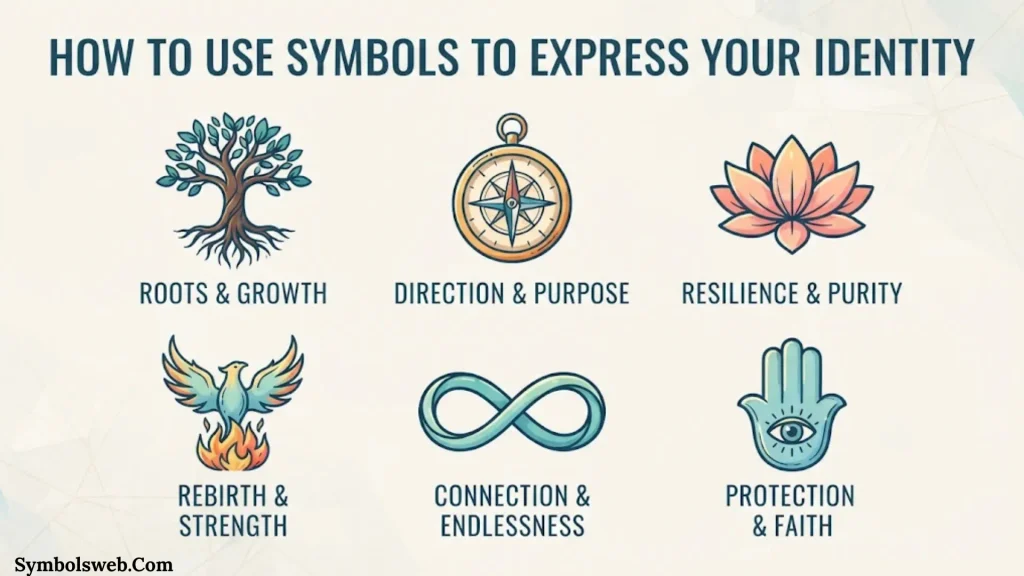
Once you’ve chosen a symbol, you can use it in different ways. The right approach depends on whether you want a visible expression of identity or a private reminder.
Personal Symbol Tattoos
A tattoo can turn a meaningful image into a lasting expression of identity. Popular choices include the phoenix, butterfly, lotus, compass, infinity symbol, and Tree of Life.
Before getting a tattoo, consider its size, placement, cultural meaning, and long-term significance. Research the artist’s work and make sure the design is something you genuinely want.
You can also combine two symbols. For example, a mountain and a sunrise might represent overcoming obstacles and starting again.
Jewelry and Accessories
Jewelry offers a simple way to keep a meaningful symbol close.
You might choose:
- A compass pendant for direction and purpose.
- An infinity necklace for lasting connection.
- A lotus ring for personal growth.
- An anchor bracelet for stability.
- A family pendant for heritage and belonging.
A small object can carry a deeply personal story.
Art and Personal Emblems
You can create an original emblem by combining shapes, colors, animals, and natural elements.
For example, a personal design might include a tree for family, a star for hope, and a circle for unity. The combination can express more than any single element alone.
You can use this design in artwork, digital profiles, stationery, or a personal logo.
Clothing and Personal Style
Patterns, accessories, and meaningful designs can express your identity without making a dramatic statement.
A small symbol on a shirt, a pendant, or a carefully chosen accessory can reflect your interests and values.
If the design comes from a cultural or religious tradition, make sure you understand its significance and use it respectfully.
Journals and Personal Spaces
Not every symbol needs to be displayed publicly.
You can add meaningful images to a journal, vision board, desk, or personal space. A photograph might remind you of someone important. A compass might encourage you to stay focused on a goal.
These private reminders can help you reflect on your values and the person you want to become.
Do Symbols Have Different Meanings Across Cultures?
Yes. A symbol can have different meanings depending on the culture, historical period, religion, and context in which people use it.
A dragon offers a clear example. In many Chinese traditions, it carries positive associations with power and good fortune. In some European stories, dragons appear as dangerous creatures that heroes must defeat.
The lotus also has different associations across cultures. It has important religious significance in Hinduism and Buddhism. Its modern use as a general symbol of personal growth may not capture the full meaning it holds in those traditions.
Even familiar shapes can carry different messages. A color, animal, or geometric pattern may communicate one idea in one community and something else elsewhere.
When choosing a cultural symbol:
- Research its historical background.
- Learn whether it has religious or sacred significance.
- Look for information from reliable cultural institutions.
- Avoid assuming that every community interprets it the same way.
- Separate established historical meanings from modern personal interpretations.
Your personal connection can be meaningful while the symbol’s cultural history remains important.
Why Do People Connect With Personal Symbols?
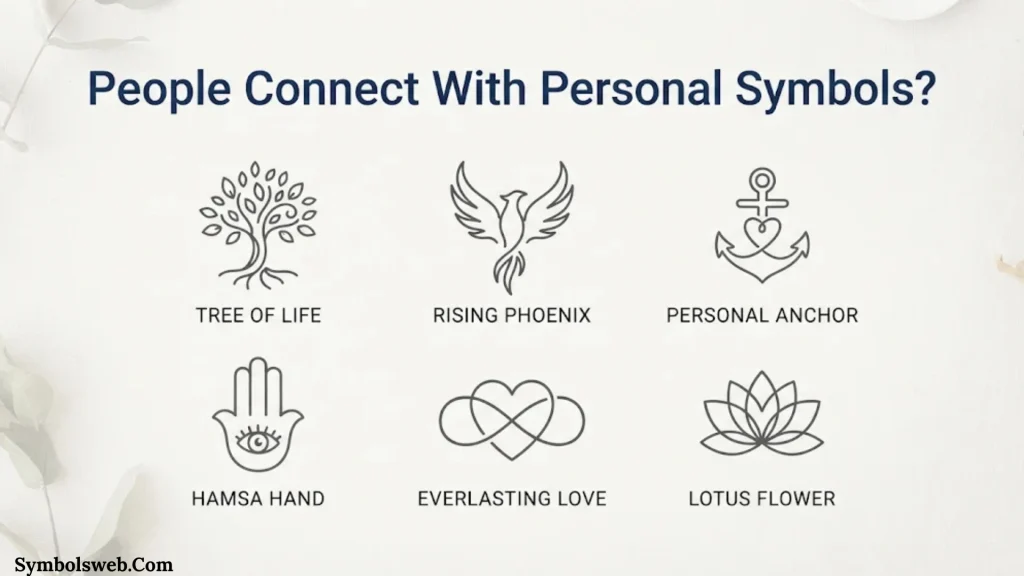
People use symbols because images can express ideas that are difficult to explain in ordinary language. A simple design can remind you of an important person, a personal belief, or a major turning point.
Here are some reasons personal symbolism matters.
Symbols Help Express Identity
A symbol can communicate personality traits and values. An eagle might reflect independence while a heart might express compassion.
You can use these images to show others what matters to you or to remind yourself of your priorities.
Symbols Create Emotional Connections
A symbol may remind you of a person, place, or experience. Its importance often comes from the memories attached to it.
For example, a flower might remind someone of a parent who loved gardening. Another person may choose a mountain because climbing one helped them regain confidence.
Symbols Make Abstract Ideas Visible
Concepts such as freedom, courage, hope, and belonging are difficult to hold in your hands. Symbols give these ideas a recognizable form.
A broken chain can communicate liberation. A candle can represent hope. A compass can express direction.
Symbols Support Self-Reflection
Choosing a personal symbol encourages you to think about your personality and experiences.
You may discover that the symbol you initially liked doesn’t reflect your values. Another image might connect more deeply with your life story.
This process can help you understand what matters most.
Symbols Help Communicate Shared Values
People also use symbols to express belonging to a family, community, religion, or cultural tradition.
A shared symbol can create a sense of connection because people recognize the ideas and history behind it.
Symbols With Both Positive and Negative Meanings
Not every symbol carries only one meaning. The same image can communicate different ideas depending on its cultural background, context, and use.
| Symbol | Positive associations | Other possible associations |
| Snake | Renewal, healing, wisdom | Danger, temptation, deception |
| Fire | Passion, warmth, transformation | Destruction, anger, danger |
| Crow | Intelligence, adaptability | Mystery, death, bad omens |
| Moon | Reflection, intuition, cycles | Uncertainty, change |
| Wolf | Loyalty, instinct, endurance | Isolation, aggression |
| Rose | Love, beauty, affection | Loss, pain, thorns |
| Mirror | Self-awareness, reflection | Vanity, self-doubt |
| Storm | Change, renewal | Chaos, uncertainty |
| Dragon | Power, protection, good fortune in some traditions | Danger or destruction in other stories |
These differences don’t make a symbol less meaningful. They show why context matters.
Before choosing a design, learn about its history and decide which interpretation connects with your identity.
Frequently Asked Questions About Symbols That Represent Me
What Is the Best Symbol to Represent Yourself?
The best symbol is one that reflects your personality, values, or life experiences. A phoenix may represent resilience, an eagle may express freedom, and a lotus may reflect personal growth. Choose the image that feels most meaningful to you rather than relying on popularity.
What Symbol Represents Your Personality?
Your personality can be represented by different symbols depending on your strongest traits. An owl may suit a thoughtful person, a lion may represent confidence, and a butterfly may reflect creativity and change. Think about the qualities that describe you most accurately.
What Are Some Unique Symbols That Describe Who You Are?
Some distinctive choices include a compass, spiral, crow, bamboo, triskelion, key, and Tree of Life. Their meanings can connect with purpose, intelligence, growth, discovery, and personal development. You can also create an original emblem by combining symbols that represent different parts of your identity.
What Symbol Represents Individuality?
A butterfly, star, arrow, or unique geometric design can represent individuality. These symbols may express independence, creativity, and the freedom to follow your own path. An original personal emblem can be especially meaningful because it reflects your individual experiences.
What Symbol Represents Personal Growth?
The butterfly, lotus flower, Tree of Life, bamboo, and spiral are common choices for representing personal growth. Each can express change, development, resilience, or the process of learning. The lotus also has established spiritual significance in Hindu and Buddhist traditions.
What Symbol Represents Strength and Courage?
The lion, bear, phoenix, mountain, and dragon are popular symbols of strength and courage. The lion often represents leadership, while the phoenix is associated with renewal after hardship. A mountain can represent endurance and determination.
What Symbol Represents Freedom and Independence?
The eagle, horse, butterfly, feather, and broken chains can represent freedom and independence. The eagle often expresses vision, while broken chains communicate liberation from restrictions. Choose the symbol that best matches your understanding of freedom.
What Symbol Represents Healing and Hope?
A lotus flower, phoenix, candle, sunrise, or tree can represent healing and hope. A candle may remind you of light during difficult times, while a phoenix can express recovery and renewal. The lotus also carries important spiritual meanings in several Asian traditions.
What Symbol Represents Rebirth and New Beginnings?
The phoenix and scarab are strong choices for representing rebirth. The butterfly can also represent transformation and a new stage of life. In ancient Egyptian symbolism, the scarab was connected with renewal and new life.
What Symbol Represents Wisdom and Intelligence?
The owl, book, crow, and Eye of Horus are possible choices depending on the meaning you want to express. The owl is commonly associated with wisdom in modern symbolism. The Eye of Horus has a specific historical connection with protection and well-being in ancient Egypt.
What Animals Represent Different Personality Traits?
Different animals can represent different qualities:
- Lion: courage and leadership.
- Wolf: loyalty and independence.
- Owl: wisdom and observation.
- Fox: cleverness and adaptability.
- Deer: gentleness and sensitivity.
- Eagle: freedom and vision.
- Bear: strength and protection.
- Butterfly: transformation and growth.
- Turtle: patience and endurance.
- Dolphin: communication and social connection.
These are common symbolic associations, not scientific personality classifications.
Can You Have More Than One Personal Symbol?
Yes. You can have several personal symbols because one image may not express every part of your identity. A compass might represent your ambition, a heart might reflect your relationships, and a phoenix might remind you of your resilience. Different symbols can represent different chapters of your life.
How Do You Choose a Symbol That Represents You?
Start by identifying your strongest personality traits, values, and important life experiences. Then explore symbols with related meanings. Research their cultural backgrounds and choose one that feels personally significant. You can also create a combination of symbols to express a more complete picture of yourself.
Can a Personal Symbol Have a Meaning Only You Understand?
Absolutely. A symbol can have an established cultural meaning and a separate personal meaning. For example, a particular flower might remind you of someone you love. Other people may see a simple flower, but you understand the memory behind it.
Why Do People Use Symbols to Express Their Identity?
People use symbols to communicate personality, beliefs, emotions, and experiences. Images can make abstract ideas easier to recognize and remember. They also help people express connections with family, culture, religion, and personal values.
Conclusion: Choose a Symbol That Reflects Who You Are
The most meaningful symbols that represent you are connected to your real personality, values, beliefs, and experiences. An eagle might express your independence. A lotus might represent your growth. A phoenix could remind you that difficult experiences don’t have to determine your future. Even a simple compass can capture your desire to find your own direction.
You don’t need to choose just one symbol or follow a popular trend. Take time to understand what matters most to you. Explore different meanings, consider their cultural backgrounds, and choose an image that still feels meaningful when you look at it years from now. Your symbol doesn’t have to explain your entire identity. It only needs to represent a part of you that matters.

Hi, I’m Ethan Holloway, and I’ve always believed that a few meaningful words can change the way we think, feel, and live. I enjoy collecting timeless quotes, studying their deeper meanings, and sharing inspiring messages that help people stay motivated through every stage of life.
Over the years, I’ve explored thousands of famous sayings from writers, leaders, philosophers, and everyday people. My goal is to make wisdom easy to understand and useful for everyone.
Books by Ethan Holloway
- The Power of Everyday Quotes
- Words That Inspire Greatness
 Jordan Hayes
 Eliana Foster