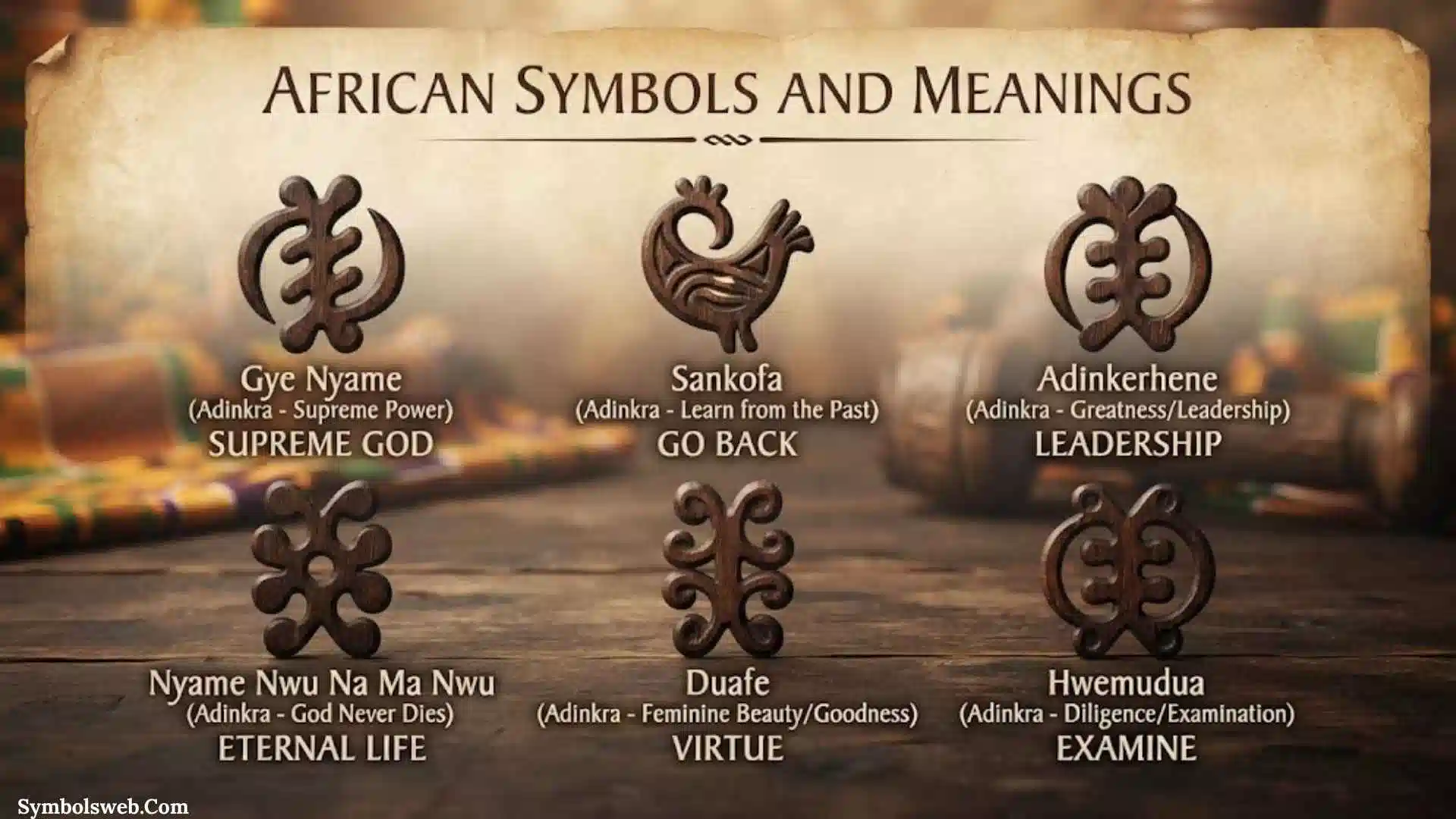
African symbols and meanings reveal a rich world of wisdom, spirituality, identity, and cultural heritage.Across the African continent, symbols have been used for centuries to communicate ideas that words alone cannot fully express.They tell stories about life, courage, leadership, unity, love, and the relationship between humanity and the divine.
If carved into wood, woven into textiles, painted on walls, or worn as jewelry, these symbols continue to inspire people around the world. Understanding their meanings offers a fascinating glimpse into African history, psychology, and spiritual traditions.
Quick Answer
African symbols are visual representations used throughout African cultures to communicate spiritual beliefs, moral values, historical knowledge, social identity, and philosophical concepts. The most famous examples are Adinkra symbols from Ghana, which express ideas such as wisdom, strength, unity, resilience, and faith through powerful visual designs.
Quick Facts About African Symbols and Meanings
| Aspect | Information |
| Origin | Various African civilizations, especially West Africa |
| Historical Significance | Used to communicate cultural values, history, and beliefs |
| Main Meaning | Wisdom, identity, community, spirituality, and life lessons |
| Spiritual Meaning | Connection between humanity, ancestors, nature, and the divine |
| Cultural Importance | Preserves traditions, stories, and social values |
| Modern Usage | Tattoos, fashion, branding, jewelry, education, and art |
What Are African Symbols?
African symbols are visual signs that represent ideas, teachings, values, and beliefs. They serve as a symbolic language that has been passed down through generations.
One of the most recognized collections of African symbols is the Adinkra system of the Akan people of present-day Ghana and Côte d’Ivoire. These symbols were traditionally stamped onto cloth and used during important ceremonies.
However, African symbolism extends far beyond Adinkra. Different cultures across the continent developed their own symbolic systems, each reflecting local beliefs, environments, and traditions.
Historically, symbols played a crucial role in societies where oral storytelling was highly valued. They helped preserve wisdom, teach moral lessons, and strengthen cultural identity.
Over time, these symbols evolved from traditional uses into modern forms of artistic and personal expression. Today, they appear in architecture, education, fashion, logos, tattoos, and digital design.
Deep Symbolic Meaning of African Symbols
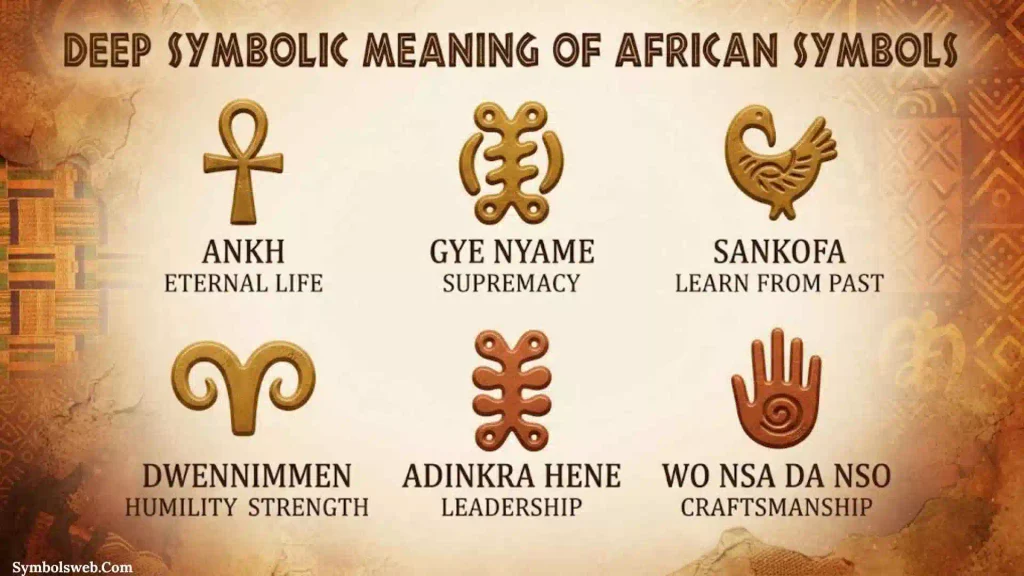
Spiritual Level
African symbols often represent the unseen forces that shape life. Many symbolize the relationship between people, nature, ancestors, and spiritual powers.
In traditional African spirituality, life is viewed as interconnected. A symbol might represent divine protection, ancestral guidance, balance, fertility, or harmony.
Many symbols encourage inner growth and remind individuals of their responsibilities to family, community, and future generations.
Psychological Level
From a psychological perspective, African symbols connect with universal human experiences.
Many reflect themes that psychologist Carl Jung described as archetypes, including:
- The Wise Elder
- The Hero
- The Caregiver
- The Creator
- The Protector
Symbols resonate emotionally because they transform complex ideas into memorable images. A single design can communicate courage, resilience, hope, or wisdom without requiring lengthy explanations.
Humans naturally seek meaning through visual patterns, making symbols powerful tools for emotional and psychological connection.
Cultural Level
African symbols strengthen social bonds and cultural identity.
For example, symbols displayed during ceremonies can communicate respect, leadership, family values, or community responsibilities.
Stories associated with symbols teach younger generations about ethics, history, and cultural traditions. In this way, symbols become living lessons that continue to shape society.
Imagine a grandmother explaining a symbol to her grandchild. She is not simply describing a design. She is passing on generations of wisdom and collective memory.
Types and Variations of African Symbols
Sankofa
Visual Description: A bird looking backward while moving forward.
Meaning: Learn from the past.
Symbolism: Wisdom gained through reflection.
Cultural Connection: Akan tradition.
Where It Appears: Art, education, jewelry, tattoos, and cultural programs.
Gye Nyame
Visual Description: A circular and flowing design.
Meaning: “Except for God.”
Symbolism: Divine supremacy and faith.
Cultural Connection: Ghanaian spirituality.
Where It Appears: Religious art, architecture, and clothing.
Dwennimmen
Visual Description: Two ram’s horns.
Meaning: Humility combined with strength.
Symbolism: True power requires wisdom and restraint.
Cultural Connection: Akan philosophy.
Where It Appears: Textiles, carvings, and jewelry.
Fawohodie
Visual Description: Stylized interconnected shapes.
Meaning: Independence and freedom.
Symbolism: Liberation and self-determination.
Cultural Connection: West African social values.
Where It Appears: Educational and cultural materials.
Eban
Visual Description: Fence-like structure.
Meaning: Safety and security.
Symbolism: Family protection.
Cultural Connection: Home and community life.
Where It Appears: Decorative arts and architecture.
African Symbols Across Different Cultures
Ancient Egypt
Ancient Egyptian civilization used some of the world’s most recognizable symbols.
Examples include:
- Ankh for life
- Eye of Horus for protection
- Scarab beetle for rebirth
These symbols influenced religious practices, art, and governance for thousands of years.
Ancient Greece
Although not African, Greek travelers and scholars interacted with North African civilizations, especially Egypt.
Many Greek philosophical ideas absorbed symbolic influences related to wisdom, divine order, and sacred geometry.
Roman Culture
Roman contact with North Africa encouraged exchanges of artistic and symbolic traditions.
Roman mosaics and architecture in Africa often blended local and Roman imagery.
Eastern Traditions
African and Eastern cultures share symbolic themes such as:
- Harmony
- Balance
- Spiritual growth
- Connection with nature
Both traditions often use symbols as tools for meditation and philosophical reflection.
Indigenous African Traditions
Indigenous African cultures developed thousands of unique symbols connected to:
- Animals
- Nature
- Ancestors
- Community
- Leadership
- Fertility
These remain among the most authentic expressions of African cultural identity.
Modern Interpretations
Today, African symbols are embraced globally.
People use them to express:
- Personal growth
- Cultural pride
- Spiritual awareness
- Social justice
- Identity
Their meanings continue to evolve while maintaining their historical roots.
Similar Symbols and Their Meanings
| Symbol | Main Meaning | Similar To | Key Difference |
| Sankofa | Learning from the past | Phoenix | Focuses on wisdom rather than rebirth |
| Gye Nyame | Divine power | Cross | Emphasizes God’s supremacy |
| Ankh | Life | Tree of Life | More closely tied to ancient Egypt |
| Dwennimmen | Strength and humility | Lion symbols | Includes balance and restraint |
| Eban | Protection | Shield symbols | Focuses on family security |
Common Misconceptions
Many people assume all African symbols come from a single tradition. In reality, Africa contains thousands of ethnic groups and cultural systems, each with unique symbolic languages.
Another misconception is that symbols are purely decorative. Historically, they often carried profound spiritual, political, and educational significance.
African Symbols in Mythology and Folklore
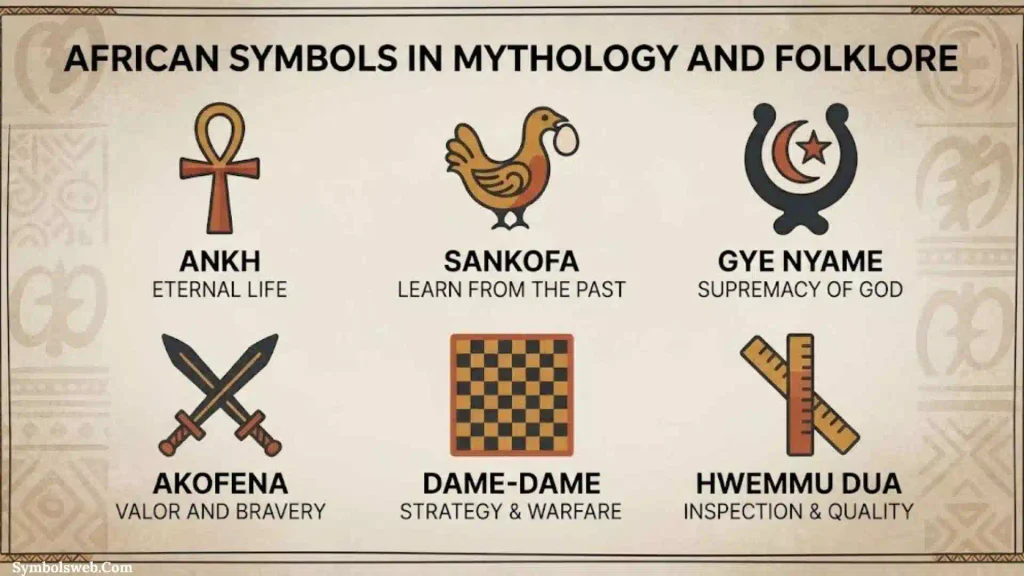
African folklore is filled with symbolic storytelling.
Many tales feature animals representing human qualities.
For example:
- The lion symbolizes leadership.
- The tortoise symbolizes wisdom.
- The spider symbolizes intelligence and creativity.
- The elephant symbolizes strength and memory.
One famous figure in West African folklore is Anansi the Spider. His stories teach lessons about cleverness, responsibility, and human nature.
Symbols appearing in these stories helped audiences remember important teachings and moral lessons.
Over centuries, folklore transformed symbols into powerful cultural icons that remain meaningful today.
African Symbols in Art, Literature, Movies and Pop Culture
Paintings
African artists use traditional symbols to explore identity, heritage, and social issues.
Literature
Writers often incorporate symbols to express themes of freedom, resilience, memory, and cultural continuity.
Poetry
Poets use symbolic imagery to connect readers with ancestral wisdom and emotional experiences.
Movies
African-inspired symbols appear in films that explore heritage, leadership, and cultural identity.
They often represent a character’s journey, transformation, or connection to community.
Television
Documentaries and historical programs frequently feature traditional symbols when discussing African history and culture.
Tattoos
Many people choose African symbols as tattoos to represent:
- Strength
- Faith
- Personal growth
- Family values
- Cultural pride
Fashion
African-inspired designs have become influential worldwide.
Symbols appear on:
- Clothing
- Scarves
- Jewelry
- Accessories
Modern Design
Graphic designers and brands use African symbols because they communicate powerful messages through simple visual forms.
Spiritual and Dream Meaning of African Symbols
Dreams involving African symbols often reflect personal growth and self-discovery.
Common interpretations include:
Positive Messages
- Spiritual awakening
- Increased wisdom
- Protection
- Inner strength
- Connection to heritage
- Personal transformation
Cautionary Messages
- Ignoring important lessons
- Losing connection with values
- Neglecting family relationships
- Resisting personal growth
During meditation, individuals may focus on symbols as visual reminders of desired qualities such as courage, patience, or balance.
Positive and Negative Meanings of African Symbols
| Positive Meaning | Negative Meaning |
| Wisdom | Pride when wisdom is ignored |
| Strength | Aggression when strength lacks compassion |
| Leadership | Abuse of power |
| Freedom | Isolation from community |
| Protection | Fear of change |
| Tradition | Resistance to healthy growth |
| Faith | Blind dependence without action |
Symbols often contain both light and shadow. Their meaning depends on how the values they represent are expressed in daily life.
Why Humans Are Attracted to African Symbols
Humans are naturally drawn to symbols because they simplify complex ideas.
A single image can communicate emotions, beliefs, and experiences that might require hundreds of words.
African symbols are especially powerful because they combine:
- Storytelling
- Philosophy
- Spirituality
- Community values
- Personal identity
Psychologically, symbols help people create meaning in their lives.
They connect individuals to something larger than themselves, whether that is family, culture, history, or spiritual belief.
Many people feel a deep emotional response because these symbols reflect universal human experiences such as love, resilience, hope, and belonging.
Modern Uses of African Symbols
Tattoos
People choose symbols like Sankofa and Gye Nyame to represent personal journeys and spiritual beliefs.
Jewelry
Necklaces, bracelets, and rings often feature symbolic designs connected to strength, protection, or wisdom.
Fashion
African symbols inspire both traditional and contemporary clothing.
Branding
Businesses use symbolic imagery to communicate values such as trust, unity, and innovation.
Social Media
Symbols frequently appear in digital artwork and cultural awareness campaigns.
Contemporary Spirituality
Many individuals incorporate African symbols into meditation and personal growth practices.
Home Decor
Wall art, sculptures, and textiles featuring traditional symbols help create meaningful living spaces.
Personal Expression
People use symbols to celebrate heritage, identity, and personal values.
Interesting Facts About African Symbols
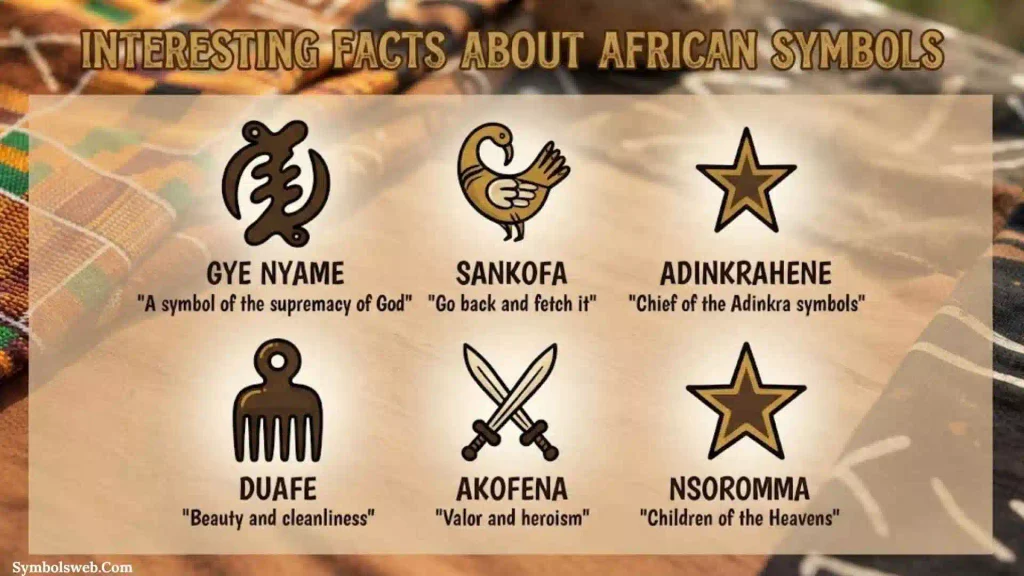
- The Adinkra symbol system contains dozens of unique symbols, each with a distinct meaning.
- Sankofa is one of the most recognized African symbols worldwide.
- Some African symbols are centuries old and remain in active use today.
- Traditional cloth makers often used symbols to communicate social messages.
- Ancient Egyptian symbols influenced artistic traditions far beyond Africa.
- Many African symbols combine spiritual and practical teachings.
- Symbols were historically used to preserve knowledge before widespread literacy.
- Certain symbols were reserved for royalty or community leaders.
- Modern tattoo culture has increased global awareness of African symbolism.
- New interpretations continue to emerge as symbols enter contemporary art and design.
Frequently Asked Questions
What are the most famous African symbols?
The most famous African symbols include Sankofa, Gye Nyame, Dwennimmen, Eban, the Ankh, and the Eye of Horus.
What does Sankofa mean?
Sankofa means “go back and get it.” It teaches that understanding the past helps create a better future.
Are African symbols spiritual?
Many African symbols have spiritual meanings connected to ancestors, divine power, protection, balance, and personal growth.
Can anyone use African symbols?
Yes, but understanding their cultural origins and meanings shows respect for the traditions from which they come.
What is the difference between Adinkra symbols and other African symbols?
Adinkra symbols belong specifically to the Akan people of Ghana and Côte d’Ivoire, while African symbolism includes thousands of symbolic traditions across the continent.
Why are African symbols still popular today?
They remain relevant because they communicate timeless values such as wisdom, resilience, unity, faith, and cultural identity.
Conclusion
African symbols and meanings represent far more than beautiful designs. They are visual expressions of wisdom, spirituality, history, and human experience. Across generations, these symbols have preserved stories, guided communities, and inspired personal growth.
If viewed through a cultural, psychological, or spiritual lens, they remind us that powerful truths can often be communicated through a single image. Their enduring legacy continues to connect people with the lessons of the past while inspiring hope for the future.

Hi, I’m Ethan Holloway, and I’ve always believed that a few meaningful words can change the way we think, feel, and live. I enjoy collecting timeless quotes, studying their deeper meanings, and sharing inspiring messages that help people stay motivated through every stage of life.
Over the years, I’ve explored thousands of famous sayings from writers, leaders, philosophers, and everyday people. My goal is to make wisdom easy to understand and useful for everyone.
Books by Ethan Holloway
- The Power of Everyday Quotes
- Words That Inspire Greatness
 Jordan Hayes
 Eliana Foster