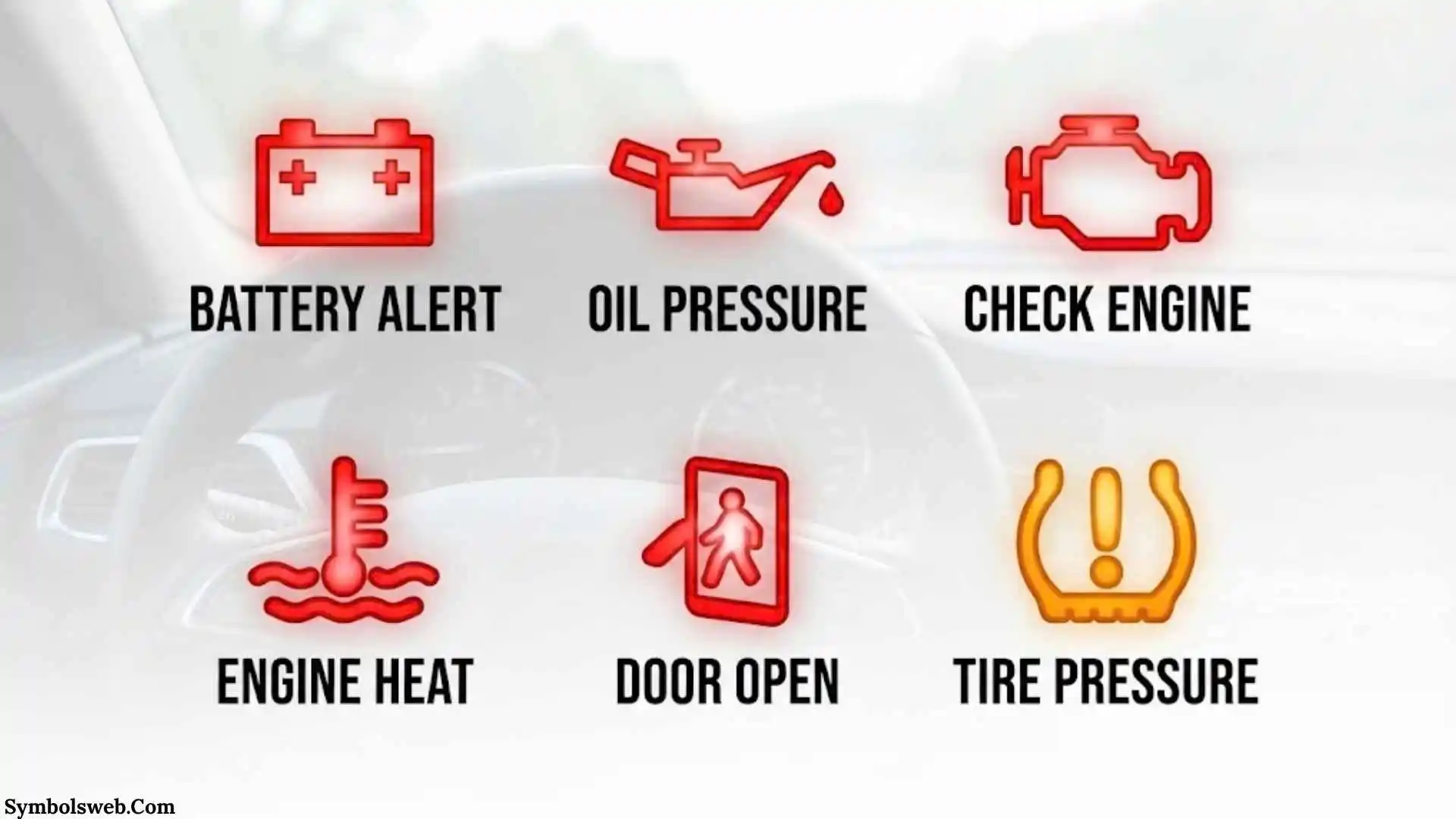
Car warning symbols are more than just glowing icons on your dashboard. They are your vehicle’s way of communicating important information about safety, performance, and potential problems. Many drivers feel anxious when an unfamiliar symbol suddenly appears, yet understanding these indicators can prevent expensive repairs and even save lives.
From ancient warning signs used by civilizations to modern digital dashboards, humans have always relied on symbols to communicate urgent messages quickly. In this guide, you’ll discover the meanings, history, psychology, cultural significance, and practical importance of car warning symbols.
Quick Answer
Car warning symbols are visual indicators displayed on a vehicle’s dashboard to alert drivers about system status, maintenance needs, or mechanical problems. These symbols use universally recognized designs and colors to communicate important information quickly, helping drivers maintain safety and prevent vehicle damage.
Quick Facts About Car Warning Symbols
| Aspect | Information |
| Origin | Early automotive instrument panels in the early 20th century |
| Historical Significance | Developed to provide universal vehicle safety communication |
| Main Meaning | Alerts drivers to vehicle conditions, faults, or maintenance needs |
| Spiritual Meaning | Symbolically represents awareness, caution, and guidance |
| Cultural Importance | Recognized globally regardless of language barriers |
| Modern Usage | Found in cars, trucks, motorcycles, hybrid vehicles, and electric vehicles |
What Are Car Warning Symbols?
Car warning symbols are standardized visual indicators displayed on a vehicle’s dashboard. They provide information about the health and operation of various systems, including the engine, brakes, battery, tires, and safety features.
Before dashboards became digital, vehicles relied mainly on gauges and mechanical indicators. As automobiles became more complex during the twentieth century, manufacturers needed a simple way to communicate problems quickly.
Symbols became the perfect solution because they transcend language barriers. A driver in Japan, Germany, Pakistan, or the United States can recognize many of the same warning lights.
Today, modern vehicles contain dozens of warning symbols connected to sensors and onboard computers. These systems constantly monitor vehicle performance and notify drivers when attention is required.
Deep Symbolic Meaning of Car Warning Symbols
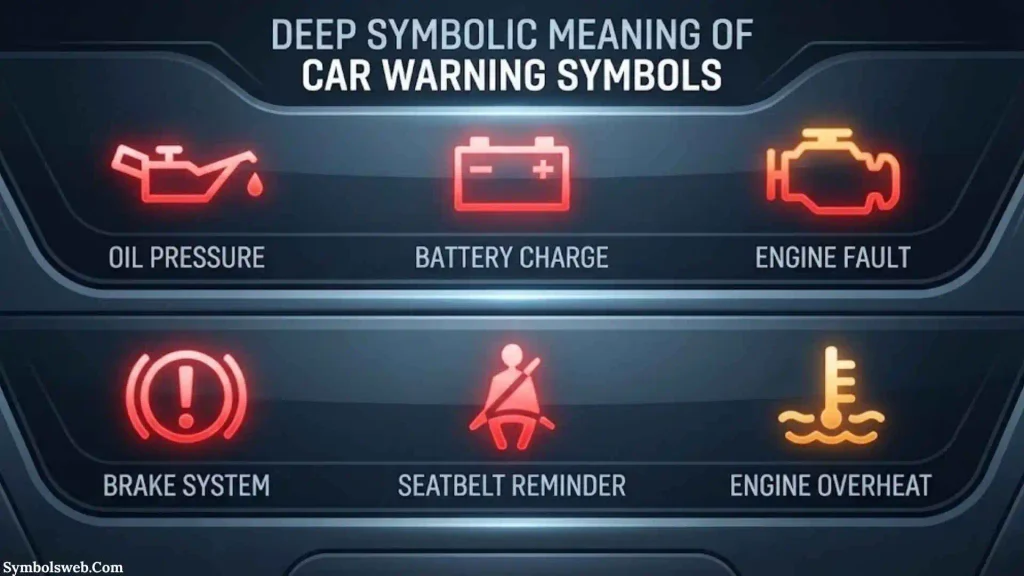
Although car warning symbols are practical tools, they also carry deeper symbolic significance.
Spiritual Level
Spiritually, warning symbols represent guidance and awareness.
Many traditions teach that warnings appear before major challenges arise. In this sense, dashboard symbols mirror life’s subtle signals. They encourage attention before problems become serious.
The illuminated warning light can symbolize:
- Awakening
- Awareness
- Prevention
- Protection
- Personal responsibility
Just as drivers must respond to dashboard alerts, individuals often benefit from paying attention to warning signs in their personal lives.
Psychological Level
Psychologically, warning symbols activate immediate attention.
According to cognitive psychology, humans naturally respond to visual alerts because our brains evolved to detect danger quickly.
The colors used in car warning symbols are particularly powerful:
- Red signals urgency and danger.
- Yellow or amber suggests caution.
- Green indicates normal operation.
- Blue often represents active systems.
Swiss psychiatrist Carl Jung discussed archetypal symbols that trigger universal reactions. Warning symbols function similarly by activating instinctive responses linked to survival and safety.
Cultural Level
Across cultures, warning signs symbolize wisdom and foresight.
Whether ancient sailors reading storm clouds or modern drivers reading dashboard lights, people rely on symbolic messages to avoid danger and make informed decisions.
The dashboard becomes a modern version of humanity’s oldest survival tool: symbolic communication.
Types and Variations of Car Warning Symbols
Check Engine Light
Visual Description: Engine-shaped icon
Meaning: Engine or emissions system issue
Symbolism: Hidden problems requiring investigation
Cultural Connection: Often associated with uncertainty because multiple issues can trigger it
Where It Appears: Most modern vehicles
Battery Warning Light
Visual Description: Battery symbol with positive and negative terminals
Meaning: Charging system malfunction
Symbolism: Energy depletion and power interruption
Where It Appears: Dashboard instrument cluster
Oil Pressure Warning Light
Visual Description: Oil can icon
Meaning: Low oil pressure
Symbolism: Lack of lubrication and support
Where It Appears: Engine monitoring systems
Brake Warning Light
Visual Description: Circle with exclamation mark or “BRAKE”
Meaning: Brake system issue
Symbolism: Need to stop and reassess
Where It Appears: All passenger vehicles
Tire Pressure Monitoring System (TPMS)
Visual Description: Horseshoe-shaped tire with exclamation mark
Meaning: Low tire pressure
Symbolism: Instability and imbalance
Where It Appears: Modern vehicles equipped with TPMS
Coolant Temperature Warning Light
Visual Description: Thermometer over waves
Meaning: Engine overheating
Symbolism: Excess stress and overheating conditions
Airbag Warning Light
Visual Description: Person seated with a circle representing an airbag
Meaning: Airbag system malfunction
Symbolism: Reduced protection
ABS Warning Light
Visual Description: ABS letters inside a circle
Meaning: Anti-lock braking system issue
Symbolism: Loss of advanced safety support
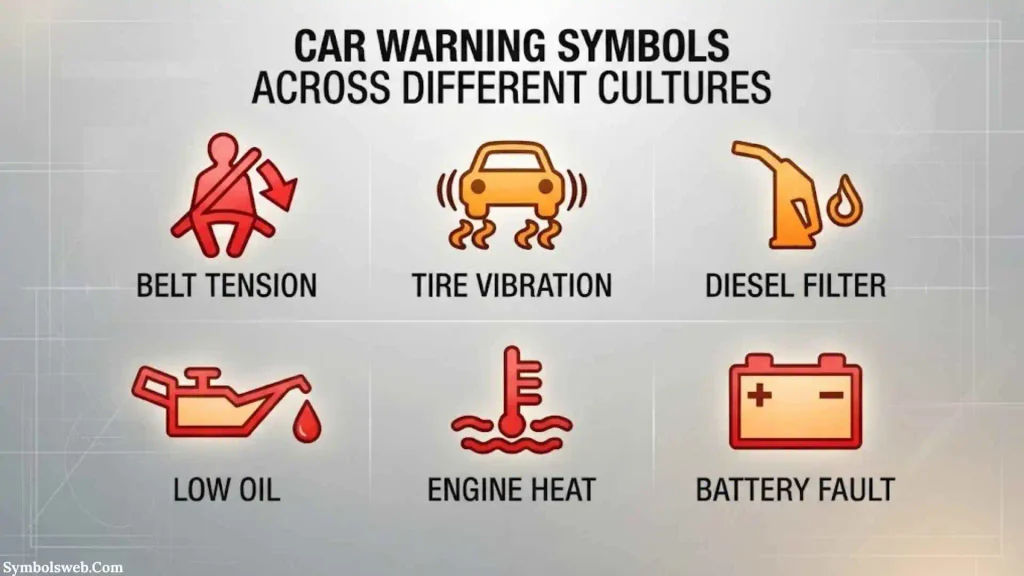
Car Warning Symbols Across Different Cultures
Ancient Egypt
Ancient Egypt used symbolic communication extensively through hieroglyphics. Much like dashboard symbols today, these visual signs conveyed complex information without words.
Ancient Greece
Ancient Greece valued symbolic imagery in navigation and warfare. Visual warnings often indicated danger zones, storms, or military threats.
Roman Culture
The Roman Empire relied on standards, signals, and symbols to coordinate vast transportation and communication networks.
Eastern Traditions
In many Eastern philosophies, warning signs symbolize balance and harmony. Ignoring signs of imbalance often leads to larger problems, much like ignoring a dashboard warning light.
Indigenous Traditions
Many Indigenous cultures interpreted environmental signs as messages from nature. Tracks, weather changes, and animal behavior served as warning systems that ensured survival.
Modern Interpretations
Today, dashboard symbols represent technological awareness. They bridge the gap between humans and machines, allowing complex vehicles to communicate through simple visual language.
Similar Symbols and Their Meanings
| Symbol Type | Similarity | Difference |
| Traffic Warning Signs | Alert drivers to danger | Located on roads rather than vehicles |
| Hazard Symbols | Use visual warnings | Focus on chemicals or environmental risks |
| Medical Alert Symbols | Communicate urgent conditions | Related to health rather than transportation |
| Aviation Warning Lights | Safety-focused indicators | Designed for aircraft systems |
Common Misconceptions
Many drivers assume all warning lights indicate emergencies.
In reality:
- Red lights generally require immediate attention.
- Yellow lights usually indicate caution.
- Green and blue lights often signal normal operation.
Understanding the distinction prevents unnecessary panic.
Car Warning Symbols in Mythology and Folklore
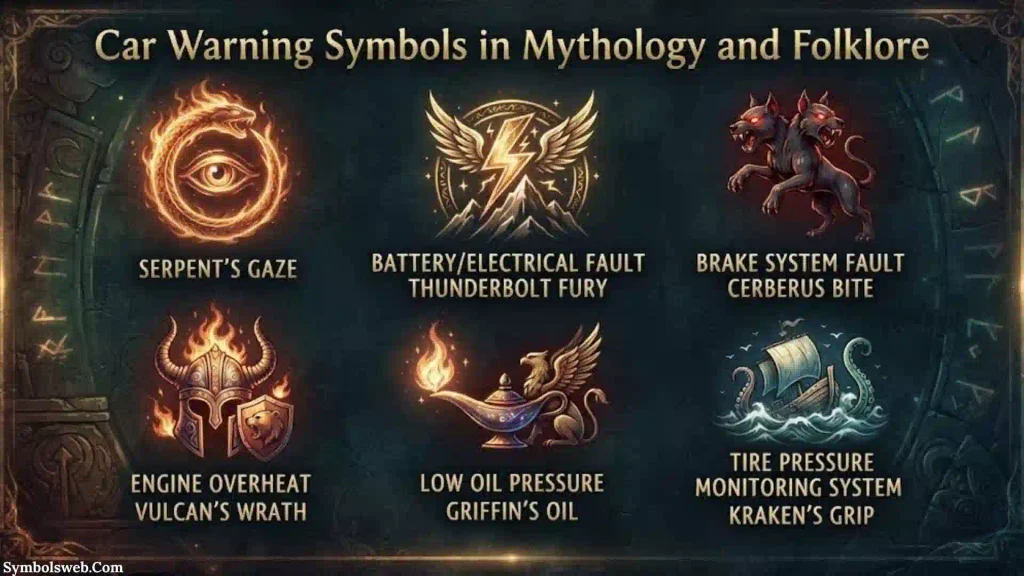
While cars are modern inventions, warning symbols share characteristics with ancient symbolic traditions.
Throughout mythology, heroes often received warnings before facing danger.
Examples include:
- Prophetic dreams in Greek myths.
- Messenger birds in Norse legends.
- Sacred omens in Roman traditions.
- Divine signs in Eastern folklore.
These warnings served the same purpose as dashboard alerts today: providing information before a crisis occurs.
The human fascination with warnings reflects a universal desire to avoid danger and gain control over uncertainty.
Car Warning Symbols in Art, Literature, Movies and Pop Culture
Literature
Warning signs frequently appear as metaphors in novels. Authors use them to symbolize approaching conflict or personal transformation.
Movies
In action and thriller films, dashboard warning lights often increase tension before dramatic events.
Television
Automotive symbols commonly appear in car restoration and racing programs, emphasizing technical expertise.
Tattoos
Some automotive enthusiasts choose dashboard icons as tattoos. They symbolize resilience, caution, or a passion for vehicles.
Fashion
Automotive-inspired designs occasionally incorporate warning symbols as bold graphic elements.
Modern Design
Many user interfaces borrow visual principles from car warning symbols because they communicate information quickly and effectively.
Spiritual and Dream Meaning of Car Warning Symbols
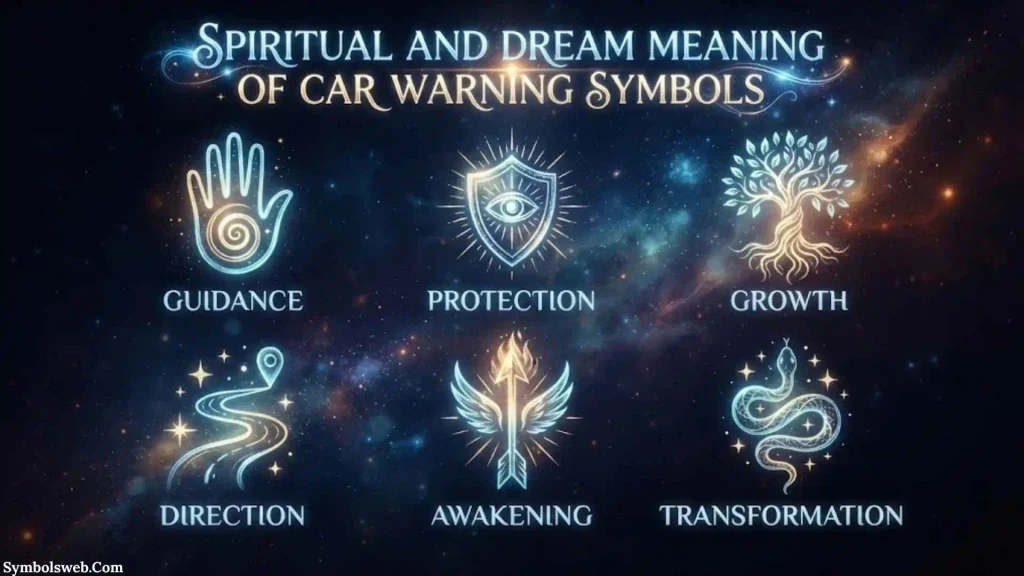
Dreaming about car warning symbols often reflects concerns about direction, control, or neglected responsibilities.
Common Dream Interpretations
Check Engine Light
May symbolize unresolved personal issues needing attention.
Brake Warning Light
Can represent a need to slow down and reconsider decisions.
Low Fuel Symbol
Often reflects emotional exhaustion or lack of motivation.
Battery Warning Light
May suggest depleted energy or burnout.
Positive Messages
- Increased awareness
- Personal growth
- Timely intervention
- Better decision-making
Cautionary Messages
- Ignored responsibilities
- Emotional overload
- Risky behavior
- Poor planning
Positive and Negative Meanings of Car Warning Symbols
| Positive Meaning | Negative Meaning |
| Awareness | Anxiety |
| Prevention | Fear |
| Protection | Stress |
| Guidance | Uncertainty |
| Safety | Mechanical failure |
| Responsibility | Neglect consequences |
| Preparedness | Urgent repairs |
The meaning depends largely on context. A warning light may initially create concern, but it ultimately serves a protective purpose.
Why Humans Are Attracted to Car Warning Symbols
Humans are naturally drawn to warning symbols because our brains prioritize survival information.
Psychologists call this the “attention bias toward threat.”
Several factors contribute:
Pattern Recognition
Humans instinctively search for meaningful patterns.
Emotional Response
Warning lights trigger curiosity and concern.
Collective Symbolism
Across history, warning signs helped communities survive.
Personal Relevance
Because cars are essential to daily life, dashboard symbols feel personally significant.
Cultural Memory
Generations have relied on symbolic communication, making warning icons instantly recognizable.
Modern Uses of Car Warning Symbols
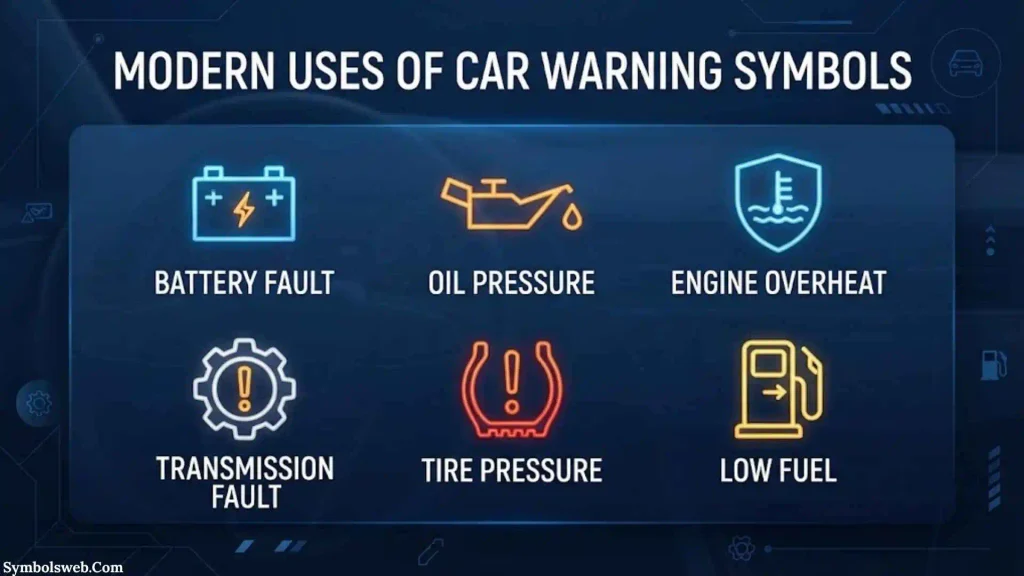
Vehicle Safety
Their primary purpose remains protecting drivers and passengers.
Automotive Education
Driving schools teach dashboard symbol recognition.
Branding
Automotive brands use warning icon designs in marketing materials.
Social Media
Dashboard warning symbols frequently appear in memes and educational content.
Home Decor
Car enthusiasts sometimes incorporate automotive iconography into decorative themes.
Personal Expression
Automotive symbols can represent independence, adventure, and technical expertise.
Interesting Facts About Car Warning Symbols
- Most dashboard symbols are internationally standardized.
- Modern vehicles can display more than 60 warning indicators.
- Red warning lights generally indicate immediate action is required.
- Yellow warning lights usually indicate maintenance needs.
- Early automobiles had very few dashboard indicators.
- Electric vehicles have unique warning symbols not found in traditional cars.
- Some luxury vehicles display animated warning graphics.
- Dashboard symbols are designed to be understood regardless of language.
- Many warning icons are based on simple geometric psychology principles.
- Proper response to warning lights can prevent costly repairs.
Frequently Asked Questions
What is the most important car warning symbol?
The brake warning light, oil pressure light, and engine temperature warning light are among the most critical because they can indicate serious safety or engine issues.
Can I drive with the check engine light on?
It depends on the situation. A steady check engine light often indicates a non-emergency issue, while a flashing light may signal a serious engine problem requiring immediate attention.
Why are some warning lights red and others yellow?
Red lights indicate urgent problems requiring immediate action. Yellow lights signal caution and should be checked soon.
Are car warning symbols the same worldwide?
Most major warning symbols follow international standards, making them recognizable across many countries and manufacturers.
What should I do when a warning symbol appears?
Consult your owner’s manual, assess the severity of the warning, and seek professional assistance if necessary.
Do electric cars have different warning symbols?
Yes. Electric vehicles include additional indicators related to battery systems, charging status, and electric drivetrain components.
Conclusion
Car warning symbols are far more than dashboard decorations. They represent a sophisticated language designed to protect drivers, prevent mechanical damage, and promote safety. Throughout history, humans have relied on symbols to communicate danger and guidance, and modern vehicles continue that tradition in a highly practical form.
By understanding these symbols, drivers gain confidence, awareness, and control. Every warning light carries a message, and listening to those messages can make the difference between a simple repair and a major problem. In many ways, your dashboard is not just displaying information. It is telling a story about the health and safety of your vehicle.

Eliana Foster is a writer with a passion for exploring the meanings behind symbols, traditions, and cultural history. She enjoys breaking down complex topics into simple, engaging articles that are easy for everyone to understand. Eliana is also the fictional author of The Hidden Language of Silent Marks and Beyond the Circle of Ancient Signs, two original book concepts created for her author profile. When she’s not writing, she loves visiting museums, reading about mythology, and researching the stories behind symbols from around the world. Her goal is to help readers discover the fascinating meanings hidden in everyday signs and ancient emblems.
 Jordan Hayes
 Ethan Holloway