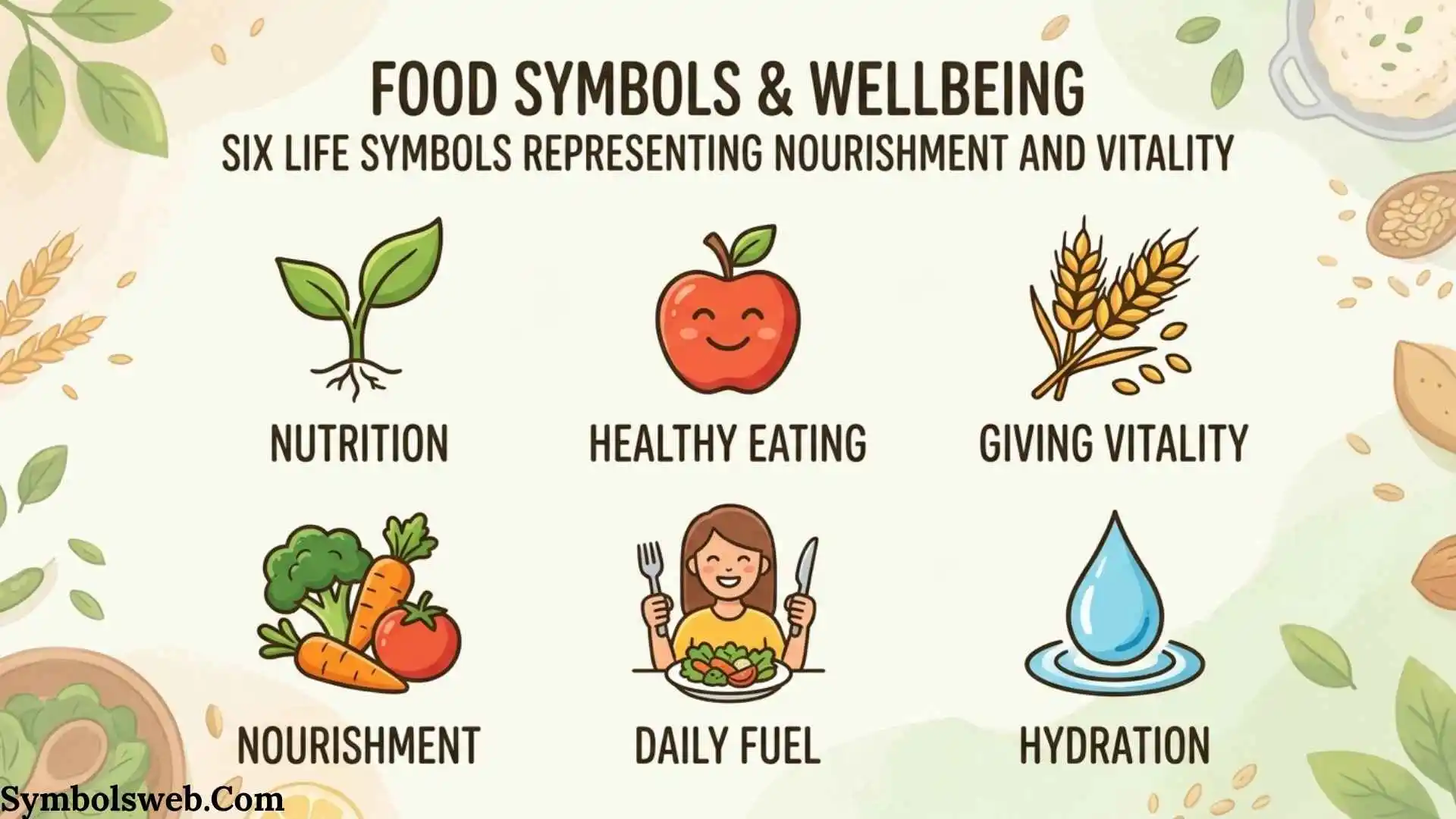
Food symbols have shaped human culture, spirituality, and storytelling for thousands of years. From ancient religious rituals to modern celebrations, certain foods carry meanings far beyond nourishment.
They represent prosperity, love, sacrifice, fertility, wisdom, and even immortality. Understanding food symbols reveals fascinating insights into human psychology, cultural identity, and the values societies have passed down through generations. Behind every symbolic food lies a story that connects people across time and place.
Food love is one of the most beautiful ways food connects with our emotions. I believe you can find love in the meals prepared with care, the favorite dishes shared with someone special, and the traditions that bring families and couples together. Sometimes, food can express feelings that you may find difficult to put into words.
Food Symbols: (Quick Answer)
Food symbols are foods that represent deeper meanings, beliefs, emotions, or cultural values beyond their physical purpose. Throughout history, societies have used symbolic foods to express prosperity, abundance, love, spirituality, protection, fertility, remembrance, and community during religious ceremonies, festivals, traditions, and everyday life.
Also Check This Post: 59+ Maori Symbols: Ancient Meanings Spiritual Wisdom and the Powerful Stories Behind Them
Quick Facts About Food Symbols
| Aspect | Information |
| Origin | Prehistoric rituals and early agricultural societies |
| Historical Significance | Used in religious ceremonies, celebrations, sacrifices, and cultural traditions |
| Main Meaning | Represents ideas, values, emotions, and beliefs through food |
| Spiritual Meaning | Connection between physical nourishment and spiritual growth |
| Cultural Importance | Preserves traditions, identity, and collective memory |
| Modern Usage | Festivals, holidays, branding, art, tattoos, social media, and personal symbolism |
What Are Food Symbols?
Food symbols are foods that carry meanings beyond their nutritional value. They act as visual and cultural representations of ideas, emotions, beliefs, and traditions.
Humans have attached symbolic meaning to food since the earliest civilizations. Ancient farmers viewed grain as a symbol of life because it sustained communities. Honey represents divine blessing because of its rarity and sweetness. Bread became a symbol of survival, sharing, and spiritual nourishment.
As societies evolved, food symbolism became deeply woven into religion, mythology, folklore, and social customs. Many traditional celebrations still center around symbolic foods that communicate messages of prosperity, gratitude, remembrance, or hope.
Food symbols matter because eating is one of humanity’s most universal experiences. Every culture understands hunger, nourishment, and sharing meals. This makes food a powerful language of meaning that transcends words.
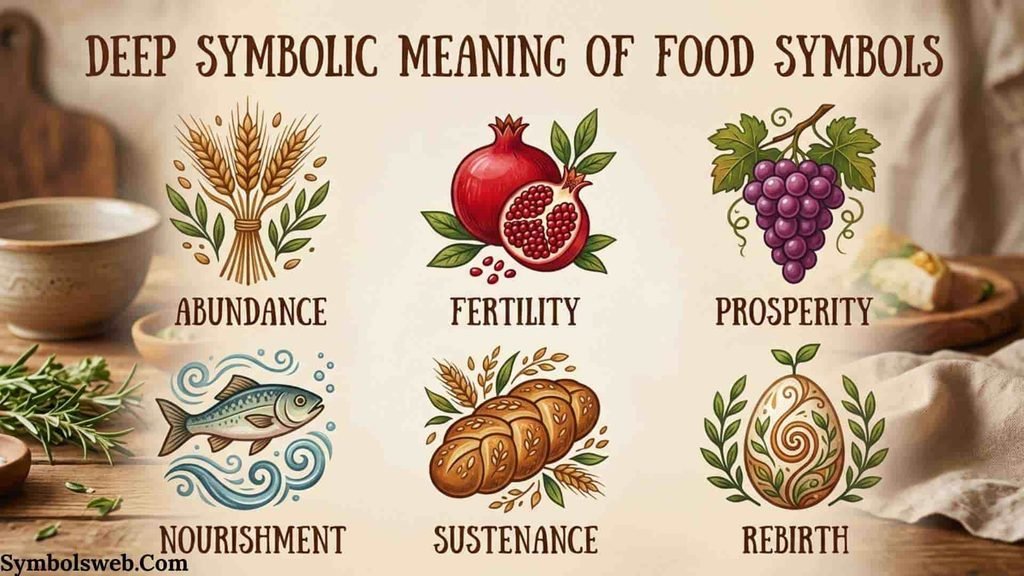
Deep Symbolic Meaning of Food Symbols
Spiritual Level
On a spiritual level, food often symbolizes the connection between the physical and sacred worlds.
Many religious traditions use food as a bridge between humans and the divine. Sacred meals, offerings, and ritual foods represent gratitude, devotion, purification, and divine blessings.
Examples include:
- Bread symbolizing spiritual sustenance
- Wine representing transformation
- Rice symbolizing abundance
- Honey symbolizing divine favor
- Fruits symbolizing life’s blessings
Food reminds people that nourishment extends beyond the body to include the soul and spirit.
Inner Transformation
Many spiritual traditions view food preparation and sharing as acts of transformation. Raw ingredients become something greater, mirroring personal growth and spiritual development.
Soul and Consciousness Connections
Across cultures, communal meals create sacred moments of connection. Sharing food often symbolizes unity, compassion, and collective consciousness.
Psychological Level
Food symbolism resonates deeply with the human mind.
Psychologists recognize that food is tied to survival, comfort, memory, and emotional security. Because of this, foods naturally become symbols of deeper emotional experiences.
Human Emotions
Certain foods evoke powerful feelings:
- Chocolate symbolizes love and pleasure.
- Apples symbolize knowledge and temptation.
- Milk symbolizes nurturing and care.
- Salt symbolizes loyalty and trust.
Jungian Symbolism
Swiss psychologist Carl Jung believed symbols emerge from the collective unconscious.
Food often appears in dreams and myths as archetypal representations of:
- Growth
- Fertility
- Transformation
- Sacrifice
- Abundance
Emotional Attraction
People feel emotionally connected to symbolic foods because they trigger memories of family traditions, celebrations, and meaningful life experiences.
Cultural Level
Food symbols help preserve cultural identity.
Traditional dishes often communicate values passed down through generations. A simple meal can represent history, heritage, and belonging.
For example:
- Mooncakes symbolize reunion in Chinese culture.
- Turkey symbolizes gratitude during Thanksgiving.
- Bread and salt symbolize hospitality in Eastern Europe.
- Dates symbolize blessing and generosity in many Islamic traditions.
Food becomes a living cultural language that keeps traditions alive.
Food Symbols And Meanings
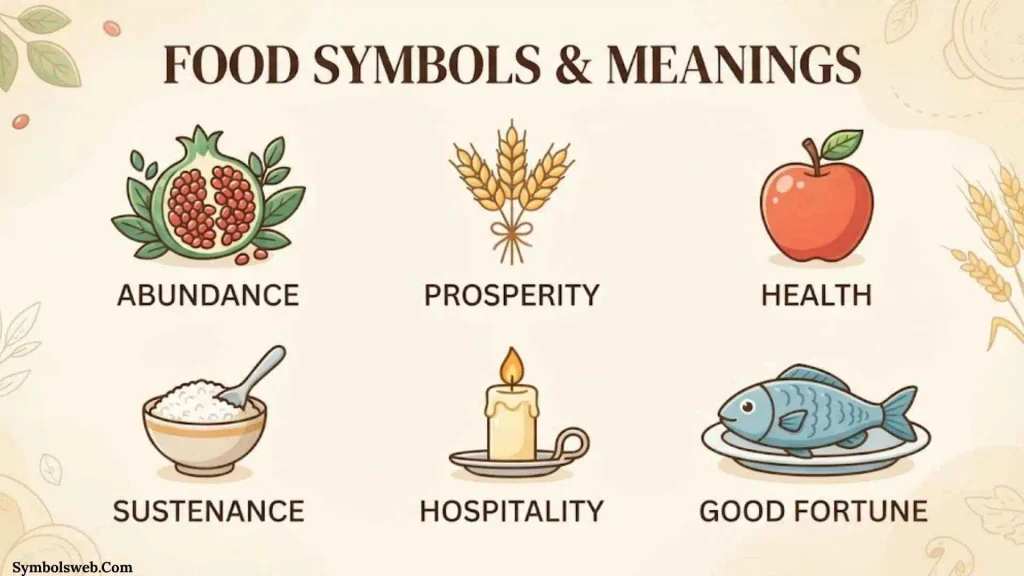
Food symbols are visual signs used to communicate information about ingredients, dietary choices, preparation methods, cultural traditions, or food-related ideas. They can appear on packaging, menus, restaurants, websites, and educational materials.
- 🍎 Apple — Often represents fresh fruit, healthy eating, or natural foods.
- 🌱 Sprout — Commonly associated with plants, natural ingredients, or plant-based foods.
- 🥕 Carrot — Represents vegetables, nutrition, and healthy eating.
- 🌾 Wheat — Often represents grains, cereals, farming, or wheat-based foods.
- ♻️ Recycling Symbol — Can indicate that packaging or materials have recycling-related information.
- 🌿 Herb or Leaf — Commonly used to suggest natural, herbal, or plant-based products.
- 🐟 Fish — Can represent seafood or fish-based foods.
- 🔥 Flame — Often indicates spicy, hot, grilled, or fire-cooked food.
- 🥬 Leafy Greens — Commonly associated with vegetables and fresh produce.
- 🍽️ Plate and Cutlery — Often represents food, dining, restaurants, or meals.
The exact meaning of a food symbol depends on where it is used, so symbols on regulated packaging should be interpreted according to the accompanying label or official standard.
Food Symbols On Packaging
Food symbols on packaging help consumers quickly understand information about a product. Some symbols communicate recycling instructions, dietary characteristics, certification, ingredients, or preparation.
Common examples include:
- Recycling symbols — Provide information about packaging materials and recycling.
- Organic certification symbols — Used by approved certification systems to identify qualifying organic products.
- Kosher symbols — Identify products certified as kosher by a particular certification organization.
- Halal symbols — May indicate that a product has been certified as halal by a recognized certifying body.
- Vegetarian or vegan symbols — May identify products that meet the requirements of a particular organization or manufacturer.
- Allergen information — Usually appears as text rather than a universal symbol and identifies regulated allergens where required.
- Best-before or use-by information — Communicates food-date information, although these are generally presented as text rather than universal icons.
Because packaging symbols can vary by country and certification organization, it is important to read the accompanying wording instead of assuming that every similar-looking symbol has the same meaning.
Food Symbols Emoji
Food emojis provide simple visual ways to represent foods, meals, ingredients, restaurants, and eating. They are especially common in social media posts, messages, menus, and digital content.
Some popular food-related emojis include:
- 🍎 — Apple
- 🍕 — Pizza
- 🍔 — Hamburger
- 🍟 — French fries
- 🌮 — Taco
- 🍣 — Sushi
- 🍜 — Noodles
- 🍩 — Doughnut
- 🍰 — Cake
- 🍓 — Strawberry
- 🍉 — Watermelon
- 🥑 — Avocado
- 🥕 — Carrot
- 🌽 — Corn
- 🍚 — Cooked rice
Food emojis can have informal or cultural meanings beyond the literal food they depict, so their interpretation can depend on the context in which they are used.
Kosher Food Symbols
Kosher food symbols are marks placed on food packaging to identify certification by a kosher certification organization. They help consumers recognize products that have been certified according to the requirements of Jewish dietary law.
Different organizations use different symbols, so there is not one universal kosher symbol. Common certification marks include symbols associated with organizations such as OU, OK, Kof-K, and Star-K.
Kosher labels can also provide additional information about a product. For example, some certifications distinguish between dairy, meat, and pareve products. A pareve product is neither meat nor dairy under kosher dietary classification.
Consumers should check the complete certification mark and any accompanying letters or wording because the details can vary between certifying organizations.
Halal Food Symbols
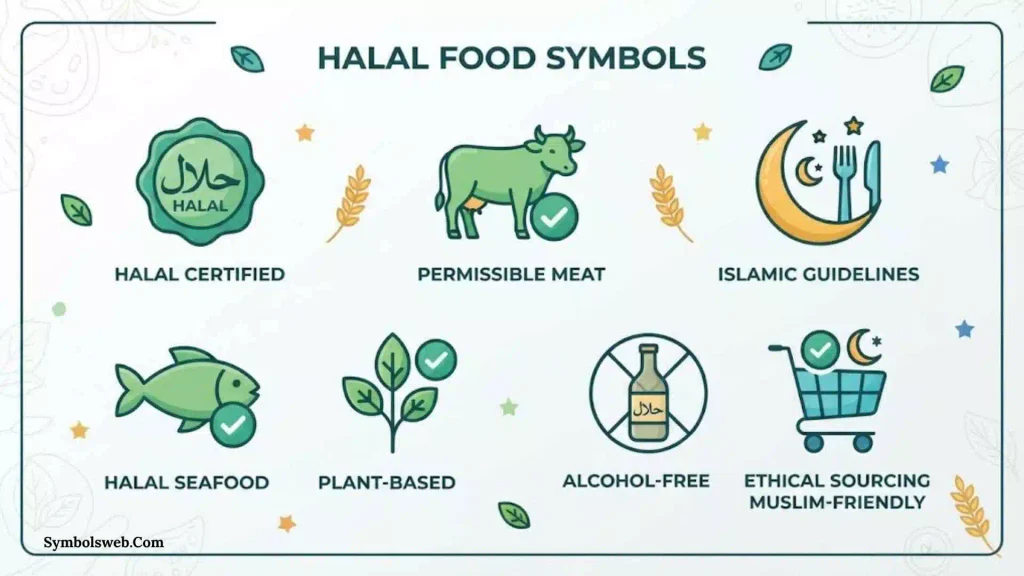
Halal food symbols are certification marks used to indicate that a food product has been reviewed and certified according to applicable halal requirements. Halal means permissible under Islamic law.
A halal symbol may appear on packaged foods, beverages, restaurants, meat products, and other products that require certification. The exact symbol differs between countries and certification organizations.
Halal certification can involve consideration of ingredients, processing, handling, equipment, and other requirements depending on the certification standard. For this reason, a halal symbol should be connected to the specific certification organization that issued it.
Some foods may naturally be halal without requiring a special symbol, while processed products can contain ingredients that require closer examination.
Fast Food Symbols
Fast food symbols are visual icons and branding elements associated with quick-service restaurants, meals, and common fast-food categories. They can appear on menus, signs, packaging, apps, and advertisements.
Common fast food symbols include:
- 🍔 Hamburger — Represents burgers and fast-food meals.
- 🍟 French fries — Commonly represents fries and quick-service dining.
- 🌭 Hot dog — Represents hot dogs and casual fast food.
- 🍕 Pizza — Often represents pizza restaurants or takeaway food.
- 🌮 Taco — Associated with tacos and Mexican-inspired fast food.
- 🥤 Drink cup — Represents soft drinks and beverages.
- 🍗 Chicken leg — Often represents fried or grilled chicken.
- 🍦 Ice cream — Commonly represents desserts and frozen treats.
These symbols are generally visual representations rather than standardized certification marks, so their meaning depends on the context.
Bioengineered Food Symbols
In the United States, the bioengineered food disclosure system provides a standardized way for certain foods to disclose that they are bioengineered. The disclosure may appear as text, a symbol, or an electronic or digital link depending on the applicable labeling requirements.
The U.S. bioengineered food symbol is designed as a circular graphic with stylized agricultural elements. It is used as part of the National Bioengineered Food Disclosure Standard administered by the U.S. Department of Agriculture.
A bioengineered food disclosure is different from an organic certification symbol and does not by itself mean that a food is healthy or unhealthy. The disclosure communicates information about how the food was produced or modified under the legal definition used by the U.S. standard.
Chinese Food Symbols
Chinese food symbols can represent traditional foods, cultural celebrations, good fortune, prosperity, longevity, and other ideas. Food symbolism is especially important during festivals and family celebrations.
- Dumplings (饺子) — Associated with wealth and prosperity, particularly during Chinese New Year.
- Fish (鱼) — Associated with abundance because the Chinese word for fish sounds similar to a word associated with surplus.
- Longevity noodles — Symbolize longevity and are traditionally served on birthdays and other celebrations.
- Oranges and tangerines — Often associated with good fortune and prosperity.
- Glutinous rice cakes (年糕) — Associated with progress, growth, and improvement.
- Spring rolls — Their golden appearance is traditionally associated with wealth.
- Tangyuan (汤圆) — Round rice balls can symbolize togetherness and family unity.
Meanings can vary by region, family tradition, and occasion, so Chinese food symbolism is not completely uniform.
Japanese Food Symbols
Japanese food symbols often connect food with seasons, celebrations, nature, family traditions, and cultural values. Some foods also have special meanings during holidays and important occasions.
- Mochi — Associated with celebrations and traditional Japanese occasions.
- Soba noodles — Often associated with longevity and are traditionally eaten around New Year.
- Red and white foods — The colors red and white can symbolize celebration and are commonly used in festive settings.
- Sea bream (tai) — Associated with good fortune and celebration because its name connects with the expression medetai, meaning auspicious or joyful.
- Chestnuts — Historically associated with victory and success in some traditional food symbolism.
- Rice — A central food in Japanese culture and strongly connected with agriculture and everyday life.
- Bento — Represents the cultural importance of carefully prepared and presented meals.
Japanese food symbolism varies according to the holiday, region, and historical tradition.
Mexican Food Symbols
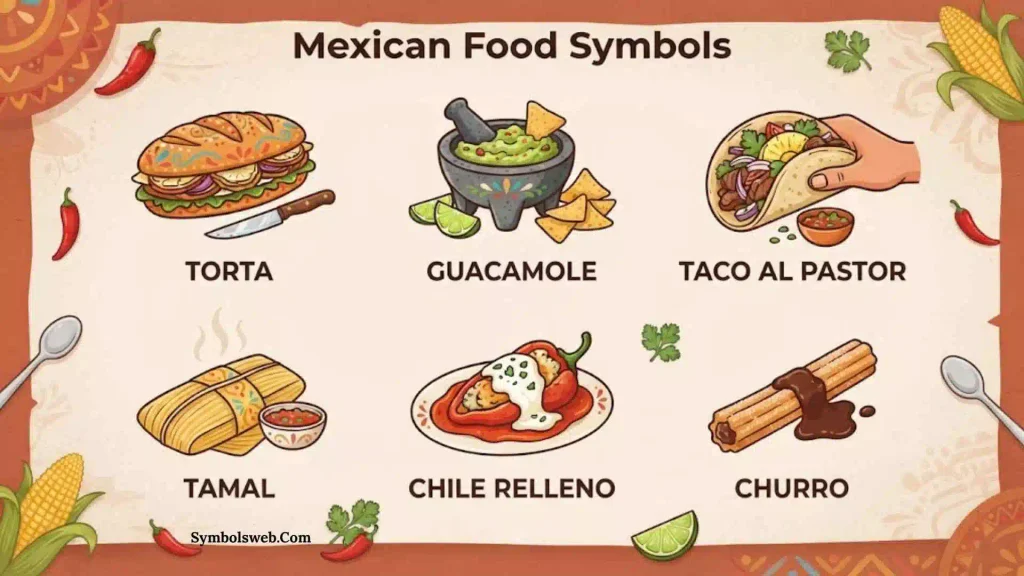
Mexican food symbols reflect the country’s Indigenous and Spanish influences, regional traditions, festivals, and everyday cuisine. Certain foods have become especially recognizable symbols of Mexican culinary culture.
- 🌮 Taco — One of the best-known symbols of Mexican cuisine.
- 🌽 Corn — A foundational ingredient with deep historical and cultural importance in Mexico.
- 🌶️ Chili pepper — Represents an essential ingredient found across many Mexican regional cuisines.
- 🫘 Beans — A traditional staple often paired with corn and other foods.
- Avocado — Widely associated with Mexican cuisine, particularly guacamole.
- Cacao — Has deep historical importance in Mesoamerican food culture.
- Pan de muerto — Traditionally associated with Día de Muertos celebrations.
- Tamales — A traditional food with deep historical roots and an important place in celebrations and family gatherings.
- Mole — Represents the complexity and regional diversity of Mexican cooking.
Types and Variations of Food Symbols
Bread
Visual Description
A baked staple made from grain.
Meaning
Life, sustenance, sharing.
Symbolism
Survival, community, spiritual nourishment.
Cultural Connection
Found in countless religious and cultural traditions.
Where It Appears
Religion, literature, rituals, folklore.
Rice
Visual Description
Small white grains cultivated throughout Asia.
Meaning
Prosperity and fertility.
Symbolism
Abundance, wealth, growth.
Cultural Connection
Central to many Asian ceremonies.
Where It Appears
Weddings, festivals, spiritual offerings.
Apple
Visual Description
Round fruit often colored red or green.
Meaning
Knowledge and temptation.
Symbolism
Wisdom, desire, immortality.
Cultural Connection
Appears throughout mythology and religion.
Where It Appears
Folklore, dreams, literature.
Honey
Visual Description
Golden sweet liquid produced by bees.
Meaning
Blessing and divine favor.
Symbolism
Sweetness, prosperity, healing.
Cultural Connection
Used in ancient rituals worldwide.
Where It Appears
Religious ceremonies, mythology, celebrations.
Pomegranate
Visual Description
Round red fruit filled with seeds.
Meaning
Life and fertility.
Symbolism
Renewal, abundance, resurrection.
Cultural Connection
Common in Mediterranean and Middle Eastern traditions.
Where It Appears
Art, mythology, spiritual symbolism.
Food Symbols Across Different Cultures
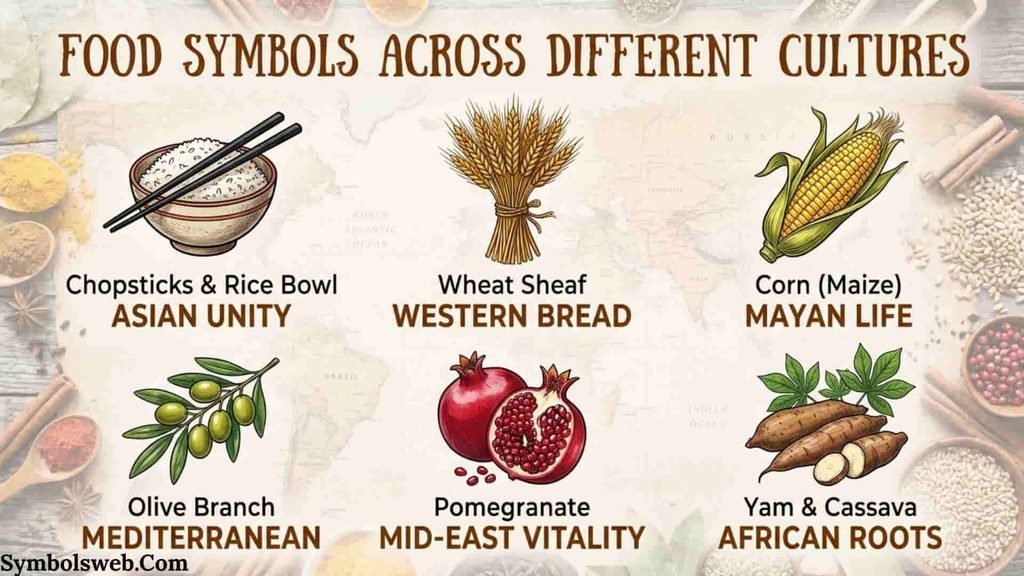
Ancient Egypt
Ancient Egypt associated bread and beer with life itself. Food offerings were placed in tombs to nourish souls in the afterlife.
The lotus flower and associated foods symbolized rebirth and immortality.
Ancient Greece
Ancient Greece connected food closely with the gods.
Olives symbolized peace and divine wisdom. Grapes represented celebration, abundance, and transformation.
Many myths revolved around sacred foods that granted power or immortality.
Roman Culture
Ancient Rome viewed grain as the foundation of civilization.
Bread symbolized citizenship, prosperity, and social order. Public food distribution became a symbol of political stability.
Eastern Traditions
In many Eastern cultures, rice symbolizes life, prosperity, and good fortune.
Noodles often represent longevity because of their length.
Tea symbolizes mindfulness, respect, and harmony.
Indigenous Traditions
Many Indigenous cultures view food as sacred gifts from nature.
Corn frequently symbolizes life, gratitude, and the relationship between humanity and the earth.
Food rituals emphasize respect, balance, and stewardship.
Modern Interpretations
Today, food symbolism continues through holidays, weddings, social media, branding, and personal traditions.
People still use symbolic foods to celebrate milestones, express love, and preserve cultural heritage.
Also Check This Post: 57+ Deep Meaning Woman Symbols of Strength and Courage: Powerful Female Symbols That Inspire Resilience
Similar Symbols and Their Meanings
| Symbol | Similarity to Food Symbols | Key Difference |
| Water | Represents life and survival | Focuses on purification and flow |
| Tree | Symbolizes growth and abundance | Emphasizes roots and connection |
| Fire | Represents transformation | Associated with energy and power |
| Flower | Symbolizes beauty and growth | More focused on emotions and nature |
| Harvest | Represents abundance | Broader agricultural symbolism |
Common Misconceptions
Many people assume food symbols always represent positive ideas. In reality, symbolic foods can also represent temptation, sacrifice, excess, or mortality depending on context.
Food Symbols in Mythology and Folklore
Food plays a central role in myths around the world.
One famous example involves the pomegranate in the story of Persephone. The fruit became a symbol of life, death, and seasonal renewal.
Apples appear in numerous legends as symbols of knowledge, temptation, and immortality.
Corn features prominently in Indigenous creation stories where it represents life itself.
Honey is often portrayed as food of the gods and a source of wisdom and divine favor.
These stories helped establish symbolic meanings that continue today.
Food Symbols in Art, Literature, Movies and Pop Culture
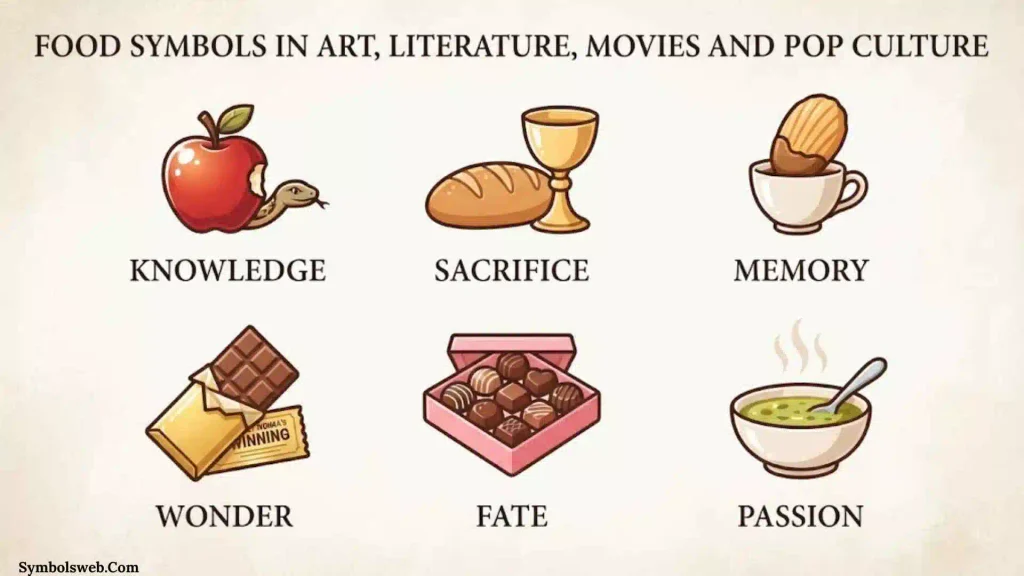
Paintings
Artists frequently use food to communicate hidden messages.
Fruit bowls often symbolize abundance, mortality, or prosperity.
Bread can symbolize faith, sacrifice, or community.
Literature
Writers use food symbolism to deepen themes and character development.
An apple may represent forbidden knowledge.
A feast may symbolize wealth, power, or social harmony.
A scarce meal may symbolize hardship or sacrifice.
Poetry
Poets use food imagery to explore love, longing, memory, and identity.
Simple foods often become metaphors for emotional experiences.
Movies and Television
Food frequently symbolizes family, tradition, comfort, or cultural identity.
Shared meals often mark moments of reconciliation, celebration, or transformation.
Tattoos
Popular food-inspired tattoos include:
- Pomegranates for fertility
- Apples for wisdom
- Wheat for abundance
- Cherries for vitality
Fashion and Design
Food imagery appears in advertising, home décor, and fashion because symbolic foods evoke strong emotional responses.
Spiritual and Dream Meaning of Food Symbols
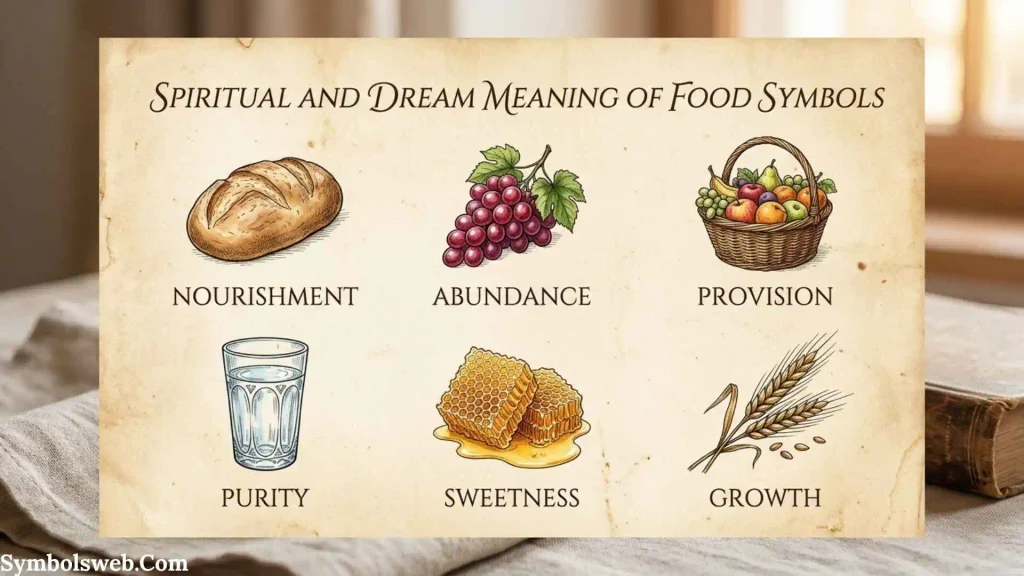
Dreams involving food often reflect emotional and spiritual needs.
Positive Interpretations
- Receiving food may symbolize blessings.
- Sharing food may represent connection.
- Fresh food may symbolize growth and opportunity.
- Harvest imagery may indicate abundance.
Cautionary Interpretations
- Spoiled food may suggest emotional stagnation.
- Excessive eating may symbolize imbalance.
- Scarcity may reflect anxiety or unmet needs.
Meditation and Spiritual Experiences
Many spiritual practitioners interpret symbolic food imagery as messages about nourishment, gratitude, or personal growth.
Positive and Negative Meanings of Food Symbols
| Positive Meaning | Negative Meaning |
| Abundance | Excess |
| Prosperity | Greed |
| Love | Attachment |
| Fertility | Overindulgence |
| Community | Dependency |
| Gratitude | Entitlement |
| Wisdom | Temptation |
| Renewal | Loss |
The same food symbol can carry different meanings depending on culture, context, and personal experience.
Why Humans Are Attracted to Food Symbols
Food symbolism speaks directly to universal human experiences.
Every person understands hunger, nourishment, and sharing. Because food is essential for survival, it naturally becomes a powerful symbol.
Psychologists suggest that symbolic foods connect with:
- Childhood memories
- Family traditions
- Emotional comfort
- Social belonging
- Cultural identity
Humans are also pattern-seeking creatures. We naturally assign meaning to objects that play important roles in our lives.
Food symbols persist because they connect the practical needs of the body with the emotional needs of the heart.
Modern Uses of Food Symbols
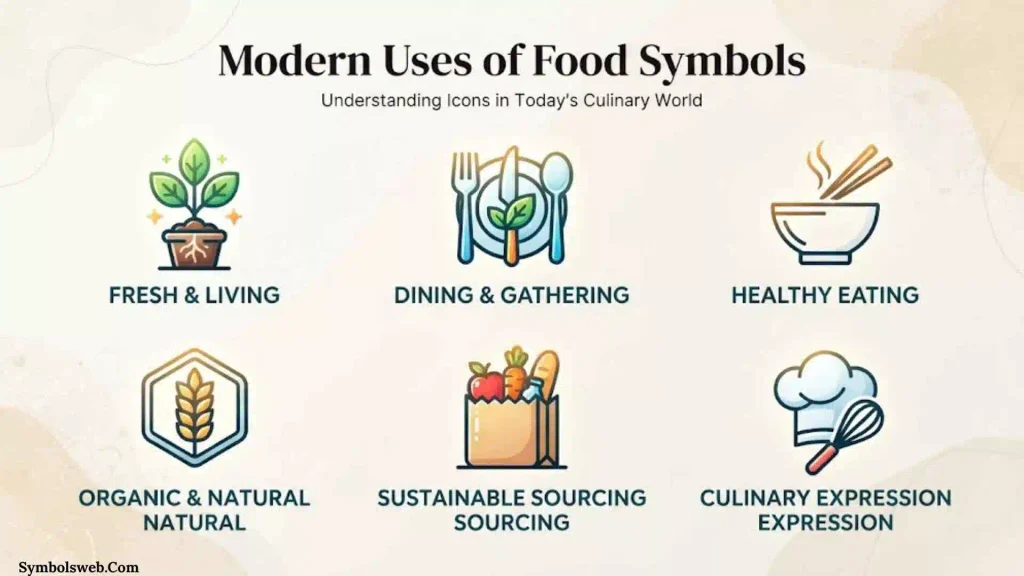
Tattoos
People choose symbolic foods to represent personal values and life experiences.
Jewelry
Food-inspired charms often symbolize prosperity, luck, or love.
Fashion
Designers incorporate fruits, grains, and culinary imagery into collections.
Branding
Companies use food symbols to evoke trust, abundance, comfort, and authenticity.
Social Media
Food imagery communicates celebration, identity, and lifestyle.
Contemporary Spirituality
Many modern spiritual practices continue using symbolic foods in rituals and ceremonies.
Home Decor
Decorative fruit, grain, and harvest imagery remains popular because it conveys warmth and abundance.
Interesting Facts About Food Symbols
- Bread has been a symbol of life for more than 10,000 years.
- Pomegranates can contain hundreds of seeds, making them powerful fertility symbols.
- Rice is thrown at weddings because it traditionally represents abundance and prosperity.
- Honey was considered sacred in many ancient civilizations.
- Apples appear in myths from Europe, Asia, and the Middle East.
- Salt was once so valuable that it symbolized wealth and loyalty.
- Corn is sacred in many Indigenous creation stories.
- Tea ceremonies transform an everyday beverage into a symbol of mindfulness and respect.
- Grapes often symbolize both celebration and spiritual transformation.
- Many modern holiday foods originated as ancient symbolic offerings.
Frequently Asked Questions
What are food symbols?
Food symbols are foods that represent deeper meanings such as prosperity, love, fertility, wisdom, spirituality, community, or remembrance.
Why do cultures use food symbols?
Cultures use food symbols because food is essential to life. Symbolic foods help communicate values, preserve traditions, and strengthen community identity.
What is the most common food symbol?
Bread is among the most universal food symbols because it represents life, nourishment, survival, and sharing across many cultures.
What do food symbols mean in dreams?
Food symbols in dreams often relate to emotional needs, personal growth, abundance, relationships, or spiritual nourishment.
Are food symbols religious?
Some food symbols have religious origins, while others come from folklore, mythology, cultural traditions, or psychological associations.
Why are food symbols still important today?
Food symbols continue to connect people with family traditions, cultural heritage, spiritual beliefs, and personal identity in modern life.
Conclusion
Food symbols are much more than ingredients on a plate. They carry stories, beliefs, memories, and values that have traveled across centuries. From sacred rituals and ancient myths to family gatherings and modern celebrations, symbolic foods help people express life’s deepest meanings.
They remind us that nourishment is not only physical but also emotional, cultural, and spiritual. Every symbolic meal tells a story about who we are, where we come from, and what we cherish most.
Also Check This Post: 57+ Symbols to Describe Yourself: Meanings Examples and Powerful Ways to Express Your Identity

Jordan Hayes is a writer with a passion for exploring the history, meanings, and cultural significance behind symbols from around the world. He enjoys turning complex topics into clear, engaging content that anyone can understand. Jordan is also the fictional author of The Silent Language of Ancient Marks and Hidden Symbols Beyond the Surface, two original book concepts created for his author profile. When he’s not writing, he spends time researching myths, traditions, and forgotten stories that inspire his work. His goal is to help readers discover the deeper meanings behind the symbols they encounter every day.
 Eliana Foster
 Ethan Holloway
[…] Alchemy Symbols and Meanings: The Hidden Language of Transformation, Wisdom, and Spiritual Power 55+ Food Symbols: Hidden Meanings Cultural Traditions and Powerful Symbolism 59+ Maori Symbols: Ancient Meanings Spiritual Wisdom and the Powerful Stories Behind Them 57+ […]
[…] Alchemy Symbols and Meanings: The Hidden Language of Transformation, Wisdom, and Spiritual Power 55+ Food Symbols: Hidden Meanings Cultural Traditions and Powerful Symbolism 59+ Maori Symbols: Ancient Meanings Spiritual Wisdom and the Powerful Stories Behind Them 57+ […]