Maori symbols carry far more than beautiful designs. They hold stories of ancestors, identity, courage, protection, family, and the deep connection between people and nature. For centuries, these symbols have been passed down through generations of the Māori people of Aotearoa (New Zealand), preserving history, beliefs, and cultural values.
Today, Māori symbols appear in tattoos, jewelry, artwork, architecture, and spiritual practices around the world. Yet behind every spiral, twist, and carving lies a profound meaning that speaks to the human experience. Understanding these symbols reveals not only Māori culture but also universal truths about life, resilience, belonging, and transformation.
Maori Symbols: (Quick Answer)
Māori symbols are traditional visual designs created by the Indigenous Māori people of New Zealand. They represent important spiritual, cultural, and ancestral concepts such as strength, protection, family, growth, wisdom, connection to nature, and life’s journey. Each symbol carries specific meanings rooted in Māori mythology, history, and cultural traditions.
Also Check This Post: 57+ Deep Meaning Woman Symbols of Strength and Courage: Powerful Female Symbols That Inspire Resilience
Quick Facts About Māori Symbols
| Aspect | Information |
| Origin | Māori culture of Aotearoa (New Zealand) |
| Historical Significance | Used in carvings, tattoos, tribal identity, storytelling, and spiritual practices |
| Main Meaning | Connection, ancestry, protection, growth, and identity |
| Spiritual Meaning | Harmony between people, ancestors, nature, and the spiritual world |
| Cultural Importance | Preserves tribal history, genealogy, and traditional values |
| Modern Usage | Tattoos, jewelry, artwork, logos, fashion, and cultural education |
What Are Māori Symbols?
Māori symbols are sacred visual representations used by the Māori people to communicate stories, beliefs, genealogy, and spiritual teachings. These symbols often appear in wood carvings, stone carvings, traditional tattoos known as moko, woven artworks, and ceremonial objects.
The origins of Māori symbolism stretch back hundreds of years before European contact. Māori communities developed a rich visual language that allowed knowledge to be passed from one generation to another.
Unlike decorative designs created purely for beauty, Māori symbols traditionally served a deeper purpose. They represented relationships between people, ancestors, nature, gods, and the universe itself.
Many symbols emerged from oral traditions and mythology. They reflected lessons learned from the sea, forests, mountains, and the challenges of everyday life.
Over time, these symbols became powerful markers of identity. A carving or tattoo could reveal a person’s ancestry, social status, achievements, and tribal connections.
Today, Māori symbols remain an important part of cultural heritage and continue to inspire people worldwide
Deep Symbolic Meaning of Māori Symbols
Spiritual Level
At a spiritual level, Māori symbols reflect the interconnectedness of all life.
Traditional Māori beliefs emphasize that humans are linked to their ancestors, the natural world, and spiritual forces. Symbols act as reminders of these relationships.
Many designs represent:
- Protection from negative influences
- Guidance from ancestors
- Personal transformation
- Balance and harmony
- Spiritual growth
- Sacred life energy known as mauri
The symbols often encourage individuals to remember their place within a larger cosmic story.
Inner Transformation
Many Māori symbols represent personal growth. Just as a plant unfolds toward sunlight, humans are believed to develop wisdom through life’s experiences.
Spirals, twists, and flowing shapes symbolize continual evolution rather than fixed identity.
Soul and Consciousness Connections
Māori spirituality teaches that ancestral knowledge remains present within descendants. Symbols serve as bridges connecting the living to those who came before.
Psychological Level
Psychologically, Māori symbols resonate because they reflect universal human experiences.
Archetypes and Jungian Symbolism
Psychologist Carl Jung argued that certain symbols appear across cultures because they emerge from the collective unconscious.
Many Māori symbols reflect archetypes such as:
- The Hero
- The Protector
- The Ancestor
- The Journey
- The Rebirth Cycle
- The Wise Elder
These themes feel familiar because they mirror fundamental human experiences.
Emotional Attraction
People are often drawn to Māori symbols because they represent:
- Belonging
- Family bonds
- Resilience
- Hope
- Identity
- Personal transformation
The flowing patterns also create a sense of movement and life, making them emotionally powerful.
Cultural Level
Within Māori culture, symbols preserve history and collective memory.
A carving is not simply an object. It may represent an ancestor, a historical event, or an important lesson.
These symbols strengthen community identity by reminding people of shared origins and values.
For example, a family may treasure a carving because it connects them to generations of ancestors who carried the same traditions.
Types and Variations of Māori Symbols
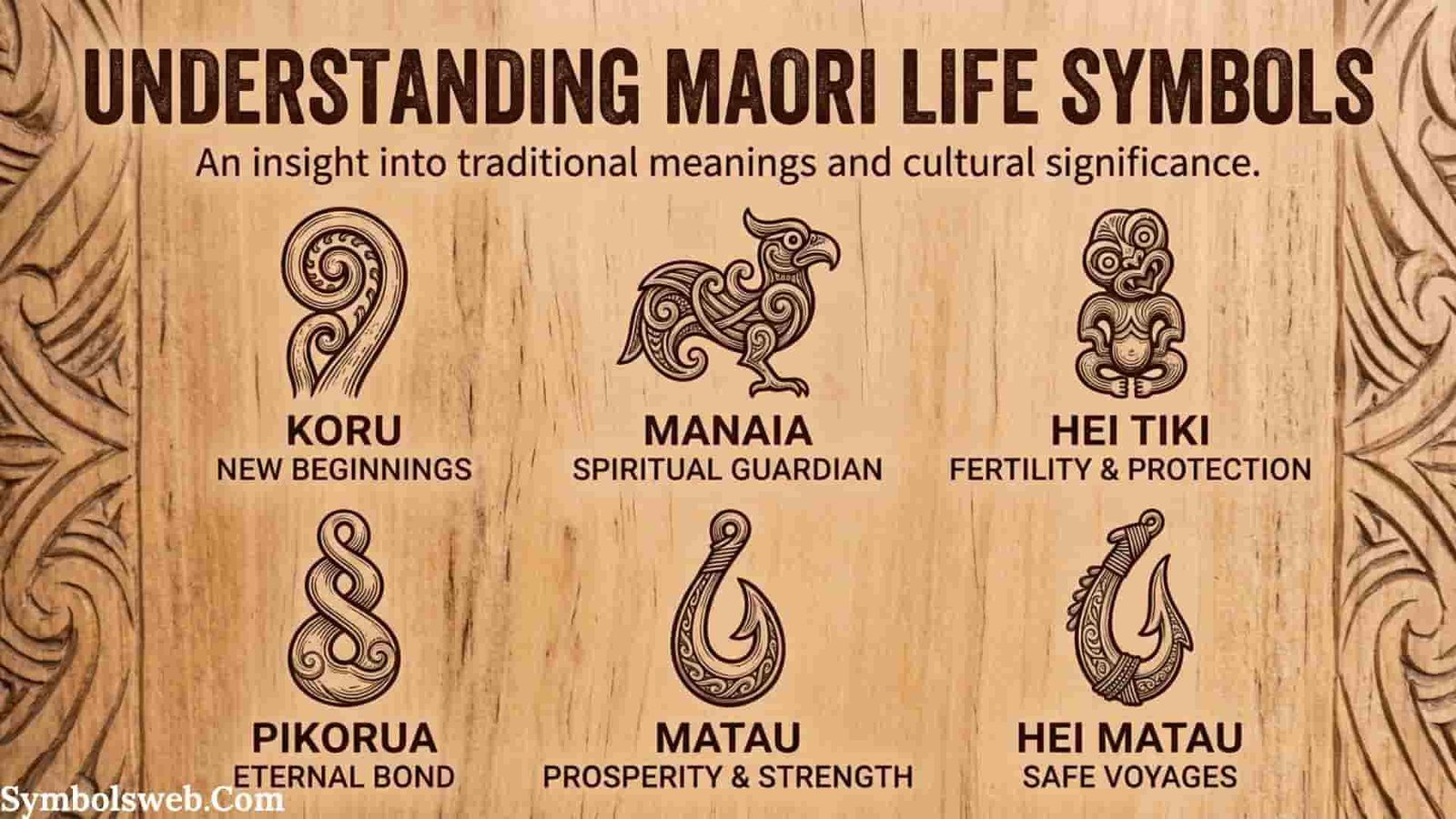
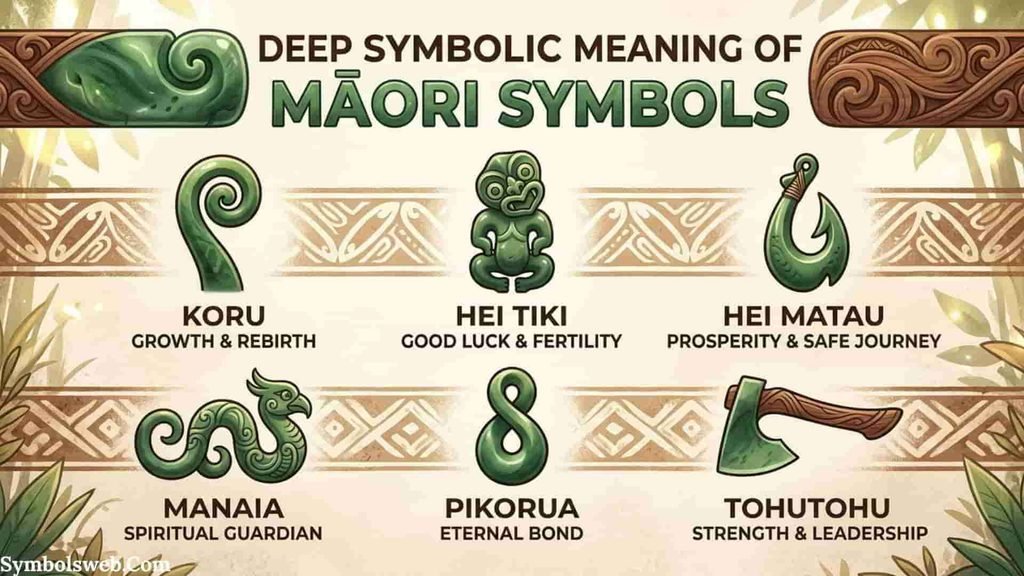
Koru
Visual Description
A spiral shape inspired by the unfurling silver fern frond.
Meaning
- New beginnings
- Growth
- Peace
- Renewal
Symbolism
The koru reflects the cycle of life and personal development.
Cultural Connection
It is one of the most recognizable Māori symbols.
Where It Appears
- Tattoos
- Jewelry
- Carvings
- Architecture
- Contemporary art
Hei Matau (Fish Hook)
Visual Description
A stylized fish hook with elegant curves.
Meaning
- Strength
- Prosperity
- Good fortune
- Safe travel
Symbolism
Fishing was central to Māori survival, making the fish hook a powerful symbol of abundance.
Cultural Connection
It reflects humanity’s relationship with the ocean.
Where It Appears
- Necklaces
- Carvings
- Tribal art
Pikorua (Twist)
Visual Description
Interwoven twisting lines.
Meaning
- Eternal connection
- Friendship
- Loyalty
- Unity
Symbolism
Two lives may take different paths yet remain connected.
Cultural Connection
Often given as gifts between loved ones.
Where It Appears
- Jewelry
- Ceremonial gifts
- Tattoos
Manaia
Visual Description
A figure combining human, bird, and spiritual characteristics.
Meaning
- Protection
- Guardianship
- Spiritual balance
Symbolism
Manaia acts as a messenger between worlds.
Cultural Connection
It is often viewed as a spiritual guardian.
Where It Appears
- Traditional carvings
- Meeting houses
- Jewelry
Toki (Adze)
Visual Description
A stylized carving tool shape.
Meaning
- Courage
- Leadership
- Determination
Symbolism
Represents strength developed through effort and discipline.
Cultural Connection
Originally linked to important tools used by skilled craftsmen.
Where It Appears
- Pendants
- Ceremonial items
- Tattoos
Māori Symbols Across Different Cultures
Although Māori symbols are unique, similar themes appear across many civilizations.
Ancient Egypt
Egyptian symbols often focused on immortality, divine protection, and spiritual power.
Like Māori symbols, they connected people to ancestors and the afterlife.
Ancient Greece
Greek symbolism emphasized wisdom, heroism, and destiny.
Both traditions used symbolic imagery to communicate moral lessons and cultural values.
Roman Culture
Romans used symbols to express strength, authority, and social identity.
Māori symbols similarly communicate status and belonging, though with a stronger ancestral focus.
Eastern Traditions
In Chinese and Japanese traditions, symbols often represent harmony, balance, and natural cycles.
These ideas closely parallel Māori beliefs about interconnectedness.
Indigenous Traditions
Many Indigenous cultures worldwide use symbols to preserve oral history and spiritual teachings.
This shared purpose creates meaningful parallels with Māori symbolism.
Modern Interpretations
Today, people from diverse backgrounds appreciate Māori symbols as expressions of:
- Identity
- Healing
- Personal growth
- Cultural respect
- Spiritual exploration
Similar Symbols and Their Meanings
| Symbol | Similarity to Māori Symbols | Key Difference |
| Celtic Knot | Eternal connection | Rooted in Celtic traditions |
| Yin Yang | Balance and harmony | Focuses on duality |
| Tree of Life | Growth and ancestry | Uses a tree rather than abstract forms |
| Native American Medicine Wheel | Spiritual connection | Different cultural framework |
| Infinity Symbol | Endless continuity | Less culturally specific |
Common Misconceptions
Many people assume all spiral symbols have identical meanings.
In reality, Māori symbols carry meanings shaped by specific cultural histories, stories, and traditions.
Māori Symbols in Mythology and Folklore
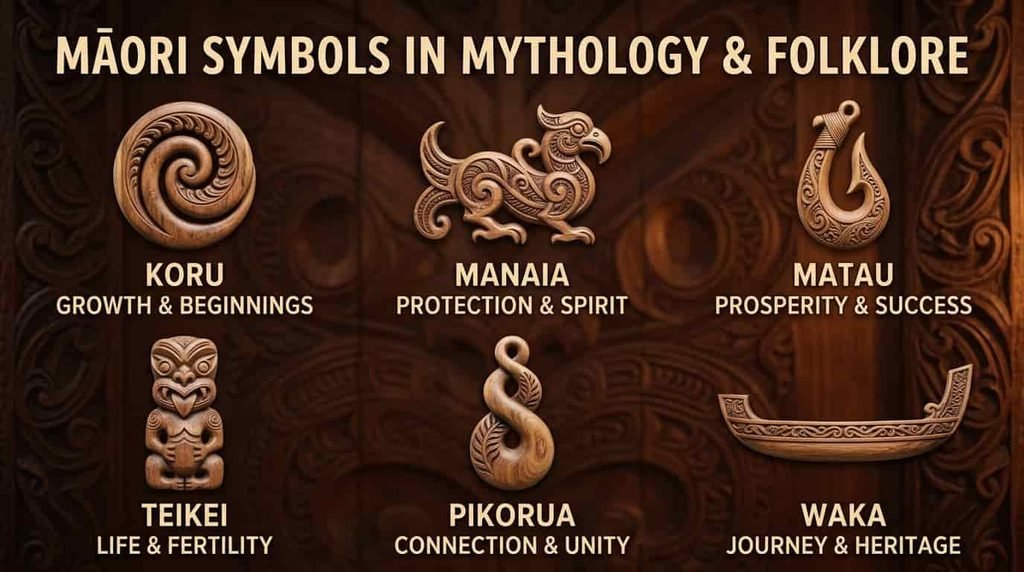
Māori mythology is filled with stories that inspire symbolic meanings.
One of the most famous legends involves Māui, the cultural hero known for fishing up islands from the ocean and slowing the sun.
Stories like these emphasize courage, ingenuity, and humanity’s relationship with nature.
Many symbols reflect lessons found within these narratives.
Manaia, for example, is often associated with spiritual guardianship and protection.
Other symbols draw inspiration from birds, fish, forests, and natural forces that feature prominently in traditional stories.
These myths continue to influence how people interpret Māori symbols today.
Also Check This Post: 57+ Symbols to Describe Yourself: Meanings Examples and Powerful Ways to Express Your Identity
Māori Symbols in Art, Literature, Movies, and Pop Culture
Paintings and Traditional Art
Artists use Māori symbols to preserve cultural identity and tell ancestral stories.
Literature
Writers often incorporate Māori symbolism when exploring themes of heritage, belonging, and identity.
Poetry
The koru frequently appears as a metaphor for growth and renewal.
Movies and Television
Māori-inspired imagery has appeared in films and documentaries that celebrate Indigenous culture and history.
Tattoos
Perhaps the most visible modern use of Māori symbols is tattoo art.
Traditional moko designs communicate personal identity and genealogy.
Modern adaptations often focus on growth, protection, and connection.
Fashion
Designers incorporate Māori-inspired motifs into clothing, jewelry, and accessories.
Respectful use requires understanding the cultural significance behind the designs.
Modern Design
Logos, architecture, and public artworks frequently draw inspiration from Māori visual traditions.
Spiritual and Dream Meaning of Māori Symbols
Dreams involving Māori symbols are often interpreted as messages about personal growth and connection.
Common Dream Interpretations
Seeing a Koru
May symbolize:
- A fresh start
- Healing
- Emotional renewal
Seeing a Twist Symbol
May represent:
- Important relationships
- Reconciliation
- Lifelong bonds
Seeing a Manaia
May suggest:
- Protection
- Spiritual guidance
- Increased awareness
Meditation Experiences
People meditating on Māori symbols often report feelings of:
- Grounding
- Inner peace
- Connection
- Clarity
- Personal transformation
Positive and Cautionary Messages
Symbols can encourage growth while also reminding individuals to remain balanced and connected to their roots.
Positive and Negative Meanings of Māori Symbols
| Positive Meaning | Negative Meaning |
| Growth | Resistance to change |
| Protection | Overdependence on protection |
| Unity | Fear of separation |
| Strength | Excessive pride |
| Transformation | Discomfort during change |
| Connection | Attachment to the past |
Like many symbols, their interpretation depends on context and personal experience.
Why Humans Are Attracted to Māori Symbols
Humans naturally seek meaning through symbols.
Māori symbols are especially compelling because they combine beauty with deep emotional significance.
Several psychological factors explain their appeal:
Pattern Recognition
The human brain is drawn to flowing, balanced shapes.
Storytelling
Each symbol carries a narrative, making it memorable.
Cultural Memory
People connect with themes such as family, belonging, and resilience.
Identity
Symbols help individuals express values and life experiences.
Universal Themes
Growth, protection, love, and transformation are meaningful across cultures.
These timeless themes explain why Māori symbols continue to inspire people worldwide.
Modern Uses of Māori Symbols
Today, Māori symbols appear in many areas of modern life.
Tattoos
Represent identity, personal journeys, and cultural appreciation.
Jewelry
Often worn as meaningful reminders of values and relationships.
Fashion
Used in culturally inspired clothing and accessories.
Branding
Organizations sometimes use Māori-inspired designs to communicate connection and authenticity.
Social Media
People share symbol meanings as expressions of personal beliefs.
Contemporary Spirituality
Many individuals use the symbols during meditation and self-reflection.
Home Decor
Carvings and artwork bring symbolic meaning into living spaces.
Personal Expression
The symbols allow people to tell stories about who they are and what they value.
Interesting Facts About Māori Symbols
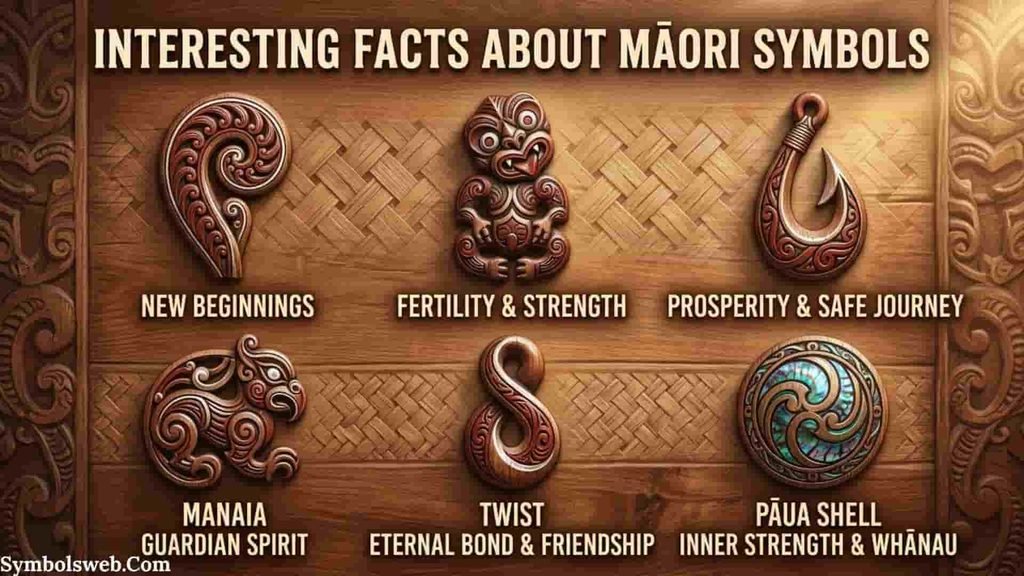
- The koru is inspired by the unfurling New Zealand silver fern.
- Traditional moko tattoos communicated genealogy and social status.
- Māori symbols were historically carved into canoes, houses, and ceremonial objects.
- Many symbols represent both physical and spiritual realities.
- Manaia is often viewed as a guardian between worlds.
- Different iwi (guilds) may interpret symbols in unique ways.
- Māori symbolism is closely connected to oral storytelling traditions.
- Certain traditional designs are considered culturally sacred.
- Symbol meanings often evolve while retaining their cultural roots.
- Māori visual art remains one of the world’s most distinctive Indigenous artistic traditions.
Frequently Asked Questions
What do Māori symbols represent?
Māori symbols represent concepts such as ancestry, protection, strength, growth, unity, spiritual guidance, and connection to nature.
What is the most famous Māori symbol?
The koru is widely considered the most recognized Māori symbol. It symbolizes new beginnings, growth, and renewal.
Are Māori symbols spiritual?
Yes. Many Māori symbols have spiritual meanings related to ancestors, protection, balance, and humanity’s connection with the natural world.
Can non Māori people wear Māori symbols?
Many people wear Māori-inspired symbols respectfully. However, understanding their cultural significance and avoiding sacred designs is important.
What does the Māori twist symbol mean?
The Pikorua, or twist symbol, represents eternal connection, friendship, loyalty, and the enduring bond between people.
What does Manaia symbolize?
The Manaia is traditionally viewed as a spiritual guardian that offers protection and serves as a link between earthly and spiritual realms.
Conclusion
Māori symbols are far more than decorative designs. They are living expressions of history, ancestry, spirituality, and identity. Each symbol carries lessons about growth, resilience, protection, and human connection.
From the graceful koru to the protective Manaia, these ancient designs continue to inspire people across the world. Their enduring power comes from their ability to speak to universal human experiences while remaining deeply rooted in Māori culture.
Also Check This Post: 55+ Travel Symbols: Hidden Meanings, History, Spiritual Power, and Cultural Significance

Jordan Hayes is a writer with a passion for exploring the history, meanings, and cultural significance behind symbols from around the world. He enjoys turning complex topics into clear, engaging content that anyone can understand. Jordan is also the fictional author of The Silent Language of Ancient Marks and Hidden Symbols Beyond the Surface, two original book concepts created for his author profile. When he’s not writing, he spends time researching myths, traditions, and forgotten stories that inspire his work. His goal is to help readers discover the deeper meanings behind the symbols they encounter every day.
 Eliana Foster
 Ethan Holloway
[…] Food Symbols: Hidden Meanings Cultural Traditions and Powerful Symbolism 59+ Maori Symbols: Ancient Meanings Spiritual Wisdom and the Powerful Stories Behind Them 57+ Symbols to Describe Yourself: Meanings Examples and Powerful Ways to Express Your Identity […]
[…] Spiritual Power 55+ Food Symbols: Hidden Meanings Cultural Traditions and Powerful Symbolism 59+ Maori Symbols: Ancient Meanings Spiritual Wisdom and the Powerful Stories Behind Them 57+ Symbols to Describe Yourself: Meanings Examples and Powerful Ways to Express Your Identity […]